You’ve seen how running shorts, shoes, and shirts have evolved from basic cotton and leather to advanced, high-performance fabrics. Today’s gear incorporates moisture-wicking, quick-drying, and breathable materials that enhance comfort and prevent chafing. Modern shoes use lightweight, ventilated meshes with smart textiles for better support and fit. As technology advances, gear continues to improve, making your runs more efficient and comfortable—there’s plenty more to discover about these exciting innovations.

Get workout gear delivered free with Prime
- Fast, free delivery on millions of items
- Prime Video, Amazon Music and more included
- Member-only deals all year
Key Takeaways
- Transition from natural fibers like cotton to synthetic, moisture-wicking fabrics improved comfort and performance.
- Advanced textiles with microfibers and mesh panels enhanced breathability and airflow in running apparel.
- Modern running garments are sleek, form-fitting, and incorporate antimicrobial and quick-drying properties.
- Running shoes evolved from leather and canvas to engineered mesh and knit fabrics for better support and flexibility.
- Ongoing innovations focus on lighter, more durable, and smart textiles to optimize athletic performance.
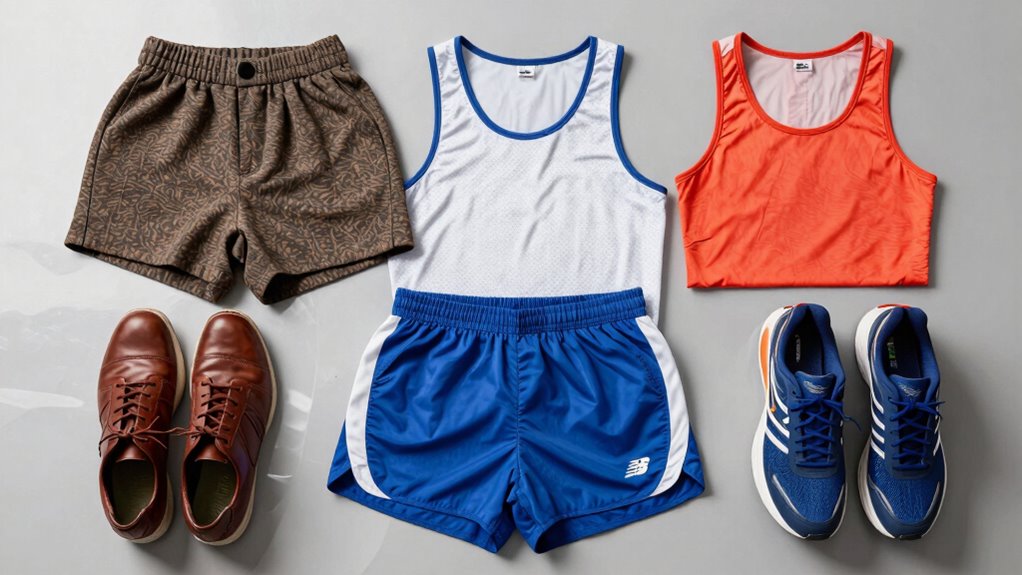
Have you ever wondered how running fabrics have transformed over the years? The journey from basic materials to high-tech textiles reflects a fascinating blend of historical material developments and technological fabric innovations. In earlier days, runners relied on simple, natural fibers like cotton, which offered comfort but lacked moisture-wicking properties. Cotton absorbed sweat, often leading to chafing and discomfort during intense activity. As awareness of athletic performance grew, fabric manufacturers began experimenting with synthetic fibers, marking the start of a new era.
The shift to synthetic materials like polyester and nylon revolutionized running apparel. These fabrics were lightweight, durable, and, most importantly, better at managing sweat. They could wick moisture away from your skin, helping you stay dry and comfortable for longer periods. This period saw significant technological fabric innovations aimed at enhancing performance. For example, the introduction of mesh panels improved breathability, while lightweight, stretchable fabrics increased freedom of movement. These advancements didn’t just improve comfort—they also contributed to better athletic results by reducing chafing and overheating.
Synthetic fabrics like polyester and nylon improved moisture management and breathability, boosting comfort and athletic performance.
In the development of running shorts, the focus moved from heavy, loose-fitting garments to sleek, form-fitting designs made from advanced moisture-wicking fabrics. These fabrics are engineered to keep sweat off your skin, drying quickly and preventing irritation. Modern running shirts use high-tech materials that incorporate microfibers, which allow for superior breathability and quick drying. Some even include antimicrobial properties to reduce odor during long runs. The integration of these technological innovations means you can push your limits without worrying about discomfort or gear failure. Additionally, understanding fabric breathability can help athletes select the right gear for varying weather conditions. The ongoing research into performance textiles continues to drive innovations, making gear lighter, more durable, and more responsive to athletes’ needs.
Running shoes have also benefited immensely from fabric innovations. Initially, shoes used simple leather or canvas, but now, lightweight engineered meshes and knit fabrics dominate. These materials are designed to provide support, flexibility, and ventilation, ensuring your feet stay cool and dry. Advanced fabric technology in shoes also allows for precise fit and reduced weight, which can improve your stride efficiency. The combination of smart textiles and advanced manufacturing techniques results in gear that adapts to your movements, offering better performance and comfort. Additionally, the development of performance-enhancing textiles has further optimized footwear for various running conditions.
Products Worth Considering

Garmin Forerunner 970 GPS Running and Triathlon Smartwatch

Garmin Forerunner 965 GPS Running and Triathlon Smartwatch, 47 mm, Black/Powder Gray

Garmin Forerunner 55 GPS Running Watch with Daily Suggested Workouts, Black
As an affiliate, we earn on qualifying purchases.
Frequently Asked Questions
How Have Environmental Concerns Influenced Running Fabric Development?
Environmental concerns have driven fabric development by encouraging the use of eco-friendly dyes and recycled fibers. You’ll notice that running shirts now often feature sustainable materials that reduce water and chemical use. Recycled fibers, made from plastic bottles or waste, help lower pollution and conserve resources. These innovations allow you to enjoy high-performance gear while supporting environmental efforts, making your runs more eco-conscious and sustainable.
What Are the Most Durable Materials Used in Modern Running Gear?
Ever wonder what makes your running gear last through tough miles? You’ll find that sustainable fibers like recycled polyester and nylon, combined with durable, breathable textiles, are among the most resilient materials today. These fabrics resist wear and tear while keeping you comfortable. They’re designed to withstand repeated use and washing, making them ideal for serious runners seeking both durability and eco-friendliness in their gear.
How Do Running Shoes Adapt to Different Terrains?
Running shoes adapt to different terrains through specialized features like trail grip and cushioning technology. For rough, uneven trails, you’ll want shoes with aggressive tread patterns that provide excellent grip, preventing slips. Cushioned soles absorb shock on rocky paths, offering comfort and support. On smoother surfaces, lighter, flexible shoes with less tread work best. These adaptations guarantee you maintain stability, comfort, and performance no matter where your run takes you.
What Innovations Are Expected in Future Running Apparel?
Imagine running in apparel that anticipates your needs before you even feel them. Future innovations likely include smart textiles that adapt in real-time, providing ideal support and temperature regulation. Moisture-wicking fabrics will become smarter, pulling sweat away more efficiently and preventing chafing. These advancements promise to revolutionize your run, making gear more responsive, comfortable, and personalized—taking your performance to unprecedented levels.
How Do Fabric Technologies Impact Athlete Performance and Recovery?
Fabric technologies markedly impact your performance and recovery by enhancing breathability and moisture-wicking properties. When your gear breathes well, it keeps you cool and prevents overheating during runs. Moisture-wicking fabrics draw sweat away from your skin, reducing chafing and discomfort. This not only boosts your athletic performance but also speeds up recovery, as your body stays dry and cool, helping you train harder and recover faster.
Conclusion
As you continue your running journey, you’ll find that the fabrics beneath your gear have quietly transformed, offering comfort and performance in subtle yet meaningful ways. These innovations, like gentle whispers of progress, enhance your experience without taking center stage. Embrace these evolving materials as your steadfast companions, guiding you smoothly through every stride. In the end, it’s the quiet evolution of your gear that helps you run further, faster, and with a little more ease—making each run a little brighter.