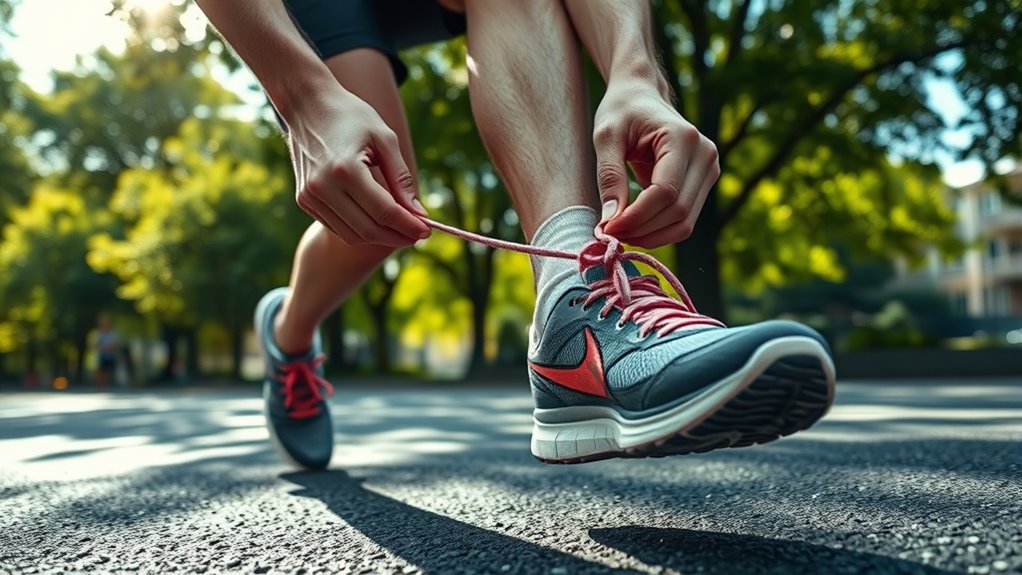

When your shoelace breaks mid-run, stay calm and quickly assess the damage. If it’s a small tear, you can try tying a secure knot or making a quick bow with the remaining lace. If the lace is completely broken, remove the damaged portion and use a new lace if you have one handy. Practice simple knot techniques for fast fixing, and if you keep going, you’ll find even more tips to stay comfortable and safe during your run.
Key Takeaways
- Assess whether to replace the lace or perform a quick knot repair based on damage severity.
- If repairing, tie a secure bow knot, double knot for extra security, ensuring it’s tight but comfortable.
- For replacement, carefully remove the broken lace and thread a new one through eyelets, matching the original length.
- Practice knot-tying techniques beforehand for faster, more effective repairs during your run.
- Carry spare laces or an emergency repair kit to prevent mid-run disruptions and ensure safety.

Running often means dealing with unexpected hiccups, and a broken shoelace is one of the most common. When this happens mid-run, it can feel frustrating, but staying calm and quickly fixing the problem is key. First, you’ll need to decide whether to replace the lace entirely or try to repair it temporarily. If the lace is merely frayed or has a small tear, a quick lace replacement might do the trick. Otherwise, you might need to tie a makeshift knot to keep your shoe secure until you can get proper replacement laces later.
Running mishaps like a broken shoelace are common; stay calm and fix it quickly to continue your run comfortably.
If you choose a lace replacement, the process is straightforward but requires focus. Carefully remove the damaged lace from the eyelets, ensuring you don’t pull too hard on the eyelets or damage your shoe. Grab a new lace of similar length and thickness, and thread it through the bottom eyelets, making sure it’s even on both sides. As you work your way up, use your fingers to guide the lace through each eyelet, maintaining a smooth, untangled path. Once the new lace is in place, you’ll want to secure it properly to prevent slipping during your run. This is where knot tying techniques come into play. The most reliable knot in this situation is the bow knot, which is quick to tie and holds well under tension.
To tie the bow knot, create a loop with each end of the lace, then cross them over each other. Loop one end around the other, pulling it through to form a secure knot. Tighten the knot evenly, ensuring it’s snug but not so tight that it cuts off circulation or causes discomfort. Double knotting can provide extra security if you’re worried about the lace coming undone. This quick fix allows you to continue your run safely and comfortably. Remember, practice makes perfect with knot tying techniques, so if you’re unsure, take a moment to rehearse in advance. Additionally, understanding proper shoe fit and lacing patterns can prevent laces from breaking prematurely.
In an emergency, a simple knot can keep your shoe on long enough to finish your run. However, once you’re done, it’s best to replace the lace altogether. Carrying a spare lace or a small emergency kit with basic tools for lace replacement and knots can save you time and hassle on future runs. Mastering these quick fixes means you’ll stay confident and prepared, no matter what surprises a run throws your way.

Miscly Flat Shoe Laces for Sneakers, Multiple Lengths and Colors Available – Grey, 54″ (137 CM)
- Color Options: 20 curated colors to choose from
- Universal Compatibility: Fits sneakers, running shoes, boots, and more
- Sneaker-Ready Design: Compatible with popular sneaker styles
As an affiliate, we earn on qualifying purchases.
As an affiliate, we earn on qualifying purchases.
Frequently Asked Questions
Can You Prevent Shoelaces From Breaking During a Run?
You can prevent shoelaces from breaking during a run by practicing good lace maintenance and focusing on shoelace longevity. Regularly check for frays or weak spots, and replace worn laces early. Use secure knots to reduce strain, and avoid over-tightening. Choosing durable, high-quality laces also helps extend their life. By caring for your shoelaces properly, you’ll minimize the risk of breakage and ensure a smoother, more comfortable run.
What Are the Best Emergency Tools for Fixing Shoelaces?
Fixing a broken shoelace mid-run is like quicksand—you need the right tools to escape. Carry a small lace repair kit for quick fixes, which often includes strong thread and tiny needles. Safety pins are also handy—they can temporarily secure loose laces or hold a split together. Both tools are compact, reliable, and essential for emergencies, helping you stay on track without hassle or delay.
How Do Different Shoelace Materials Affect Durability?
Different lace material types markedly impact durability and material longevity. Nylon and polyester laces are known for their high strength and resistance to wear, making them ideal for long-lasting use. Cotton laces, while softer, tend to wear out faster and fray more easily. You should consider these differences when choosing your shoelaces, especially if you want to maximize durability during intense activities or frequent use.
Is It Better to Re-Tie or Replace a Broken Shoelace?
Like a vintage Walkman, a broken shoelace calls for quick action. You should consider shoelace replacement, especially if the damage’s severe or the lace is frayed. Re-tying works temporarily but isn’t reliable long-term. For proper shoelace maintenance, replacing a damaged lace ensures your shoes stay secure. So, when in doubt, opt for shoelace replacement over re-tying, keeping your run smooth and your shoes dependable.
How Can I Quickly Find a Replacement Shoelace?
You can quickly find a replacement shoelace by checking your shoelace storage, where spare laces are often kept. Look for laces that match your shoe’s color and length, or consider carrying a small kit with versatile replacement options. If you’re in a hurry, visit nearby sports stores or shoe repair shops. Always keep a spare shoelace handy to make quick swaps when needed, ensuring your run stays uninterrupted.
Conclusion
Just like the phoenix rises from ashes, you can turn a broken shoelace into a moment of resilience. Every run, like life, presents challenges—you’re capable of fixing what’s frayed and moving forward stronger. Remember, setbacks are just opportunities to demonstrate your resourcefulness and grit. So, next time your shoelace snaps, don’t see it as an end, but as a chance to showcase your perseverance. Keep running, keep thriving—your journey isn’t over yet.