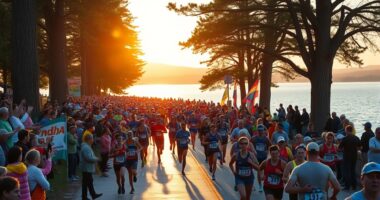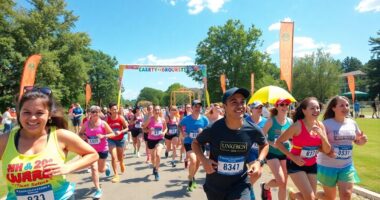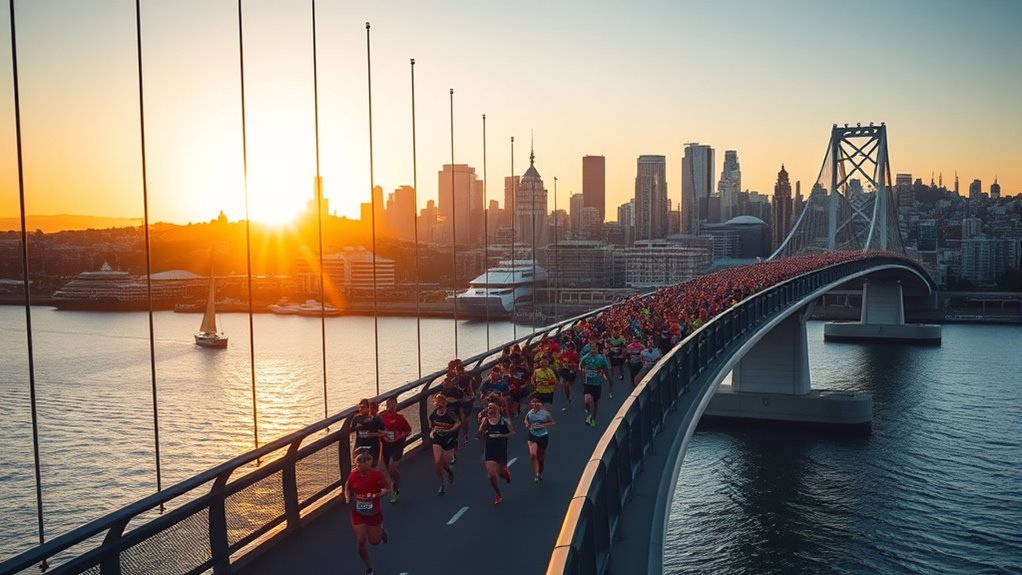
During the Auckland Marathon, crossing the Harbour Bridge is a key highlight that tests your endurance and determination. You’ll experience a physical challenge as you navigate the iconic structure’s incline and stunning views. Proper preparation through targeted training, good nutrition, and mental focus will help you conquer this memorable moment. Want to discover how to optimize your race strategy for this unique course? Keep going to learn more about making your marathon experience exceptional.
Key Takeaways
- The Auckland Marathon features a highlight crossing of the iconic Harbour Bridge, symbolizing a major milestone in the race.
- Proper hill and bridge training enhances performance and safety when navigating the bridge’s inclines.
- The route’s varied terrain, including the Harbour Bridge, requires tailored training and hydration strategies.
- Crossing the Harbour Bridge offers runners scenic views and a sense of achievement upon completing this key segment.
- Preparation, including mental resilience and race-day nutrition, ensures a successful crossing of the Harbour Bridge during the marathon.
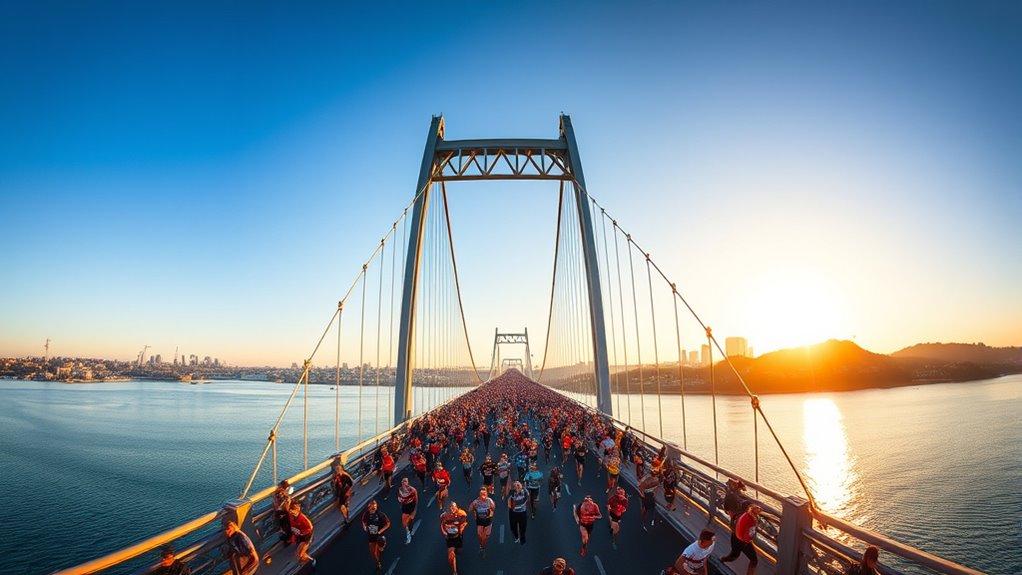
The Auckland Marathon is a premier running event that attracts thousands of athletes from around the world to New Zealand’s vibrant city. If you’re preparing to cross the iconic Harbour Bridge, you need more than just endurance—you need a solid plan that includes effective training techniques and nutrition strategies. These elements are essential for tackling the course’s unique challenges and guaranteeing you perform at your best.
When it comes to training techniques, it’s important to incorporate a mix of long runs, speed work, and hill training. Long runs build your stamina, preparing your body for the sustained effort needed during the marathon. To simulate race conditions, try running on similar terrain and at a steady pace, gradually increasing your distance each week. Speed work, such as interval training or tempo runs, sharpens your pace and boosts your cardiovascular capacity. Hill training is especially beneficial given the bridges and inclines you’ll encounter, particularly on the route crossing the Harbour Bridge. Incorporate hill repeats into your weekly routine to strengthen your leg muscles and improve your climbing ability. You’ll also want to pay attention to your recovery days, allowing your muscles to repair and preventing injury. Additionally, understanding essential oils for training support can help optimize your recovery and mental focus during intense training periods.
Nutrition strategies are equally essential. Proper fueling before, during, and after your run can greatly impact your performance and recovery. Before the race, consume a carbohydrate-rich meal a few hours prior to start, such as oatmeal with fruit or a bagel with peanut butter. During the marathon, plan to intake easily digestible carbs through gels, energy bars, or sports drinks at regular intervals—typically every 30 to 45 minutes. Staying hydrated is critical, especially considering New Zealand’s variable weather; sip water and electrolyte drinks consistently throughout the race. Post-race, focus on replenishing lost nutrients with a mix of carbs and protein to aid muscle recovery. Incorporating familiar, easily digestible foods into your nutrition plan will help prevent gastrointestinal issues during the run.
Crossing the Harbour Bridge is a highlight, but it also demands mental resilience and physical preparedness. By honing your training techniques and adhering to strategic nutrition plans, you’ll set yourself up for success. Remember, consistency is key; stick to your plan, listen to your body, and adjust as needed. The experience of running over the Harbour Bridge with the Auckland skyline in the background is inspiring, and being well-prepared guarantees you can enjoy every moment of it. With the right preparation, crossing the Harbour Bridge becomes not just a race segment, but a memorable achievement in your marathon journey.

INOXTO Running Hydration Vest Backpack,Lightweight Insulated Pack with 1.5L Water Bladder Bag Daypack for Hiking Trail Running Cycling Race Marathon for Women Men (Light Gray)
❤ 【Ergonomic and comfortable design】 INOXTO Hiking Backpack Water Bladder Vest Kit aligns your back while gently protecting…
As an affiliate, we earn on qualifying purchases.
As an affiliate, we earn on qualifying purchases.
Frequently Asked Questions
What Is the History of the Auckland Marathon?
You’re interested in the Auckland Marathon’s history. It started in 2000, aiming to promote running and showcase Auckland’s landmarks, like the Harbour Bridge and Sky Tower. Over the years, it’s grown into a major event, attracting runners from around the world. If you’re training for it, remember that familiar landmarks inspire your marathon training. This race celebrates Auckland’s vibrant cityscape and encourages community participation, making it a true local and international highlight.
How Can I Register for the Marathon?
You can register for the marathon by visiting the official Auckland Marathon website and completing the online registration form. Make sure you meet the entry requirements, such as age and health criteria, before submitting your application. Early registration is recommended to secure your spot, as the event can fill up quickly. Keep an eye on registration deadlines and follow the instructions carefully to guarantee your marathon registration is successful.
What Are the Marathon’s Age Group Categories?
Imagine stepping into a grand tapestry of runners, each belonging to their unique thread. The marathon’s age group categories follow race division standards, typically spanning from 18-29, 30-39, 40-49, and so on, up to 70+. You’re grouped by these age brackets, ensuring fair competition and camaraderie. No matter your age, you’ll find your place among fellow runners, united by your passion for the race and the journey ahead.
Are There Wheelchair or Wheelchair-Accessible Options?
Yes, there are wheelchair accessibility options at the marathon. You can enjoy barrier-free routes designed to accommodate wheelchair users, guaranteeing you have a comfortable and accessible experience. The event prioritizes inclusivity, providing assistance and accessible facilities along the course. Make sure to check specific details and register in advance to ensure your needs are met. This way, everyone can participate and enjoy the excitement of the race.
What Safety Measures Are in Place During the Event?
To guarantee your safety, the event employs meticulous emergency response planning and thorough marathon crowd control strategies. These measures include dedicated security personnel, clear signage, and strategic barriers to guide runners smoothly. Medical teams are on standby, ready to assist if needed. Rest assured, your safety is prioritized, allowing you to focus on your race while confident that exhaustive precautions are in place to handle any situation effectively.

Nike Women's Bella 7 Training/Workout Shoes, White/Multi-Color-Sail-Pencil Point, 8.5
Flexibility; Moderate: The more flexibility that you have in the midsole and outsole, the more you can move…
As an affiliate, we earn on qualifying purchases.
As an affiliate, we earn on qualifying purchases.
Conclusion
As you cross the Harbour Bridge, you realize you’re not just running a race—you’re conquering a symbol of Auckland’s spirit. Imagine yourself as the ship sailing smoothly through open waters, propelled by determination. With over 10,000 runners each year, this marathon transforms the city into a vibrant, collective heartbeat. So, keep pushing forward, because every step brings you closer to that triumphant moment—like reaching the horizon after a long voyage.

Honey Stinger Organic Fruit Smoothie Energy Gel, Gluten Free & Caffeine Free, for Exercise, Running and Performance, Sports Nutrition for Home & Gym, Pre and Mid Workout, 12 Pack, 13.2 Ounce
DELICIOUS A classic fruit blend in a 12ct box. These grab-and-go energy gels are made for quick, sustained…
As an affiliate, we earn on qualifying purchases.
As an affiliate, we earn on qualifying purchases.
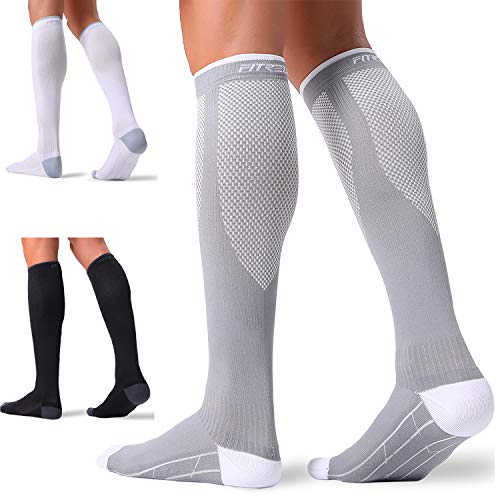
FITRELL 3 Pairs Compression Socks for Women and Men 20-30mmHg- Circulation and Muscle Support Socks for Travel, Running, Nurse, Knee High, Medical Black+White+Grey Small-Medium
【Size Tips】: Choose according to your CALF size first as for 20-30 mmHg. One size smaller if need…
As an affiliate, we earn on qualifying purchases.
As an affiliate, we earn on qualifying purchases.