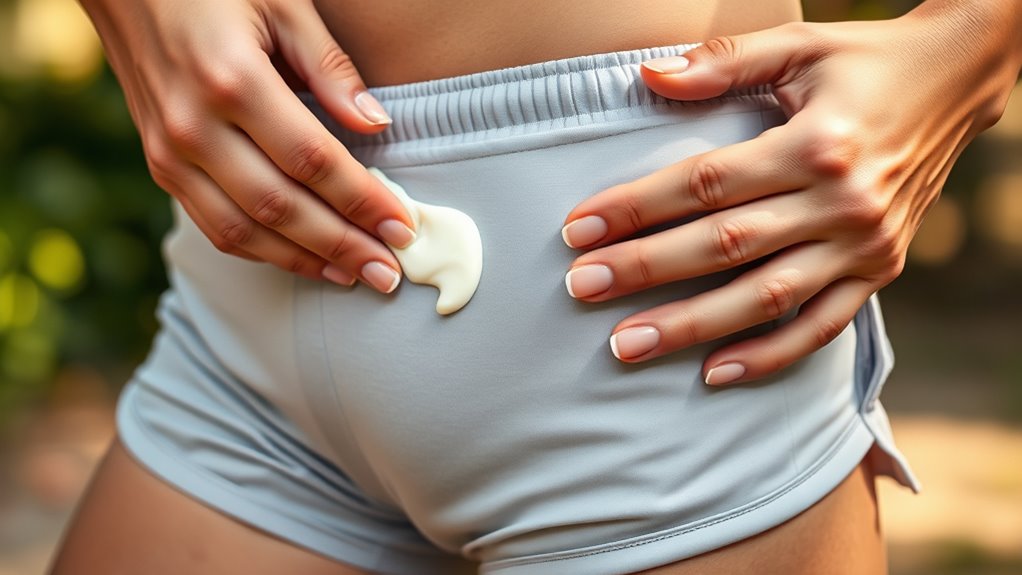

To prevent chafing, wear loose, moisture-wicking clothing that fits snugly but not tight, especially in areas prone to irritation like thighs and underarms. Apply lubricants such as petroleum jelly or anti-chafe balms before activity, and keep your skin dry and clean. Use powders to absorb moisture and choose seamless or flat-seam garments to reduce friction. If you want to learn more about effective techniques and products, there’s plenty of useful information to help keep your skin comfortable.

Get workout gear delivered free with Prime
- Fast, free delivery on millions of items
- Prime Video, Amazon Music and more included
- Member-only deals all year
Key Takeaways
- Wear moisture-wicking, loose-fitting, and seamless clothing to reduce skin friction and moisture buildup.
- Apply lubricants like petroleum jelly or anti-chafe balms before activity, reapplying as needed.
- Keep skin clean, dry, and inspect regularly to address early signs of irritation promptly.
- Use powders such as talcum or cornstarch to absorb excess moisture and prevent chafing.
- Choose breathable, lightweight fabrics suited for activity and environmental conditions to minimize skin irritation.
Chafing can be uncomfortable and even painful, but with the right prevention and care, you can minimize its impact. One of the most effective ways to do this is by paying attention to skin irritation and your clothing choices. Skin irritation occurs when skin rubs against itself or clothing repeatedly, causing redness, soreness, and sometimes blistering. To prevent this, you need to select clothing that reduces friction, especially in areas prone to chafing like thighs, underarms, and groin. Loose-fitting, moisture-wicking fabrics are your best allies because they minimize skin contact and help keep sweat away from your skin, decreasing the chances of irritation. Avoid cotton or rough textures that trap moisture and increase friction. Instead, opt for seamless or flat-seam garments that prevent chafing caused by seams rubbing against your skin.
Your clothing choices should also consider the activity you’re engaging in. For high-impact exercises or long walks, invest in specialized athletic wear designed for chafe prevention. These clothes are usually made from smooth, lightweight, and stretchy materials that move with your body and reduce friction. Applying a lubricant, such as petroleum jelly or anti-chafe balms, before engaging in activities can create a protective barrier on your skin, further reducing irritation. Make sure to reapply if you start sweating heavily or after breaks. When dressing for hot or humid weather, choose light-colored, breathable fabrics that allow air circulation and wick moisture away from your skin, keeping you dry and comfortable. Additionally, maintaining proper skin hygiene and ensuring your skin stays dry are vital because moisture control significantly reduces chafing risk.
Aside from clothing, be mindful of skin irritation itself. Keep your skin clean and dry, especially after sweating or showering, because damp skin increases friction and chafing risk. Consider using powders like talcum or cornstarch to absorb excess moisture and reduce skin-to-skin contact. If you notice areas starting to chafe, address them immediately by gently cleaning the area and applying an anti-chafing ointment. Wearing snug but not tight clothing helps prevent skin from rubbing excessively. Also, pay attention to areas where skin folds or overlaps, as these are common spots for irritation. Regularly inspecting your skin and adjusting your clothing or applying protective products can go a long way in preventing chafing symptoms from escalating.
As an affiliate, we earn on qualifying purchases.
Frequently Asked Questions
Can Chafing Occur in Areas Other Than Thighs and Underarms?
Yes, chafing can happen in other body parts like your groin, nipples, or behind your knees. It often occurs in areas where skin rubs against skin or clothing choices cause friction. To prevent this, choose moisture-wicking clothes, wear snug but comfortable fitting garments, and stay dry. Being mindful of these body parts and your clothing choices helps reduce chafing risks and keeps you comfortable during activity.
Are There Specific Fabrics That Help Prevent Chafing?
You’ll find that moisture-wicking fabrics and seamless clothing can be your allies in preventing chafing. These fabrics draw sweat away from your skin, reducing friction, while seamless designs eliminate irritating seams. Look for materials like polyester, nylon, or specialized technical fabrics, as they help keep you dry and comfortable during activity. Wearing the right gear makes a noticeable difference, helping you stay chafe-free and confident throughout your day.
How Long Does It Take for Chafing to Heal Completely?
Chafing healing time varies depending on severity, but typically, it takes about 3 to 7 days for complete recovery. With proper chafing treatment duration, including keeping the area clean, dry, and applying soothing ointments, you can speed up healing. If the chafing is severe, it may take longer. You should monitor your skin and avoid friction until it fully heals to prevent further irritation.
Can Diet or Hydration Affect Chafing Risk?
Yes, your hydration levels and diet can influence your chafing risk. Staying well-hydrated helps keep your skin supple and reduces friction, lowering chafing chances. Eating healthy fats from sources like nuts and fish supports skin health and repair. Conversely, dehydration and poor diet can weaken your skin, making it more prone to chafing. So, drinking plenty of water and maintaining a balanced diet are key to prevention.
Are There Natural Remedies to Soothe Chafed Skin?
Yes, natural remedies can soothe chafed skin. While discomfort lingers like a harsh reminder, herbal remedies and soothing oils offer relief. You can apply aloe vera gel, known for its cooling properties, or coconut oil, which moisturizes and reduces inflammation. These natural options help heal irritated skin, providing comfort without harsh chemicals. Embrace these gentle solutions, and your skin can recover more quickly, restoring your comfort and confidence.
Conclusion
To keep chafing at bay, stay dry, wear proper gear, and listen to your body’s signals. Remember, even the bravest knights faced discomfort, but they knew how to tend to their wounds. With a little care and prevention, you can avoid unnecessary pain and continue your journey. So, don’t wait for an ailment to strike—be proactive. After all, no one wants to be caught in the rain without their trusty shield, especially when it’s your own skin.
Halloween Picks
halloween
As an affiliate, we earn on qualifying purchases.