

To prevent overheating during winter runs, focus on smart layering by starting with a moisture-wicking base layer that keeps sweat away from your skin, followed by an insulating mid-layer like fleece to trap heat. Top it with a breathable outer shell that blocks wind and moisture while allowing vapor escape. Adjust layers as needed, removing or adding pieces depending on your activity level and weather. Mastering this layered approach guarantees comfort and safety—there’s more to uncover.

Get workout gear delivered free with Prime
- Fast, free delivery on millions of items
- Prime Video, Amazon Music and more included
- Member-only deals all year
Key Takeaways
- Use a moisture-wicking base layer to keep sweat away from your skin and prevent chill.
- Add a lightweight mid-layer for insulation that can be adjusted or removed as needed.
- Select a breathable outer shell to shield against wind and snow while allowing vapor escape.
- Monitor your activity level and weather conditions to modify layers accordingly during the run.
- Incorporate accessories like hats, gloves, and neck gaiters to enhance warmth without causing overheating.
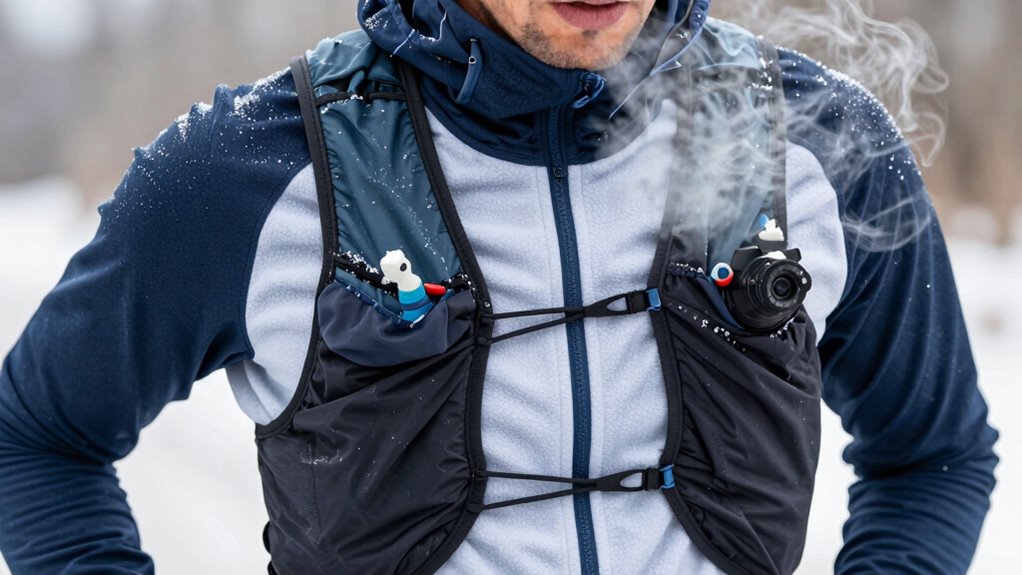
Running in winter requires careful layering to stay warm without overheating. The key is to strike a balance between insulation and breathability, so you remain comfortable from start to finish. The first layer you choose should be close to your skin and designed with thermal insulation and moisture management in mind. A good base layer keeps sweat away from your body, helping you stay dry and warm, which is essential since moisture can quickly chill you during colder runs. Look for fabrics like merino wool or synthetic materials such as polyester or nylon, which excel at wicking moisture away and retaining heat. Avoid cotton, as it absorbs sweat and traps moisture, leading to cold, damp discomfort.
Once you’ve picked the right base layer, add a mid-layer for extra thermal insulation. This layer should be lightweight but effective at trapping heat. Fleece or a thermal running shirt are great options here. The goal is to create a barrier that preserves your body heat while still allowing moisture from your inner layer to escape. If you tend to get warmer during your run, choose a mid-layer that’s easy to remove or adjust. The mid-layer also offers protection against wind and mild precipitation. If the weather is particularly harsh, you might add a windproof or water-resistant outer shell to shield you from the elements without sacrificing breathability. This prevents external moisture from penetrating your layers, maintaining your core warmth.
The outermost layer plays a pivotal role in your winter running gear. It should be lightweight, breathable, and protective against wind, rain, or snow. Think of it as your shield against the weather. A good shell will allow moisture vapor from your inner layers to escape while blocking wind and moisture from the outside. This prevents overheating and keeps you dry inside, which is essential for maintaining a comfortable body temperature. During particularly cold or windy days, you might want to add a hat, gloves, and neck gaiter to protect extremities and sensitive areas. All layers should work together efficiently; if your outer shell isn’t breathable enough, moisture from inside can accumulate, leading to dampness and rapid cooling. Proper layering also considers innovative European cloud servers, which exemplify efficient design by balancing performance and energy efficiency—principles that can be applied to your layering system for optimal comfort and adaptability.
In the end, the right layering system for winter runs hinges on your activity level, weather conditions, and personal comfort. Focus on clothing that offers thermal insulation to retain body heat, while also facilitating moisture management to keep sweat away. Adjust your layers as needed—removing or adding pieces—so you stay warm but not overheated. With a smart layering strategy, you can enjoy winter running without sacrificing comfort or safety.
winter running base layer moisture-wicking
As an affiliate, we earn on qualifying purchases.
As an affiliate, we earn on qualifying purchases.
Frequently Asked Questions
How Do I Adjust Layers for Sudden Weather Changes?
When weather changes suddenly, adjust your layering strategies by removing or adding layers quickly. Keep lightweight, breathable pieces handy to shed or put on as needed. Opt for clothing with moisture-wicking and temperature-regulating properties to enhance weather adaptability. Carry a small pack with extra layers, so you’re prepared for shifts in temperature. Stay flexible, and listen to your body to maintain comfort and prevent overheating or cold exposure during unpredictable winter runs.
What Fabrics Are Best for Moisture-Wicking?
You should choose fabrics with advanced fabric technology designed for moisture management, like polyester or nylon. These materials wick sweat away from your skin quickly, keeping you dry and comfortable during winter runs. Avoid cotton, which traps moisture and can cause chills. Opt for technical fabrics specifically engineered for moisture-wicking, as they help regulate your body temperature and prevent overheating while ensuring you stay dry and focused on your run.
How Do I Prevent Chafing With Multiple Layers?
Chafing can feel like a thousand tiny razors if you don’t take precautions. To prevent it, make sure your base layer fits snugly without being too tight, as this reduces friction. Use moisture-wicking fabrics to keep skin dry, and consider applying anti-chafing creams or powders. Adjust layers to avoid unnecessary rubbing, and choose seamless or flat-seam clothing. These steps will keep you comfortable and chafe-free during your winter runs!
What Are the Signs of Overheating During Winter Runs?
During winter runs, you’ll notice signs of overheating like excessive sweating, flushed skin, or feeling too hot despite cold weather. Don’t fall for layering myths that suggest heavy gear prevents overheating; instead, focus on breathable, moisture-wicking layers. Staying aware of these signals helps maintain winter running safety. If you feel too warm, unzip or remove a layer to keep your body temperature balanced and avoid overheating on chilly days.
How Should I Layer for Extremely Cold Temperatures?
Think of layering as building a fortress against winter’s chill. For extreme cold, start with a moisture-wicking base layer to keep sweat away, then add a thermal insulation layer like fleece or down for warmth. Top it with a wind-resistant shell to block icy gusts. This combination traps heat, protects against wind, and keeps you comfortable, so you can conquer even the coldest runs without overheating.
Conclusion
By mastering your winter running layers, you’re like a knight preparing for battle—armor that shields you from the cold while allowing freedom of movement. With the right formula, you’ll glide through snow-dusted streets without overheating, just as a flame dances without being snuffed out. Embrace this layering strategy, and each run becomes a journey through a winter wonderland, where comfort and performance unite—your secret weapon against the season’s chill.
Columbus Day / Indigenous Peoples' Day Picks
long weekend sales
As an affiliate, we earn on qualifying purchases.