
For runners who want built-in GPS and training guidance, I’d start with the Garmin Forerunner 570; the Forerunner 165 is a simpler running watch, while WHOOP 5.0 puts recovery and continuous monitoring first. These options suit different priorities: detailed run data, a straightforward training companion, or a screenless view of activity and recovery. The wider lineup also includes basic trackers and a smart ring, but many lack the GPS-focused tools serious runners may want. Battery life, comfort, workout guidance, and the need to carry a phone are key tradeoffs. Read on for the full comparison and a guide to choosing the right fit for your running routine.

Get workout gear delivered free with Prime
- Fast, free delivery on millions of items
- Prime Video, Amazon Music and more included
- Member-only deals all year
Complete the kit

Key Takeaways
- GPS running features separate the Forerunners from most of the lineup. Garmin’s dedicated watches are the clearest fit for recording outdoor runs and using running-focused tools.
- The Forerunner 570 and 970 occupy different training tiers. The 570 is the balanced running-watch pick; the 970 is positioned for runners and triathletes seeking a more advanced multisport option.
- The Forerunner 55 and 165 serve different levels of complexity. The 55 keeps the focus on core run tracking and suggested workouts, while the 165 adds a more modern watch experience.
- WHOOP and the screenless FITVII prioritize wearing the tracker beyond workouts. That approach can suit people focused on daily activity or recovery, but it gives up the at-a-glance run screen of a GPS watch.
- Several generic fitness bands, including the rings, are less clearly tailored to running. Their health and activity features may be useful, but buyers should check GPS, run metrics, and phone dependence before choosing one for training.




| runner fitness trackers and wearable | Battery life | Display | Compatibility |
|---|---|---|---|
| WHOOP 5.0/MG Activity Tracker | 14+ days | — | Apple Health, Google Health Connect, Strava, TrainingPeaks |
| Garmin Forerunner 570 42 mm GP | — | AMOLED touchscreen with button controls | — |
| Garmin Forerunner 970 GPS Runn | Up to 15 days smartwatch mode; up to 26 hours GPS mode | AMOLED touchscreen with button controls | — |
| Garmin Forerunner 70 Running S | Up to 13 days smartwatch mode; up to 23 hours GPS mode | AMOLED touchscreen with button controls | — |
| Garmin Forerunner 165 GPS Runn | — | AMOLED touchscreen | — |
| Fitness Tracker with Heart Rat | Up to 7 days | 1.10-inch AMOLED | Android 5.0+ and iOS 9.0+ |
| MorePro Fitness Tracker with H | Up to 7 days normal use; up to 15 days standby | — | Android 7.0+ and iOS 13.0+ |
| WHOOP 5.0/MG Activity Tracker | 14+ days | — | — |
| Garmin Forerunner 55 GPS Runni | — | — | — |
| FITVII Screenless Fitness Trac | 3–5 days typical; 1–3 days with sports modes | — | Android 7 and iOS 13.0 or later |
| Garmin Forerunner 570 | Up to 10 days smartwatch mode; up to 18 hours GPS mode | AMOLED touchscreen with button controls | — |
| Fitness Tracker with Heart Rat | 10–14 days regular use; up to 30 days standby | 1.10-inch AMOLED touchscreen | iPhone and Android |
| EnergyPort Fitness Tracker wit | 20–30 days regular use; 45–60 days standby | — | Android and iOS |
| FITVII Slim Fitness Tracker AM | 7–10 days | 1.6-inch AMOLED HD | Android 7.0 and iOS 13.0 or later; Bluetooth 4.0 |
| Smart Health Ring Fitness Trac | 3–5 days; up to 20 days with charging case | No display | iOS and Android; older-device support is not specified |
More Details on Our Top Picks
WHOOP 5.0/MG Activity Tracker with 12-Month Membership and 14+ Days Battery Life
For runners who want to understand how training load, sleep, and recovery fit together, the WHOOP 5.0 makes continuous monitoring its main draw. It tracks heart rate, strain, recovery, and VO2 max, then uses personalized coaching to turn those signals into guidance; its 14+ day battery life also reduces charging interruptions during a training block. Compared with the Garmin Forerunner 165, WHOOP puts less emphasis on run-day tools such as a display and built-in GPS, so it suits runners who already track routes elsewhere and want more attention on recovery. The screenless design means no quick glance at pace or workout data, and ongoing access depends on a membership after the included 12 months. Runners who prefer a self-contained GPS watch should choose a Forerunner instead.
Pros:- Tracks recovery, strain, sleep, heart rate, and VO2 max
- Personalized coaching interprets health and training data
- More than 14 days of stated battery life
- Waterproof design supports continuous wear
Cons:- No screen for checking pace or metrics during a run
- Membership is required for ongoing access
- Less suited than GPS running watches to route tracking from the wrist
Best for: Runners who already record routes on another device and want continuous recovery, sleep, and training strain insights.
Not ideal for: Runners who want to see pace and workout data on their wrist or avoid subscription-based coaching.
- Battery life:14+ days
- Membership:12 months included
- Waterproof:Yes
- Compatibility:Apple Health, Google Health Connect, Strava, TrainingPeaks
- Included:WHOOP 5.0 device, SuperKnit band, Wireless PowerPack
- Health tracking:Sleep, heart rate, recovery, strain, VO2 max, menstrual cycle
Our verdict“Choose WHOOP 5.0 if recovery guidance matters more to you than seeing live running data on your wrist.”
Garmin Forerunner 570 42 mm GPS Running Smartwatch, Black Aluminum
The Garmin Forerunner 570 42 mm gives runners a bright AMOLED screen, button controls, and multi-band GPS in a smaller case than the 47 mm Forerunner 970. That size difference makes this version a better fit for runners who want training plans, recovery insights, and accurate positioning without as much watch presence on the wrist. It also supports calls when paired with a smartphone, extending its use beyond workouts. Compared with the Forerunner 165, the 570 adds multi-band GPS and a microphone and speaker, while the 165 offers a simpler running-focused feature set. The tradeoff is that the 570’s GPS battery life is up to 18 hours, and its call feature depends on carrying a paired phone. Runners who want maps, a sapphire lens, and more advanced running dynamics may find the larger Forerunner 970 a better match.
Pros:- 42 mm case offers a smaller fit than the Forerunner 970
- Multi-band GPS supports accurate positioning
- AMOLED touchscreen combines with button controls
- Training plans and recovery insights support structured running
Cons:- GPS mode battery life is up to 18 hours
- Calls require a paired smartphone
- Safety and tracking features need setup and smartphone network coverage
Best for: Runners who want a compact GPS watch with a vivid display, multi-band positioning, and structured training guidance.
Not ideal for: Runners who need built-in maps and advanced running dynamics or expect phone calls without carrying a smartphone.
- Case size:42 mm
- Bezel:Aluminum
- Display:AMOLED touchscreen with button controls
- Smartwatch battery life:Up to 10 days
- GPS battery life:Up to 18 hours
- GPS:Multi-band
- Activity profiles:30+
- Connectivity:Built-in microphone and speaker; calls require a paired smartphone
Our verdict“Pick the Forerunner 570 42 mm for a compact training watch with multi-band GPS, and consider the 970 if you need maps and deeper running metrics.”
Garmin Forerunner 970 GPS Running and Triathlon Smartwatch, 47 mm, Carbon Gray DLC Titanium, Black/Whitestone
For runners who train across disciplines or want detailed feedback on running form, the Forerunner 970 is the most capable watch in this group. It pairs multi-band GPS with built-in maps, Garmin Coach plans, training readiness, and running metrics such as running economy and running tolerance. Its sapphire lens, titanium bezel, and LED flashlight add durability and practical visibility on early or late sessions. Compared with the smaller Forerunner 570, the 970 adds navigation, multisport auto-transition, and more advanced running data, but its 47 mm case takes up more wrist space. Battery life reaches up to 15 days in smartwatch mode and 26 hours in GPS mode. Some data has limits: step speed loss requires a separately sold HRM 600, and calls require a paired smartphone.
Pros:- Multi-band GPS and built-in maps support route navigation
- Advanced running metrics include running economy and tolerance
- Sapphire lens and titanium bezel pair durability with a lightweight build
- Built-in LED flashlight and multisport auto-transition add training utility
Cons:- 47 mm case may feel large compared with the Forerunner 570 42 mm
- Step speed loss requires a separately sold HRM 600 monitor
- Phone calls require pairing with a smartphone
Best for: Triathletes and data-focused runners who want maps, advanced running dynamics, and multisport support on one watch.
Not ideal for: Runners who prefer a smaller, simpler watch or want every running metric without buying an additional heart rate monitor.
- Case size:47 mm
- Bezel:Carbon Gray DLC titanium
- Lens:Sapphire
- Display:AMOLED touchscreen with button controls
- Battery life:Up to 15 days smartwatch mode; up to 26 hours GPS mode
- GPS and navigation:Multi-band GPS with built-in maps
- Running features:Running economy, step speed loss, running tolerance, wrist-based running dynamics and power
- Other features:Built-in LED flashlight, Garmin Coach plans, training readiness, ECG app, multisport auto-transition
Our verdict“Choose the Forerunner 970 if you want premium navigation and advanced running or triathlon data and are comfortable with its larger case.”
Garmin Forerunner 70 Running Smartwatch, 43 mm, Tidal Blue
The Forerunner 70 fits runners who also want one watch for a wide range of other activities: its 80+ activity profiles outnumber the 25+ on the Forerunner 165. Built-in GPS, wrist-based heart rate, and training and recovery insights cover the essentials for running without relying on a phone to record pace and distance. Its battery lasts up to 13 days in smartwatch mode or 23 hours in GPS mode, giving it an advantage over the Forerunner 570 on stated GPS endurance. The AMOLED screen and button controls offer both touch and physical input. The product data does not list the 70’s display size or advanced GPS features, so runners seeking multi-band positioning or detailed running dynamics may prefer the 570 or 970. Safety and live location sharing require a paired phone, setup, and network coverage.
Pros:- Built-in GPS records running pace and distance
- More than 80 activity profiles cover a broad mix of sports
- Up to 23 hours of GPS battery life
- Training plans and recovery insights support workout planning
Cons:- Live location and safety features require a paired smartphone and network coverage
- Health and fitness metrics are estimates
- Product data does not specify multi-band GPS or built-in maps
Best for: Runners who switch between running and many other sports and want built-in GPS with long stated battery life.
Not ideal for: Runners who prioritize multi-band GPS, built-in maps, or advanced running form metrics.
- Case size:43 mm
- Display:AMOLED touchscreen with button controls
- GPS:Built-in
- Heart rate monitoring:Wrist-based
- Battery life:Up to 13 days smartwatch mode; up to 23 hours GPS mode
- Activity profiles:80+
- Color:Tidal Blue
- Safety features:Live location sharing with chosen contacts when paired with a smartphone; setup and network coverage required
Our verdict“Choose the Forerunner 70 if you want a running watch that also covers a wide range of other sports, and choose the 970 for maps and advanced running metrics.”
Garmin Forerunner 165 GPS Running Smartwatch, 43 mm, Black
The Forerunner 165 covers the core needs of a runner with built-in GPS, wrist-based heart rate, AMOLED display, and training and recovery insights. Its 43 mm case and up to 11 days of smartwatch battery life make it a practical everyday option for runners who want workout data on their wrist without moving to a more advanced model. Compared with the Forerunner 570, it has fewer listed activity profiles and lacks the 570’s multi-band GPS and call hardware; in return, its focus stays on accessible running and everyday tracking. The 165 includes Garmin Pay and more than 25 activity profiles. GPS use shortens battery life to up to 19 hours, and safety features depend on a compatible phone and network coverage. Runners seeking maps or advanced form metrics should look at the 970.
Pros:- Built-in GPS and wrist-based heart rate cover core run tracking
- AMOLED display with button controls
- Up to 11 days of smartwatch battery life
- Garmin Pay and 25+ activity profiles add everyday versatility
Cons:- Battery life drops to up to 19 hours in GPS mode
- Safety features require a compatible smartphone and network coverage
- Lacks the Forerunner 970’s maps and advanced running metrics
Best for: Runners who want built-in GPS, training guidance, and everyday smartwatch features in a straightforward 43 mm watch.
Not ideal for: Runners who need built-in maps, multi-band GPS, advanced running dynamics, or phone-independent safety features.
- Case size:43 mm
- Display:AMOLED touchscreen
- GPS battery life:Up to 19 hours
- Smartwatch battery life:Up to 11 days
- Activity profiles:25+
- Heart rate:Wrist-based
- Payments:Garmin Pay
- Color:Black
Our verdict“Choose the Forerunner 165 for core GPS running and training guidance, and move up to the 570 or 970 if you need more advanced positioning or data.”
Fitness Tracker with Heart Rate, Blood Pressure, Sleep Monitoring, 1.10″ AMOLED Screen, Waterproof, Smart Watch for Women and Men
The 1.10-inch AMOLED screen makes this a practical choice for runners who want to check notifications and activity at a glance without stepping up to a dedicated GPS running watch. Its 25 sports modes and all-day activity tracking cover basic workout logging, while IP68 water resistance suits everyday wear. Compared with the Garmin Forerunner 55, it offers a bright touchscreen and smart notifications, but the supplied details do not list built-in GPS or running-specific training guidance. The up-to-7-day battery life is convenient, though frequent tracking can shorten it. Health readings are for reference, and more detailed metrics depend on app integration, so this fits casual runners who value an accessible display over in-depth training analysis.
Pros:- AMOLED touchscreen makes activity and notifications easy to check
- 25 sports modes support a range of workouts
- IP68 water resistance suits everyday use
- Up to 7 days of battery life with 2-hour charging
Cons:- Product details do not specify built-in GPS or running-focused training tools
- More detailed metrics depend on app integration
- Health readings are for reference and battery life varies with use
Best for: Casual runners who want a readable AMOLED screen, basic sports tracking, and phone notifications in one everyday wearable.
Not ideal for: Runners who need built-in GPS, pace and distance tracking, or structured training guidance without relying on a phone.
- Display:1.10-inch AMOLED
- Water resistance:IP68
- Battery life:Up to 7 days
- Charging time:2 hours
- Sports modes:25
- Compatibility:Android 5.0+ and iOS 9.0+
Our verdict“Choose this for casual running and everyday tracking with a bright screen; pick the Garmin Forerunner 55 for GPS-based run data and training guidance.”
MorePro Fitness Tracker with Heart Rate, Blood Pressure, Blood Oxygen, Sleep Monitoring, and Women’s Health Features
With 120+ sport modes, the MorePro suits runners who mix road sessions with other activities and want one tracker for a varied routine. It also records heart rate around the clock, on-demand blood oxygen, sleep stages, and menstrual cycle information. That health focus gives it a wider activity menu than the Garmin Forerunner 55, but the Garmin’s listed GPS and suggested workouts make it the clearer choice for runners who prioritize route, pace, and training guidance. MorePro’s IP68 water resistance and up-to-7-day normal-use battery support regular wear, while full functionality requires a smartphone. Its blood pressure and other health readings are not a basis for diagnosis, and the provided details do not specify built-in GPS, which limits its appeal for data-led run training.
Pros:- More than 120 sport modes cover varied workout routines
- 24/7 heart rate and sleep-stage monitoring
- Includes menstrual cycle tracking and reminders
- Up to 7 days of battery life in normal use
Cons:- Product details do not specify built-in GPS or running-specific guidance
- Full functionality requires a compatible smartphone
- Health readings are not intended for medical diagnosis or treatment
Best for: Runners who cross-train across many activities and want sleep, cycle, and general wellness tracking alongside workouts.
Not ideal for: Runners who want built-in GPS, clear running-specific training plans, or a tracker that works fully without a smartphone.
- Heart rate monitoring:24/7
- Blood oxygen monitoring:On-demand
- Sleep tracking:Deep sleep, light sleep, and wake-ups
- Sport modes:120+
- Battery life:Up to 7 days normal use; up to 15 days standby
- Water resistance:IP68
- Compatibility:Android 7.0+ and iOS 13.0+
Our verdict“Pick MorePro for broad activity and wellness tracking; choose the Garmin Forerunner 55 if GPS run data and suggested workouts matter more.”
WHOOP 5.0/MG Activity Tracker with 12-Month Membership
The screenless WHOOP 5.0/MG is built around continuous wear and personalized feedback on sleep, strain, and recovery, making it a distinct choice for runners who want to track how training and rest fit together. Its 14+ day battery life reduces charging interruptions, and the included 12-month membership provides access to its coaching and health insights. Compared with the Garmin Forerunner 55, WHOOP puts more emphasis on recovery and less on the immediate run: the Garmin lists GPS, pace, distance, and suggested workouts, while WHOOP has no screen or notifications. That means checking data requires a phone, and the membership is part of the ownership commitment. It suits runners focused on long-term training habits, but is less fitting for those who want live run metrics on their wrist.
Pros:- 14+ day battery life supports continuous wear
- Personalized sleep, strain, and recovery insights
- Waterproof design for all-day use
- Includes a 12-month membership and wireless PowerPack
Cons:- Screenless design means no immediate on-wrist data or notifications
- Full features require a membership
- Product details do not list GPS or live running metrics
Best for: Consistent runners who want continuous sleep, strain, and recovery insights and are comfortable reviewing results in an app.
Not ideal for: Runners who want an on-wrist display, notifications, live pace data, or to avoid a membership for full features.
- Device type:Screenless activity tracker
- Battery life:14+ days
- Membership included:12 months
- Waterproof:Yes
- Included band:SuperKnit Luxe band
- Included charger:Wireless PowerPack
Our verdict“Choose WHOOP for recovery-led training insights and long wear time; choose the Garmin Forerunner 55 for GPS and at-a-glance run data.”
Garmin Forerunner 55 GPS Running Watch with Daily Suggested Workouts, Up to 2 Weeks Battery Life, Black
The Garmin Forerunner 55 is the strongest running-first pick here because its GPS tracks distance and pace while daily suggested workouts give runners a practical next step. Its heart-rate monitoring and wellness features add context to training, and up to 20 hours in GPS mode supports extended sessions without sacrificing the watch’s up-to-two-week smartwatch battery life. Compared with the screenless WHOOP 5.0/MG, the Garmin is better suited to checking run data as it happens; WHOOP instead focuses on recovery and requires membership for full features. The Forerunner 55 is more approachable than a feature-heavy multisport watch, but some functions depend on a compatible smartphone and app downloads. Its heart-rate monitor is not a medical device, and buyers seeking advanced training analysis may want a higher-tier Forerunner.
Pros:- GPS tracks running pace and distance
- Daily suggested workouts offer accessible training direction
- Up to 20 hours of battery in GPS mode
- Up to 2 weeks in smartwatch mode
Cons:- Some features require a compatible smartphone and app downloads
- Heart-rate monitoring is not a medical measurement
- Less suited to buyers seeking advanced training analysis
Best for: New and recreational runners who want reliable GPS pace and distance tracking plus straightforward workout suggestions.
Not ideal for: Runners seeking advanced training analytics or medical-grade health measurements, or those who do not want smartphone-dependent features.
- GPS battery life:Up to 20 hours
- Smartwatch battery life:Up to 2 weeks
- Features:GPS, heart-rate monitor, Bluetooth, activity profiles, wellness tracking, customizable watch faces
- Compatible apps:Garmin Connect and Connect IQ Store
- Color:Black
Our verdict“Choose the Forerunner 55 if you want GPS run tracking and simple workout guidance in a running-focused watch.”
FITVII Screenless Fitness Tracker for Women and Men
The FITVII is for runners who want background wellness tracking without a screen competing for attention. Its slim, IP68-rated design tracks heart rate, sleep, steps, calories, and distance, while the supplied details say core features have no subscription fees. The adjustable S and L straps add fit flexibility. Unlike the WHOOP 5.0/MG, FITVII does not require a membership for core tracking, but it also lacks WHOOP’s listed recovery coaching and longer 14+ day battery life. FITVII’s typical 3–5-day battery drops to 1–3 days with sports modes, so frequent workouts mean more charging. Its screenless format also makes run stats less accessible in the moment, and the provided product details do not specify built-in GPS. It works best as a low-distraction wellness companion, not a primary GPS running watch.
Pros:- Slim, screenless design supports low-distraction wear
- Core features have no subscription fee
- IP68 waterproof rating suits workouts and daily use
- Includes adjustable S and L straps
Cons:- No display for checking workout information at a glance
- Battery lasts 1–3 days with sports modes
- Product details do not specify built-in GPS
Best for: Runners who prefer a discreet, screenless band for everyday wellness tracking and want core features without a subscription.
Not ideal for: Runners who need live on-wrist run data, long battery life during frequent sports tracking, or clearly specified built-in GPS.
- Design:Ultra-slim and screenless
- Water resistance:IP68
- Battery life:3–5 days typical; 1–3 days with sports modes
- Compatibility:Android 7 and iOS 13.0 or later
- Bluetooth:5.0
- Bands included:S and L adjustable straps
- Strap fit range:6.22 to 9.45 inches
Our verdict“Choose FITVII for discreet, subscription-free wellness tracking; runners who want recovery coaching and longer battery life can compare it with WHOOP 5.0/MG.”
Garmin Forerunner 570, 42 mm, Aluminum, Whitestone/Cloud Blue
The Forerunner 570 is the strongest fit here for runners who want training structure alongside everyday smartwatch features. Its personalized guidance and recovery insights give it a clearer running focus than the general-purpose trackers in this batch, while the 42 mm case offers a smaller option than the 47 mm Forerunner 970. The AMOLED touchscreen is easy to read, and button controls give runners another way to operate it during a workout. Battery life reaches 18 hours in GPS mode, which covers many training plans but leaves less room for long outings than its 10-day smartwatch figure might suggest. Calls, voice assistance, and incident features depend on a compatible phone, so this is not a phone-free safety setup.
Pros:- Personalized training guidance and recovery insights support structured running.
- AMOLED touchscreen combines with button controls for flexible operation.
- 42 mm case is smaller than the Forerunner 970’s 47 mm case.
- More than 30 activity profiles cover training beyond running.
Cons:- GPS battery life is up to 18 hours, limiting headroom for extended outings.
- Calls, voice assistant access, and safety features require a compatible smartphone.
Best for: Runners who want guided training and recovery insights in a smaller Garmin watch with a bright display.
Not ideal for: Ultrarunners who need longer GPS endurance, or runners who expect calls and safety features to work without a compatible smartphone.
- Display:AMOLED touchscreen with button controls
- Case size:42 mm
- Bezel:Aluminum
- Color:Whitestone/Cloud Blue
- Battery life:Up to 10 days smartwatch mode; up to 18 hours GPS mode
- Activity profiles:More than 30
- Connectivity:Calls and voice assistant access when paired with a compatible smartphone
- Safety:Incident detection and live location sharing when paired with a compatible smartphone
Our verdict“Choose the Forerunner 570 if you want guided running and recovery features in a compact Garmin; choose a longer-lasting tracker for extended GPS sessions.”
Fitness Tracker with Heart Rate Monitor, Sleep Tracking, and AMOLED Touch Screen
This tracker makes more sense for people who want a compact daily health companion than for runners who need route tracking. Its 1.10-inch AMOLED screen and monitoring for heart rate, sleep, blood oxygen, and body temperature cover common wellness interests, while the listed 5 ATM rating and 10–14 days of regular-use battery life suit routine wear. The key running limitation is that the product data does not mention built-in GPS, so it cannot match the Garmin Forerunner 570’s running-focused training features for recording location-based sessions on the watch. Detailed analysis also depends on its app, and the small display may feel cramped for checking workout information mid-run. It is a simpler, wellness-led alternative to a dedicated GPS running watch.
Pros:- Tracks heart rate, sleep, blood oxygen, and body temperature.
- Listed 5 ATM water resistance suits swimming and everyday use.
- Regular-use battery life is listed at 10–14 days.
- Works with iPhone and Android and includes smart notifications.
Cons:- Built-in GPS is not listed, limiting its fit for route-based running.
- The 1.10-inch display may be small for checking information during workouts.
- Detailed data analysis requires the companion app.
Best for: Casual runners and daily wearers who prioritize sleep and general health monitoring over on-watch GPS run tracking.
Not ideal for: Runners who want built-in GPS, detailed running guidance, or a larger screen for viewing workout data.
- Display:1.10-inch AMOLED touchscreen
- Water resistance:5 ATM
- Battery life:10–14 days regular use; up to 30 days standby
- Compatibility:iPhone and Android
- Strap size:Adjustable from 5.0 to 9.45 inches
- Charging:Magnetic fast charging
- Monitoring:Heart rate, sleep, body temperature, blood oxygen, and blood pressure
- Activity tracking:Steps, calories, and sleep quality
Our verdict“Pick this tracker for everyday wellness monitoring and casual activity, but choose the Forerunner 570 for GPS-focused running and training guidance.”
EnergyPort Fitness Tracker with Blood Oxygen and 170+ Sport Modes, 60-Day Battery, Lifetime Membership, Activity & Sleep Monitoring
The EnergyPort’s main advantage is how rarely it needs charging: it lists 20–30 days of regular-use battery and up to 45–60 days on standby. That makes it appealing for runners who want continuous wear for everyday activity and sleep tracking, while the 25 g weight should be unobtrusive across the day. Its 170+ sport modes sound broad, but the supplied details do not establish built-in GPS or running-specific coaching. That leaves it less suited to structured run tracking than the Garmin Forerunner 570, whose training guidance and GPS battery figure are specified. The 1 ATM water rating is also limited compared with the 5 ATM tracker in this lineup. Treat the health readings as reference information, as the product itself says they are not medical readings.
Pros:- Lists 20–30 days of regular-use battery life.
- Lightweight 25 g design is suited to all-day wear.
- More than 170 workout modes offer broad activity selection.
- Compatible with Android and iOS.
Cons:- Built-in GPS and running-specific coaching are not specified.
- 1 ATM water resistance is limited compared with the 5 ATM everyday tracker in this batch.
- Health readings are for reference and are not medical measurements.
Best for: Runners who value lightweight all-day wear, basic activity and sleep monitoring, and infrequent charging more than GPS or coaching.
Not ideal for: Runners who need built-in GPS, detailed run analysis, medical-grade readings, or strong water resistance for swimming.
- Workout modes:More than 170
- Battery life:20–30 days regular use; 45–60 days standby
- Water resistance:1 ATM (10 m)
- Weight:25 g
- Materials:Skin-friendly material, nylon, and silicone
- Compatibility:Android and iOS
- Warranty:3 years
- Other features:Health monitoring, sleep monitoring, customizable alerts, and interchangeable bands
Our verdict“Choose EnergyPort if low charging frequency and light wear matter most; choose the Forerunner 570 for a more clearly specified GPS running experience.”
FITVII Slim Fitness Tracker AMOLED with Blood Oxygen, Blood Pressure, Heart Rate, Sleep Tracking, Waterproof, Step Counter for Women and Men
The FITVII Slim is the display-forward choice among the general wellness bands here, with a 1.6-inch AMOLED HD screen that gives notifications and tracked information more room than the 1.10-inch tracker in this lineup. It also covers heart rate, sleep, blood oxygen, and blood pressure monitoring, with battery life listed at up to 10 days. For running, however, the supplied details mention multiple sport modes but do not specify built-in GPS or dedicated running guidance. That makes it a better fit for fitness tracking and phone-connected routines than for runners choosing a watch around route recording. By comparison, the Garmin Forerunner 570 clearly lists GPS-mode endurance and personalized training guidance. Smartphone connection is needed for some functions, and health measurements are not intended for diagnosis.
Pros:- 1.6-inch AMOLED HD display is larger than the 1.10-inch tracker in this lineup.
- Tracks heart rate, sleep, blood oxygen, and blood pressure.
- Battery life is listed at up to 10 days.
- IP68 rating and smart notifications support everyday use.
Cons:- Built-in GPS and dedicated running guidance are not specified.
- Some features require a smartphone connection.
- Health monitoring is not intended for medical diagnosis.
Best for: Runners who want a larger, easy-to-read screen for general activity tracking and notifications, and are comfortable relying on a phone for some features.
Not ideal for: GPS-focused runners seeking route tracking and dedicated training guidance from the wearable itself.
- Display:1.6-inch AMOLED HD
- Heart rate monitoring:Yes
- Blood oxygen monitoring:Yes
- Blood pressure monitoring:Yes
- Sleep tracking:Yes
- Water resistance:IP68
- Battery life:7–10 days
- Compatibility:Android 7.0 and iOS 13.0 or later; Bluetooth 4.0
Our verdict“Pick the FITVII Slim for a larger screen and everyday tracking, but choose the Forerunner 570 if running GPS and training guidance are priorities.”
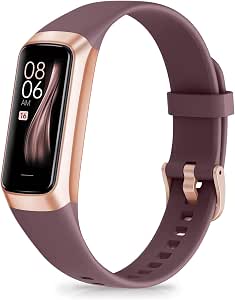
Smart Health Ring Fitness Tracker with Stress & Sleep Monitoring, Waterproof Activity Tracker, Compatible with iOS & Android, No Subscription Fee, Lightweight Wearable for Women & Men (Rose Gold, 11)
This ring suits runners who would rather leave a watch off their wrist and review activity or sleep data later. Its screen-free design is discreet, and the supplied details list water resistance to 80 meters plus 3–5 days of battery life, extendable to 20 days with the charging case. Compared with the Garmin Forerunner 570, it gives up the visible workout screen and the specified running guidance and GPS-mode endurance; GPS geotagging is listed, but the data does not clarify how it works for a run. The ring may work well as a low-profile wellness tracker, yet proper sizing matters for comfort, and buyers should not assume it offers watch-like real-time workout feedback. Compatibility with older devices is also unclear.
Pros:- Screen-free ring design is discreet for daily and sleep tracking.
- Water resistance is listed to 80 meters.
- Battery life is 3–5 days, or up to 20 days with the charging case.
- No subscription fee is required for feature access.
Cons:- No display for viewing real-time workout information.
- Proper sizing is needed for a comfortable fit.
- Running-specific GPS and training functions are not clearly described.
Best for: Runners who want discreet sleep and activity tracking without wearing a watch or paying a subscription.
Not ideal for: Runners who need live workout data on their wrist, clear run-specific features, or flexible fit sizing.
- Display:No display
- Water resistance:Up to 80 meters
- Battery life:3–5 days; up to 20 days with charging case
- Material:Silicone
- Size:Round, size 11
- Compatibility:iOS and Android; older-device support is not specified
- Tracking:Sleep, stress, heart rate, blood pressure, and daily activity
- Additional features:GPS geotagging and no subscription fee
Our verdict“Choose this ring for discreet, subscription-free wellness tracking, but select the Forerunner 570 if you want visible running data and training guidance.”

How We Picked
I ranked these for running first, giving the strongest weight to dedicated GPS, running-specific features, clear workout feedback, and practical battery life for regular training. I also considered fit and usability: a wearable should be comfortable enough for repeat runs and make the data a runner needs easy to access. Build, versatility for other activities, and the tradeoffs of a screenless design or membership model shaped the order as well.
The Garmin Forerunner models lead because their stated purpose and feature sets center on running, with the 570 as the balanced lead pick and the 970 as the more advanced multisport choice. The 55 and 165 follow as more approachable or simpler alternatives. WHOOP earns a distinct place for runners who value continuous monitoring and recovery, while general fitness trackers and the ring rank lower for this query because their listed features do not establish the same dedicated GPS running focus. I treat similarly named variants as separate listings, but their overlapping names do not by themselves imply different capabilities.
Factors to Consider When Choosing Runner Fitness Trackers And Wearables
Before choosing a wearable, decide what you need it to do during a run and what you want to learn between runs. A tracker can be useful for daily habits without being a strong training watch, so I’d match its tools to the way you actually run.
Do You Need GPS Without Your Phone?
Built-in GPS lets a watch record an outdoor route and distance without relying on a phone connection. That matters if you run without your phone or want route data in one device. Some general fitness trackers may record activity but rely on a paired phone for location, so check the exact model’s GPS setup before buying. Phone-assisted GPS can be a reasonable choice for casual routes if carrying a phone is already part of your routine. For race preparation or pace-based workouts, independent GPS is usually the more convenient starting point. Also check whether the watch supports the satellite or route features you expect, since the word “GPS” alone says little about the quality of the running experience.
Choose Run Metrics You’ll Actually Use
More metrics can help structure training, but only when they answer a question you have. A beginner may get more from dependable distance, pace, and guided workouts than from a long list of recovery scores. Runners following a plan should check that the watch supports the workout structure and run data their plan uses. Avoid choosing by the number of health sensors or sport modes alone; those counts do not show whether the running screen is clear or the training tools are useful. A watch with fewer, readable metrics can be easier to use mid-run. Start with the information you’ll act on, then treat extra analysis as a bonus.
Balance Battery Life Against Screen and GPS Use
Battery claims often describe different usage patterns, so compare expected GPS time with ordinary smartwatch use rather than relying on a single headline figure. Frequent long runs, GPS activity, notifications, and bright screens can shorten the time between charges. A screenless band may last longer in some designs, but it cannot show live pace or workout prompts in the same way as a watch display. If you run ultras or travel often, charging frequency may matter more than a colorful screen. For daily training, a predictable charging routine can be a better fit than maximizing battery life at the cost of useful run feedback. Check whether the maker states battery life separately for GPS and general use.
Prioritize Fit and Comfort for Long Runs
A wearable that shifts, pinches, or distracts you can become an annoyance on longer sessions, even if its feature list looks strong. Watch size and strap adjustment affect how securely it sits, while rings and slim bands place sensors differently and may feel less intrusive to some runners. Try to account for swelling, layering in cold weather, and whether you want to wear the same device overnight. Optical heart-rate readings can also vary with fit and motion, so a snug but comfortable placement matters. If heart-rate training is central to your plan, check compatibility with any external sensor you already use. Comfort is personal, which makes return terms and strap options worth checking before committing.
Separate Training Tools From General Health Tracking
Steps, sleep, and wellness readings can add context to a training routine, but they are not substitutes for accurate run recording. Some listings mention blood pressure or blood oxygen monitoring; those features do not establish that a device is a medical instrument or a dedicated running watch. Decide whether you want the wearable to guide workouts, track daily habits, or focus on recovery, since those goals call for different screens and software. A subscription-based service may offer ongoing analysis, so factor its continuing terms into whether the product suits you. For basic running records, paying attention to route capture, workout usability, and sync reliability can matter more than a broad health checklist. Read the exact model’s feature and compatibility details rather than assuming every device in a product family works the same way.
Frequently Asked Questions
Can a screenless tracker replace a GPS running watch?
It can suit someone who wants passive activity and recovery tracking and is comfortable checking run details later. For live pace, route feedback, or workout prompts, a screenless tracker is less convenient than a GPS watch. Some bands may depend on a phone for location, so verify how the specific model records distance. If you run structured sessions or leave your phone at home, a watch designed for running is the safer fit. Choose screenless mainly when unobtrusive daily wear matters more than in-run feedback.
Is the Forerunner 55 enough for a new runner?
The Forerunner 55 is the most straightforward running-focused entry in this group, with GPS and daily suggested workouts listed among its features. That combination can help a new runner track outdoor sessions and build a routine without starting with an advanced multisport device. The 165 offers a more modern watch experience, while the 570 and 970 are aimed at broader or more advanced needs. A beginner who mainly wants distance, pace, and basic guidance may not need to move up the range. Check current model details for the workout and display features that matter to you.
Should I choose WHOOP if I care more about recovery than pace?
WHOOP is the most recovery-oriented option in this roundup, with continuous activity and sleep monitoring emphasized in its listing. That focus may suit a runner who wants to follow patterns across the day and overnight. It is less suited to someone who wants a conventional watch screen with live running data. The listed WHOOP package includes a 12-month membership, so review the membership terms and what continues afterward before deciding. If route, pace, and running workouts are the main goal, compare it with a dedicated Forerunner first.
Are the health readings on inexpensive fitness bands enough for training decisions?
They can offer general context, but a long list of readings does not guarantee reliable run data or coaching. For training, prioritize GPS behavior, pace and distance recording, and a comfortable heart-rate fit. Treat blood pressure and blood oxygen features as supplementary unless the manufacturer clearly describes their intended use and limitations. A dedicated running watch can be a better match when workouts depend on consistent tracking. Check device compatibility and how data syncs before making a band the center of a training plan.
When does a premium running watch make sense over a simpler model?
A premium watch makes sense when its added running or multisport tools solve needs you already have, such as managing a varied training schedule or combining running with triathlon activities. If you mainly record a few weekly runs, a simpler Forerunner may cover the essentials with less complexity. Compare the exact features of the 570 and 970 against your training rather than assuming the higher tier will improve results by itself. A larger feature set can also mean more menus and settings to learn. Choose the premium model when you can name the capabilities you’ll use regularly.
What are the best best fitness trackers for running?
The best fitness trackers for running depend on what you want to monitor and how you plan to use the data. The picks above offer options to compare for everyday activity tracking, workout recording, and running-focused features. Consider which details matter most to you, such as pace, distance, heart rate, route tracking, battery life, or comfort during long runs. Also think about whether you want a simple companion for occasional jogs or a device to support a regular training routine. Comparing those priorities can help you choose among the best fitness trackers for running featured in this roundup.
Conclusion
I’d choose the Garmin Forerunner 570 as the best overall for runners who want a dedicated GPS watch with a modern, balanced feature set. The Forerunner 55 is my best value-style pick for a beginner who wants core running support and suggested workouts, while the Forerunner 970 is best for premium multisport training. For runners who put recovery and continuous monitoring ahead of a run screen, WHOOP 5.0 has the clearest role; those who prefer an unobtrusive wearable can look at the screenless FITVII. I’d choose the 165 for a simpler Garmin watch experience, and consider the generic bands or ring chiefly for everyday activity tracking after checking their GPS and running details.
Evergreen bestsellers Picks
bestsellers
As an affiliate, we earn on qualifying purchases.