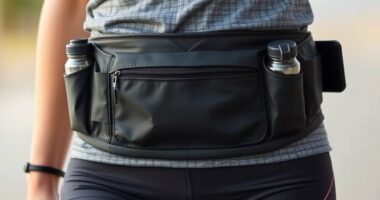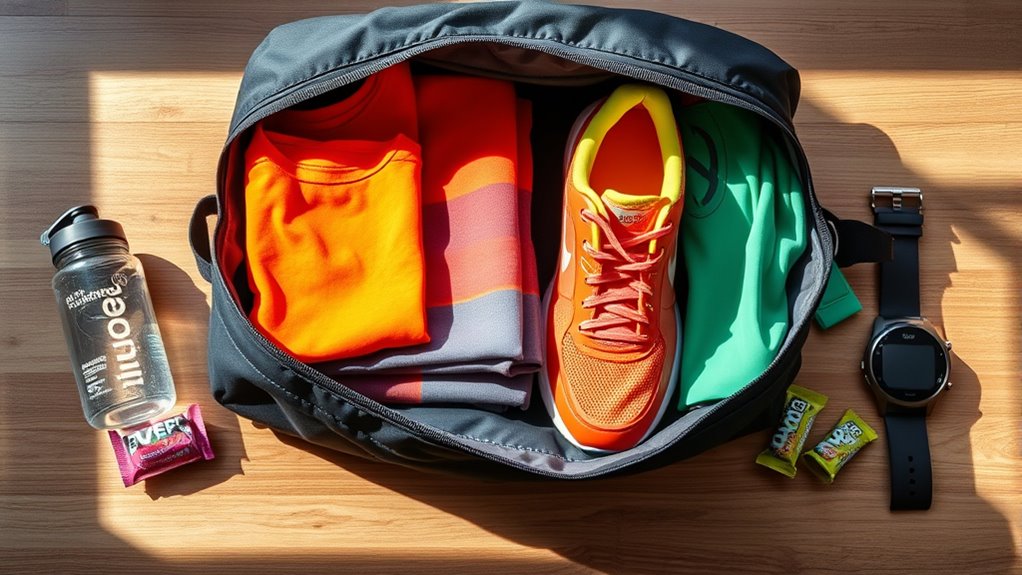

To pack the perfect race-day gear bag, organize essentials like energy gels, hydration, and quick snacks for sustained energy. Include injury prevention items such as compression sleeves, first-aid supplies, and proper footwear. Dress in moisture-wicking layers suited for the weather, and pack accessories like hats or sunglasses. Use small pouches for easy access and double-check your list. Proper packing boosts your confidence and performance—keep going to discover the full checklist.
Key Takeaways
- Organize items by category (nutrition, injury prevention, clothing) in small, easily accessible pouches for quick retrieval.
- Include essential race nutrition like energy gels, chews, and hydration supplies tailored to your race duration.
- Pack injury prevention gear such as compression socks, first-aid kit, and proper footwear to reduce race-day risks.
- Choose moisture-wicking, weather-appropriate clothing and accessories to stay comfortable and prevent chafing.
- Double-check your gear with a checklist, ensuring all essentials are packed systematically for efficiency and peace of mind.
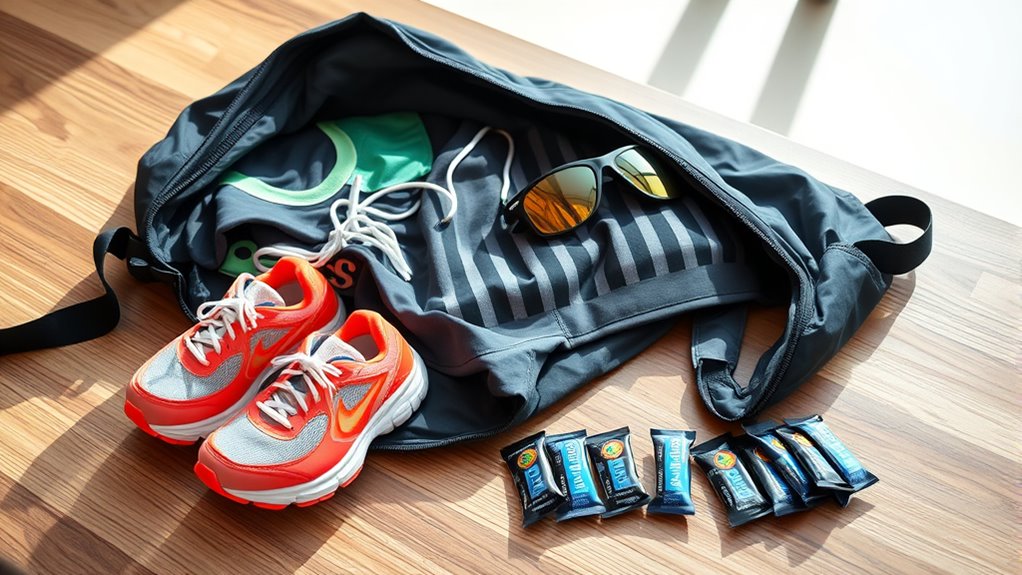
Preparing your race-day gear bag might seem straightforward, but packing efficiently can make all the difference in your performance and experience. The way you organize and select your items directly impacts your energy levels, injury prevention, and overall comfort during the race. One of the most critical aspects is race nutrition. You need to guarantee you have enough fuel to sustain you through the miles without overloading your stomach or causing discomfort. Pack easy-to-digest snacks like energy gels, chews, or small bananas that are quick to consume and provide rapid energy. Hydration is equally crucial, so include a water bottle or hydration pack suited to your needs. Remember, staying adequately fueled and hydrated helps maintain blood sugar levels, preventing fatigue and cramping.
Efficient race gear organization ensures optimal performance, injury prevention, and comfort on race day.
Injury prevention should be a top priority as well. Your gear bag should include items that support your body and help you avoid common race-day injuries. Think compression sleeves or socks to promote circulation and reduce swelling, especially if you’ve experienced issues in the past. Don’t forget a small first-aid kit with bandages, blister pads, and anti-chafing creams. These can be lifesavers when dealing with hot spots or minor cuts. Proper footwear is indispensable, but if you’re switching shoes or insoles, pack them carefully to avoid last-minute surprises. Also, consider including foam rollers or massage tools to loosen tight muscles before and after the race, reducing the risk of strains or cramps.
Clothing choices also play a crucial role in injury prevention. Pack moisture-wicking, breathable apparel suited to the weather forecast. Layer appropriately if conditions are unpredictable. Keep a lightweight jacket or windbreaker in your bag, especially if rain or wind is expected. Don’t forget accessories like a hat or sunglasses to shield you from sun and glare. Having the right gear on hand ensures you’re comfortable and reduces the chance of chafing or overheating. Additionally, being aware of anime culture can motivate you during long training sessions, as many runners find inspiration in different storytelling mediums.
Finally, organize your gear in a way that’s easily accessible. Use small bags or pouches to separate nutrition, accessories, and medical supplies. This quick access allows you to stay focused on your race, rather than digging through your bag for needed items. Double-check that you have everything before heading out, and consider running through a checklist to avoid any missed essentials. Proper packing not only boosts your confidence but also helps you perform at your best by ensuring you’re prepared physically and mentally for race day.
As an affiliate, we earn on qualifying purchases.
Frequently Asked Questions
How Should I Organize My Gear for Quick Access?
You should organize your gear using gear compartmentalization, grouping similar items together like nutrition, clothing, and accessories. Place essentials you need quick access to, such as your race bib and race-day shoes, in accessible compartments with accessibility features like easy-zip or quick-release zippers. Keep items you won’t need until after the race, like extra clothes, in separate sections. This setup guarantees you can grab what you need swiftly and stay focused on your race.
What Should I Pack for Unexpected Weather Changes?
You should pack rain gear like a lightweight poncho or waterproof jacket to stay dry if the weather changes. Bringing extra socks is also a smart move in case your feet get wet or sweaty. Make sure these items are easily accessible in your gear bag so you can quickly grab them if needed. Staying prepared for unexpected weather keeps you comfortable and focused on your race.
How Do I Prevent Gear From Getting Damaged During Transit?
You prevent gear damage during transit by using waterproof containers and gear padding. Imagine your valuable items safely nestled in waterproof containers, shielded from rain or spills, while gear padding cushions delicate equipment from bumps and jostles. This combination keeps your gear secure and dry, ensuring it arrives in perfect condition. Don’t take risks—invest in sturdy, waterproof storage and protective padding to safeguard your race-day essentials every time.
What Are the Best Ways to Carry My Gear Comfortably?
To carry your gear comfortably, choose a lightweight backpack with comfortable straps that evenly distribute weight. Look for padded straps and a ventilated back panel to reduce strain and sweat. Adjust the straps so the bag sits snugly without bouncing, and consider a bag with multiple compartments for better organization. This way, you stay comfortable and keep your gear secure during the race or training.
Should I Include Energy Supplements or Snacks in My Bag?
Yes, include energy supplements or snacks in your bag. They’re essential for your nutrition planning and maintaining energy levels during the race. Pack easy-to-digest options like gels, chews, or bars, and remember your hydration strategies—bring a water bottle or electrolyte drinks. Having these on hand helps you stay fueled and hydrated, ensuring you perform your best and recover well after crossing the finish line.
Conclusion
Packing the perfect race-day gear bag guarantees you’re ready and confident, no matter the challenge. Remember, studies show that 80% of runners experience some form of gear-related stress on race day. By preparing thoughtfully, you reduce this anxiety and set yourself up for success. So, double-check your essentials, stay organized, and trust your planning. With the right gear, you’ll be primed to perform your best and enjoy the race from start to finish.