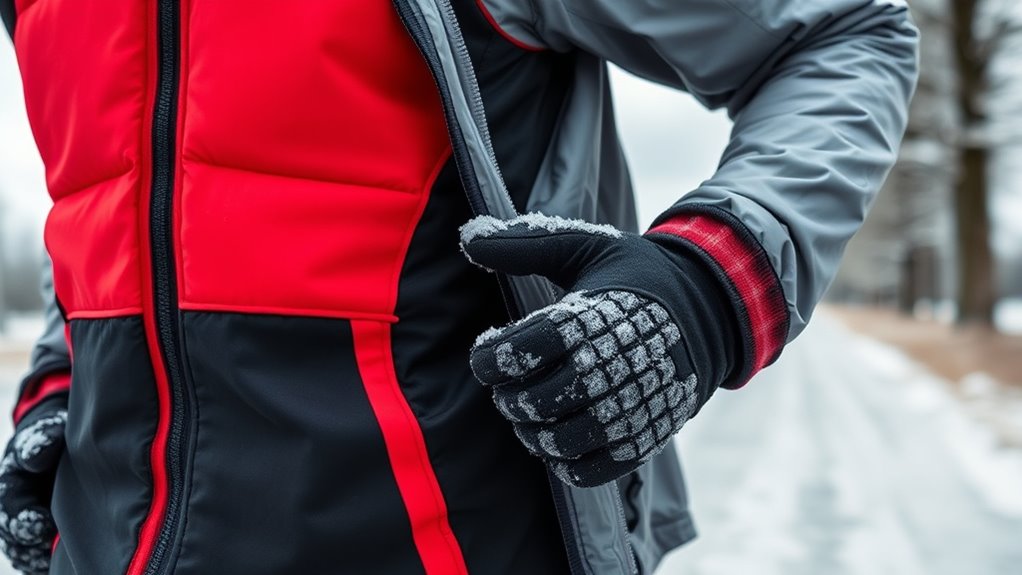

When preparing for cold-weather runs, layer with a moisture-wicking base to keep sweat away from your skin, then add insulating layers like fleece for warmth, and finish with a weather-resistant outer shell to protect against wind and snow. Make sure your extremities are covered with moisture-wicking gloves, hats, and insulated socks, and include reflective gear for safety in low light. Mastering proper layering helps you stay comfortable and safe—learn more tips to optimize your cold-weather running gear.
Key Takeaways
- Wear a moisture-wicking base layer to keep sweat away from your skin and prevent dampness.
- Add an insulated middle layer, like fleece, for warmth without bulk, adjustable based on outdoor temperature.
- Use a weather-resistant outer shell that is breathable, windproof, and waterproof to protect against elements.
- Incorporate reflective gear and bright clothing for visibility and safety during low-light conditions.
- Ensure extremities are properly layered with moisture-wicking gloves, hats, and insulated socks for full warmth.

When temperatures drop, dressing properly for a cold-weather run becomes essential to stay comfortable and safe. The key is layering effectively, which helps regulate your body temperature and protects you from the elements. The innermost layer should focus on moisture management. You want a moisture-wicking fabric that pulls sweat away from your skin, keeping you dry and preventing chills. Materials like polyester or specialized synthetic blends are excellent choices because they dry quickly and help maintain your core temperature. Avoid cotton, as it absorbs moisture and can trap cold, damp fabric against your skin, increasing the risk of hypothermia.
Your middle layer acts as insulation, trapping body heat while allowing moisture to escape. Fleece or thermal run shirts work well here because they provide warmth without adding bulk. This layer should be adjustable depending on how cold it is outside and your activity level. If it’s particularly frigid, you might add a lightweight insulated vest or a thicker fleece. Remember, you want to stay warm but not overheated, so choose layers that you can easily remove if you start to sweat excessively.
The outer layer serves as your shield against wind, rain, or snow. A good shell should be windproof and water-resistant but also breathable to prevent sweat from accumulating inside. This layer is critical because it prevents the elements from penetrating your base and middle layers, maintaining your body heat. When choosing outerwear, look for features like adjustable hoods and vents to optimize airflow and comfort.
Visibility is just as important as warmth when running in winter, especially during early mornings or late evenings. Invest in reflective gear, such as vests, stripes, or patches on your jacket or shoes. Reflective elements make you more visible to drivers and other pedestrians, reducing the risk of accidents. Wearing bright, reflective gear not only boosts your safety but also helps you stay confident and motivated during darker runs.
Finally, don’t forget your extremities. Wear moisture-wicking gloves and thermal hats or headbands to keep your hands and ears warm. Socks should also be moisture-wicking and insulated to prevent cold feet and blisters. Properly layered and equipped with reflective gear, you’ll stay comfortable, safe, and motivated to hit your cold-weather running goals. Remember, the right clothing choices make all the difference in enjoying winter runs rather than battling the elements. Additionally, choosing gear with reflective elements enhances your visibility and safety during low-light conditions.
moisture-wicking base layer for running
As an affiliate, we earn on qualifying purchases.
As an affiliate, we earn on qualifying purchases.
Frequently Asked Questions
How Do I Adjust Layers for Changing Weather Conditions During a Run?
When weather changes, you should adjust your layers based on weather change indicators like wind, temperature drops, or increased humidity. Use layer adjustment strategies such as removing a top layer if you start sweating or adding a lightweight windbreaker if it gets windier. Keep an eye on these signs, and modify your layers quickly to stay comfortable and safe during your run.
What Materials Are Best for Moisture-Wicking and Insulation?
Think of moisture-wicking and insulation materials as your cold-weather armor. Synthetic fibers, like polyester and nylon, excel at drawing sweat away from your skin, keeping you dry, while natural fabrics such as wool and silk offer excellent insulation and comfort. For peak performance, choose moisture-wicking synthetics for your base layer and natural fabrics for insulation, ensuring your body stays dry and warm no matter how the weather shifts during your run.
How Do I Prevent Chafing With Multiple Layers?
To prevent chafing with multiple layers, choose fabric choices like seamless or flat-seam garments that reduce friction. Apply anti-chafing remedies such as anti-chafing balm or powders to areas prone to irritation. make certain your layers fit well—neither too tight nor loose—and stay dry by choosing moisture-wicking materials. Adjust layers if you feel discomfort during your run, and always prioritize comfort to avoid chafing.
When Should I Remove or Add Layers Mid-Run?
You should add or remove layers based on how you feel and the weather conditions. Use dynamic layering techniques by adjusting layers when you start feeling too hot or cold, stopping to strip off a layer if you sweat excessively or feeling too warm. Conversely, if the temperature drops or you get cold, add a lightweight layer. Keep monitoring your body and environment to stay comfortable and prevent overheating or chilling.
What Accessories Are Essential for Cold-Weather Running?
You should always wear reflective gear to stay visible during cold-weather runs, especially early mornings or late evenings. A running hat is essential to keep your head warm and wick away sweat. Consider adding gloves and a neck gaiter for extra warmth. These accessories guarantee safety and comfort, helping you stay focused and protected despite the chilly conditions. Always prioritize visibility and warmth for a successful winter run.
Conclusion
With wise layering, you’ll ward off winter worries and welcome crisp, comfortable runs. By balancing baselayers, insulating mid-layers, and protective shells, you create a cozy, capable costume for cold-weather adventures. Remember, a little preparation prevents pouting in the plummeting temperatures. So suit up smartly, stay steady, and savor the season’s brisk beauty without battling the biting chill. Layering leverages comfort and confidence, making every cold-weather run a cool, conquering conquest.