
To prevent black toenails, wear properly fitting shoes that offer enough space and support, and use protective gear like padded socks or toe caps during sports. Avoid sudden movements and keep your nails trimmed and clean to minimize trauma. If you notice discoloration after an injury, monitor symptoms and seek medical care if pain worsens or blood pools considerably. Staying aware of injury signs and taking prompt action can help you manage and prevent further damage—if you’re curious about how to do more, keep exploring.
Key Takeaways
- Wear properly fitting shoes with enough room to prevent trauma to the toenails.
- Use protective gear like toe caps or padded socks during sports activities to reduce injury risk.
- Keep toenails trimmed, clean, and free from trauma to promote healthy nail growth.
- Seek medical attention if you notice large hematomas, severe pain, or persistent discoloration.
- Practice injury prevention techniques and avoid sudden movements to minimize trauma and black toenail occurrence.
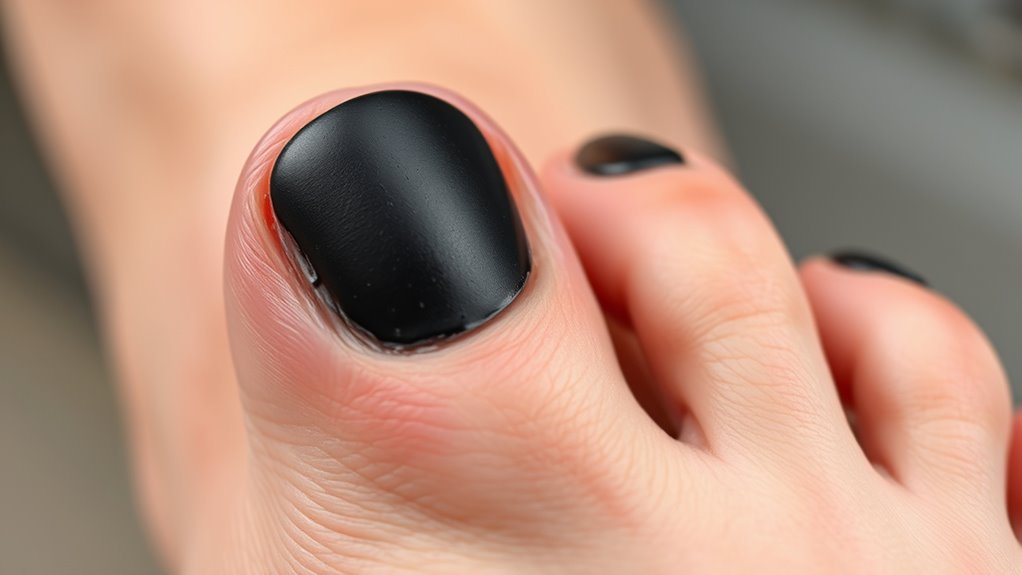
Have you ever noticed your toenail turning black and wondered what’s causing it? Nail discoloration can be alarming, especially when it appears suddenly and without warning. One common cause of black toenails is trauma, often linked to sports injuries. If you’ve recently played soccer, run long distances, or participated in any high-impact activity, you might have unknowingly injured your toenail. These injuries can cause blood to collect under the nail, resulting in a dark, blackish appearance. It’s important to recognize that this discoloration isn’t just an aesthetic issue; it signals trauma that may need attention to prevent further complications.
When you sustain a sports injury to your toe, you might feel pain, swelling, or tenderness, but the visible sign of a black toenail is often what catches your eye most. The discoloration occurs because blood vessels beneath the nail break, and blood pools, creating a subungual hematoma. This blood trapped under the nail gives it that distinctive black or dark purple hue. Sometimes, the injury may be minor, and the discoloration fades on its own. However, if the pain worsens, the nail becomes detached, or the blackness spreads, it’s wise to seek medical advice. In some cases, a doctor might need to drain the blood or remove part of the nail to relieve pressure and prevent infection.
Preventing black toenails from sports injuries involves a few practical steps. First, always wear well-fitting shoes that provide ample space and support for your toes. Tight shoes increase the risk of repeated trauma, especially during intense activity. Using protective gear, like toe caps or padded socks, can also help cushion your toes from impact. If you’re involved in high-impact sports, pay attention to your technique and avoid sudden, awkward movements that could cause injury. Additionally, keep your toenails trimmed and clean to prevent additional trauma from snagging or hitting objects. Staying aware of injury prevention techniques can help you avoid unnecessary trauma and preserve nail health.
If you do notice a black toenail after engaging in sports, it’s essential to monitor it closely. Minor discoloration might resolve within a few days, but persistent or worsening symptoms could indicate a more severe injury. In cases where pain is severe, or blood accumulation is large, a healthcare professional can safely drain the hematoma to relieve pressure. Remember, timely treatment helps prevent complications like infection or permanent damage to the nail bed. Overall, being cautious during sports and caring for your toenails can go a long way in preventing black toenails and ensuring your toes stay healthy and injury-free.
Frequently Asked Questions
Can Black Toenails Indicate a Serious Underlying Condition?
Black toenails can sometimes signal underlying causes like trauma, fungal infections, or more serious conditions such as melanoma. If you notice persistent or painful discoloration, you should seek medical evaluations promptly. Don’t overlook these signs, especially if they worsen or occur alongside other symptoms. Addressing the underlying causes early helps prevent complications and ensures proper treatment, so see a healthcare professional for accurate diagnosis and appropriate care.
How Long Does It Take for a Black Toenail to Heal Naturally?
A black toenail is like a bruise under your nail, and it usually takes about 2 to 3 weeks for your toenail to heal naturally, depending on the severity. Toenail discoloration from trauma or injury prompts your nail to grow out, so nail recovery time varies. Keep the area clean, avoid further injury, and be patient, as your body works to replace the damaged nail.
Are There Specific Footwear Recommendations to Prevent Black Toenails?
To prevent black toenails, choose footwear with a proper shoe fit that isn’t too tight or loose. Opt for breathable footwear made of materials like mesh or leather, which allow air circulation and reduce moisture. Make sure your shoes provide enough room for your toes to move comfortably, especially during physical activity. Regularly check your shoes for signs of wear and replace them when they no longer offer proper support.
Is It Safe to Try Home Remedies for Black Toenails?
Trying home remedies for black toenails isn’t always a good idea; it can sometimes turn into a risky endeavor that worsens the problem. While DIY remedies and natural treatments seem tempting, they might not be effective or safe, especially if the nail is damaged or infected. Always consult a healthcare professional before attempting any home remedies to prevent unintended harm and ensure proper treatment.
When Should I See a Doctor for a Black Toenail?
You should see a doctor if your black toenail results from trauma, especially if you notice severe pain, swelling, or blood under the nail. Also, seek help if you develop infection symptoms like pus, increased redness, warmth, or a foul odor. A professional can assess for possible blood clots or damage, and provide proper treatment to prevent complications. Don’t ignore signs of infection or significant injury.
Conclusion
Taking care of your toes means preventing pain, avoiding infection, and preserving confidence. By staying vigilant, practicing good hygiene, and seeking help when needed, you protect your health and comfort. Don’t ignore the signs, don’t delay treatment, and don’t let black toenails hold you back. Embrace prevention, embrace care, and embrace the freedom to walk confidently. Your toes deserve attention—because when you care for them, you care for yourself.