To use a massage gun safely as a runner, start with gentle pressure and avoid pressing too hard to prevent tissue damage. Limit each session to 1-3 minutes per muscle, focusing on soft tissues and avoiding bones or joints. Follow manufacturer guidelines and listen to your body—stop if you feel pain or discomfort. Proper technique, combined with moderate use, helps prevent injuries and speeds up recovery. For detailed tips, keep exploring further.
Key Takeaways
- Apply gentle, controlled pressure, avoiding excessive force to prevent tissue damage and pain.
- Follow recommended usage guidelines and limit each muscle group to 1-3 minutes per session.
- Target soft tissue areas, avoiding bones and joints, and listen to your body’s response.
- Gradually increase pressure and duration as comfort and familiarity grow.
- Use the massage gun consistently and in moderation to support recovery without overexertion.
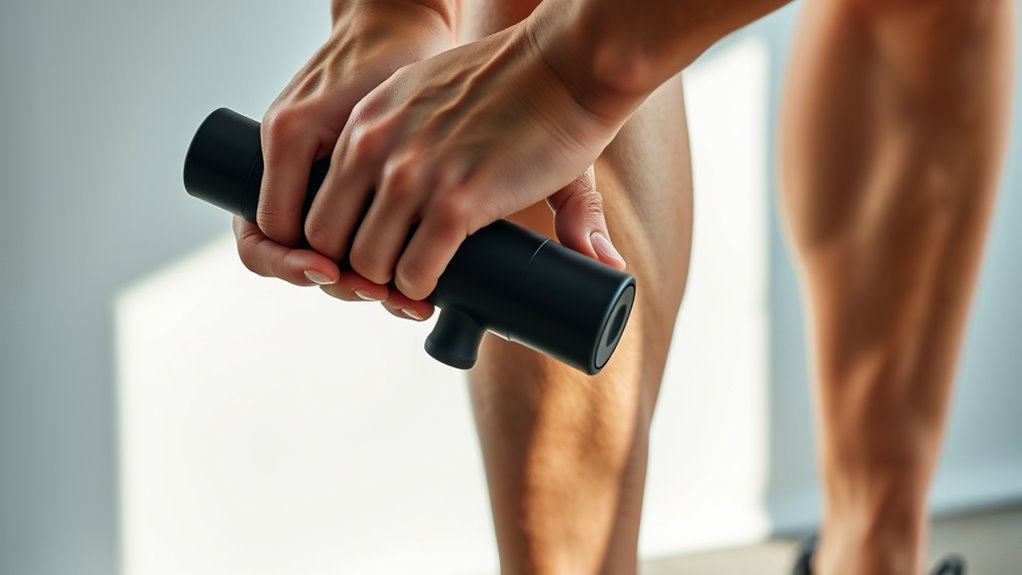
Using a massage gun can be an effective way to relieve muscle tension and improve recovery, but it’s important to use it safely to prevent injury. As a runner, you know that pushing your body hard often leaves muscles tight and sore. A massage gun can help, but only if you apply it correctly. One key aspect is understanding proper pressure. You want to avoid pressing too hard, which can cause bruising or tissue damage. Instead, let the device’s massage head do the work, and use gentle, controlled pressure. If you feel pain or discomfort, back off immediately. Remember, the goal is to relax muscles, not to cause pain. Start with light pressure, especially if you’re new to using a massage gun, and gradually increase it if needed. This approach helps you stay within safe limits and prevents overstressing tissues. Additionally, being aware of the recommended usage guidelines can help you optimize your recovery while minimizing risks.
Another critical factor is adhering to duration limits. Using the massage gun for too long on one area can lead to irritation or even muscle soreness. As a general rule, keep each session on a specific muscle group to about 1-2 minutes. If you’re targeting larger muscles like your quads or hamstrings, you might extend to 2-3 minutes, but don’t overdo it. Pay attention to how your body responds; if muscles feel tender or inflamed afterward, reduce the duration or frequency of use. Overuse can be counterproductive, leading to increased soreness or even injury. It’s best to space out sessions, giving your muscles time to recover and adapt. When using a massage gun, also consider the area you’re targeting. Avoid pressing directly on bones or joints, as this can cause discomfort or injury. Focus on soft tissue and muscle bellies. If you’re unsure, start with lighter pressure and shorter durations, then gradually increase as you become more comfortable. Always listen to your body—if a particular spot feels tender or painful, stop using the device there and try a different area. Combining proper pressure with strict duration limits ensures you get the benefits of muscle relief without risking harm. Remember, consistency and moderation are key. Using your massage gun wisely will help you recover faster, stay injury-free, and keep you running strong mile after mile.
Frequently Asked Questions
Can I Use a Massage Gun Before Running?
Yes, you can use a massage gun before running. It helps with your pre-run warm-up and muscle activation, loosening tight muscles and increasing blood flow. Just avoid using it on sensitive areas or overused muscles to prevent overstimulation. Focus on large muscle groups like your quads and hamstrings, and keep sessions brief—about 30 seconds to a minute per area—to prepare your body for a smooth, injury-free run.
How Long Should I Avoid Using a Massage Gun After Injury?
You should avoid using a massage gun immediately after an injury, as it can interfere with injury healing. Typically, wait at least 48-72 hours, or until swelling and pain subside, before considering massage gun use. Timing is everything; using it too soon might do more harm than good. Remember, patience with massage gun timing helps your body recover faster and stronger, even if it feels tempting to rush healing.
Is It Safe to Share a Massage Gun With Others?
Sharing a massage gun isn’t recommended because of hygiene practices and shared device risks. You could transfer bacteria or infections if you use someone else’s device, especially on open skin or sensitive areas. Always clean the massage gun thoroughly after each use, and ideally, avoid sharing it altogether. Using your own device guarantees proper hygiene and reduces the risk of spreading germs, keeping you safer and healthier.
Can I Use a Massage Gun on My Face?
You can use a massage gun on your face, but you should do so carefully. Facial muscles are delicate, and skin sensitivity varies from person to person. Start with the lowest setting and avoid applying too much pressure. Use gentle, quick motions around your cheeks, jawline, and forehead. Always test a small area first, and if you feel discomfort or irritation, stop immediately. Prioritize safety to protect your skin and facial muscles.
What Are Signs I Should Stop Using the Massage Gun Immediately?
You should stop using the massage gun immediately if you notice increased muscle soreness or skin irritation. If you feel sharp pain, persistent discomfort, or swelling, it’s a sign to pause. Overuse can lead to bruising or nerve irritation. Always listen to your body, and if symptoms worsen or don’t improve, consult a healthcare professional before resuming use. Safety comes first to prevent injury.
Conclusion
Remember, just like a gentle breeze calms the storm, using your massage gun wisely soothes your muscles without harm. Treat it with care—stay mindful of your body’s signals, avoid overdoing it, and always follow the guidelines. When used properly, your massage gun becomes a trusted ally, easing tension and restoring balance. Embrace this tool as you would a trusted friend, and keep your running journey smooth, strong, and injury-free.