Choosing the right gear for long distance running can make or break your training and race days. The INOXTO Running Hydration Vest stands out as the best overall pick due to its balanced 1.5L capacity and lightweight design, while the AiRunTech Hydration Running Belt offers a low-profile alternative for runners who dislike chest packs. The main tradeoff you will face is between hydration capacity and comfort; larger bladders require vests that may chafe, while belts offer less storage but remain nearly invisible. Continue reading to see how these thirteen options compare on fit, stability, and utility.

Get workout gear delivered free with Prime
- Fast, free delivery on millions of items
- Prime Video, Amazon Music and more included
- Member-only deals all year
Complete the kit


Key Takeaways
- Vests vs. Belts: Vests (like Zelvot and INOXTO) dominate for runs over 10 miles due to better weight distribution, while belts (like AiRunTech) are superior for sub-10-mile runs where minimal bulk is preferred.
- Hydration Capacity Threshold: Most runners in this roundup find that 500ml is the sweet spot for casual long runs, whereas 1L-2L bladders are necessary for trail running or hot weather conditions.
- Fit Stability Matters More Than Weight: A heavier vest that does not bounce (like the MOKURA) is often more comfortable than a lighter, poorly fitted pack that causes chafing.
- Storage Versatility: The top-rated products feature multiple pocket configurations (front and rear) allowing runners to separate fuel, electronics, and layers, a feature lacking in budget belts.
- Reflective Safety: High-visibility strips are standard on nearly all top-tier vests in this list, making them safer for early morning or evening training compared to basic fabric belts.





| gear for long distance running | Material | Weight |
|---|---|---|
| AiRunTech Hydration Running Be | — | — |
| Fitgriff Running Belt for Men | — | — |
| Number-One Running Belt with W | Neoprene | — |
| Running Phone Holder Vest with | Quick-dry, breathable fabric | — |
| AIKENDO Slim Running Belt for | Spandex | 2 oz |
| AIKENDO Women Fanny Pack Runni | Spandex | 0.1 kg |
| MOKURA Running Vest for Women | Neoprene and breathable mesh | Under 10 oz |
| Zelvot Running Vest with 2L Wa | 900D Oxford fabric and polyester | 0.65 kg |
| Running Phone Holder Vest with | Neoprene | 230 g |
| Zelvot Running Vest with 1L Wa | Waterproof and scratch-resistant nylon | — |
| Slim Running Belt Fanny Pack f | Polyester | 2.4 ounces |
| INOXTO Running Hydration Vest | Nylon | 140 grams |
| Slim Running Belt for Women an | Nylon | 3.2 ounces |
More Details on Our Top Picks
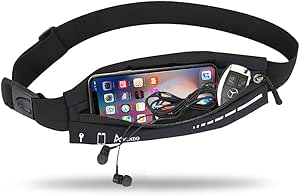
AiRunTech Hydration Running Belt with Water Bottle and Phone Pocket
The AiRunTech gives runners a way to carry water without stepping up to a vest: its two 175ml bottles sit alongside a phone pocket and room for small essentials. That makes it a better match for shorter training runs or routes with refill options than the 500ml vest, which carries more water and spreads storage across six pockets. Its anti-slip design and adjustable waist range aim to keep the belt steady, while the reflective tab and race bib toggles add useful run-specific details. The tradeoff is capacity: 350ml total may not cover a long outing, especially in warm conditions, and the belt’s fit may not suit every body. Choose it for compact, belt-based hydration rather than self-sufficient distance running.
Pros:- Includes two BPA-free 175ml bottles with leakproof nozzles.
- Large pocket fits smartphones up to 6.5 inches and small essentials.
- Anti-slip design is intended to limit movement while running.
- Reflective tab and race bib toggles add practical run-specific features.
Cons:- 350ml combined bottle capacity is limited for long or hot runs.
- The adjustable belt may feel too tight or loose depending on body shape.
- Storage is less extensive than a multi-pocket hydration vest.
Best for: Runners doing shorter training sessions or running routes with refill stops who want two small bottles and a phone in one belt.
Not ideal for: Long-distance runners who need substantial water capacity or a larger, more organized carry system.
- Adjustable waist size:18–51.2 inches
- Bottle capacity:Two bottles, 175ml each
- Phone compatibility:Fits smartphones up to 6.5 inches
- Bottle material:BPA-free
- Fit feature:Anti-slip design
- Safety feature:Reflective tab
- Run features:Headphone hole and race bib toggles
Our verdict“Choose the AiRunTech for compact hydration on shorter runs, but pick a 500ml vest or larger pack when your route demands more water.”
Fitgriff Running Belt for Men & Women – Secure Jogging Pouch for Phone, Keys & Essentials
When water is already available along the route, the Fitgriff keeps the carry setup simple: an adjustable elastic belt holds a phone in the main compartment and separates keys or cash into a smaller pocket. Unlike the AiRunTech hydration belt, it includes no bottles, so there is less to manage but no onboard drinking supply. Its sweat- and splash-resistant construction and reflector strips suit everyday road runs, while the infinitely adjustable belt offers more flexibility than a fixed-size pouch. The limits are clear for distance use: protection is not meant for heavy rain or prolonged water exposure, and there is no dedicated hydration storage. I’d choose it for a phone-and-keys load on supported routes, not for long stretches without water access.
Pros:- Main and small compartments separate a phone from keys and cash.
- Infinitely adjustable elastic belt accommodates varied fit preferences.
- Sweat- and splash-resistant construction suits routine runs.
- Reflector strips improve visibility in low-light conditions.
Cons:- Does not include bottles or another hydration system.
- Not fully waterproof in heavy rain or prolonged exposure.
- Limited compartment space is geared toward essentials rather than extensive gear.
Best for: Runners who carry a phone, keys, and a card on familiar routes with fountains or refill stops.
Not ideal for: Distance runners who need water carried with them or reliable protection through heavy rain.
- Phone compatibility:Fits almost all smartphones
- Compartments:Main compartment plus small compartment for keys and cash
- Belt adjustment:Infinitely adjustable elastic belt
- Moisture protection:Sweat- and splash-resistant
- Visibility:Reflector strips
- Intended activities:Running, hiking, cycling, and travel
Our verdict“Pick the Fitgriff for a straightforward phone-and-essentials belt on routes with water access, rather than unsupported long runs.”
Number-One Running Belt with Water Bottles (2 x 175ml), Hydration Waist Pack for Sports
The Number-One belt pairs two 175ml bottles with a zippered pocket in a water-resistant neoprene body, giving runners a compact carry option with a notably broad stated belt range of 27 to 59 inches. Compared with the AiRunTech, it lists a wider waist range and specifies neoprene, but both provide just 350ml of total water—too little for many long, unsupported runs. Its anti-slip waistband is meant to help reduce bounce, and the zippered pocket secures a phone and small valuables. The missing reflective details make it less suited to low-light road training than the Fitgriff or reflective AiRunTech. I’d rank it as a fit-flexible option for shorter outings, not a substitute for a higher-capacity vest.
Pros:- Includes two BPA-free 175ml bottles.
- Stated belt range of 27 to 59 inches accommodates a broad range of waist sizes.
- Zippered pocket secures a phone and small valuables.
- Water-resistant neoprene and an anti-slip waistband suit active use.
Cons:- 350ml total capacity may fall short on long-distance or hot-weather runs.
- No reflective features are listed for low-light visibility.
- Pocket and belt format provide less organization than a multi-pocket vest.
Best for: Runners seeking a two-bottle waist belt with a broad stated size range for shorter sessions or routes with refill access.
Not ideal for: Runners who need more than 350ml of water, reflective safety details, or space for a large load of gear.
- Bottle capacity:Two bottles, 175ml each
- Belt size:27–59 inches
- Material:Neoprene
- Dimensions:20 × 11cm
- Pocket:Large zippered pocket
- Belt feature:Adjustable anti-slip waistband
- Water resistance:Water-resistant material
Our verdict“Choose this belt for adjustable, compact hydration on shorter runs, but move to a vest when you need more water or storage.”
Running Phone Holder Vest with 500ml Water Bottle, Reflective Hydration Vest, Adjustable, Lightweight, 6 Pockets, Unisex
For runners who want water and gear in one carry system, this vest is the most capable option in this group. Its 500ml soft flask holds more than either two-bottle belt’s combined 350ml, while six pockets give phone, fuel, and small items separate places. The waterproof phone pouch and reflective details also make it better equipped for varied weather and low-light routes than the Number-One belt, which is simpler but has no listed reflective features. Breathable, quick-dry fabric and adjustable sizing suit training across changing conditions, though the three size groupings will not fit every body equally well. The soft flask may also feel less familiar than rigid bottles. It still has limited water capacity for very long or unsupported runs.
Pros:- 500ml soft flask offers more water than the 350ml belt options.
- Six pockets help separate phone, fuel, and other essentials.
- Waterproof phone pouch adds protection for a key item.
- Reflective details and quick-dry breathable fabric suit varied conditions.
Cons:- 500ml may be insufficient for long, hot, or unsupported routes.
- Only three size groupings are listed, which may limit fit options.
- Soft-flask drinking and handling may not suit runners who prefer rigid bottles.
Best for: Runners who want a vest-style setup with a phone pouch, organized storage, and more onboard water than a small hydration belt provides.
Not ideal for: Runners who prefer minimal waist carry, need more than 500ml of water, or fall outside the three listed size ranges.
- Water capacity:500ml
- Pockets:6
- Size options:XS–S, M–L, L–XL
- Material:Quick-dry, breathable fabric
- Phone storage:Waterproof phone pocket
- Hydration type:Soft flask
- Visibility:Reflective details
Our verdict“Choose this vest for organized carry and 500ml of onboard water, while runners needing greater range should seek a higher-capacity hydration pack.”
AIKENDO Slim Running Belt for Women and Men, Fanny Pack Phone Holder
The AIKENDO takes the least-is-most approach: a 2-ounce spandex belt has one zipped pocket for a phone and a few essentials, with water resistance and reflective elements for routine road running. It is lighter and slimmer than the Fitgriff belt, which divides items between two compartments, but that simplicity also means keys and cards share the same pocket. The adjustable strap is listed for waists up to 45 inches, so it offers useful flexibility without the broader stated range of the Number-One hydration belt. There is no bottle storage, making this a better match for short runs, races with aid stations, or runners who carry water separately. Hand washing is required, and storage remains intentionally limited.
Pros:- Lightweight 2-ounce design keeps the carry setup minimal.
- Water-resistant spandex helps protect belongings from sweat.
- Reflective elements support low-light visibility.
- Adjustable strap and zipper provide a simple, secure phone-carry option.
Cons:- One pocket offers little separation for phone, keys, and cards.
- No water bottle or hydration storage is included.
- Hand-wash-only care is less convenient than machine-washable gear.
Best for: Runners who want a lightweight, low-profile place for a phone on short routes or races with water stations.
Not ideal for: Distance runners who need carried hydration, multiple organized compartments, or a waist fit beyond the listed 45-inch strap length.
- Material:Spandex
- Weight:2 oz
- Size:One size
- Strap length:45 inches
- Dimensions:10.24 × 0.39 × 1.57 inches
- Water resistance:Water-resistant
- Closure and pockets:Zipper; one pocket
- Care:Hand wash only
Our verdict“Pick the AIKENDO for a slim phone belt on supported short runs, but choose a hydration belt or vest for longer routes.”
AIKENDO Women Fanny Pack Running Belt, Water Resistant Waist Pack for Hiking and Fitness
For long runs where I only need a phone, keys, and a few small essentials, the AIKENDO waist pack keeps things simpler and lighter than a hydration vest. Its three zippered pockets help separate valuables, while the soft, breathable spandex and adjustable fit accommodate waists from 27 to 44 inches. The water-resistant fabric offers some protection from sweat and light weather, but it is not a substitute for a waterproof pouch in heavy rain. Compared with the MOKURA Running Vest, this belt carries no water, so I would pair it with a separate bottle or use it on routes with reliable refill points. It also has less capacity than either Zelvot vest. Choose it for a low-bulk setup, not for carrying layers or long-run hydration.
Pros:- Three pockets separate small essentials
- Soft, breathable spandex with an adjustable 27–44-inch waist fit
- Water-resistant fabric helps guard belongings from sweat and light weather
- Headphone opening supports wired listening setups
Cons:- Does not carry water, so runners need a separate hydration plan
- Water resistance is not full waterproofing for heavy rain
- Limited to small valuables and requires hand washing
Best for: Runners who prefer a minimal waist pack for phone, keys, and small essentials on routes with water available along the way
Not ideal for: Self-supported long-distance runners who need carried water, extra clothing, or dependable protection from heavy rain
- Size:One size
- Waist fit:27–44 inches
- Strap length:44 inches
- Material:Spandex
- Water resistance:Water resistant
- Pockets:3
- Closure:Zipper
- Weight:0.1 kg
Our verdict“I’d choose this belt for low-bulk runs with easy water access, but not for long routes where I need to carry hydration.”
MOKURA Running Vest for Women and Men with 500ML Soft Flask and Phone Holder
The MOKURA is the lightest-feeling style in this group on paper: it weighs under 10 ounces and includes a 500 ml soft flask for carrying water without moving to a larger bladder pack. Adjustable straps and front pockets are useful on long runs because they keep essentials close and help limit bounce; reflective accents add visibility for low-light starts. Compared with the Zelvot 1L vest, MOKURA carries less water, which can reduce bulk but may mean more refill stops. Its storage is also more limited than the six-pocket SWIFTVEST, and the phone holder may not fit very large phones. I’d pick it for road or moderate-distance runs where a compact flask is enough, not for remote outings that call for substantial water or extra gear.
Pros:- Under-10-ounce listed weight keeps the setup relatively light
- Includes a 500 ml soft flask and phone holder
- Adjustable straps help tailor fit and reduce bounce
- Reflective accents support visibility in low light
Cons:- 500 ml capacity may require frequent refills on longer or hotter routes
- Limited storage space for larger gear
- Phone holder may not accommodate very large smartphones
Best for: Runners seeking a lightweight vest and a single 500 ml flask for moderate long runs with refill options
Not ideal for: Runners on remote routes who need more than 500 ml of carried water or ample room for larger phones and extra gear
- Weight:Under 10 oz
- Material:Neoprene and breathable mesh
- Water capacity:500 ml
- Fit:Adjustable straps
- Pockets:Front dual pockets and rear mesh pocket
- Included:Soft water flask and phone holder
- Visibility:Reflective accents
Our verdict“I’d choose MOKURA for a light, flask-based setup when 500 ml and modest storage are enough.”
Zelvot Running Vest with 2L Water Bladder, Hydration Backpack, Reflective Chest Pack for Men and Women
When route length or refill access makes water capacity a priority, the 2-liter bladder gives this Zelvot a clear advantage over the 500 ml MOKURA and SWIFTVEST options. Its adjustable shoulder and waist straps help secure the load, while multiple waterproof zippered pockets provide more protection for carried essentials than the AIKENDO belt’s water-resistant fabric. Reflective details are useful in low light, and the listed 900D Oxford fabric points toward a more durable build. The tradeoff is weight: at 0.65 kg, it is substantially heavier than MOKURA’s under-10-ounce vest before accounting for water. The 2-liter capacity also may not satisfy runners planning especially long, hot, or remote outings. I’d favor it for carrying a meaningful water supply and extra essentials, not for the lightest possible road setup.
Pros:- 2-liter bladder carries more water than the 500 ml flask vests in this group
- Multiple waterproof zippered pockets protect small essentials
- Adjustable shoulder and waist straps help secure the pack
- Reflective logo and strip improve visibility in low light
Cons:- Listed weight of 0.65 kg is heavier than the MOKURA vest
- Two-liter capacity may still fall short for especially long or hot routes
- Adjustability may not fit every body shape comfortably
Best for: Trail and road runners who need a larger carried water supply and protected storage on routes with limited refill access
Not ideal for: Runners prioritizing a very light kit or needing more than 2 liters of water for extended, hot, or remote outings
- Water capacity:2 liters
- Weight:0.65 kg
- Material:900D Oxford fabric and polyester
- Fit:Adjustable shoulder and waist straps
- Storage:Multiple waterproof zippered pockets
- Visibility:Reflective logo and strip
- Listed sports:Cycling, marathon, snowshoeing, and trail running
Our verdict“I’d pick this Zelvot for self-supported runs that call for more water and protected storage, accepting extra weight over a flask vest.”
Running Phone Holder Vest with 500ml Water Bottle, Reflective Hydration Vest, Adjustable, Lightweight, 6 Pockets, Unisex
The SWIFTVEST earns its place for runners who want frequent access to small items without stopping to rummage: six pockets give it more organization than MOKURA’s front-and-rear pocket layout. It also pairs a 500 ml soft flask with a phone pouch described as waterproof, a useful combination for shorter supported long runs or training loops with refill points. At 230 g, it sits between MOKURA’s under-10-ounce listing and the heavier 0.65 kg Zelvot 2L pack, though those capacity and weight formats are not directly equivalent once water is added. Its modest flask capacity is the main limitation for distance; the Zelvot 1L vest carries more water, while this one offers more pocket access. Phone fit and snugness can vary, so check device dimensions and adjustability before choosing it.
Pros:- Six pockets provide more organization than the MOKURA vest
- Includes a 500 ml soft flask
- Waterproof phone pouch is designed to protect a device
- Reflective details and adjustable straps suit low-light training
Cons:- 500 ml capacity may be insufficient for long routes without refill access
- Phone pouch may not fit larger smartphones
- Fit can feel too snug or too loose depending on body shape
Best for: Runners who value quick access to several small essentials and carry a compatible phone on supported routes
Not ideal for: Runners needing more than 500 ml of water, a reliably roomy phone pouch, or a fit that can be confirmed across a wide range of body shapes
- Brand:SWIFTVEST
- Model:SV01
- Weight:230 g
- Material:Neoprene
- Water capacity:500 ml
- Pockets:6
- Dimensions:11 in W x 14 in H
- Features:Water-resistant, reflective, breathable, adjustable straps
Our verdict“I’d choose SWIFTVEST when pocket access matters more than water capacity and my phone fits its pouch.”
Zelvot Running Vest with 1L Water Bladder, Adjustable Reflective Hydration Pack for Men and Women
This Zelvot sits between the compact 500 ml flask vests and the 2-liter Zelvot pack: its 1-liter BPA-free bladder offers more carried water than MOKURA or SWIFTVEST without committing to the larger capacity and listed weight of the 2L model. Multiple waterproof pockets and an adjustable 29–41-inch fit make it a practical choice for runners who carry a phone, keys, and a few route essentials. Reflective details and a headphone port add useful touches for regular training. The compromise is that 1 liter still may not cover a very long or hot run without refills, and the supplied fit range is more specific than the AIKENDO belt’s 27–44-inch range. A full load may also distribute unevenly if the straps are not adjusted well. I’d choose it for balanced capacity, not maximum range or minimum bulk.
Pros:- One-liter bladder offers twice the listed capacity of the 500 ml MOKURA and SWIFTVEST
- Multiple waterproof pockets protect carried essentials
- Adjustable fit is specified for a 29–41-inch range
- Reflective details and headphone port support regular training
Cons:- One liter may require refills on very long or hot routes
- Fit range may exclude some body sizes
- Load can feel uneven when the pack is fully loaded
Best for: Runners who want more water than a 500 ml flask provides but prefer a smaller pack than the 2-liter Zelvot
Not ideal for: Runners needing a high-capacity bladder for remote all-day outings or those outside the listed 29–41-inch adjustment range
- Water capacity:1 liter
- Bladder:BPA-free with high-flow bite valve
- Material:Waterproof and scratch-resistant nylon
- Adjustment range:29–41 inches
- Storage:Multiple storage pockets
- Visibility:Reflective logo and strip
- Additional feature:Headphone port
Our verdict“I’d pick this Zelvot for a moderate water supply and protected storage without stepping up to a 2-liter pack.”
Slim Running Belt Fanny Pack for Men and Women, Water-Resistant Phone Holder with Reflective Strips
For long runs where a phone is the main thing I need to carry, this belt keeps the setup simple: its single zippered pocket is designed to fit smartphones with cases, while the adjustable 27–46-inch strap accommodates a broad range of waists. At 2.4 ounces, it adds little bulk, and reflective strips offer a visibility aid for low-light outings. Compared with the three-pocket Pink Slim Running Belt, this model gives up storage flexibility in exchange for a more focused phone-carrying setup. It also cannot replace a hydration belt or vest: there is no listed bottle storage, and one pocket may crowd keys or other small essentials beside a large phone. Choose it for uncomplicated phone access, not for carrying a full long-run kit.
Pros:- Pocket is designed to fit smartphones with cases
- Adjustable waist range of 27–46 inches
- Light 2.4-ounce listed weight
- Reflective strips support visibility on low-light runs
Cons:- Single pocket limits organization and room for additional essentials
- No listed bottle or hydration storage
- Hand wash only
Best for: Runners who carry a phone with a case and only a key or similarly small extra, and want a lightweight belt with an adjustable fit.
Not ideal for: Long-distance runners carrying nutrition, several small items, or water; its single pocket offers limited organization and no listed hydration storage.
- Material:Polyester
- Water resistance:Water resistant
- Pocket count:1
- Waist size range:27–46 inches
- Strap length:46 inches
- Weight:2.4 ounces
- Closure:Zipper
- Color:Black
Our verdict“Pick this belt if your long-run carry is phone-first and minimal; choose the Pink Slim Running Belt if you need separate pockets for small items.”
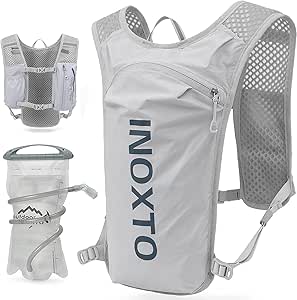
INOXTO Running Hydration Vest Backpack, Lightweight Insulated Pack with 1.5L Water Bladder for Hiking, Trail Running, Cycling, Race, Marathon for Women and Men
When I need to carry water as well as essentials, this vest is a more capable long-distance option than either waist belt in this group. Its 1.5-liter bladder provides a built-in supply, while multiple front and side pockets give nutrition and small gear places beyond the main reservoir. The listed 140-gram weight and breathable mesh point toward a lighter, ventilated setup for trail routes or runs without frequent refill points. There are tradeoffs: the capacity is limited for especially long outings or hot conditions, and the vest may need strap adjustment before it sits securely. Unlike the Slim Running Belt with Reflective Strips, this is a more involved piece of kit, so it makes less sense for short, phone-only runs or runners who prefer carrying water separately.
Pros:- Includes a 1.5-liter water bladder
- Multiple front and side pockets allow separated storage
- Listed weight is 140 grams
- Breathable mesh and adjustable straps support a customizable fit
Cons:- 1.5-liter capacity may be insufficient for longer routes or high water needs
- May require fit adjustments to sit securely
- More coverage and setup than a minimal running belt
Best for: Trail and road runners who want a hands-free 1.5-liter water supply plus pockets for nutrition and small essentials on longer routes.
Not ideal for: Runners needing a larger water reserve for extended, hot, or remote outings, or those who want the simplicity and low profile of a basic belt.
- Water capacity:1.5 liters
- Weight:140 grams
- Material:Nylon
- Storage:Multiple front and side pockets
- Bottle pockets:Pockets for 250 ml PET bottles
- Reflective trim:Yes
- Intended use:Hiking, trail running, cycling, racing, skiing, and mountaineering
Our verdict“Choose this vest when a built-in water supply and separated storage matter more than the lighter, simpler carry of a phone belt.”
Slim Running Belt for Women and Men, Fanny Pack with 3 Pockets, Pink
Among the two slim belts here, this one suits runners who want to separate a phone from keys or money: its three expandable pockets offer more organization than the single compartment on the Slim Running Belt with Reflective Strips. The listed waterproof material and reflective accents are useful for unpredictable weather and low-light routes, though the product description also frames the fabric as water-resistant, so I would not treat it as a substitute for a dry bag. At 3.2 ounces, it remains a lightweight carry, but the 26–38-inch waist range is narrower than the other belt’s 27–46 inches. The pink color is also the only listed option. This is a better pick for pocket organization than for broad fit flexibility or carrying water on unsupported long runs.
Pros:- Three expandable pockets separate small essentials
- Designed to fit smartphones with cases
- Listed waterproof material and reflective accents
- Lightweight at 3.2 ounces
Cons:- Listed waist range is limited to 26–38 inches
- Only pink is listed as a color
- Spot-clean-only care and no listed hydration storage
Best for: Runners with a 26–38-inch waist who want separate pockets for a phone, keys, and money in a lightweight belt.
Not ideal for: Runners outside the listed waist range, those who want a choice of colors, or anyone needing built-in hydration for a long unsupported route.
- Material:Nylon
- Water resistance:Waterproof (product data); description also says water-resistant
- Pocket count:3 expandable pockets
- Size:Medium
- Listed waist range:26–38 inches
- Strap length:37.8 inches
- Dimensions:37.8 × 4.7 × 0.1 inches
- Weight:3.2 ounces
- Color:Pink
Our verdict“Choose this belt over the single-pocket model if organizing several small essentials matters more than a wider waist range.”

How We Picked
I evaluated these thirteen products by focusing on three primary criteria: fit stability, hydration accessibility, and storage logic. For long distance running, a product that bounces or shifts is useless, regardless of its capacity. I prioritized vests with adjustable sternum straps and belts with non-slip inner linings. I also assessed how easily a runner can access their water bottle or soft flask without stopping, a critical factor for maintaining pace. Finally, I compared the utility of pocket layouts, favoring designs that allow for quick access to gels and phones without removing the gear.
The ranking logic reflects a hierarchy of use cases. Hydration vests rank higher overall because they solve the core problem of long-distance running: carrying significant fluid weight without compromising biomechanics. Running belts are ranked based on their ability to stay secure during high-cadence movement and their capacity to hold a phone without interfering with stride. Premium picks were selected for build quality and specialized features like insulated bladders, while value picks were judged on essential functionality and durability relative to their simpler designs.
Factors to Consider When Choosing Gear For Long Distance Running
Selecting the right equipment requires matching the gear to your typical run duration, terrain, and body type. Here are the key factors to weigh before making a purchase.
Hydration Capacity vs. Weight
One of the most common mistakes runners make is buying a vest with too much capacity for their needs. If you typically run under 10 miles in mild weather, a 500ml soft flask or small bottle is sufficient and adds negligible weight. However, if you run in hot climates or on trails without water sources, a 1L to 2L bladder becomes necessary. The tradeoff is that larger bladders require a vest structure, which adds bulk and can trap heat. Assess your average run length and weather conditions honestly; carrying 2 liters of water when you only need 500ml creates unnecessary fatigue and sweat buildup.
Fit and Chafing Prevention
Chafing is the primary reason runners abandon hydration gear. A poor fit causes the pack to rub against skin or clothing, leading to painful abrasions over long distances. Look for vests with adjustable sternum and waist straps that allow you to tighten the load against your torso. For belts, check the inner lining; silicone or textured grips prevent sliding better than smooth fabric. If you have a leaner build, vests with wider shoulder straps may feel uncomfortable or gap at the chest. Conversely, runners with broader shoulders might find narrow-strap vests dig in. Always check for seam placement in high-friction areas like underarms and hips.
Storage Accessibility and Layout
Not all pockets are created equal. You need distinct zones for different items: quick-access pockets for gels and keys, secure pockets for phones and wallets, and larger compartments for layers or nutrition. Front-facing pockets on vests are ideal for gels and phones because you can access them without looking or stopping. Rear pockets are better for bulky items like jackets or spare water bottles. Belts often suffer from poor accessibility, requiring you to twist your torso to reach the zippered opening. If you frequently adjust your gear mid-run, prioritize vests with multiple front zippers or elastic mesh pockets over single-compartment belts.
Material Breathability and Durability
Long-distance running generates significant heat and sweat. Gear made from thick, non-breathable nylon can cause overheating and discomfort. Look for materials described as mesh-lined, quick-dry, or featuring ventilation channels. While durability is important, ultra-lightweight materials often sacrifice longevity. A balance is found in ripstop fabrics that are thin enough to breathe but strong enough to resist tearing. Also, consider the zipper quality; cheap zippers can jam when wet or dirty, which is frustrating mid-run. Waterproofing is less critical than breathability unless you run in heavy rain, in which case, sealed seams become a priority.
Reflective Safety Features
If you train during low-light conditions, visibility is non-negotiable. Many products in this roundup include reflective strips, but the placement and quality vary. Strips on the chest, back, and side panels provide 360-degree visibility, which is safer than just a back reflector. Some vests incorporate reflective piping along the seams, which outlines your body shape more effectively than flat patches. While safety features add little weight, they are often the first thing to wear out if the material is low quality. Check if the reflective elements are sewn-in or printed; printed logos tend to crack and fade faster than sewn reflective tape.
Frequently Asked Questions
Should I choose a hydration vest or a running belt for a marathon?
For a marathon, a hydration vest is generally the superior choice because it distributes weight evenly across your shoulders and hips, reducing fatigue. Belts can shift and bounce as you tire, causing discomfort and chafing over 26.2 miles. Vests also offer more storage for nutrition and layers, which you may need for weather changes. However, if you prefer to carry minimal gear and rely on aid stations, a slim belt like the AIKENDO or AiRunTech might suffice. The key is whether you need to self-sustain your hydration or can grab water from tables.
How do I prevent chafing with running vests?
Chafing is usually caused by movement and moisture. To prevent it, ensure your vest is tight enough to not bounce but not so tight that it restricts breathing. Use an anti-chafe balm on areas where straps contact skin, such as underarms and nipples. Wearing a moisture-wicking, seamless shirt underneath the vest also reduces friction. Regularly wash your vest to remove salt and dirt buildup, which can increase abrasion. If you experience persistent hot spots, consider a vest with mesh-lined straps or a different cut, such as the Zelvot or MOKURA, which may fit your torso shape better.
Are soft flasks better than hard water bottles for long runs?
Soft flasks collapse as you drink, preventing air pockets and reducing sloshing noise, which makes them quieter and more aerodynamic. They are also easier to squeeze for quick sips while moving. Hard bottles, on the other hand, are more durable and easier to clean, but they can bounce if not secured tightly. For most long-distance runners, soft flasks offer a smoother experience, especially in vests like the MOKURA or INOXTO. However, if you prefer a consistent flow rate and easier refilling at aid stations, a hard bottle in a belt like the AiRunTech might feel more familiar.
Can I use a running belt for trail running?
Running belts are suitable for shorter trail runs or well-marked trails where you don’t need to carry much gear. However, for technical trails or longer distances, a belt can shift when you bend, climb, or descend, causing imbalance. Vests provide a more secure fit that stays in place during dynamic movements. If you do choose a belt for trails, ensure it has a non-slip inner lining and a secure phone pocket to prevent items from falling out during rough terrain. For serious trail running, a vest like the Zelvot with a hydration bladder is the more reliable option.
How do I clean and maintain my hydration gear?
Proper maintenance prevents mold and bacteria growth, which is common in hydration bladders and vests. After every use, rinse the bladder with warm water and mild soap, then let it air dry completely. Store it open or with a freezer insert to keep it from sticking. Wipe down the vest or belt with a damp cloth to remove sweat and salt; avoid machine washing unless the manufacturer explicitly permits it, as this can damage waterproof coatings and reflective elements. For hard-to-reach areas, use a bottle brush. Regular cleaning extends the life of your gear and prevents unpleasant odors during long runs.
Conclusion
Choosing the right gear for long distance running depends on your specific needs for hydration, storage, and comfort. If you want the best overall balance of capacity and fit, the INOXTO Running Hydration Vest is the top choice for most runners tackling 10+ miles. For those seeking the best value without sacrificing essential features, the AiRunTech Hydration Running Belt offers excellent utility for shorter runs or aid-station-heavy races. Runners looking for a premium, lightweight option should consider the MOKURA Running Vest, which excels in comfort and minimal bulk. Beginners will find the Fitgriff Running Belt easy to use and unobtrusive, while trail runners or those in hot climates should prioritize the Zelvot Running Vest with its 2L bladder for self-sustained hydration. Match the gear to your distance and terrain, and you will find the right partner for your miles.
Halloween Picks

Thuodo 8 FT Tall Halloween Inflatable Three-Headed Dragon with LEDs

DomKom 6-Foot Halloween Inflatable Ghosts Roasting Marshmallows

Pumpkin Halloween Fog Machine with 12-Color LED Lights, Bluetooth Speaker, and Remote
As an affiliate, we earn on qualifying purchases.