

To find safe, scenic running routes, start by exploring local parks, neighborhoods, or city trails through maps or dedicated apps that highlight popular paths. Look for well-maintained, well-lit paths with natural beauty, and check safety tips and user reviews. Running during daylight or in busy areas can help you stay secure. Planning these routes carefully can turn routine runs into enjoyable outdoor escapes—keep going to discover more tips for your perfect route.
Key Takeaways
- Use local maps and dedicated apps to discover popular, well-rated scenic routes in your area.
- Check route reviews and safety tips from other runners before selecting a path.
- Opt for well-lit, populated paths during times when foot traffic is higher for added safety.
- Visit routes beforehand to assess terrain, maintenance, and scenic qualities firsthand.
- Share your planned route with friends or family and carry a phone for emergency contact.
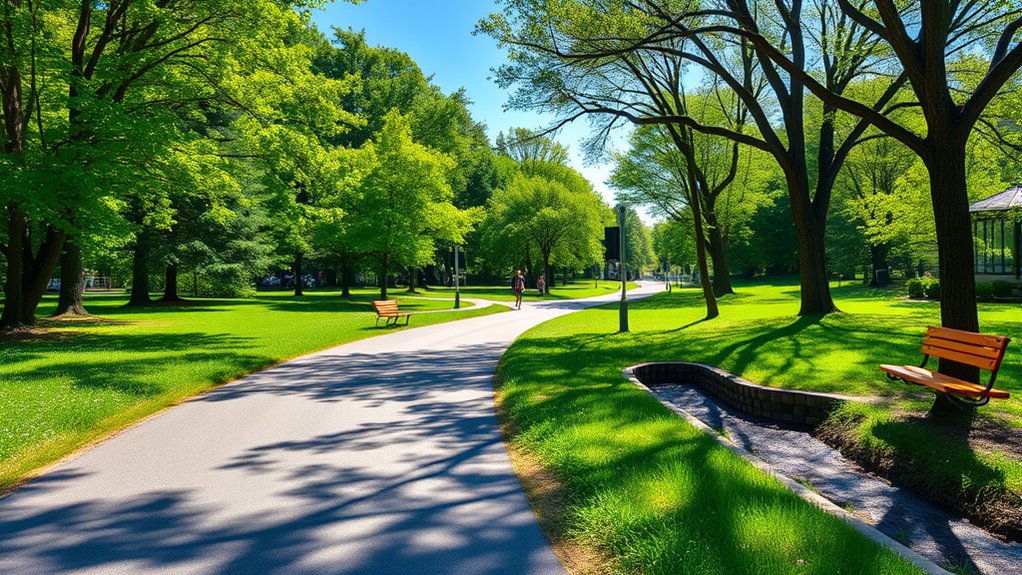
Finding scenic running routes that are also safe can greatly enhance your overall experience and keep you motivated. When you choose routes that blend natural beauty with safety, running feels less like a chore and more like an enjoyable escape. Urban trails and park pathways are excellent options, offering both scenic views and a controlled environment where you can focus on your pace without unnecessary hazards. Urban trails are often lined with trees, flowers, and interesting architecture, providing visual stimulation that makes your run more engaging. Park pathways, on the other hand, are designed with pedestrians in mind, typically maintained well and free from vehicle traffic. They often wind through green spaces, lakes, or gardens, offering a calming backdrop that can boost your mental well-being during a workout.
Scenic, safe routes like urban trails and park pathways make running more enjoyable and mentally refreshing.
To find these routes, start by exploring your local neighborhood or city maps. Many cities have dedicated websites or apps that highlight popular running routes, including urban trails and park pathways. These resources often include user reviews and tips for the safest and most scenic sections. When selecting a route, consider the time of day you plan to run. Early mornings and late afternoons tend to be less crowded, reducing the risk of accidents or encounters with distracted pedestrians or cyclists. Also, check the lighting conditions; well-lit paths are safer, especially if you prefer running during dusk or dawn.
Pay attention to the terrain as well. Urban trails might include paved or gravel paths, which are generally stable and easy on your joints. Park pathways usually offer smooth surfaces that are accessible for all runners, including those with mobility aids. Avoid routes that have uneven surfaces, loose gravel, or areas prone to flooding after rain, as these can increase the risk of falls or injuries. If possible, visit your preferred route beforehand to assess its safety and scenic qualities. Look for well-maintained paths, clear signage, and nearby amenities like benches or water fountains.
Safety also involves being aware of your surroundings. Stick to populated routes where other runners, walkers, or cyclists are present. Carry your phone with emergency contacts saved, and wear visible clothing, especially if you run during low-light hours. Sharing your route with a friend or family member can add an extra layer of security. Additionally, checking the operating hours of nearby amenities like grocery stores can help you plan your run around your needs. Ultimately, finding routes that are both scenic and safe requires a bit of research and observation, but once you identify the perfect urban trails or park pathways, your runs will be more enjoyable and less stressful. This approach not only improves your physical health but also enriches your mental well-being, making each run a rewarding experience.

SAWNZC LED Reflective Vest Running Gear, 5 Colors Lights Up Running Vest for Night Walking Cycling Jogging, Adjustable Size for Men Women Kids, Rechargeable and High Visible (1, Green)
- LED Front and Rear Lights: Bright, 360° visibility for safety
- Five Color Light Modes: Steady, flashing, and RGB options
- Easy Mode Switching: Press button to cycle through modes
As an affiliate, we earn on qualifying purchases.
As an affiliate, we earn on qualifying purchases.
Frequently Asked Questions
How Do I Identify Scenic Routes in Unfamiliar Areas?
You can identify scenic routes in unfamiliar areas by using mapping resources like Google Maps or Strava to explore parks, trails, and waterfronts. Additionally, tap into local insights by asking fellow runners, checking community boards, or browsing local social media groups. These methods reveal hidden gems and popular scenic paths, ensuring you enjoy beautiful, safe runs while discovering new areas. Always verify route safety before heading out.
What Safety Gear Should I Carry on Scenic Runs?
You should carry reflective gear to stay visible, especially if running early or late. Wear bright clothing and consider a headlamp or wristbands with reflective strips. Also, bring hydration essentials like a small water bottle or energy drink to stay hydrated during your scenic run. These items guarantee your safety and comfort, making your run enjoyable and secure, no matter where you explore.
How Can I Run Safely During Different Seasons?
To run safely during different seasons, wear appropriate seasonal clothing to stay comfortable and protected from weather changes. In hot weather, hydrate frequently and carry water or electrolyte drinks; in cold, layer up and wear moisture-wicking gear. Adjust your route to avoid icy or flooded areas and listen to your body’s signals. By staying prepared with the right clothing and hydration strategies, you’ll enjoy safe, scenic runs year-round.
Are There Apps for Discovering Scenic Running Routes?
Sure, there are apps for discovering scenic running routes—because who doesn’t want a GPS-guided tour of picturesque paths? You can explore mapping tools and trail databases like AllTrails or Strava, which offer detailed routes and user reviews. These apps help you find safe, scenic spots, making your runs more enjoyable and less like an urban escape attempt. So, gear up and let technology lead your next adventure!
How Do I Avoid High-Traffic or Hazardous Areas?
To avoid high-traffic or hazardous areas, you should check local maps and traffic data before heading out. Pay attention to urban noise and pollution levels, especially near busy streets or industrial zones. Use apps or websites that highlight less crowded, greener routes. Stick to residential neighborhoods, parks, or dedicated trails where traffic is minimal, and air quality is better, ensuring a safer, more enjoyable run.
Conclusion
By choosing well-lit parks or quiet neighborhoods, you can enjoy scenic runs safely. For example, imagine starting your morning jog along a tree-lined trail near your home, feeling refreshed and secure. Always trust your instincts, stay aware of your surroundings, and plan your route ahead. With a little preparation, you’ll discover beautiful, safe spots that make running both enjoyable and worry-free. So lace up and explore your local scenery confidently!