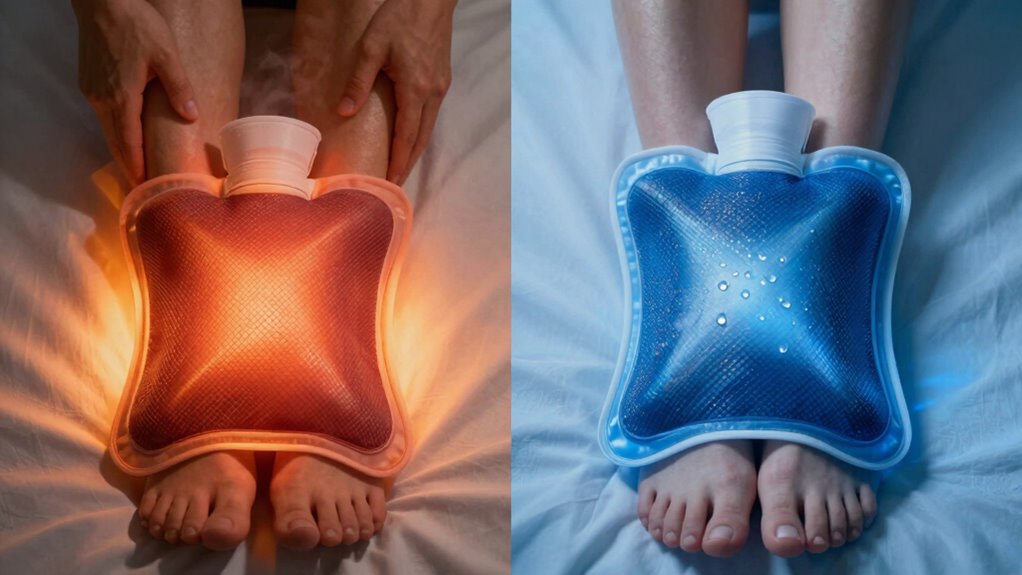
When deciding between heat and cold for sore legs, consider the injury stage and your symptoms. If you have sharp pain, swelling, or inflammation, apply cold for 15-20 minutes to reduce swelling. Once that initial phase passes and stiffness or tightness remains, switch to heat to relax muscles and improve comfort. Knowing when to use each makes recovery smoother—keep going to discover how to make the best choice for your soreness.
Key Takeaways
- Use cold therapy within 48 hours of injury to reduce inflammation and swelling.
- Apply heat therapy after initial inflammation subsides to relax muscles and alleviate stiffness.
- For sharp pain and swelling, choose cold; for persistent soreness and muscle tightness, opt for heat.
- Alternate cold and heat treatments to balance inflammation reduction and muscle relaxation.
- Always monitor skin response and avoid prolonged application to prevent tissue damage.
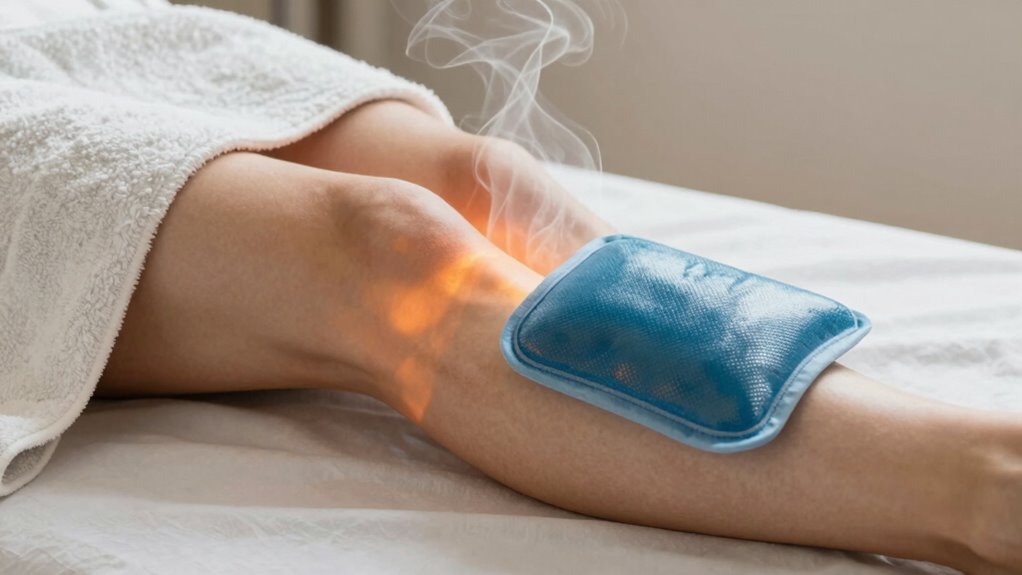
When your legs are sore, deciding between heat and cold therapy can make a big difference in how quickly you recover. The choice hinges on what your body needs most at that moment. If you’re feeling tight, tense, or stiff, heat therapy can be your best friend. Applying heat helps promote muscle relaxation by increasing blood flow to the affected area. This encourages muscles to loosen up, easing stiffness and discomfort. It’s especially effective if your soreness stems from overuse or prolonged activity that causes muscles to tighten. Conversely, if you’re experiencing swelling, sharp pain, or signs of inflammation, cold therapy is usually the better option. Cold reduces inflammation by constricting blood vessels, which limits the flow of inflammatory substances to the injured tissues. This can drastically decrease swelling and numb the area, providing immediate pain relief. Knowing when to switch between heat and cold depends on the stage of your recovery. In the initial phase of soreness—say, within the first 48 hours—cold therapy is typically recommended. It helps control inflammation and minimizes tissue damage. Applying an ice pack or cold compress for 15-20 minutes every hour can be very effective. Once the initial swelling subsides and the pain begins to feel more like muscle tightness rather than acute injury, heat therapy becomes more appropriate. It encourages muscle relaxation and helps loosen up tight muscles, making movement easier and more comfortable. Using a heating pad or warm towel can help ease persistent stiffness or soreness that lingers beyond the initial injury phase. Understanding how to properly apply cold and heat is crucial for avoiding further injury or discomfort. Timing and proper application are essential. Never apply ice directly to your skin; always use a cloth or towel as a barrier to prevent frostbite. Similarly, don’t leave heat on for too long—15 to 20 minutes at a time is sufficient to avoid burns. Pay attention to your body’s signals—if cold causes numbness or discomfort, remove it immediately. The same goes for heat if you experience increased swelling or redness. Keep in mind that combining both therapies can sometimes be beneficial, especially if you alternate between cold to reduce inflammation and heat to promote muscle relaxation. This approach can give you a more rounded recovery experience, targeting both the inflammation and tightness that contribute to sore legs. Ultimately, your goal is to reduce pain, minimize inflammation, and restore mobility. By understanding when to use heat versus cold, you can tailor your recovery routine effectively and get back on your feet faster.

FlexiKold Gel Soft Flexible Ice Packs for Injuries – Reusable Freezer Cold Pack, Cold Compress & Cooling Gel Pad for Face, Shoulder, Hip, Leg, Arm, Ankle & Foot Injury – Medium – 7.5” x 11.5”
Colder For Longer: Reusable ice packs for injuries with proprietary gel interior that stays Colder for Longer. Gel…
As an affiliate, we earn on qualifying purchases.
As an affiliate, we earn on qualifying purchases.
Frequently Asked Questions
Can Alternating Heat and Cold Treatments Improve Sore Leg Recovery?
Alternating heat and cold treatments can help improve your sore leg recovery by promoting muscle relaxation and reducing inflammation. Cold therapy constricts blood vessels, decreasing swelling and pain, while heat encourages blood flow, easing muscle tension. By switching between the two, you can effectively manage soreness, speed up healing, and prevent stiffness. Just make sure to apply each treatment appropriately and for limited periods to avoid skin damage.
How Long Should I Apply Heat or Cold Therapy for Optimal Results?
You should apply heat or cold therapy for about 15-20 minutes at a time, like a lightning bolt of relief. Stick to these duration guidelines to avoid skin damage, and use the therapy every 2-3 hours as needed. Keep a timer handy, and don’t overdo it—frequent, short applications work best for soothing sore legs effectively. Always listen to your body’s signals and adjust accordingly.
Are There Any Risks or Side Effects Associated With Heat or Cold Therapy?
You should be aware that heat therapy can cause potential skin burns if applied too hot or for too long, while cold therapy might worsen circulatory issues or cause frostbite if used improperly. To avoid risks, always use a barrier like a cloth, limit application time, and follow recommended guidelines. If you have circulation problems or sensitive skin, consult a healthcare professional before starting heat or cold treatments.
Is Heat or Cold More Effective for Chronic Leg Soreness?
When it comes to chronic leg soreness, you might find that heat therapy warms up the muscles and eases stiffness, making it more effective than ice therapy. Cold therapy is better suited for acute injuries and swelling. If you want relief from ongoing pain, give heat a shot first. But remember, listen to your body—sometimes the best cure is to switch gears and try both to see what works best.
Can I Use Heat or Cold Therapy Alongside Medications?
Yes, you can use heat or cold therapy alongside medications, but you should consider medication interactions and therapy timing. Always consult your doctor to ensure these treatments won’t interfere with your medications or cause adverse effects. Apply heat or cold at appropriate times, avoiding overuse, and wait until your medications take effect. Following your healthcare provider’s advice helps you safely combine therapies for better relief.

Deepsoon Heating Pad,Electric Heating Pads for Back,Neck,Abdomen,Moist Heating Pad for Shoulder,Knee,Arms,Legs,Dry/Moist Heat & Auto Shut Off,Christmas Gifts for Men and Women,Light Gray,24×12 Inch
We heating pad have different sizes for you to choose from, including 12”x24”, 20”x24 ”, 17”x33” and 20”x40”,you…
As an affiliate, we earn on qualifying purchases.
As an affiliate, we earn on qualifying purchases.
Conclusion
Just like the timeless dance of fire and ice, choosing between heat and cold for sore legs depends on your body’s needs. Embrace the warmth when muscles need soothing, and let the chill calm inflammation when swelling strikes. Remember, it’s your story—your decision. So, listen closely, act wisely, and trust your instincts. Like a well-choreographed dance, finding the right balance restores harmony and keeps you moving forward, pain-free and confident.

Ice Freeze Bags (Kit of 12) by Omni Ice™
Freezer Safe / Heat safe up to 250 degrees
As an affiliate, we earn on qualifying purchases.
As an affiliate, we earn on qualifying purchases.

Ice Packs for Injuries Reusable (3-Piece Set) – Hot and Cold Ice Pack Therapy Gel Wrap Support – Supports Recovery, Joint and Muscle Pain – Knees, Back & More (3 Piece Set – Classic)
Effective Relief: Cold packs for injuries provide immediate soothing comfort; ice bags for injuries help reduce swelling and…
As an affiliate, we earn on qualifying purchases.
As an affiliate, we earn on qualifying purchases.