
As you run through Philadelphia’s historic streets, you’ll enjoy a fast, friendly city atmosphere packed with vibrant neighborhoods and enthusiastic crowds supporting your effort. The course offers scenic views, lively neighborhoods, and great camaraderie. To guarantee your best performance, plan your nutrition and hydration routines ahead of race day. Staying energized and hydrated will help you enjoy every moment of this memorable marathon experience. Keep going, and you’ll find more tips to make your race even better.
Key Takeaways
- The Philadelphia Marathon features a scenic course through historic landmarks, encouraging a fast and enjoyable race experience.
- Proper nutrition and hydration strategies practiced beforehand help runners sustain energy and avoid cramps during the race.
- The city’s supportive atmosphere and aid stations make it a friendly environment for runners of all levels.
- Training with long runs, speed work, and nutrition routines prepares runners for optimal performance and endurance.
- Runners are advised to stay calm, follow their nutrition plan, and enjoy the vibrant, energetic city race setting.
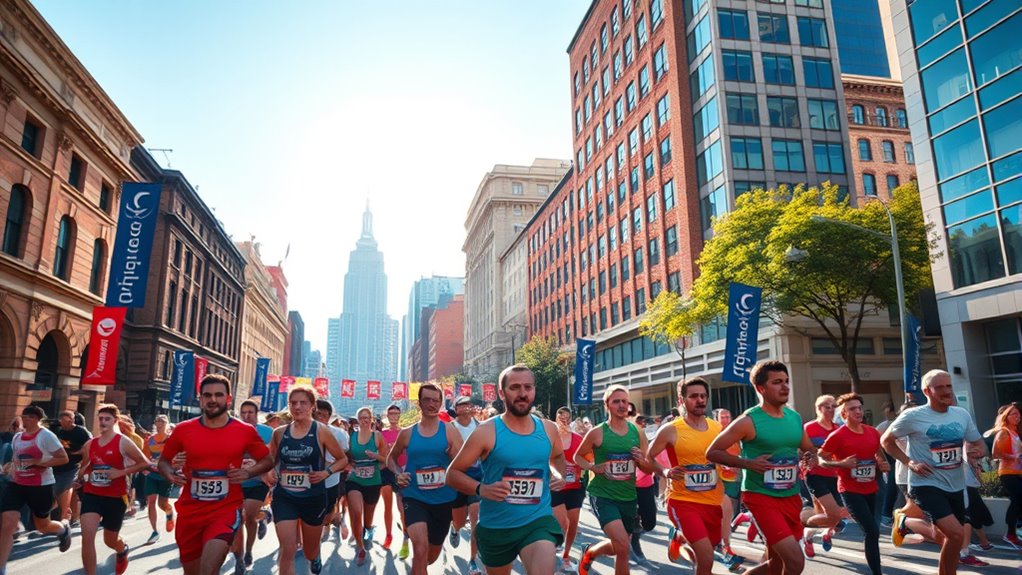
Every year, thousands of runners from around the world flock to Philadelphia to take part in the iconic Philadelphia Marathon. Whether you’re a seasoned marathoner or a first-time participant, preparing properly can make all the difference. One essential aspect often overlooked is race day nutrition. In the weeks leading up to the race, your marathon training plans should emphasize fueling your body effectively. As race day approaches, you’ll want to focus on easily digestible carbs, staying hydrated, and maintaining steady energy levels. On the morning of the race, a familiar, well-practiced breakfast can help prevent stomach issues and give you the energy boost you need. Think simple options like a banana with a small amount of peanut butter or a bagel with honey—foods you’ve tested during your training.
Preparing your body with easy-to-digest carbs and familiar breakfast choices sets you up for marathon success.
During the run, your race day nutrition strategy becomes even more critical. Many runners rely on gels, chews, or sports drinks to sustain their energy, especially during the latter miles. Practice using these items during your marathon training plans so you know how your body responds. Hydration is equally important. Philadelphia’s marathon course, with its scenic route through the city’s historic sites, can be physically demanding, especially if the weather is warm. Carry a water bottle or utilize aid stations strategically placed along the course to avoid dehydration. Remember, not all hydration options are equal—some runners prefer electrolyte drinks to replenish lost salts and prevent cramping. Incorporating proper hydration strategies into your training can significantly improve your race performance.
Beyond nutrition, your marathon training plans should include a mix of long runs, speed work, and rest days. Building endurance gradually helps your body adapt and reduces injury risk. Incorporate runs that mimic race conditions—similar terrain, pace, and nutrition routines—to better prepare yourself for race day. On the day of the marathon, stay calm and stick to the plan you’ve practiced. The Philadelphia course is known for its friendly atmosphere, and the support from spectators can give you a much-needed boost.
Ultimately, success at the Philadelphia Marathon comes down to preparation—both physically and nutritionally. By adhering to well-structured marathon training plans and paying close attention to your race day nutrition, you’ll set yourself up for a strong finish. Remember, every step you take in training is an investment toward crossing that iconic finish line in Philadelphia, proud and accomplished.
Frequently Asked Questions
What Is the Best Time to Register for the Marathon?
You should register during the early sign-up period, which typically opens several months before race day. To secure your spot and get the best rates, aim to sign up as soon as the registration window opens. Waiting too long might mean missing out or paying higher fees. Keep an eye on official announcements, and don’t delay—early registration guarantees you’re in for this fast, friendly city run!
Are There Any Wheelchair or Adaptive Race Options?
Think of the marathon as a city-wide symphony where everyone’s part matters. Yes, there are wheelchair division and adaptive running options, ensuring everyone can participate. The organizers are committed to inclusivity, providing accessible routes and support for adaptive runners. If you’re considering this, you’ll find a welcoming environment that celebrates diversity and perseverance, making the race a true community effort where everyone’s voice is heard and valued.
How Do I Track My Progress During the Race?
You can track your progress during the race by using GPS tracking on your device or running app. Join a pace group to help maintain your desired speed and stay motivated. These tools give you real-time updates, so you know how you’re doing at any moment. Make sure your device is charged and synced before the race to enjoy a smooth tracking experience and stay on top of your pace.
What Accommodations Are Available for Out-Of-Town Participants?
Like a traveler in a city that never sleeps, you’ll find plenty of lodging options to suit your needs, from cozy hotels to budget-friendly hostels. Transportation services make it easy to get around, whether you’re arriving from afar or exploring the city’s vibrant streets. Out-of-town participants receive special accommodations and assistance, ensuring your stay is comfortable so you can focus on conquering the race and making unforgettable memories.
Are There Post-Race Celebrations or Events?
After the race, you can enjoy lively post-race festivities that celebrate your achievement and bring the community together. There are often music, food, and drinks, creating a festive atmosphere for all participants. You’ll also find opportunities for runner reunions, where you can connect with friends and fellow runners. These events make the marathon experience memorable and fun, giving you a chance to relax and share your accomplishment with others.
Conclusion
As you cross the finish line, you realize the Philadelphia Marathon isn’t just about miles — it’s about the city’s heartbeat. Like running through a living history book, each step connects you to stories of resilience and community. Think of it as a relay race, passed down through generations, now yours to carry forward. This race proves that with determination, you can turn a city’s spirit into your own personal triumph.