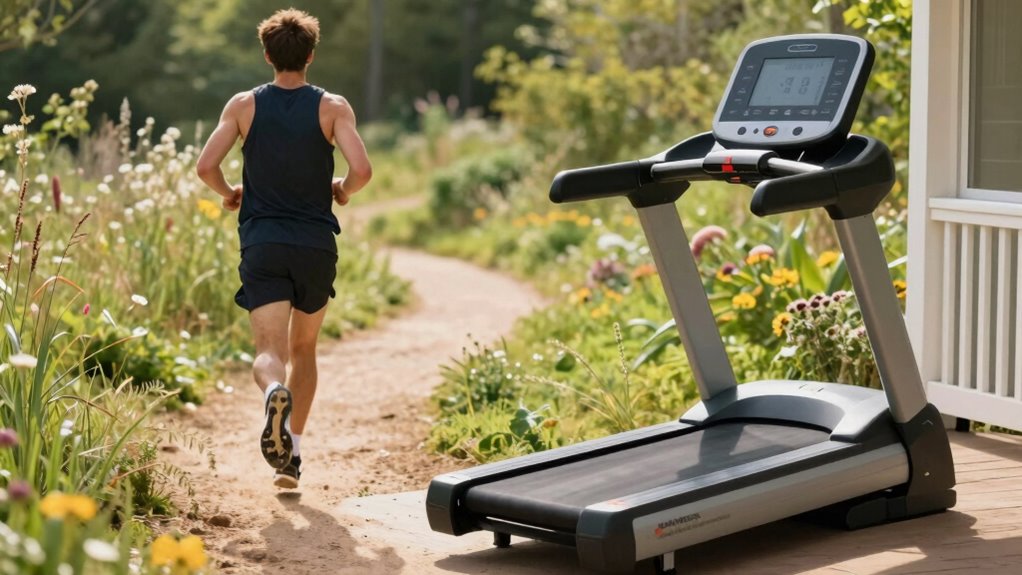

Converting outdoor pace to treadmill pace isn’t exact because environmental and effort differences affect your perception. On a treadmill, factors like lack of wind and steady surfaces can make a pace feel easier or harder than outdoors at the same speed. To get accurate conversions, focus on your perceived effort, breathing, and heart rate rather than relying solely on numbers. Using interval workouts and calibration techniques helps you compare and adjust your pace across both settings effectively. Keep exploring to learn how to perfect your pace conversions.

Get workout gear delivered free with Prime
- Fast, free delivery on millions of items
- Prime Video, Amazon Music and more included
- Member-only deals all year
Key Takeaways
- Treadmill pace often feels easier than outdoor running at the same speed due to lack of wind and terrain variability.
- Calibrate treadmill pace by matching perceived effort, breathing, and heart rate to outdoor runs for accurate conversion.
- Use interval training to develop a consistent sense of effort, helping translate treadmill speeds to outdoor effort levels.
- Remember that outdoor runs may feel more strenuous at the same pace because of environmental factors like wind resistance.
- Focus on perceived exertion rather than exact numbers to reliably convert treadmill pace to outdoor running effort.
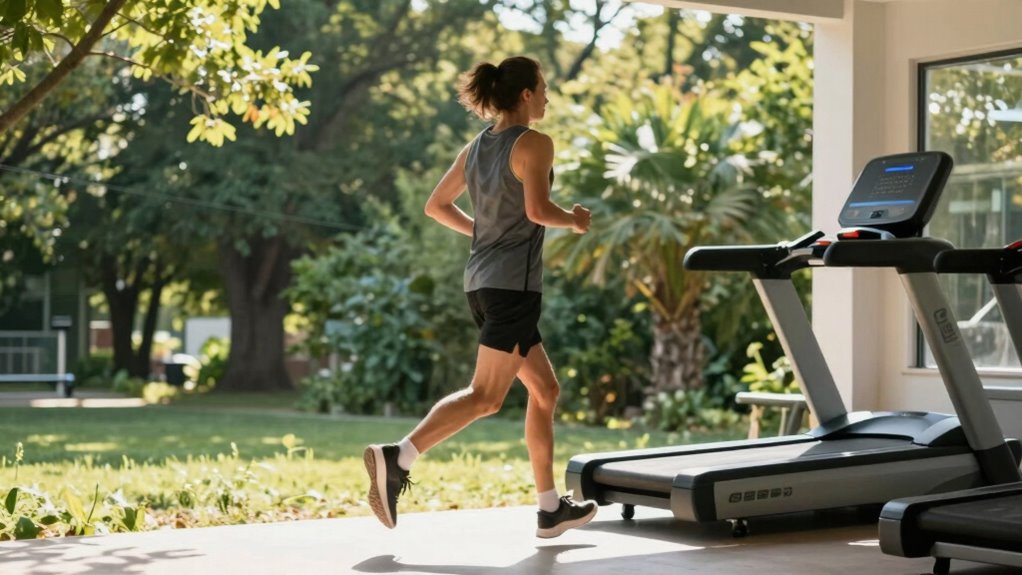
Running outdoors and on a treadmill may seem similar, but many runners notice their pace feels different in each setting. That’s because the environment and surface affect how you perceive your speed and effort. When you’re trying to compare your outdoor pace to treadmill data, it’s essential to understand how to calibrate your pace accurately. This is where interval training and pace calibration come into play. Interval training, which involves alternating periods of high and low intensity, helps you develop a better sense of pace and control. It trains you to recognize what a certain speed or effort feels like, whether on the road or the belt. By incorporating interval workouts into your routine, you can fine-tune your perception of pace, making conversions between outdoor and treadmill easier and more reliable. Additionally, understanding style differences between environments can help you adapt your training for better consistency. Pace calibration is the process of adjusting your perception and measurement of speed so that data from your treadmill matches your actual outdoor effort. When you start, you might notice that running at 6 mph indoors doesn’t feel quite the same as running at 6 mph outdoors. This discrepancy occurs because indoor environments lack wind resistance, uneven terrain, and other variables that affect your effort. To calibrate your pace, you need to pay attention to your breathing, heart rate, and perceived exertion during both settings. For example, if you notice that a certain treadmill pace feels easier than your outdoor run at the same speed, you might need to increase your treadmill pace slightly to match your outdoor effort. Conversely, if outdoor running feels more strenuous, you might need to decrease your treadmill pace. Using interval training helps you establish a consistent reference point for your pace calibration. During these sessions, run at various speeds, both indoors and outside, and note how you feel at each point. This practice trains your brain to associate perceived effort with specific speeds, making it easier to translate data from one environment to the other. It also improves your ability to gauge effort without constantly relying on gadgets. Remember, the goal isn’t to match every treadmill number exactly but to develop a reliable sense of your pace across different settings. Once you understand your effort levels, you can adjust your workouts accordingly.
As an affiliate, we earn on qualifying purchases.
Frequently Asked Questions
How Does Elevation Affect Outdoor and Treadmill Pace Differences?
Elevation impacts your outdoor and treadmill pace differences because terrain variability and altitude adjustments come into play. When you’re running uphill outdoors, your pace slows due to increased effort and altitude effects, which aren’t fully replicated on a treadmill. Conversely, running downhill or at lower altitudes can make your outdoor pace faster compared to treadmill pace. Understanding these factors helps you accurately gauge your performance and adjust your training accordingly.
Can Weather Conditions Impact the Accuracy of Outdoor Pace Measurements?
Weather impact can turn your outdoor run into a wild card, affecting measurement accuracy like a gust of wind shifting your course. Rain, wind, and temperature fluctuations can slow you down or distort GPS signals, making your pace readings less reliable. You might think you’re maintaining a steady rhythm, but these conditions can deceive your device, emphasizing the need to account for weather when evaluating your outdoor performance.
Are There Specific Sports or Activities Where Pace Conversion Is More Important?
You’ll find pace conversion particularly important in trail running and cycling, where terrain and conditions vary greatly. When switching between outdoor and indoor settings, accurate conversions help you track progress and set realistic goals. For trail runners, uneven surfaces impact pace measurements, while cycling pace can fluctuate with wind and elevation. Using proper conversion rules guarantees you’re comparing apples to apples, keeping your training consistent and effective across different environments.
How Often Should I Recalibrate My Treadmill for Accurate Pace Comparison?
Think of your treadmill as a trusted compass, guiding your stride. You should recalibrate your treadmill every few months or when you notice discrepancies, ensuring treadmill calibration maintains outdoor pace accuracy. Regular calibration keeps your treadmill readings true, making your training more effective. Don’t wait for noticeable errors—proactively recalibrate to stay aligned with real outdoor paces, so every run pushes you closer to your goals with confidence.
What Are Common Mistakes to Avoid When Converting Outdoor to Treadmill Pace?
To avoid pace misjudgments and measurement inaccuracies, don’t assume outdoor and treadmill paces are directly interchangeable. You might overestimate your treadmill speed or underestimate outdoor effort. Always recalibrate your treadmill regularly, and use consistent measurement methods. Avoid relying solely on perceived effort; instead, track your pace with a reliable GPS device or a calibrated treadmill to guarantee accurate conversions and prevent common mistakes.
Conclusion
Remember, whether you’re pounding the pavement or running on a treadmill, understanding the conversion rules helps you stay consistent. Think of it like comparing a trusty steed to a chariot—both get you moving, but each has its quirks. Keep these tips in mind, and you’ll be running smoothly through any terrain. So, lace up, stay motivated, and don’t let the sweat of today be lost in the sands of time. Your next run awaits!
Evergreen bestsellers Picks
bestsellers
As an affiliate, we earn on qualifying purchases.