
To run safely at night, plan your route beforehand, sticking to well-lit, familiar areas and avoiding dark, isolated spots. Wear high-visibility clothing or reflective gear to make sure you’re seen by others, and carry your phone, ID, and safety tools like a whistle or personal alarm. Maintain awareness of your surroundings and share your route and estimated return time with someone trusted. With the right mindset and preparation, night running can be both enjoyable and secure—learn more to stay safe.
Key Takeaways
- Choose well-lit, familiar routes and avoid isolated or poorly maintained areas.
- Wear reflective gear and bright clothing to enhance visibility to others.
- Share your route and estimated return time with a trusted contact before running.
- Carry a fully charged phone, identification, and safety tools like a whistle or personal alarm.
- Stay alert, maintain awareness of surroundings, and trust your instincts for safety at night.
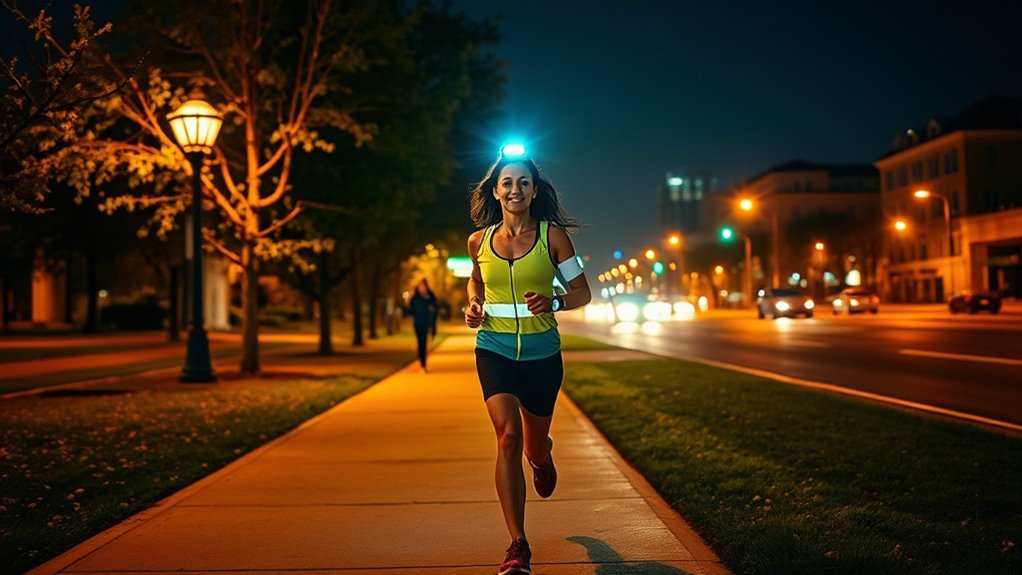
Running at night can be enjoyable and invigorating, but it also requires extra caution to stay safe. When the sun sets, visibility drops, and your surroundings become less predictable. To protect yourself, you need to think ahead, especially about two critical aspects: wearing reflective gear and planning your route carefully. Reflective gear is essential because it makes you more visible to drivers, cyclists, and other pedestrians. Invest in high-quality reflective vests, armbands, or shoes that catch light from multiple angles. The brighter and more noticeable your gear, the less likely someone will overlook you. Avoid dark clothing that can blend into the shadows; instead, opt for items with reflective strips or bright colors. Remember, safety isn’t just about visibility—it’s about making sure others see you well enough to give you space and avoid accidents.
Route planning is equally important. Before heading out, map your route during daylight hours so you know exactly where you’re going. Stick to well-lit streets, paths, or parks that have regular traffic and activity. Avoid shortcuts through isolated areas, alleys, or poorly maintained trails where help might be hard to find if needed. Use navigation apps that allow you to track your route and share your location with a trusted friend or family member. This way, someone always knows where you are, and you can quickly alert them if you encounter trouble. Also, consider the terrain—stick to flat, even surfaces to minimize the risk of tripping or falling. If you’re running in a new area, do a quick reconnaissance during the daytime to identify potential hazards, such as uneven pavement, debris, or poorly lit zones. Incorporating safety measures such as carrying a whistle or personal alarm can further enhance your security in case of emergency.
Combining reflective gear with strategic route planning gives you a significant safety advantage. It allows you to run confidently, knowing you’re more visible and your path is secure. Keep your phone fully charged and carry identification, just in case. It’s also wise to let someone know your planned route and estimated return time before you start. Staying aware of your environment, dressing properly, and choosing your route wisely can turn a night run into a safe and exhilarating experience. With these precautions, you’ll find that running at night, while different from daytime, can be both revitalizing and safe when you’re prepared.

SAWNZC LED Reflective Vest Running Gear, 5 Colors Lights Up Running Vest for Night Walking Cycling Jogging, Adjustable Size for Men Women Kids, Rechargeable and High Visible (1, Green)
LED Reflective Vest; designed with LED light both front and rear and reflective strip on the gear, it…
As an affiliate, we earn on qualifying purchases.
As an affiliate, we earn on qualifying purchases.
Frequently Asked Questions
What Should I Do if I Encounter a Suspicious Person During My Night Run?
If you encounter a suspicious person during your night run, stay calm and trust your instincts. Use personal safety strategies like maintaining a safe distance and avoiding confrontation. Activate your emergency response protocols by calling 911 or your designated emergency contact. Keep your phone accessible, speak loudly to attract attention, and keep moving towards well-lit, populated areas. Your awareness and quick actions help guarantee your safety in such situations.
Are There Specific Types of Reflective Gear Recommended for Night Running?
You might think any reflective gear will do, but ironically, the bright Reflective vest and LED armbands are your best bets. These gear pieces catch drivers’ eyes and keep you visible from afar. Don’t settle for dull or minimal reflections; invest in high-quality, adjustable gear that shines in the dark. After all, your safety depends on being seen, even when you’re just trying to enjoy a peaceful night run.
How Can I Stay Motivated to Run Safely at Night Regularly?
You stay motivated to run safely at night by setting clear goals and celebrating small wins. Use motivational strategies like listening to your favorite music or visualizing your progress. Find accountability partners who can encourage you and keep you committed. Their support makes it easier to stay consistent, even when it’s dark outside. Remember, maintaining your safety mindset and tracking your improvements will boost your confidence and motivation to keep running regularly.
What Are the Best Apps or Tools for Night Running Safety?
You’d think safety apps would be obvious, but surprisingly, apps like Strava and Runkeeper offer more than tracking—they include GPS tracking and emergency alerts, making you feel like a running spy. These tools let you share your route with friends and trigger alerts if something’s wrong. Don’t forget to activate emergency features; they’re your digital lifeline, turning your night run into a safer, more confident adventure.
How Can I Prevent or Handle Injuries While Running in Low Light Conditions?
To prevent or handle injuries while running in low light conditions, you should prioritize visibility tips like wearing reflective gear and using a headlamp. Focus on injury prevention by warming up properly, staying aware of your surroundings, and choosing well-lit, familiar routes. If you feel discomfort or risk, slow down or stop. Always listen to your body and carry a phone for emergencies to stay safe during night runs.
night running safety gear
As an affiliate, we earn on qualifying purchases.
As an affiliate, we earn on qualifying purchases.
Conclusion
So, you’ve taken all these precautions to stay safe at night—wear bright gear, stick to familiar routes, and stay alert. Ironically, the biggest risk might be thinking you’re invincible just because you’ve planned perfectly. Remember, no plan is foolproof, and the darkness can hide more than just your surroundings. Stay cautious, trust your instincts, and enjoy your runs—just don’t forget that safety always comes first, even when the moon’s out to watch you.
personal alarm for runners
As an affiliate, we earn on qualifying purchases.
As an affiliate, we earn on qualifying purchases.
high visibility running shoes
As an affiliate, we earn on qualifying purchases.
As an affiliate, we earn on qualifying purchases.