

To improve sleep hygiene as a runner, stick to a consistent sleep schedule by going to bed and waking up at the same times each day. Create a sleep-friendly environment by keeping your room dark, cool, and quiet, and avoid screens before bed. Limit caffeine, heavy meals, and fluids close to sleep, and establish calming routines like stretching or relaxing music. By maintaining these habits, you’ll recover faster and perform better; keep exploring for more helpful tips.

Get workout gear delivered free with Prime
- Fast, free delivery on millions of items
- Prime Video, Amazon Music and more included
- Member-only deals all year
Key Takeaways
- Maintain a consistent sleep schedule by going to bed and waking up at the same times daily.
- Create a sleep-friendly environment: cool, dark, quiet, and free of electronic devices.
- Establish calming pre-sleep routines like reading, gentle stretching, or listening to soothing sounds.
- Avoid caffeine, heavy meals, and excessive fluids before bedtime to prevent disruptions.
- Practice relaxation techniques such as deep breathing or meditation to reduce stress and improve sleep quality.
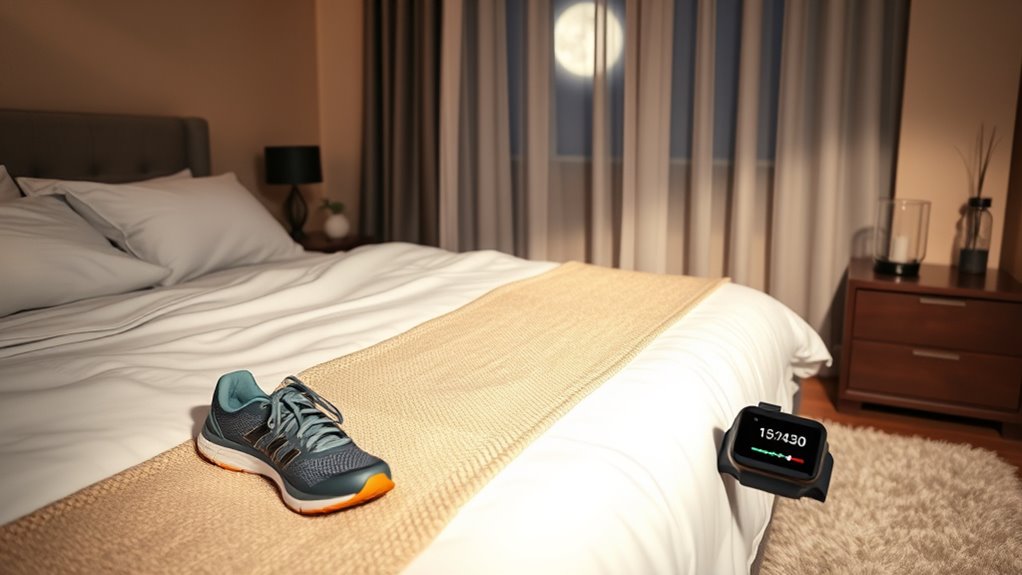
Getting quality sleep is essential for runners aiming to improve performance and recover effectively. When you prioritize restful sleep, your body has the opportunity to repair muscles, replenish energy stores, and clear metabolic waste. One of the most effective ways to achieve this is by establishing strong bedtime routines that signal to your body it’s time to wind down. Consistency is key; going to bed and waking up at the same time each day helps regulate your internal clock, making it easier to fall asleep quickly and stay asleep throughout the night. Avoid irregular sleep schedules, especially during weekends, as they can disrupt your circadian rhythm and negatively impact your recovery and performance.
Prioritizing consistent sleep routines helps runners recover faster and perform better.
Creating an environment conducive to restful sleep is equally important. Keep your bedroom cool, dark, and quiet. Use blackout curtains or an eye mask to block out light, and consider earplugs if noise is a problem. Removing electronic devices from your sleeping area is vital, as the blue light emitted by screens suppresses melatonin production, making it harder to fall asleep. Instead, incorporate calming activities into your bedtime routines, such as reading a book, practicing gentle stretching, or listening to soothing music. These habits help relax your mind and body, easing the bridge into sleep.
Avoid caffeine and heavy meals close to bedtime, as they can interfere with your ability to fall asleep. Instead, opt for a light snack if you’re hungry, like a banana or a small handful of nuts. Staying hydrated is important, but try to limit fluid intake right before bed to prevent disruptive trips to the bathroom. Incorporate relaxation techniques such as deep breathing exercises, meditation, or progressive muscle relaxation into your nightly routine. These practices help reduce stress and calm your nervous system, making it easier to drift into restful sleep.
It’s also beneficial to create a pre-sleep ritual that signals to your body that it’s time to rest. This can include dimming the lights, turning off screens at least an hour before bed, and engaging in calming activities. Consistent bedtime routines reinforce your body’s natural sleep signals, leading to more restful sleep and better recovery from your runs. Additionally, incorporating music therapy or nature sounds can further promote relaxation and improve sleep quality. Remember, quality sleep isn’t just about quantity; it’s about creating an environment and routine that promote deep, uninterrupted rest. When you commit to these routines, you’ll notice improved energy levels, quicker recovery, and enhanced athletic performance, all of which support your running goals.
As an affiliate, we earn on qualifying purchases.
Frequently Asked Questions
Can Naps Replace Nighttime Sleep for Runners?
Naps can’t fully replace nighttime sleep for runners. While power naps can boost your energy and aid recovery, they don’t provide the same restorative benefits as a full night’s sleep. Maintaining sleep consistency is key to peak performance and health. Incorporate short naps strategically, but prioritize consistent, quality nighttime sleep to support your running goals and overall well-being.
How Does Caffeine Intake Affect Sleep Quality for Runners?
Caffeine intake can considerably impact your sleep quality, especially if you consume it late in the day. Timing matters—avoid caffeine at least six hours before bedtime to prevent interference with sleep. If you rely on caffeine regularly, you might experience withdrawal symptoms that disrupt sleep patterns. By managing caffeine timing and reducing intake gradually, you can improve your sleep quality and enhance your recovery as a runner.
What Are the Best Sleep Positions for Runners?
You might think sleeping in any position works, but research suggests back sleeping with proper pillow support is best for runners. This sleep posture helps maintain spinal alignment and reduces muscle strain. Use a supportive pillow to keep your neck aligned and avoid putting pressure on joints. Side sleeping can also work if you use a pillow between your knees for added comfort, but avoid stomach sleeping, which can cause neck and back pain.
Does Running in the Evening Impact Sleep Latency?
Running in the evening can impact your sleep latency, especially if it disrupts your bedtime routines or sleep environment. If you keep a consistent bedtime routine and create a calm sleep environment, your body can shift seamlessly from activity to rest. However, intense evening runs might elevate adrenaline levels, making it harder to fall asleep quickly. Adjust your running time if needed to guarantee better sleep and recovery.
How Can Runners Recover From Sleep Deprivation Quickly?
To recover quickly from sleep deprivation, prioritize hydration strategies and optimize your sleep environment. Drinking water helps your body recover, while a cool, dark, and quiet room enhances sleep quality. Avoid caffeine and screens before bed, and try short naps to boost alertness. Staying consistent with your sleep schedule also speeds recovery, so your body can restore energy and repair itself more efficiently.
Conclusion
By prioritizing good sleep hygiene, you optimize your recovery and performance as a runner. Some believe that consistent routines can even influence your body’s natural clock, making sleep more restful. While science supports the benefits of quality sleep, it’s still evolving how much routines alone can enhance it. Still, adopting these habits helps you feel energized and ready to hit your next run, proving that good sleep truly fuels your running success.
Fall Picks
fall essentials
As an affiliate, we earn on qualifying purchases.