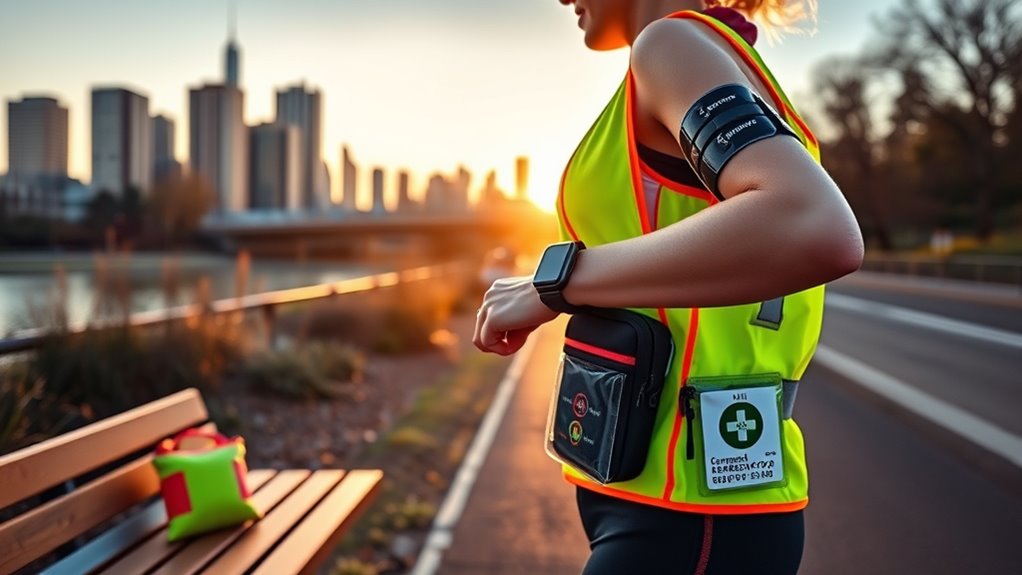

To stay safe while running, always carry proper identification with your medical info and emergency contacts, like a safety bracelet or card. Share your route and estimated return time with someone you trust, and guarantee your phone is fully charged with safety apps or emergency contacts pre-set. Carry a reliable communication device or GPS in case of poor signal. Regularly test your safety gear and stay aware of your surroundings. Keep exploring for more tips to enhance your safety plan.
Key Takeaways
- Carry a safety ID bracelet or card with essential medical and contact information for quick identification during emergencies.
- Always keep your cell phone fully charged and install safety apps with GPS tracking and emergency alert features.
- Share your running route, estimated return time, and safety plan with a trusted person for accountability and quick response.
- Test your emergency communication devices regularly to ensure they function properly in case of an incident.
- Inform yourself about the area, trust your instincts, and be prepared to abort the run if you feel unsafe.
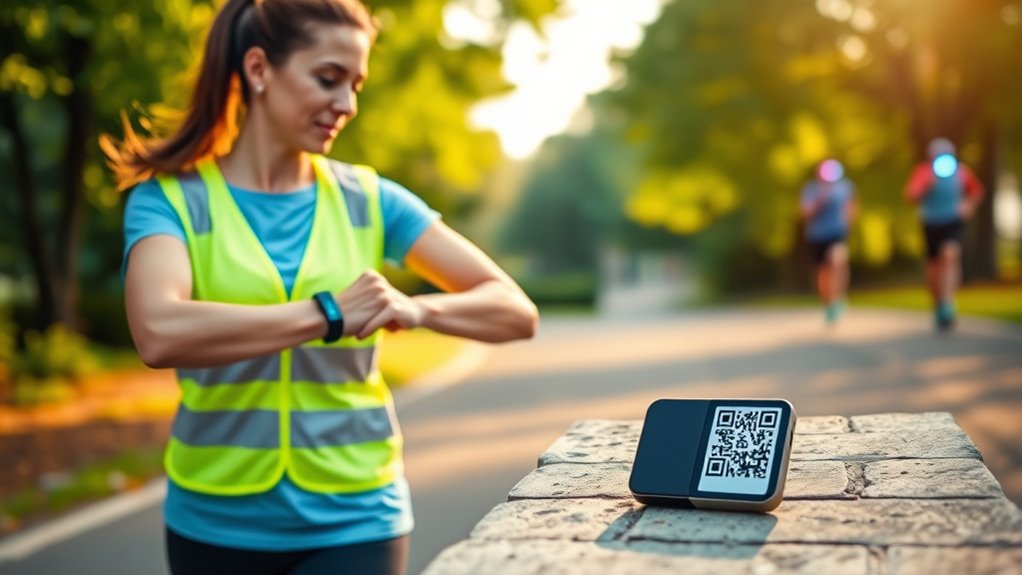
Have you ever considered what you’d do if you encountered an emergency while running alone? It’s a question many runners overlook until it’s too late. Your personal safety should always be a priority, especially when you’re out in the open, away from immediate help. One of the best ways to guarantee your safety is by carrying some form of emergency communication device. This could be as simple as a fully charged cell phone or a dedicated safety device with GPS tracking and one-touch emergency features. Having quick access to emergency services can make all the difference if you’re injured, feeling threatened, or lost.
Carrying an emergency device ensures safety if you’re injured, threatened, or lost during your run.
Before heading out, it’s smart to set up your emergency communication plan. Make sure your phone is always charged and consider installing safety apps that can send your location to trusted contacts instantly. Some apps even have a panic button that alerts emergency services directly. It’s also wise to save important contacts, like local police or a designated emergency contact, under recognizable names to make them easy to find in your phone. If you run in areas with poor cell service, think about carrying a personal safety device that uses GPS signals or radio frequencies to connect you to help. These devices can operate independently of your phone’s network, ensuring you’re covered even in remote areas.
Another key aspect of personal safety is letting someone know your running route and estimated return time. Share your plan with a friend or family member, so they can alert authorities if you don’t check in after a set period. This simple step adds an extra layer of protection, especially if you’re running in unfamiliar or isolated locations. Always carry identification that includes your name, emergency contacts, and any medical conditions. A safety ID bracelet or card can be invaluable if you’re unable to communicate after an incident.
Preparing for emergencies isn’t just about carrying the right gear; it’s about being proactive. Regularly review your safety protocol, test your communication devices, and stay informed about the area where you run. Trust your instincts—if something feels off, don’t hesitate to cut your run short or seek help. Your personal safety is in your hands, and with proper emergency communication tools and planning, you can considerably reduce risks and respond effectively if an incident occurs. Remember, being prepared not only protects you but also gives you peace of mind to enjoy your runs fully. Incorporating high-quality communication devices into your safety plan can significantly enhance your ability to get help quickly and efficiently.
Frequently Asked Questions
What Are the Best Materials for a Durable Safety ID?
You should choose safety IDs made from waterproof materials like silicone, stainless steel, or PVC, as they withstand rain and sweat. Look for engravable options, such as metal or plastic tags, which allow you to customize essential information clearly. These durable materials guarantee your safety ID remains legible and intact during your runs, providing peace of mind knowing your emergency details stay protected no matter the weather or activity conditions.
How Should I Store Emergency Contact Information?
Think of your emergency contact info as a lifeline you wear close to your heart. Store it on a durable safety ID that includes your medical history and allergy alerts, ensuring first responders get the full picture quickly. Keep a digital copy on your phone and a printed version in your running bag. Regularly update both to make sure your essential details are always current and ready when needed.
Are There Specific Safety ID Formats for Children?
Yes, child safety ID formats often feature simple, durable designs with clear labels for essential details like name, emergency contacts, allergies, and medical info. You should choose ID designs that are easily visible and comfortable for your child to wear during activities. Look for options like wristbands or shoe tags made from waterproof materials. These IDs guarantee quick access to crucial info, enhancing safety during emergencies and helping responders assist your child efficiently.
What Is the Recommended Frequency to Update Emergency Info?
You should update your emergency info at least once a year to guarantee accuracy, clarity, and relevance. Regularly updating your emergency info keeps your safety ID current, your contact details precise, and your medical information dependable. Think of it as rejuvenating a vital map—staying prepared, staying protected. Set a calendar reminder, review your details, and make updates a routine part of your safety routine to keep your information always ready when it’s needed most.
Can Safety IDS Be Worn During Water or Trail Runs?
Yes, you can definitely wear safety IDs during water or trail runs. Opt for waterproof safety gear to keep your ID dry in water or rain, and choose reflective accessories to enhance visibility on trail runs or in low-light conditions. Make sure your safety ID is securely attached and easily accessible. This way, your emergency info stays protected and visible, providing peace of mind during any outdoor adventure.
Conclusion
Think of your safety ID and emergency prep as your running partner—always there when you need it most. Just last month, a runner was able to get quick help after tripping and falling, thanks to her emergency info. Remember, over 60% of runners don’t carry ID, but being prepared can turn a scary moment into a simple fix. Stay proactive; it’s the best way to keep your runs safe and enjoyable.