When choosing between kinesio and athletic tape, consider your needs. Kinesio tape lifts the skin to improve circulation and support muscles gently, making it great for enhancing movement and recovery. Athletic tape, on the other hand, provides rigid support to stabilize joints and prevent overextension during intense runs. Understanding how each type works helps you optimize your injury prevention strategy; stay with us to explore more about taping techniques for runners.
Key Takeaways
- Kinesio tape lifts the skin to reduce pressure, improve circulation, and promote flexibility, ideal for muscle recovery.
- Athletic tape provides rigid stabilization, locking joints in specific positions for maximum support during running.
- Proper application of both tapes prevents injuries like strains and sprains by supporting muscles and joints proactively.
- Kinesio tape is more flexible and promotes movement, while athletic tape offers firm support and immobilization.
- Choosing between them depends on whether you need mobility support (Kinesio) or joint stabilization (Athletic).
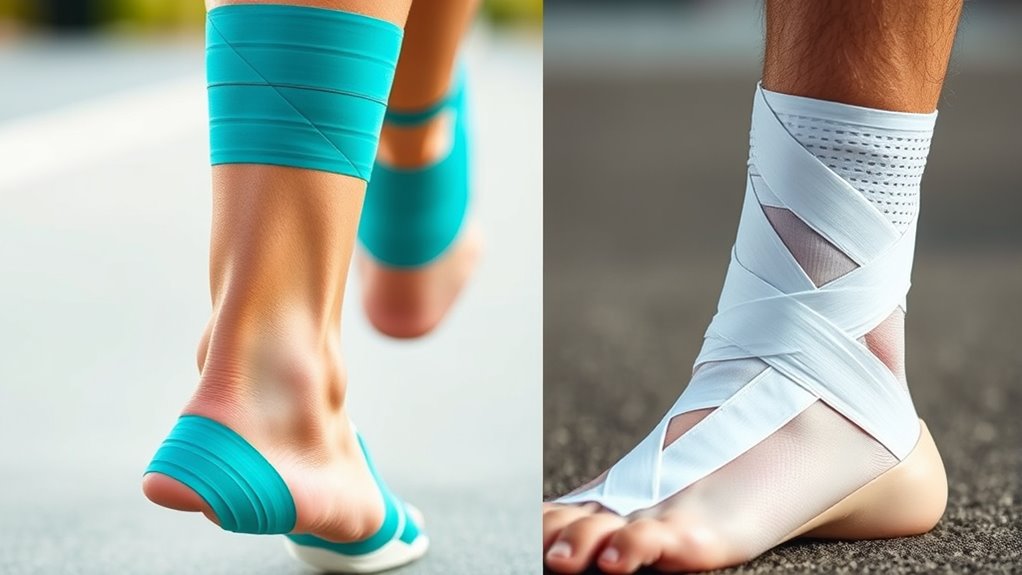
Have you ever wondered how taping can help improve your running performance or reduce pain? Taping, whether using kinesio tape or athletic tape, plays a significant role in supporting your muscles and preventing injuries. When you’re pounding the pavement or hitting the trail, your muscles endure a lot of stress, and taping can provide the necessary support to keep them stable and functioning properly. By stabilizing muscles and joints, taping helps prevent overextension, strain, or sudden movements that might lead to injury. This proactive approach allows you to run more confidently, knowing that your muscles are being supported during strenuous activity.
Taping supports muscles and joints, helping prevent injuries and boost running confidence.
In terms of muscle support, kinesio tape is designed to lift the skin slightly away from the underlying tissues, which can reduce pressure and improve circulation. This lifting effect helps muscles recover faster and stay more flexible, making it easier to maintain proper form over long distances. Athletic tape, on the other hand, offers more rigid support, providing a firm stabilizing effect on joints and muscles. It’s often used to lock in a specific position, which can be particularly beneficial if you’re recovering from an injury or aiming to prevent one from happening. Both types of tape serve the purpose of muscle support, but they do so in different ways. Kinesio tape promotes movement and circulation, while athletic tape offers a more rigid, supportive hold.
Prevention is the key to keeping injuries at bay, and taping plays an essential role here. Properly applied tape can reduce the risk of common running injuries like sprains, strains, and tendonitis by supporting vulnerable areas before they become problematic. If you notice slight discomfort or fatigue in certain muscles or joints, taping can act as a protective barrier, reducing strain and allowing you to push through your run without risking further damage. It’s important, though, to learn the correct techniques for applying tape, ensuring it’s not too tight or too loose. When applied correctly, taping becomes an effective tool for injury prevention, helping you stay consistent and injury-free.
Additionally, understanding how muscle support techniques can complement other injury prevention strategies can lead to more effective running routines. Ultimately, whether you’re aiming for muscle support or injury prevention, taping offers a versatile solution for runners. It’s not a substitute for proper training, stretching, or rest, but it can be a valuable addition to your running routine. By understanding the benefits of kinesio and athletic tape, you can choose the right type for your specific needs and enjoy the added confidence that taping provides during your runs.
Frequently Asked Questions
Can Kinesio or Athletic Tape Improve Running Speed?
Kinesio and athletic tape can help improve your running speed by supporting muscles and joints, reducing injury risk, and enhancing stability. Their tape elasticity allows for natural movement while providing compression. When used correctly, they aid injury prevention and can boost your confidence during runs. However, they don’t directly make you faster but help you stay consistent and injury-free, which can lead to improved performance over time.
How Long Can I Safely Wear Running Tape?
Imagine you’re living in the days of the Roman Empire, and you wonder how long you can safely wear running tape. Generally, you should limit tape duration to 24-48 hours for safety and maximum tape longevity. Wearing it longer can cause skin irritation or discomfort. Always monitor your skin and remove the tape if you notice irritation. For ongoing support, consult a healthcare professional to guarantee safe use.
Are There Any Side Effects From Taping During Runs?
You might experience skin irritation from taping during runs, especially if you have sensitive skin or leave the tape on too long. Some runners worry about tape dependency, but that’s unlikely unless you rely on it constantly. To minimize side effects, make sure your skin is clean and dry before taping, and remove the tape promptly if you notice redness or discomfort. Listening to your body helps prevent any adverse reactions.
Is Taping Suitable for Beginners or Only Experienced Runners?
You don’t need to be an expert to benefit from taping; it’s quite suitable for beginners. You might find that starting with simple techniques offers noticeable support and comfort during runs. As you gain confidence, you can explore more advanced, expert techniques to optimize your performance and prevent injuries. Taping can be a helpful addition to your routine, whether you’re just starting out or a seasoned runner.
Can Taping Prevent All Types of Running Injuries?
Taping can’t prevent all types of running injuries, but it can be an effective preventative measure and aid in injury mitigation. By providing support and stability to vulnerable areas, taping helps reduce strain and inflammation. However, it’s essential to combine taping with proper training, stretching, and footwear. Always listen to your body and consult a professional for personalized advice, ensuring taping complements your overall injury prevention strategy.
Conclusion
Whether you choose kinesio or athletic tape, understanding how they support your run is like choosing the right shoes—each has its purpose. I once saw a runner tape her ankle with kinesio and finish her marathon strong, proving the right tape can be like a trusted teammate. Remember, taping is a tool, not a fix-all. With the right application, you’ll feel more confident and ready to hit your stride, mile after mile.