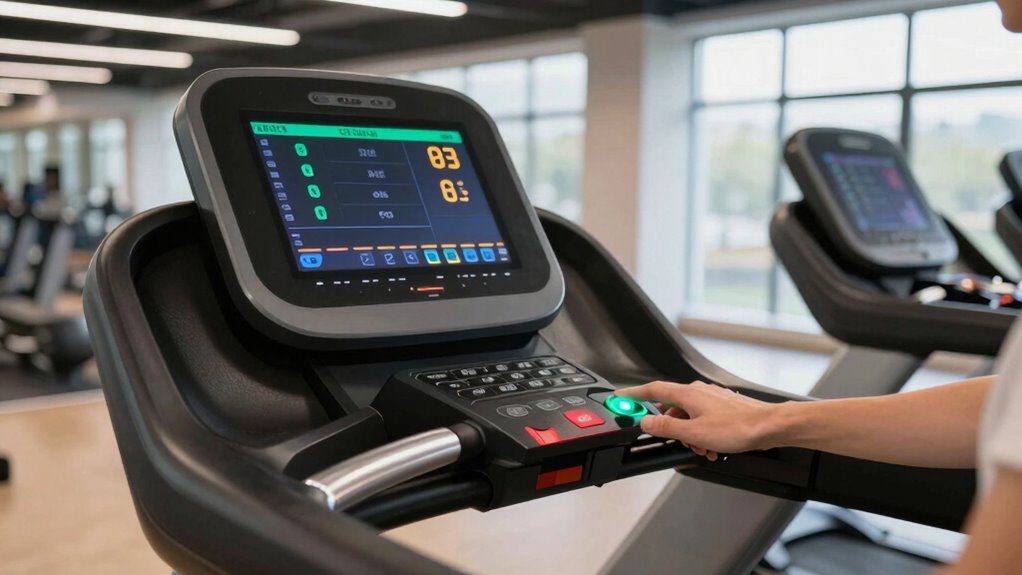

To set up intervals on any treadmill without confusion, start by checking its controls and choosing a preset program or manually adjusting speed and incline. Plan your workout segments beforehand, deciding on your high and low-effort durations and target speeds. Use the treadmill’s display to set timers or speed changes if available, or implement automatic interval functions. Stay focused on your effort levels—if you keep these tips in mind, you’ll master interval workouts easily. Continue to learn effective techniques to optimize your sessions.
Key Takeaways
- Familiarize yourself with the treadmill’s interval features or preset programs before starting.
- Plan your workout segments, defining clear durations and target speeds for high and low efforts.
- Use visual cues or written notes to stay organized during transitions between intervals.
- Start with simple, manual adjustments to speed and incline if preset options aren’t available.
- Monitor your effort and listen to your body, adjusting as needed to avoid confusion or overexertion.
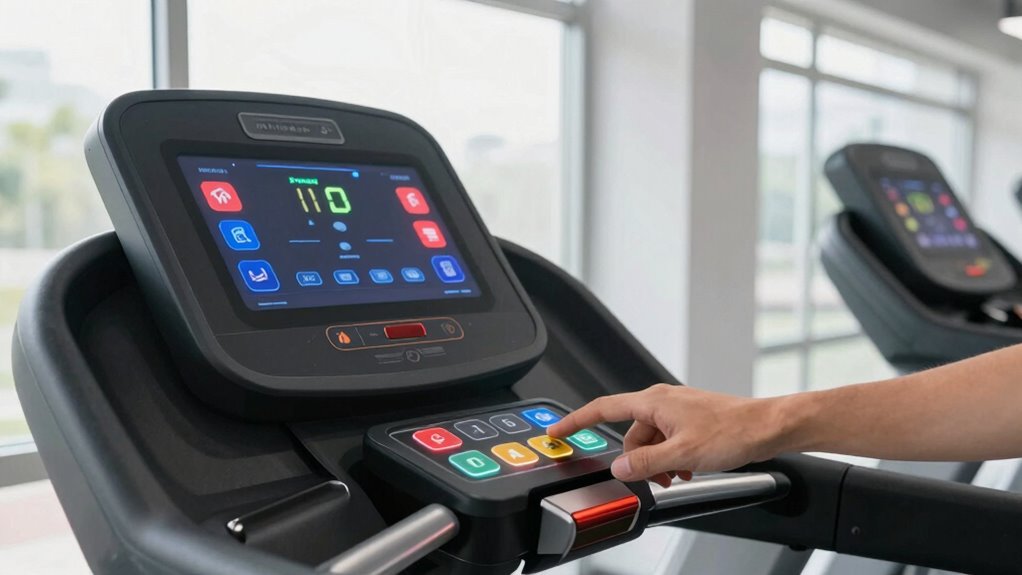
If you want to boost your running performance and burn more calories, setting up treadmill intervals is an effective strategy. Interval training benefits are well-documented, offering improved cardiovascular fitness, increased stamina, and more efficient calorie burn. However, before jumping into interval workouts, it’s essential to prioritize treadmill safety. Make sure your treadmill is in good working condition, with no loose parts or electrical issues. Always start with a proper warm-up to prepare your muscles and reduce injury risk, and keep a water bottle nearby to stay hydrated. Wearing appropriate running shoes also helps prevent discomfort and injury during high-intensity intervals.
Prioritize treadmill safety, warm-up, and proper gear to maximize interval training benefits safely.
When setting up intervals, begin by determining your overall workout duration. For beginners, 20 to 30 minutes can be enough, while more experienced runners might push for 40 minutes or more. Break this time into alternating segments: periods of higher intensity (sprints or faster running) followed by recovery phases of lower intensity (walking or slow jogging). For example, you might sprint for 30 seconds and then walk for 90 seconds, repeating this cycle for the desired number of rounds. Most treadmills have preset interval programs, but if yours doesn’t, you can manually adjust speed and incline settings for each segment.
The key to effective interval training is clarity. Know your target speeds and durations beforehand. For high-intensity segments, aim for a pace that challenges you but is sustainable for the interval duration—typically around 80-90% of your maximum effort. During recovery periods, dial back to a comfortable pace to catch your breath and prepare for the next effort. Keep a mental or written plan handy to ensure you stick to your intended intervals, preventing confusion mid-workout. Additionally, understanding workout customization options can help you better tailor your sessions to your fitness level and goals.
Many treadmills also allow you to set specific time intervals and automatically switch between different speeds and inclines. Take advantage of these features if available, as they help you maintain consistency and focus on your effort level rather than constantly adjusting controls. Remember, interval training benefits come from pushing your limits safely, so listen to your body. If you feel dizzy, overly breathless, or experience pain, ease up or pause the workout.

SereneLife Folding Treadmill – Foldable Home Fitness Equipment with LCD for Walking & Running, 6 MPH Speed, 1HP Motor, Cardio Machine, 4 Manual Incline Levels, 12 Programs, Bluetooth, 265lbs Capacity
A SPACE-SAVING, COMPACT TREADMILL – Our treadmill with incline has a hydraulic folding system for easy storage. When…
As an affiliate, we earn on qualifying purchases.
As an affiliate, we earn on qualifying purchases.
Frequently Asked Questions
Can I Customize Interval Lengths on Any Treadmill Model?
Yes, you can customize interval lengths on many treadmill models through treadmill programming features. Most modern treadmills allow you to adjust interval durations to match your fitness goals. You simply access the programming menu, select interval training, and then set your desired lengths for work and rest periods. Keep in mind, though, some older or basic models might have limited options, so check your treadmill’s manual to see what customization options are available.
How Do I Track My Progress During Interval Training?
You track your progress during interval training by monitoring your heart rate and using interval timers. Keep an eye on your heart rate monitor to guarantee you’re working within your target zone, and use the treadmill’s interval timers to mark the active and rest periods. This helps you stay on track, measure improvements, and adjust intensity as needed. Consistent tracking keeps your workouts effective and motivates you to reach your fitness goals.
Are There Recommended Warm-Up and Cool-Down Durations?
Think of your warm-up and cool-down as the opening and closing scenes of a movie. A good warm-up routine lasts 5-10 minutes, gradually increasing your heart rate, while cool-down stretches should take about 5-10 minutes to help your body recover. These routines prevent injuries and boost performance, so don’t skip them. Keep moving gently during warm-up, and stretch your muscles afterward to stay flexible and fresh.
What Should I Do if My Treadmill Doesn’T Have Interval Programs?
If your treadmill lacks interval programs, you can manually set up your workout by planning your intervals beforehand. Decide on your work and rest periods, then adjust your speed or incline accordingly during your session. Keep a timer handy to switch between high and low-intensity segments. This manual setup allows you to customize your interval training effectively, ensuring you get the most out of your workout without relying on built-in programs.
How Often Should I Vary My Interval Workouts?
You should vary your interval workouts about every 2 to 3 weeks to prevent plateaus and keep things interesting. Maintaining consistent interval frequency helps improve your fitness, but mixing it up guarantees you avoid boredom and overtraining. Listen to your body, and adjust intensity or duration as needed. This approach promotes balanced workout consistency, boosts progress, and keeps your training challenging yet sustainable over the long term.
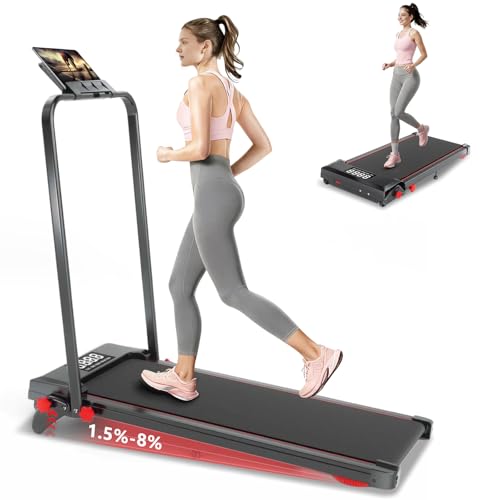
Ecogou Walking Pad with Handle Bar and Incline, 3 in 1 Under Desk Treadmill with Hiking Mode, 2.5HP Low Noise Walking Treadmill Pad with Remote Control,Portable Treadmills for Home Office, Led Display
【3-level Incline Treadmill】:Increases tilt to 8%, burning over 200+calories per hour compared to a basic walking mat. you…
As an affiliate, we earn on qualifying purchases.
As an affiliate, we earn on qualifying purchases.
Conclusion
Remember, practice makes perfect, so don’t get discouraged if it feels tricky at first. Once you familiarize yourself with your treadmill’s settings, interval workouts become second nature. Keep it simple, stay consistent, and you’ll see progress. Just like riding a bike, the more you do it, the easier it gets. Stick with it, and soon your intervals will be smooth sailing—because, after all, Rome wasn’t built in a day.

Faweskiy Upgraded Gym Timer Clock for Tabata/FBG/EMOM – Large Workout Clock for Home Gym with Remote Control, Count Down & Up | Stopwatch, Fitness Digital Timer for Home/Yoga/Boxing/Garage
Large Digital Gym Timer With Loud Buzzer: Crystal clear LED screen and bright jumbo digit allow you to…
As an affiliate, we earn on qualifying purchases.
As an affiliate, we earn on qualifying purchases.

ALEADER Women's Energycloud Slip On Walking Shoes Pure Running Shoes for Gym Workout Treadmill Running Errands White Gray Size 7.5 US
Skin-Friendly Material: Stretchy, comfortable foot-hugging knit offer the breathability&flexibility no matter whether you wear the socks or not.
As an affiliate, we earn on qualifying purchases.
As an affiliate, we earn on qualifying purchases.