
To test new shoes effectively, start on a treadmill where you can assess your gait and footstrike. Gradually increase your speed to evaluate cushioning and stability. Next, take them outdoors on various terrains like asphalt and gravel to check grip and support. Pay attention to foot comfort and any signs of wear. This method guarantees your shoes fit well and perform under different conditions. Stick around to discover more tips for optimizing your shoe-testing experience.
Key Takeaways
- Begin testing on a treadmill to evaluate footstrike and shoe responsiveness in a controlled environment.
- Gradually increase speed to assess cushioning support and overall stability during runs.
- Transition to outdoor surfaces, testing on asphalt, gravel, and trails for grip and comfort.
- Wear shoes over longer distances to identify signs of wear and overall durability.
- Monitor foot fatigue and performance levels to ensure the best fit for your running style.
When you slip on a new pair of shoes, the excitement can be palpable. You lace them up, feeling the fresh material and imagining the potential they hold for your runs. But before you hit the road or treadmill, it’s vital to test them out properly. The right shoe fit can make all the difference in your running experience, affecting your running form and overall comfort level.
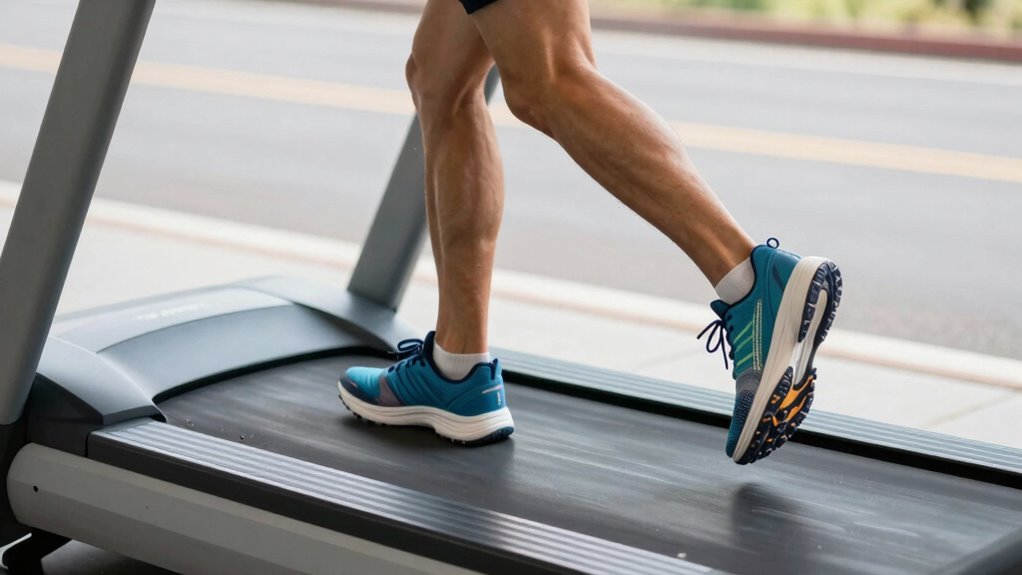
Start with a treadmill run. This controlled environment allows you to focus on how the shoes respond to your movements. Pay attention to your footstrike and how the shoes interact with your gait. Does the cushioning feel supportive, or does it feel like you’re running on concrete? You’ll want to evaluate the shoe’s adaptability to different speeds during your speed assessment. Gradually increase your pace to see how the shoes hold up. If they feel stable and responsive, you’re likely on the right track.
Start with a treadmill run to assess your shoes’ support and responsiveness as you gradually increase your pace.
Next, shift your focus to the terrain adaptation. Once you’ve tested them on the treadmill, take your new shoes outside. Different surfaces can challenge your shoes in various ways. Whether you’re running on asphalt, gravel, or trails, observe how the shoes respond. Do they provide adequate grip and support? Are your feet feeling fatigued, or do they remain comfortable? This real-world testing is essential for understanding how well they’ll perform in your typical running environment.
Don’t forget about durability testing. While you might love the way they feel on that first run, you need to take into account how they’ll hold up over time. Wear them for longer distances and note any signs of wear, especially in high-impact areas. If you notice discomfort or a drop in performance, it might be time to rethink your choice. Incorporating proper footwear testing methods can help you make a more informed decision. Being aware of the shoes’ design features and how they support different types of movement can also improve your evaluation process. Additionally, understanding how different shoe materials interact with various terrains can give you a better idea of their overall performance. Remember, proper testing techniques can also help you identify potential issues early, preventing discomfort during your actual runs.
In the end, taking the time to evaluate your new shoes on both the treadmill and the road guarantees that you make a smart choice. With the right shoe, you’ll not only improve your running form but also enjoy every step you take. So lace up, hit the pavement, and find the perfect fit for your running journey.
As an affiliate, we earn on qualifying purchases.
Frequently Asked Questions
How Long Should I Test New Shoes Before Deciding to Keep Them?
You should test new shoes for at least a week before deciding to keep them. Use them on both a treadmill surface and outdoors to see how the shoe cushioning holds up. Pay attention to any discomfort or changes in your stride. If they feel supportive and comfortable during your runs, they’re likely a good fit. Trust your instincts—if something feels off, it might be time to look for another pair.
Can I Return Shoes After Treadmill Testing?
Yes, you can often return shoes after treadmill testing, but it depends on the shoe return policies of the retailer. Before you test them, check the policy to understand any conditions, like time limits or wear levels. When testing, follow treadmill testing tips like using a towel to avoid damage and keeping the tags on. This way, you’re more likely to get a full refund if the shoes don’t meet your needs.
What Type of Socks Should I Wear During Testing?
Think of your socks as the foundation of a sturdy house; they need to support you well. When testing new shoes, opt for moisture-wicking materials like merino wool or synthetic blends, as they help keep your feet dry. Choose socks with appropriate cushioning levels to match your comfort needs. This combination not only enhances your experience but also guarantees that your feet feel great throughout your testing session.
Should I Use My Regular Insoles While Testing?
Yes, you should use your regular insoles while testing. They’ll help guarantee your comfort level remains consistent, allowing you to focus on how the new shoes feel. If your insoles provide good arch support, it’s wise to keep them in, as they can enhance the overall experience. Just pay attention to how everything works together; you want to find the best fit that meets your needs during your run.
How Do I Know if Shoes Fit Correctly?
To find the perfect fit, think of your foot as a delicate flower needing the right pot. Start with your shoe size; it should match your foot shape snugly. Check for toe room—your toes shouldn’t be cramped. Verify there’s adequate arch support and cushioning for your specific needs. Finally, your heel should feel secure, not slipping. If all these elements come together, you’ve found a shoe that fits just right!
Conclusion
When you’re testing new shoes, remember to take it one step at a time. Whether you’re on the treadmill or hitting the road, pay attention to how they feel. Don’t rush the process; let your feet guide you. By mixing both environments, you’ll get a clearer picture of their performance. So lace up, hit the ground running, and trust your instincts—after all, the proof of the pudding is in the eating!