To stay visible during early morning or late-night runs, you can choose from safety lights like clip-on devices, headlamps, or integrated LED gear. Clip-on lights attach easily to belts or vests and are quick to change, while headlamps provide focused light for your path. Integrated gear with embedded LEDs offers multi-angle visibility. Different mounting options let you customize your setup for comfort and safety. Keep exploring to discover more about their benefits and best choices.
Key Takeaways
- Various safety lights include handheld, waist-mounted, chest-mounted, headlamps, and integrated LED gear for comprehensive visibility.
- Mounting options like clip-on, head-mounted, or integrated gear influence light effectiveness and runner safety.
- Clip-on lights are quick to attach/detach, while headlamps provide focused illumination for hands-free running.
- Choosing the right safety light depends on battery life, brightness, ease of use, and compatibility with running gear.
- Proper mounting enhances visibility, ensuring runners are more noticeable to drivers, cyclists, and others in low-light conditions.
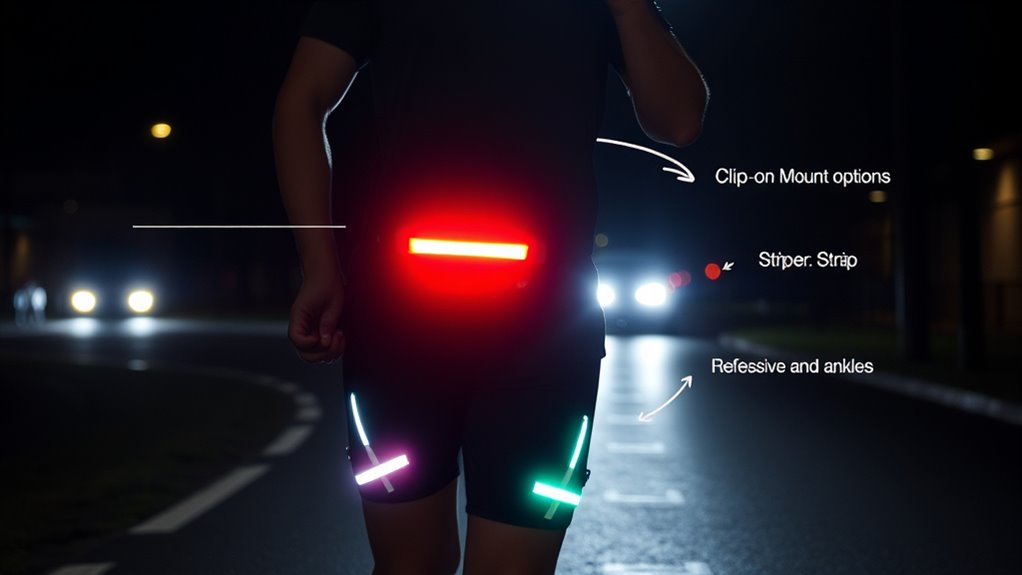
Are you running early in the morning or late at night? If so, safety should be your top priority, and that means paying attention to how you’re visible to others. Reflective gear and visibility accessories are essential tools that can make a significant difference in ensuring you’re seen by drivers, cyclists, and fellow runners. These items are designed to catch light and reflect it back to others, especially in low-light conditions, giving you an extra layer of protection during your runs.
Prioritize visibility with reflective gear and accessories for safe early morning and late-night runs.
When it comes to choosing safety lights for runners, there are a variety of options tailored to different needs and preferences. Some runners prefer handheld lights that can be easily carried or clipped onto your clothing. These are particularly useful if you want to quickly switch between handheld illumination and attaching a small, lightweight light to your gear. Others opt for waist-mounted or chest-mounted safety lights that provide a broader field of visibility, illuminating your path and making you more noticeable from a distance. These mounted lights often come with adjustable straps or clips, ensuring a snug fit without bouncing around as you run.
Mounting options are *essential* because they influence how effectively the light functions. Clip-on safety lights are incredibly versatile; you can attach them to your belt, waist pack, or the back of your running vest. They’re quick to put on and remove, making them ideal for unpredictable running schedules. Headlamps are another popular choice, especially if you’re running in areas with uneven terrain or need to illuminate your immediate path. They sit on your forehead, leaving your hands free and providing focused light exactly where you need it. For added visibility, many headlamps come with flashing modes, which can increase your chances of being seen by approaching vehicles or cyclists. Additionally, some runners prefer integrated safety lights built directly into their gear, such as reflective vests or jackets with embedded LED lights. These are excellent because they combine high-visibility fabric with active lighting, ensuring you’re seen from all angles. Plus, they often feature multiple lighting modes, allowing you to switch from steady illumination to flashing patterns depending on your environment or personal preference.
Choosing the right safety lights can also be influenced by the power source and battery life, ensuring your lights last throughout your runs without interruption. Ultimately, the key is to select safety lights and visibility accessories that suit your running habits and environment. Whether you choose handheld lights, clip-on options, headlamps, or integrated gear, make sure they’re bright enough, securely mounted, and easy to operate. When you equip yourself with the right safety lights, you can run confidently knowing you’re doing everything possible to stay visible and safe during those early morning or late-night runs.

4 Pack LED Safety Light, Clip on Reflective Gear Lights for Walking at Night, Running, Jogging, High Visibility Strobe Light Accessories for Runners, Kids, Hiking, Kayak, Cycling, Camping, Boat Red
New Improved Design – Keep your family and loved ones safe with this slim, lightweight, compact, and super…
As an affiliate, we earn on qualifying purchases.
As an affiliate, we earn on qualifying purchases.
Frequently Asked Questions
Are Safety Lights Waterproof for Rain or Snow?
Yes, many safety lights for runners are waterproof, designed through waterproof testing to withstand rain and snow. They offer weather durability, so you don’t have to worry about moisture compromising their functionality. Look for lights with an IPX rating, which indicates their level of water resistance. Choosing a waterproof safety light guarantees you stay visible and safe in various weather conditions, no matter if it’s drizzling or snowing.
How Long Do Safety Lights Typically Last on a Single Charge?
Did you know that most safety lights last between 4 to 12 hours on a single charge? You’ll want to check the battery life before heading out, as it varies by model. Typically, charging duration ranges from 1 to 3 hours, ensuring quick recharges. Keep in mind, higher brightness settings tend to drain the battery faster, so consider your needs and plan your charge accordingly for a safe, well-lit run.
Can Safety Lights Be Used for Cycling as Well?
Yes, safety lights can definitely be used for cycling. Many multi-sport lights are designed for both running and cycling, offering bright, versatile illumination. They enhance your cycling safety by making you more visible to drivers and others on the road. Just make certain you select a light with appropriate mounting options and brightness levels suited for cycling, so you stay safe and seen during your rides.
Are There Any Safety Regulations for Running Lights?
Imagine your safety light as a lighthouse guiding you home; it’s essential to follow regulations. While specific safety standards and certifications for running lights vary by region, many jurisdictions recommend compliance with regulatory standards like ANSI or CE markings, ensuring visibility and reliability. Always check local laws before purchasing or using a running light, so you stay safe and visible during your runs, just like a lighthouse keeps ships on course.
Do Safety Lights Have Different Modes for Visibility?
Yes, safety lights for runners have different modes for visibility. You can choose from light color options like red, white, or yellow, depending on your needs. Many lights feature flashing modes to attract more attention or steady modes for consistent visibility. Flashing lights are great for alerting drivers and others on the road, while steady lights provide continuous illumination. Switching between these modes helps make certain you’re visible in various running conditions.

Foxelli LED Headlamp Flashlight for Adults & Kids, Running, Camping, Hiking Head Lamp with White & Red Light, Comfortable Headband, Lightweight & Waterproof, 3 AAA Batteries
SUPER BRIGHT LED TECHNOLOGY (165 ft beam) – wide variety of white & red modes, all controlled by…
As an affiliate, we earn on qualifying purchases.
As an affiliate, we earn on qualifying purchases.
Conclusion
So, next time you hit the pavement, remember that safety lights might just be your best friends — or at least, your most reliable. Ironically, what keeps you safe is often overlooked until it’s too late. Don’t wait for a close call to realize the importance of visibility. Invest in the right safety lights now, and enjoy your run with confidence, knowing you’re glowing brighter than your excuses for skipping it. Stay safe, and keep shining!
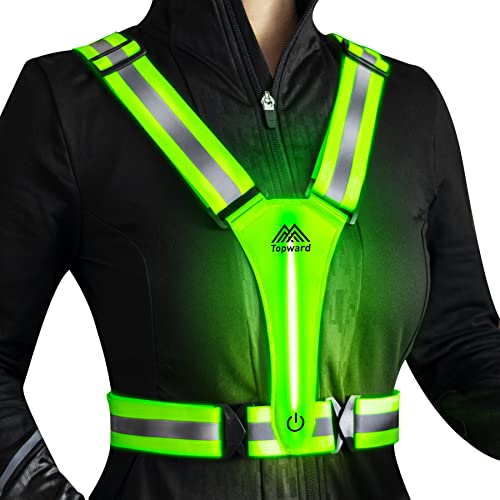
Topward LED Reflective Vest Safety Gear, Light Up Vest for Night Walking Cycling, High Visibility Running Vest with Reflective Strips, USB Rechargeable with Adjustable Waist/Shoulder
BE SEEN FROM A LONG DISTANCE – Topward LED Reflective Vest is an upgraded, new generation safety vest…
As an affiliate, we earn on qualifying purchases.
As an affiliate, we earn on qualifying purchases.

SAWNZC LED Reflective Vest Running Gear, 5 Colors Lights Up Running Vest for Night Walking Cycling Jogging, Adjustable Size for Men Women Kids, Rechargeable and High Visible (1, Green)
LED Reflective Vest; designed with LED light both front and rear and reflective strip on the gear, it…
As an affiliate, we earn on qualifying purchases.
As an affiliate, we earn on qualifying purchases.