TL;DR
Fit&Well reports that a personal trainer recommends glute bridges, quadruped donkey kicks and fire hydrants as equipment-free exercises for building glute strength at home. The trainer suggests starting with two sets of 10 repetitions and stopping if an exercise causes sharp pain.
A personal trainer interviewed by Fit&Well recommends glute bridges, quadruped donkey kicks and fire hydrants as equipment-free exercises people can do at home to build glute strength. The report gives beginner-friendly form instructions and suggests starting with two sets of 10 repetitions, two to three times a week.

Get workout gear delivered free with Prime
- Fast, free delivery on millions of items
- Prime Video, Amazon Music and more included
- Member-only deals all year
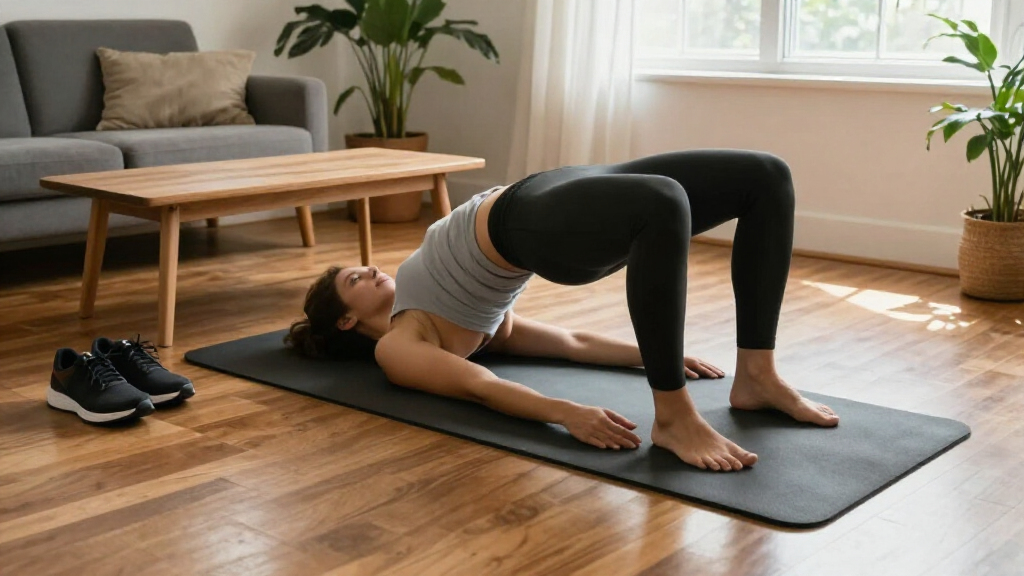
For a glute bridge, lie on your back with knees bent and feet flat on the floor. Brace your midsection, squeeze your glutes and lift your hips, holding briefly before lowering. The trainer advises avoiding an arch in the lower back; the movement should come from the hips rather than an exaggerated back bend.
For a quadruped donkey kick, start on hands and knees and lift one bent leg, directing the heel toward the ceiling. Lower it with control, complete the repetitions on that side, then switch. Keep the spine in a neutral position and avoid arching the lower back, the trainer says.
For a fire hydrant, remain on hands and knees and lift one bent leg out to the side, then pause and lower it. Keep the hips facing down and square to the floor, using a smaller range of motion if needed. The report recommends two sets of 10 repetitions at first, then progressing toward three sets of 15 as strength improves. Its trainer says to stop if sharp pain occurs and seek medical advice.
A Simple Routine for Home Training
The recommendations offer a no-equipment starting point for people who want to add lower-body strength work at home without buying weights or joining a gym. The three movements can be performed in a small space, and the report describes them as beginner-friendly. That makes the routine accessible, though individual ability and comfort will vary.
The trainer also suggests using the exercises as short activity breaks during periods of sitting. This is advice from the report’s source, not evidence that the routine prevents pain or injury. The exercises can help someone practice controlled hip and leg movements, but the article does not provide research comparing these moves with other strength programs or establish a specific result for every person.
Products Worth Considering

Levoit EverestAir-P Smart Air Purifier for Large Rooms

Oral-B iO5 Rechargeable Electric Toothbrush with 5 Cleaning Modes and Travel Case, White

Oral-B iO Series 3 Rechargeable Electric Toothbrush for Adults, Black, with 2 Brush Heads and Travel Case
As an affiliate, we earn on qualifying purchases.
How the Trainer Sets Progression
The Fit&Well report says the trainer assigns these exercises to clients to do at home between sessions. The stated reasons for choosing them are that they require no equipment and are accessible to beginners. It describes the glute muscles as supporting the pelvis and lower back and contributing to movements such as walking, running and rising from a chair.
The suggested starting frequency is two to three times weekly, with two sets of 10 repetitions per exercise. Once the movements feel manageable, the trainer recommends building toward three sets of 15. The report also mentions looped resistance bands as a possible later way to increase difficulty for bridges and fire hydrants; that progression is optional and goes beyond the no-equipment starting routine.
Limits of the Exercise Advice
The source presents the routine as a trainer’s recommendation; it does not report a clinical trial or comparative evidence establishing these as the best exercises for everyone. It also does not specify how quickly a person might gain strength, how results were measured, or whether the exercises are appropriate for people with injuries or health conditions.
The report advises stopping for sharp pain and speaking with a doctor, but it does not provide individualized screening or modifications for specific conditions. Anyone unsure whether these movements are suitable can ask a qualified health professional or fitness trainer for guidance. The publication date was not included in the supplied source material.
Building the Routine Gradually
Readers following the trainer’s advice can begin with two sets of 10 repetitions per movement, two or three days per week, and increase the workload gradually if the exercises remain comfortable. The report’s next suggested target is three sets of 15; it does not set a timeline for reaching that level.
Good form and a pain-free range of motion should guide progression. The trainer suggests keeping the back neutral during donkey kicks and fire hydrants, and avoiding lower-back arching during bridges. If sharp pain occurs, stop the exercise and consult a doctor rather than pushing through it.
Key Questions
Which three exercises does the report recommend?
The Fit&Well report names glute bridges, quadruped donkey kicks and fire hydrants as the trainer’s equipment-free choices for home workouts.
How often should a beginner do the exercises?
The trainer suggests doing the routine two to three times a week, starting with two sets of 10 repetitions for each movement. The report does not give a required schedule for rest days.
How should the exercises become harder?
The report recommends gradually progressing toward three sets of 15 repetitions as the exercises become easier. It also mentions a looped resistance band as an optional later addition for bridges and fire hydrants.
What should someone do if an exercise hurts?
The trainer says muscle fatigue can be expected, but sharp pain is a reason to stop. The report advises speaking with a doctor if that occurs.
Source: fitandwell.com