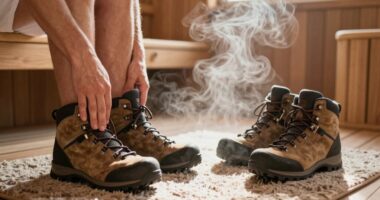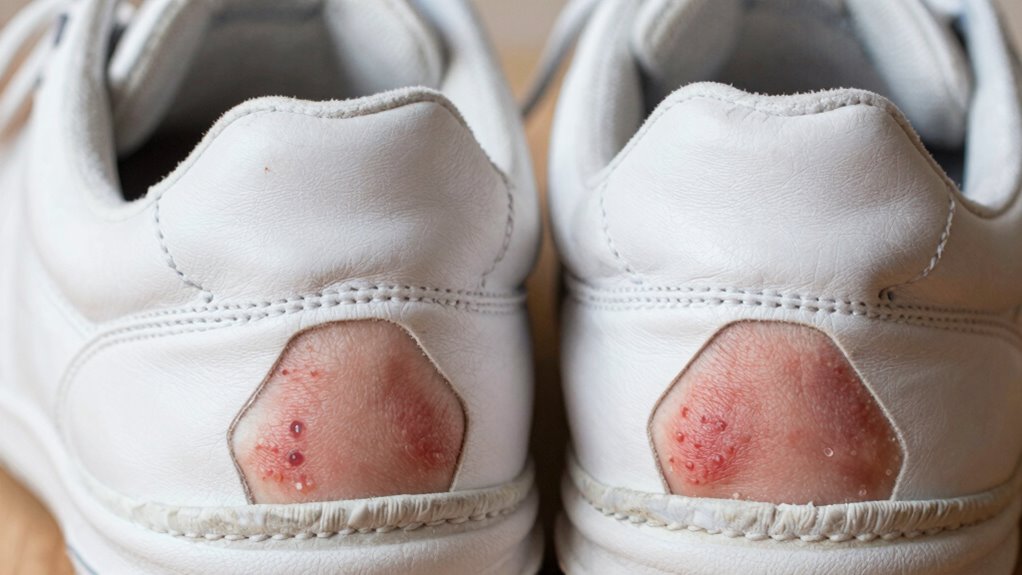

New shoes can cause hot spots and blisters because they often don’t fit properly, leading to excessive friction and rubbing against your skin. Shoes that are too tight squeeze your feet, while loose ones cause sliding, both increasing blister risk. To prevent this, make certain your shoes fit well—snug but comfortable with enough room for your toes and a secure heel. Keep your feet dry and use protective padding. Discover more tips to keep your feet blister-free.
Key Takeaways
- New shoes often cause hot spots due to excessive friction from poor fit or rubbing.
- Tight shoes squeeze the foot, increasing pressure and friction that lead to blisters.
- Loose shoes allow foot sliding, creating areas of repeated rubbing and hot spots.
- Properly fitting shoes with adequate toe space and a snug heel reduce friction and blister risk.
- Using moisture-wicking socks, lubricants, and blister pads can help prevent hot spots from forming.
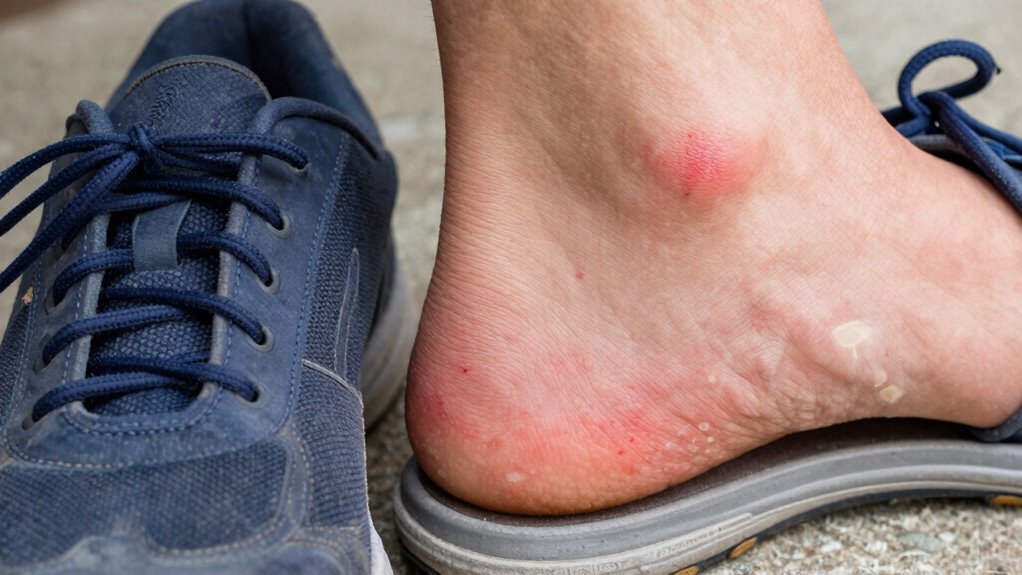
Have you ever experienced that uncomfortable, fluid-filled bump on your skin? That’s a blister, and it often shows up when you’re breaking in new shoes. When your footwear fit isn’t quite right, your skin rubs against the inside of your shoes, causing friction. This constant rubbing damages the top layer of skin, and your body responds by creating a fluid pocket to protect and cushion the area. The result is a blister—painful, sometimes painful, and definitely annoying. To prevent this, blister prevention starts with paying close attention to your footwear fit. Shoes that are too tight squeeze your feet, increasing friction, while loose shoes cause your foot to slide around, also creating hot spots and blisters. The key is to find shoes that fit snugly but comfortably, providing enough room for your toes to move without excess space that causes rubbing.
Proper footwear fit isn’t just about comfort; it’s your first line of defense against blisters. When trying on shoes, walk around to see how they feel in motion. Ensure there’s a little extra room in the toe box—about a thumb’s width—so your toes aren’t crammed. The heel should fit securely without slipping, which is a common cause of friction and blister formation. Remember, different shoe styles fit differently, so what works for one activity might not be suitable for another. For example, running shoes are designed with cushioning and support to reduce friction during high-impact activities, while casual shoes might not offer the same protection. Additionally, understanding water-related factors like moisture can help prevent blisters, since wet skin is more prone to friction and damage.
Blister prevention isn’t only about the initial fit; it also involves how you prepare your feet and shoes beforehand. Wearing moisture-wicking socks can help keep your feet dry, reducing the chance of blister-causing friction. Applying lubricants like petroleum jelly on hot spots before activity can also minimize skin irritation. If you’re breaking in new shoes, do so gradually—wear them for short periods to allow your feet to adapt. Using blister pads or moleskin on areas prone to rubbing can provide an extra layer of protection, especially during long walks or hikes.

suaskk Womens Athletic Cushioned Anti-Blister Comfort Running Ankle Socks 5 Pairs
Soft and Comfy Cushioned Socks: These womens socks with great soft cushion at the bottom, heel and toe…
As an affiliate, we earn on qualifying purchases.
As an affiliate, we earn on qualifying purchases.
Frequently Asked Questions
Can Blisters Be Prevented With Special Socks?
Yes, wearing socks made from moisture-wicking materials can help prevent blisters. These special socks manage moisture effectively, reducing friction and skin irritation caused by sweaty feet. Look for options with moisture management features like synthetic fibers or merino wool, which keep your feet dry and comfortable. Choosing the right sock material and ensuring a snug fit can considerably lower your risk of developing blisters while wearing new shoes.
How Do I Treat a Blister That Has Burst?
When a blister bursts, you should clean the area gently with soap and water to prevent infection. Apply an antibiotic ointment and cover it with a sterile bandage to promote blister healing and protect it from further irritation. Change the dressing daily, and avoid popping blisters in the future. Proper burst blister care helps reduce pain and speeds up healing, so keep the area clean and watch for signs of infection.
Are There Specific Shoe Types That Cause Fewer Blisters?
You’re better off with shoes that fit like a glove to avoid blisters. Orthopedic footwear provides extra support and reduces friction, making blisters less likely. Minimalist shoes, on the other hand, offer a snug fit and less bulk, which can help prevent hot spots. Choose shoes with smooth seams, breathable material, and proper sizing. Remember, a well-fitting pair keeps your feet happy and blister-free, no matter the terrain.
When Should I See a Doctor for a Blister?
You should see a doctor if your blister causes severe pain, shows signs of infection like redness, warmth, pus, or if it’s large and keeps swelling. Blister causes include friction or heat, and symptoms often involve redness, swelling, and fluid-filled bubbles. If the blister doesn’t heal, worsens, or if you notice any signs of infection, get medical help promptly to prevent complications.
Do Blisters Lead to Infections if Untreated?
Think of an untreated blister as an open invitation for trouble. If you ignore it, blister infections can develop, turning a simple sore into a bigger problem. Risks of leaving blisters untreated include painful infections and delayed healing. To avoid these blister infections, keep the area clean, avoid popping it, and watch for signs of infection like redness or pus. Ignoring it only increases the chance of complications.

6 Pairs Comfowner Heel Cushion Pads, Comfort Shoe Grips Snugs for Big Shoes Loose Blisters and Pain, Protectors Liners Men Women
𝗣𝗮𝗰𝗸𝗮𝗴𝗲 𝗜𝗻𝗰𝗹𝘂𝗱𝗶𝗻𝗴: 3 Pairs Beige and 3 Pairs Black ,Our heel cushion pads make you enjoy long-lasting comfort,…
As an affiliate, we earn on qualifying purchases.
As an affiliate, we earn on qualifying purchases.
Conclusion
Now that you know why new shoes cause hot spots and blisters, you’re better equipped to prevent them. Think of your feet as a delicate garden—you need to tend to them carefully to avoid painful weeds. Always break in new shoes gradually, keep your feet dry, and use protective gear like moleskin. With a little effort, you’ll keep your feet happy and blister-free, so you can stride confidently without pain dragging you down.

Comfwalk Shoe Filler Insert – Full Length Daily Latex Foam Shoe Inserts, Shoe Insoles for Shoes That are Too Big, 3 Pairs (EU 37, US Women 7 Men 4)
= PACKAGE INCLUDES = This value pack contains 3 pairs of white color shoe filler Insoles.
As an affiliate, we earn on qualifying purchases.
As an affiliate, we earn on qualifying purchases.

Body Glide Foot Glide Anti Blister Balm | blister prevention for heels, shoes, cleats, boots, socks, and sandals | Use on toes, heel, ankle, arch, sole and ball of foot | 0.8oz
No More Blister Bandages for Feet | Blister prevention to avoid the need for treatment & first aid
As an affiliate, we earn on qualifying purchases.
As an affiliate, we earn on qualifying purchases.