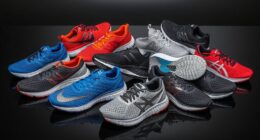
Choosing between racing shoes and trainers depends on your running goals and leg support needs. Racing shoes are lightweight and designed for speed, but their minimal cushioning offers less shock absorption, which could strain your legs if you lack strength or run long distances. Trainers provide more stability and cushioning, reducing impact and injury risk during high-mileage runs or recovery. For a smarter decision that protects your legs, consider the features detailed below—there’s more to discover to optimize your performance.
Key Takeaways
- Choose racing shoes for speed and minimal support to prevent overuse injuries during short, intense races.
- Opt for trainers with cushioning and stability features to reduce impact and protect legs during high-mileage training.
- Match your footwear to your running goals: racing shoes for performance, trainers for injury prevention and comfort.
- Proper fit and material quality, influenced by manufacturing, are essential for optimal leg protection in both shoe types.
- Using the right shoe type based on your running style minimizes fatigue and decreases injury risk over time.

When deciding between racing shoes and trainers, it’s important to understand how each type is designed to support your running style and goals. Racing shoes are crafted to maximize speed and efficiency, often with minimal cushioning and a lightweight build. They’re ideal if you’re aiming for marathon endurance, as they allow you to conserve energy over long distances. In contrast, trainers focus on comfort, stability, and shock absorption, making them suitable for daily runs, recovery, or long-distance training where injury prevention and leg protection are priorities. Knowing how shoe manufacturing influences their structure helps you choose the right gear for your needs. Shoe manufacturing plays a crucial role in determining the durability and performance of each type of shoe, affecting how well they support your running style and protect your legs. Racing shoes are typically made with advanced, lightweight materials in shoe manufacturing, which reduces overall weight and enhances your stride. They often feature a snug fit, a low heel-to-toe drop, and a thin sole that encourages a more natural foot motion. This design helps you maintain a faster pace during races, especially over marathon endurance distances, because less effort is required to lift your feet and propel forward. However, the minimal cushioning means you need to be confident in your running form and foot strength. If you’re training for a marathon, racing shoes can help you improve your speed, but they might not offer enough support for everyday wear or long runs on uneven terrain.
Choosing between racing shoes and trainers depends on your running goals, terrain, and support needs.
Trainers, on the other hand, are manufactured with more cushioning and support features. Their construction involves thicker midsoles, stability features, and sometimes motion control elements to help prevent injury and reduce fatigue. The shoe manufacturing process prioritizes durability and comfort, making trainers the go-to option for high-mileage training sessions or recovery runs. Wearing trainers during your marathon training can help protect your legs from the repetitive impact of long-distance running, preserving your joints and reducing the risk of overuse injuries. They also tend to have a broader base for stability, which benefits runners who need extra support or have specific biomechanical needs.
Ultimately, your choice depends on your running goals, terrain, and personal comfort. If you’re chasing personal bests or competing in races, racing shoes will likely give you the edge needed for marathon endurance, thanks to their lightweight and speed-focused design. If your priority is protecting your legs during high-mileage training or ensuring comfort on varied surfaces, trainers are your best bet. Understanding how shoe manufacturing influences these differences helps you make an informed decision, ensuring you select footwear that supports your running style without risking injury.

AI TIDE Carbon Plate Marathon Running Racing Shoes Men Stable Support Shock-Relief Ultra-Light TPU Outsole Rebound Sneakers Size 6.5
【Breathable upper】The upper of the sneakers is spliced with multi-color flying-woven tatting materials to enhance air permeability and…
As an affiliate, we earn on qualifying purchases.
As an affiliate, we earn on qualifying purchases.
Frequently Asked Questions
Can Trainers Be Used for Competitive Racing?
Yes, you can use trainers for competitive racing, but keep in mind their shoe durability may not match racing shoes, which are designed for speed and lightweight performance. Trainers often have extra cushioning, which can affect running biomechanics, potentially slowing you down or increasing fatigue. For serious competitions, specialized racing shoes are better, but if you’re racing casually or on shorter distances, trainers can work without compromising your performance too much.
How Do Racing Shoes Improve Leg Protection?
Racing shoes improve leg protection by offering better foot arch support and heel cushioning, which help reduce stress on your legs during runs. The enhanced arch support stabilizes your feet, preventing unnecessary strain, while the heel cushioning absorbs shock, decreasing impact on your legs. This combination keeps your legs more protected and less prone to injuries, making racing shoes a smart choice for serious runners aiming to safeguard their legs during competition or high-intensity training.
Are There Specific Trainers for Different Running Distances?
Yes, there are specific trainers for different running distances. You’ll find running shoe technology tailored for short sprints versus marathon distances, optimizing your performance and comfort. Training shoe durability varies depending on the distance, with lighter shoes for shorter runs and more durable soles for longer ones. Choosing the right trainers helps protect your legs, boosts efficiency, and prevents injury, so select shoes that match your running goals and distance.
What Are the Cost Differences Between Racing Shoes and Trainers?
The cost comparison shows racing shoes are typically more expensive than trainers, often ranging from $100 to $200, while trainers usually cost between $50 and $120. You should consider your budget considerations carefully, as racing shoes are designed for performance and race-day use, which justifies their higher price. Trainers are more versatile and affordable, making them a practical choice for everyday training without breaking the bank.
Do Racing Shoes Require a Special Fitting Process?
Yes, racing shoes often require a special fitting process. You should do a fit testing to guarantee they match your foot shape perfectly, as even small differences can affect comfort and performance. Some brands offer shoe customization options, allowing you to tailor the fit further. Properly fitted racing shoes help protect your legs by reducing the risk of blisters and injuries, so don’t skip this step for ideal results.

adidas Men's RunBlaze, White/Dark Blue/Black, 7.5
Cushioned running shoes for daily training.
As an affiliate, we earn on qualifying purchases.
As an affiliate, we earn on qualifying purchases.
Conclusion
Choosing between racing shoes and trainers isn’t just about style—it’s about protecting your legs. Racing shoes, with their lightweight design and snug fit, can improve your speed but might offer less support. Trainers provide stability and cushioning, reducing injury risk during daily runs. Think of racing shoes as a sleek sports car—fast but delicate—while trainers are like a reliable SUV—comfortable and sturdy. Pick wisely to keep your legs safe and enjoy your runs longer.

IRUNSVAN Carbon Plate Marathon Running Racing Shoes Men Professional Stable Supp ort Shock-Relief Ultra-Light Rebound Sneakers
Carbon Plate Stability Support – Equipped with carbon plate technology, these running shoes deliver enhanced propulsion, stability, and…
As an affiliate, we earn on qualifying purchases.
As an affiliate, we earn on qualifying purchases.

Ankle Balance Board – Stability Trainer for Rehabilitation, Basketball, Running, Yoga & Injury Recovery – Home Gym Equipment (Includes Workout Guide)
Science-Backed Rehabilitation-Strengthens weak ankles, improves balance, and speeds up recovery from sprains—ideal for athletes, rehab patients, and fitness…
As an affiliate, we earn on qualifying purchases.
As an affiliate, we earn on qualifying purchases.