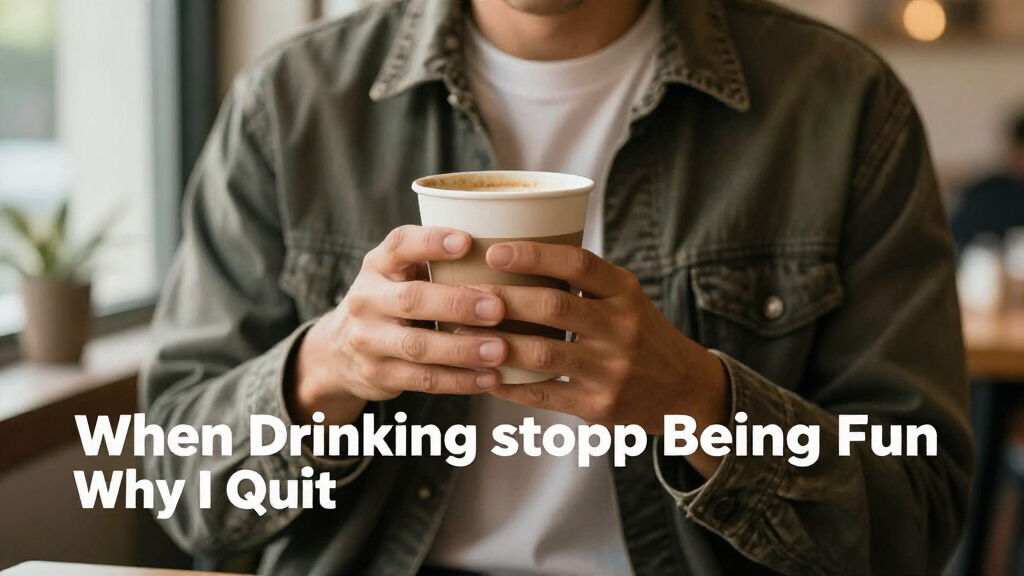

TL;DR
In a Tiny Buddha essay, a writer says she had gone ten months without drinking when she reflected on why she stopped. She describes increasingly frequent blackouts, anxiety and shame after drinking, concern about being available to her children, and a new understanding of how much she drank compared with friends.
A writer for Tiny Buddha says she had gone ten months without drinking when she wrote about why she quit, describing more frequent blackouts, distressing mornings and concern that alcohol could leave her unable to respond to her children in an emergency. Her account is a personal essay, not a medical assessment or a report about a broader trend.

Get workout gear delivered free with Prime
- Fast, free delivery on millions of items
- Prime Video, Amazon Music and more included
- Member-only deals all year
The writer says alcohol had been part of her life since she began drinking at about 13 or 14, and was woven into friendships, celebrations and her Irish cultural background. For years, she says, she enjoyed drinking. Over time, however, she came to feel that its aftermath outweighed the enjoyment: she describes waking with anxiety and shame, trying to piece together the previous night and fearing what others might tell her.
She says she experienced blackouts more often, sometimes attending dinners or parties and later remembering little or none of them. She describes pretending to remember conversations and events when friends brought them up. The worry and shame could last for days, she writes, and occasions she might otherwise have remembered fondly became associated with getting drunk or missing parts of the night.
Her decision also involved her children, an 18-year-old daughter and an 11-year-old son, according to the essay. She says she did not want them to see her drunk and worried that, after drinking heavily, she might not be able to help if they needed her overnight. She says her son has been especially proud of her for stopping. The essay does not say whether she sought treatment or support, or describe a formal recovery plan.
How Sobriety Changed Her Perspective
The account shows how one person’s reasons for stopping developed through everyday experiences: memory gaps, anxiety and parenting responsibilities, rather than a single turning point. Her observations are personal, but they illustrate why the consequences someone associates with drinking may matter more to them over time than the social settings where drinking once felt routine.
She also says that not drinking changed how she viewed her past behavior. While drinking, she assumed friends were consuming similar amounts; at sober dinners and parties, she came to believe that this was not so. That realization brought discomfort, she writes, but also made it harder to dismiss her own drinking as simply what everyone was doing. The essay offers her interpretation of her experience, not evidence about her friends’ drinking or other people’s habits generally.
Her concern about being available to her children makes the decision concrete: she asks whether she could have responded to a fire or car accident after drinking heavily and says she feared the answer was no. The essay does not report that an emergency occurred. Its significance is the writer’s account of how perceived responsibility and the wish to be dependable became part of her reason to stop.
Products Worth Considering

Therabody SmartGoggles 2nd Gen Heated Eye and Temple Massager

Hyperice Hypervolt Go 3 Portable Percussion Massage Gun

Bowflex SelectTech 840 Adjustable Kettlebell
As an affiliate, we earn on qualifying purchases.
The writer describes alcohol as present across much of her life, from adolescence to weddings, birthdays, dinners and gatherings with friends. She says drinking felt normal within her social world and that she genuinely liked it for a long time. That background helps explain why quitting was not simply a change in what she drank: it meant reconsidering a routine tied to friendship, family events and her sense of herself.
She recalls reading about keeping a “burn journal,” a record of experiences a person does not want to repeat. In her view, writing down difficult consequences could counter the tendency to remember drinking’s enjoyable moments and forget its aftermath. She frames the idea as a way to remember, not to intensify self-blame, and says she had become tired of waking with anxiety and wondering what happened.
The writer also points to small changes at home. A refrigerator she once thought she and her partner stocked with alcohol now holds mostly sparkling water and non-alcoholic beer, she says. She took that as evidence that she may have been responsible for more of the household’s alcohol use than she had recognized. It is her retrospective impression; the essay provides no quantities or independent account from her partner.
““The fun just wasn’t worth it anymore.””
— The writer, in her Tiny Buddha essay
What the Essay Does Not Establish
The account does not identify the writer by name in the supplied material, provide the essay’s publication date, or say what happened after the ten-month mark. It is also unclear whether she experienced withdrawal, received professional support, or considered herself to have an alcohol use disorder; the essay does not make a diagnosis. Her descriptions of how much she drank and how others behaved are her own recollections and interpretations, not independently verified findings.
The source material ends as the writer begins discussing how relationships and her personality changed after she stopped. It therefore does not provide a full account of those changes, how she managed social pressure, or whether her circumstances have shifted since writing. The essay should not be read as medical advice or as a substitute for individualized help.
Her Sobriety Beyond Ten Months
The writer says she hopes to continue not drinking, but does not give a specific future milestone or announce a next step. The supplied essay also does not state whether she plans to publish a follow-up. Any description of her current status beyond the ten months reported would require newer information.
For readers who recognize concerns in their own drinking, the essay alone cannot determine what support or care may be appropriate. A health professional or qualified support service can offer guidance tailored to an individual’s circumstances.
Key Questions
How long had the writer stopped drinking?
She says she had been without alcohol for ten months when she wrote the account. The source does not state how long she has remained sober since then.
Why did she decide to quit?
She describes increasingly frequent blackouts, anxiety and shame after drinking, as well as concern about being able to respond to her children in an emergency. She says the unpleasant aftermath had come to outweigh the enjoyment.
Does the essay say she received treatment?
No. The supplied account does not say whether she sought treatment, counseling or another form of professional support, and it does not provide a diagnosis.
What does she mean by a “burn journal”?
She describes it as writing down experiences a person does not want to repeat, such as difficult mornings or regretted actions. She says the idea may help her remember the costs of drinking rather than focusing only on the enjoyable parts.
Source: tinybuddha.com