
To boost your running strength, focus on kettlebell moves like swings, single-leg deadlifts, and goblet squats. Swings improve hip power and endurance, while single-leg deadlifts enhance balance and core stability, critical for effective running form. Goblet squats target your quads and core, helping you push through fatigue. These exercises engage multiple muscle groups and build explosive strength, making your runs more efficient. Want to discover more key exercises to elevate your running game?

Get workout gear delivered free with Prime
- Fast, free delivery on millions of items
- Prime Video, Amazon Music and more included
- Member-only deals all year
Key Takeaways
- Kettlebell Swings enhance hip power and running push-off, improving stride efficiency and cardiovascular endurance.
- Single Leg Deadlifts strengthen hamstrings and glutes while promoting stability and balance, crucial for running mechanics.
- Goblet Squats build foundational strength in quads and core, aiding in muscular endurance and form during runs.
- Kettlebell Lunges mimic running motions, improving leg strength and flexibility, which translates directly to running performance.
- Overhead Press develops upper body strength, supporting better running posture and overall alignment during runs.
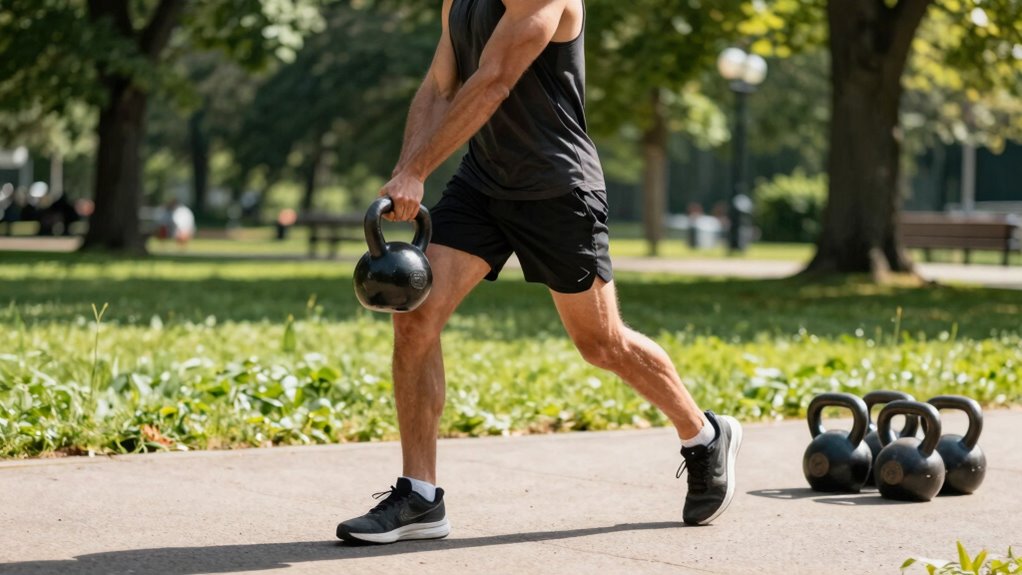
Boost your running performance with kettlebell moves that build strength and endurance. When you incorporate kettlebell exercises into your training regimen, you’ll notice improvements in your running efficiency and overall power. These moves engage multiple muscle groups, enhance core stability, and develop the explosive strength you need for those long runs or sprint intervals.
Start with kettlebell swings. This dynamic movement not only targets your hips and glutes but also builds your cardiovascular endurance. As you swing the kettlebell, focus on generating momentum from your hips. This mimics the explosive push-off you need while running, enhancing your stride power. You’ll find that with consistent practice, your ability to maintain speed over distance improves considerably.
Next, try single leg deadlifts. Balancing on one leg while performing this exercise challenges your stability and strengthens your hamstrings and glutes—key muscles for runners. As you lower the kettlebell towards the ground, keep your back straight and engage your core. This movement translates well to running by improving your balance and reducing the risk of injury. Incorporating stability training can further enhance your overall athleticism.
Goblet squats are another excellent addition to your routine. Holding the kettlebell close to your chest while you squat helps strengthen your quads and core. This foundational strength is crucial for runners, as it allows you to push through fatigue and maintain form. Aim for deep squats to maximize muscle engagement; you’ll notice a difference when you hit the trails or pavement. Developing muscular endurance is essential for sustained running performance.
Overhead presses can further enhance your upper body strength, which is often overlooked in running training. Strong shoulders and arms contribute to better running posture and efficiency. As you press the kettlebell overhead, maintain a tight core and avoid overarching your back. This move promotes stability, allowing for a more fluid running motion. Incorporating proper technique ensures you get the most benefit while minimizing injury risk.
Don’t forget about Turkish get-ups. This full-body exercise builds strength and coordination, essential for maintaining balance during your runs. As you shift from lying down to standing, you’ll engage your core and stabilizing muscles, making you more resilient on the road.
Finally, incorporate kettlebell lunges into your routine. This exercise mimics the forward motion of running and strengthens your legs while improving flexibility. As you lunge, pay attention to your form; it’ll translate directly to your running stride. Incorporating balance training can further enhance your stability and overall running performance.
As an affiliate, we earn on qualifying purchases.
Frequently Asked Questions
How Often Should I Incorporate Kettlebell Training Into My Running Routine?
You should incorporate kettlebell training into your running routine about two to three times a week for ideal kettlebell frequency. This helps build strength and enhances running synergy. Focus on exercises that target your core and lower body, as they’ll support your running performance. Listen to your body—if you’re feeling fatigued, adjust your intensity or frequency. Balancing both kettlebell workouts and runs will keep you strong and injury-free.
Can Kettlebell Exercises Help Prevent Running Injuries?
Yes, kettlebell exercises can help prevent running injuries. In fact, studies show that strength training can reduce injury risk by up to 50%. By incorporating kettlebell workouts, you improve your strength balance, targeting muscles often neglected in running. This enhanced strength not only stabilizes your joints but also corrects muscle imbalances, making you less prone to injuries. So, add kettlebells to your routine, and you’ll run stronger and safer!
What Kettlebell Weight Is Best for Beginners?
For beginners, a kettlebell weight of 8 to 12 kg (18 to 26 lbs) is often recommended. Start light to focus on form and technique. Kettlebell selection tips include testing different weights to find what feels comfortable yet challenging. You should be able to perform basic movements without strain. As you progress, gradually increase the weight to enhance strength while keeping your body safe from injury.
Should I Warm up Before Kettlebell Workouts?
Yes, you should definitely warm up before kettlebell workouts. Incorporate dynamic stretching and mobility drills to prepare your muscles and joints. This not only enhances your performance but also reduces the risk of injury. Focus on movements that mimic the exercises you’ll be doing, like hip swings and arm circles. Taking just 5 to 10 minutes for this warm-up can make a big difference in how you feel during your workout.
How Long Should a Kettlebell Session Last for Runners?
Imagine you’re a runner tuning a finely crafted instrument. A kettlebell session should last about 30 to 45 minutes. This duration strikes a balance between intensity and endurance, allowing your muscles to engage and adapt without overexerting. Keep the intensity moderate to high, focusing on form and control. As you refine your movements, you’re not just building strength; you’re harmonizing your body for those longer runs ahead.
Conclusion
Incorporating kettlebell moves into your routine can greatly enhance your running strength and efficiency. Research shows that runners who engage in strength training, like kettlebell exercises, can improve their speed by up to 15%. So, next time you hit the gym, consider adding those swings and squats to your regimen. You’ll not only build power and endurance but also help prevent injuries. Embrace the kettlebell, and watch your running performance soar!
Fall Picks
fall essentials
As an affiliate, we earn on qualifying purchases.