

For runners seeking tall socks with a defined compression rating, I’d start with the CEP Core Run 5.0 as the best overall pick; FITRELL’s 20–30 mmHg multipacks stand out for rotation, while the cushioned crew socks favor comfort and blister-conscious coverage. The main choice is between knee-high compression and shorter coverage, along with firmer 20–30 mmHg support versus lighter 15–20 mmHg options. Cushioning, fit, and how many pairs you need also shape the decision. A tighter sock is not automatically a better running sock, and a multipack may trade specialized features for convenience. Read on for the full breakdown of how the 11 options differ and which type of runner each suits.

Get workout gear delivered free with Prime
- Fast, free delivery on millions of items
- Prime Video, Amazon Music and more included
- Member-only deals all year
Complete the kit


Key Takeaways
- The CEP Core Run 5.0 is the clearest overall choice for runners who want a dedicated tall running sock and a stated 20–30 mmHg compression level, rather than a general-purpose multipack.
- FITRELL’s two 20–30 mmHg three-pair options make rotation easier; compare their listings and fit details before choosing, since the product names alone do not establish a meaningful performance difference.
- The cushioned crew option stands apart from knee-high models by prioritizing cushioning and anti-blister construction over full-calf coverage.
- 15–20 mmHg options, including CHARMKING and Iseasoo, offer a lighter stated level than the 20–30 mmHg socks, which may appeal to runners who prefer less compression; the fit still needs to feel comfortable during movement.
- Copper-infused claims and larger pack counts are not substitutes for running-specific details; compare coverage, sizing, fabric, and intended use before choosing a multipack.
| CEP Core Run 5.0 Tall Compression Socks for Men, 20–30 mmHg |  | Best for Targeted Calf Support | Design: Tall compression socks for men | Compression: 20–30 mmHg | Fabric: 84% polyamide, 16% elastane | VIEW LATEST PRICE | See Our Full Breakdown |
| Ankle Compression Socks for Men and Women with Arch Support |  | Best Low-Cut Option | Design: Low-cut ankle compression socks | Compression: 15–20 mmHg | Fabric: Nylon and spandex | VIEW LATEST PRICE | See Our Full Breakdown |
| Compression Running Crew Socks, 3 Pairs, Cushioned and Anti-Blister |  | Best for Cushioning and Friction Control | Pack size: 3 pairs | Design: Crew compression socks | Compression: 15–20 mmHg gradient compression | VIEW LATEST PRICE | See Our Full Breakdown |
| 6-Pair Copper-Infused Compression Socks for Women and Men |  | Best for a Larger Sock Rotation | Pack quantity: 6 pairs | Fabric: 85% nylon, 15% polyester | Compression: Graduated; level not specified | VIEW LATEST PRICE | See Our Full Breakdown |
| CHARMKING Compression Socks for Women & Men (3 Pairs) – 15-20 mmHg |  | Best Everyday-to-Run Pick | Pack quantity: 3 pairs | Design: Unisex compression socks | Compression: 15–20 mmHg graduated compression | VIEW LATEST PRICE | See Our Full Breakdown |
| ROCKBROS Knee-High Compression Socks for Women and Men |  | Best for Cushioned Shoe Feel | Length: Knee-high | Compression: Graduated, ankle to calf | Fabric: Nylon and spandex | VIEW LATEST PRICE | See Our Full Breakdown |
| FITRELL 3-Pair Compression Socks, 20–30 mmHg, for Women and Men |  | Best for Zoned, Firm Support | Quantity: 3 pairs | Compression: 20–30 mmHg | Support design: Graduated compression with five support zones | VIEW LATEST PRICE | See Our Full Breakdown |
| Iseasoo Copper Compression Socks, 15–20 mmHg, 8 Pairs |  | Best for Large Multi-Pair Rotation | Quantity: 8 pairs | Compression: 15–20 mmHg | Material: 85% nylon, 10% polyester, 5% copper fiber | VIEW LATEST PRICE | See Our Full Breakdown |
| Physix Gear 20–30 mmHg Compression Socks for Men and Women |  | Best for More Size Choices | Compression: 20–30 mmHg, graduated | Length: Knee-high | Materials: Nylon and spandex | VIEW LATEST PRICE | See Our Full Breakdown |
| FuelMeFoot Copper Compression Socks, 3 Pairs |  | Best for Everyday Wear Between Runs | Pack size: 3 pairs | Fabric: Nylon | Compression: Support is described; level not specified | VIEW LATEST PRICE | See Our Full Breakdown |
| FITRELL 3-Pair Graduated Compression Socks, 20–30 mmHg |  | Best for Cushioned Daily Runs | Pack size: 3 pairs | Compression: 20–30 mmHg | Fabric: 72.1% polyamide, 18.4% polyester, 9.5% spandex | VIEW LATEST PRICE | See Our Full Breakdown |
| compression socks for running | Compression | Care | Fabric |
|---|---|---|---|
| CEP Core Run 5.0 Tall Compress | 20–30 mmHg | Machine wash | 84% polyamide, 16% elastane |
| Ankle Compression Socks for Me | 15–20 mmHg | Machine wash or hand wash | Nylon and spandex |
| Compression Running Crew Socks | 15–20 mmHg gradient compression | Machine wash | — |
| 6-Pair Copper-Infused Compress | Graduated; level not specified | Machine wash | 85% nylon, 15% polyester |
| CHARMKING Compression Socks fo | 15–20 mmHg graduated compression | Machine wash | — |
| ROCKBROS Knee-High Compression | Graduated, ankle to calf | Machine washable | Nylon and spandex |
| FITRELL 3-Pair Compression Soc | 20–30 mmHg | Machine wash | 72.1% polyamide, 18.4% polyester, 9.5% spandex |
| Iseasoo Copper Compression Soc | 15–20 mmHg | Machine wash | — |
| Physix Gear 20–30 mmHg Compres | 20–30 mmHg, graduated | Machine wash cold; tumble dry low | — |
| FuelMeFoot Copper Compression | Support is described; level not specified | Machine wash in cold water on low; hang dry | Nylon |
| FITRELL 3-Pair Graduated Compr | 20–30 mmHg | Machine wash | 72.1% polyamide, 18.4% polyester, 9.5% spandex |
More Details on Our Top Picks
CEP Core Run 5.0 Tall Compression Socks for Men, 20–30 mmHg
For runners who want firm, full-calf support rather than a low-cut sock, the CEP Core Run 5.0 is the most running-specific option in this group. Its 20–30 mmHg compression reaches the calf, ankle, Achilles, and arch, while traction zones and impact cushioning address stride stability and repeated foot strikes. Breathable air channels and quick-drying fabric are useful on longer or sweatier runs, and the smooth toe seam aims to reduce rubbing. Compared with the lower-pressure CHARMKING Compression Socks, this CEP pair offers a stronger, more anatomically targeted fit, but it may feel too restrictive for runners who prefer light support. The main tradeoff is a tall, men’s-specific design; it offers less flexibility than the unisex options, and the care details provide little guidance beyond machine washing.
Pros:- 20–30 mmHg compression targets the calf, ankle, Achilles, and arch
- Air channels and quick-drying fabric support comfort during sweaty runs
- Impact cushioning and traction zones are designed for a more stable stride
- Smooth toe seam may help limit irritation
Cons:- Firm compression may not suit runners who prefer a lighter feel
- Tall men’s-specific design is less versatile than low-cut or unisex options
- Care information specifies machine washing but gives no further washing guidance
Best for: Men who want firm, tall compression with specific support around the calf, Achilles, ankle, and arch for training or longer runs.
Not ideal for: Runners who prefer ankle-height socks, light compression, or a unisex fit; the tall 20–30 mmHg design may feel restrictive.
- Design:Tall compression socks for men
- Compression:20–30 mmHg
- Fabric:84% polyamide, 16% elastane
- Breathability:Breathable air channels
- Moisture management:Quick-drying fabric
- Cushioning and grip:Impact cushioning and traction zones
- Toe construction:Smooth toe seam
- Care:Machine wash
Our verdict“Choose the CEP Core Run 5.0 if you want firm, full-calf compression and running-focused cushioning; skip it if you want a lighter or lower-cut sock.”
Ankle Compression Socks for Men and Women with Arch Support
Runners who find knee-high compression too warm or cumbersome may prefer these low-cut ankle socks. Their 15–20 mmHg pressure and targeted support zones focus on the ankle and arch, while lightweight nylon and spandex are intended to manage sweat during runs and other workouts. That shorter coverage is the clearest difference from the CEP Core Run 5.0, which provides firm compression up the calf and more running-specific cushioning. This pair makes more sense for runners who want support around the foot without a tall leg, but it does not offer the CEP’s calf coverage or listed impact cushioning. The sizing information is limited to two ranges, so runners near a boundary may have less guidance when choosing a fit. It also trades the protective coverage of a crew or tall sock for a lower-profile feel.
Pros:- Low-cut shape can feel less warm and bulky than tall compression socks
- 15–20 mmHg compression includes targeted ankle and arch support
- Breathable nylon and spandex are designed to wick moisture
- Suitable for running, sports, travel, and everyday wear
Cons:- Does not provide calf compression or the coverage of crew and tall options
- Only two size ranges are specified
- Offers less listed impact cushioning than the CEP Core Run 5.0
Best for: Runners who want low-cut socks with ankle and arch support for warm-weather training, gym sessions, or everyday wear.
Not ideal for: Runners seeking calf compression, cushioned coverage up the leg, or detailed sizing options beyond the two listed ranges.
- Design:Low-cut ankle compression socks
- Compression:15–20 mmHg
- Fabric:Nylon and spandex
- Support:Targeted pressure zones and 3D circular support
- Fit:Regular
- Men’s sizes:S/M: US 6.5–9; L/XL: US 9.5–12
- Women’s sizes:S/M: US 7.5–10; L/XL: US 10.5–13
- Care:Machine wash or hand wash
Our verdict“Pick these ankle socks if you want light, low-profile support around the foot, but choose a tall model if calf compression is part of your running kit.”
Compression Running Crew Socks, 3 Pairs, Cushioned and Anti-Blister
For runners who prioritize foot comfort over firm calf coverage, these crew socks combine 15–20 mmHg gradient compression with cushioning at the toes, soles, and heels. The COOLMAX blend and mesh knitting are designed to move moisture and let heat escape, while a seamless toe aims to reduce a common source of rubbing. Compared with the CEP Core Run 5.0, these offer a lower listed compression range and more explicit cushioning across the foot, making them a better fit for runners focused on friction and impact underfoot rather than stronger calf support. The three-pair format also gives runners rotation options. The tradeoff is uncertainty around fit: the stated size range is broad, but specific sizing guidance is not provided. Runners who dislike compression may also find the close fit uncomfortable.
Pros:- Cushioning at the toes, soles, and heels supports comfort underfoot
- COOLMAX fabric and mesh knit are designed to wick moisture and improve airflow
- Seamless toe aims to reduce rubbing and irritation
- Three-pair pack allows for sock rotation between runs
Cons:- 15–20 mmHg compression is lighter than the CEP Core Run 5.0’s 20–30 mmHg
- Broad size range comes without specific sizing guidance
- Compression fit may not suit runners who prefer ordinary non-compression socks
Best for: Runners who want cushioned crew socks with moisture-managing fabric and a seamless toe to help reduce foot friction.
Not ideal for: Runners seeking firm 20–30 mmHg calf support or clear size-by-size guidance before buying.
- Pack size:3 pairs
- Design:Crew compression socks
- Compression:15–20 mmHg gradient compression
- Fabric composition:35% polyester (COOLMAX), 30% nylon, 25% cotton, 10% spandex
- Cushioning:Cushioned toes, soles, and heels
- Toe construction:Seamless toe
- Breathability:Moisture-wicking fabric with breathable mesh knit
- Care:Machine wash
Our verdict“Choose this three-pair crew set if cushioning and friction control matter more to you than firmer calf compression.”
6-Pair Copper-Infused Compression Socks for Women and Men
This six-pair set is the practical choice for runners who want several pairs in rotation for training days and regular wear. Its breathable, moisture-managing fabric, 360-degree stretch, and wide top band are intended to support a flexible fit and help keep the cuff from rolling. Unlike the Compression Running Crew Socks, which specify 15–20 mmHg compression and describe cushioning and a seamless toe, this set leaves out a compression range and does not list running-specific foot cushioning. That makes its running fit harder to judge from the available details. The larger pack quantity is its clearest advantage, but the missing sizing information also makes fit selection less certain. Copper infusion is described as a fabric feature, though its composition is not specified; I would focus on the listed stretch and top-band design rather than assume more.
Pros:- Six pairs support frequent rotation between runs and other wear
- Moisture-managing, breathable fabric is suited to active use
- 360-degree stretch is designed to allow a flexible fit
- Wide top band is intended to help prevent rolling
Cons:- Compression level is not specified, making support difficult to compare
- No sizing details are provided
- Running-focused cushioning and toe construction are not listed
Best for: Runners who want multiple pairs for frequent rotation and value stretch, moisture management, and a wide cuff.
Not ideal for: Runners who need a clearly stated compression level, detailed sizing guidance, or specified cushioning for long runs.
- Pack quantity:6 pairs
- Fabric:85% nylon, 15% polyester
- Compression:Graduated; level not specified
- Design features:Copper-infused fabric
- Stretch:360-degree stretch
- Top band:Wide band designed to help prevent rolling
- Moisture management:Breathable, moisture-managing material
- Care:Machine wash
Our verdict“Consider this set if a larger rotation matters most, but choose a product with stated compression and sizing if you need predictable running support.”
CHARMKING Compression Socks for Women & Men (3 Pairs) – 15-20 mmHg
The CHARMKING set suits buyers who want one compression sock for running and less athletic parts of the day. Its 15–20 mmHg graduated compression is lighter than the CEP Core Run 5.0’s 20–30 mmHg, while the unisex design and three-pair pack make it a flexible option for rotating between training, travel, and work. The nylon-rich, 360-degree-stretch fabric is described as breathable and form-fitting, so it aims to provide support without limiting movement. Compared with the cushioned Compression Running Crew Socks, though, CHARMKING does not list cushioning, a seamless toe, or specific mesh construction. That leaves less detail for runners focused on blister prevention or comfort over long distances. Its single compression level also suits general support better than buyers seeking stronger compression.
Pros:- 15–20 mmHg graduated compression offers lighter support than the CEP Core Run 5.0
- Unisex format and three-pair pack suit mixed activity and regular rotation
- 85% nylon and 15% spandex blend is designed for stretch and durability
- Breathable, lightweight construction is intended to support mobility
Cons:- Does not list running-specific cushioning or seamless toe construction
- Only one compression level is specified
- Unisex sizing may not match every foot shape as precisely as a more detailed fit range
Best for: Runners and active commuters who want a lighter-compression unisex sock for workouts, travel, and daily wear.
Not ideal for: Runners who need 20–30 mmHg support, detailed fit guidance, or specific cushioning and blister-control features.
- Pack quantity:3 pairs
- Design:Unisex compression socks
- Compression:15–20 mmHg graduated compression
- Material:85% nylon, 15% spandex
- Stretch:360-degree stretch
- Construction:Breathable, form-fitting fabric
- Care:Machine wash
- Origin:Imported
Our verdict“Choose CHARMKING for lighter compression across running and daily wear, but pick a more running-focused sock if cushioning or stronger calf support is a priority.”
ROCKBROS Knee-High Compression Socks for Women and Men
The textured, reinforced sole gives the ROCKBROS a different emphasis from the FITRELL 3-Pair Compression Socks, which specify a 20–30 mmHg level and five support zones. Here, the product data describes graduated ankle-to-calf compression but does not state a pressure rating, so runners cannot compare its firmness as precisely. Its lightweight nylon-spandex blend and ribbed cuff make it a straightforward option for those who want knee-high coverage that is designed to stay put, while the sole adds cushioning and grip inside a shoe. The tradeoff is limited sizing information: only S–L is listed, with no measurements supplied. I’d choose it for the sole texture and simple fit, but runners who need a stated compression level or detailed sizing should look at the FITRELL or Physix Gear options instead.
Pros:- Graduated ankle-to-calf coverage is designed to provide lower-leg support
- Ribbed cuffs are designed to help the socks stay in place
- Lightweight nylon-spandex blend is suited to running and everyday wear
- Textured, reinforced sole adds cushioning and grip inside shoes
Cons:- No compression strength in mmHg is provided
- Only S–L sizing is listed, without measurement guidance
- Machine washing is the only care method specified
Best for: Runners who want knee-high coverage with a textured, cushioned sole and do not need a published mmHg rating
Not ideal for: Runners who need precise calf measurements or a specified compression level to guide fit and support
- Length:Knee-high
- Compression:Graduated, ankle to calf
- Fabric:Nylon and spandex
- Fit:Unisex; sizes S–L
- Sole:Textured and reinforced
- Care:Machine washable
- Pattern:Solid
- Origin:Imported
Our verdict“Choose ROCKBROS if a textured, cushioned sole matters more to you than a stated compression rating or detailed sizing guidance.”
FITRELL 3-Pair Compression Socks, 20–30 mmHg, for Women and Men
The FITRELL stands out for runners who want a specified 20–30 mmHg level rather than the unquantified graduated compression listed for the ROCKBROS socks. Its five support zones, cushioned soles, calf mesh and seamless toes give it a more feature-specific running setup: cushioning targets underfoot comfort, while mesh and smooth toe construction are intended to limit heat and rubbing. The three-pair pack also makes it easier to rotate socks between runs than a single-pair option. Fit needs closer attention, though: the calf ranges overlap, and the description recommends sizing down for tighter compression. Compared with the Physix Gear model, FITRELL calls out more construction details for ventilation and cushioning, while Physix Gear offers additional size choices. I’d skip FITRELL if you prefer lighter pressure or find size selection by calf measurement difficult.
Pros:- Specified 20–30 mmHg graduated compression with five support zones
- Cushioned soles are designed to absorb impact during activity
- Calf mesh and moisture-wicking fabric support ventilation
- Seamless toes are designed to reduce friction
Cons:- Overlapping calf-size ranges can make selection less straightforward
- Sizing guidance recommends sizing down for tighter compression, which may complicate fit
- Firm 20–30 mmHg pressure may not suit runners seeking lighter support
Best for: Runners seeking firm, measured compression with cushioning and ventilation details, especially those who want several pairs to rotate
Not ideal for: Runners who prefer lighter compression or want a simple size choice without overlapping calf ranges
- Quantity:3 pairs
- Compression:20–30 mmHg
- Support design:Graduated compression with five support zones
- Fabric:72.1% polyamide, 18.4% polyester, 9.5% spandex
- S/M calf size:9–15 in
- L/XL calf size:14–16 in
- Toe:Seamless
- Care:Machine wash
Our verdict“Pick FITRELL if you want a three-pair rotation with firm, specified compression and running-oriented cushioning, mesh and toe details.”
Iseasoo Copper Compression Socks, 15–20 mmHg, 8 Pairs
The Iseasoo set is the lineup’s clearest pick for runners who want many pairs and lighter specified compression: it includes eight pairs at 15–20 mmHg. That puts it below the FITRELL and Physix Gear socks in stated pressure, making it a more approachable choice for buyers who do not want a 20–30 mmHg option. The nylon-polyester fabric includes copper fiber and is described as breathable and moisture-wicking, with machine washing for routine care. Those details support everyday rotation, though the product data does not provide running-specific construction such as cushioning zones or a seamless toe. Fit is the bigger concern: only Large-X-Large is listed, with no detailed sizing guide. Compared with the three-pair FuelMeFoot set, Iseasoo offers a much larger rotation and a defined compression range, but less certainty for anyone outside its listed size.
Pros:- Eight pairs support frequent rotation between runs and washes
- Specified 15–20 mmHg compression is lighter than the 20–30 mmHg FITRELL and Physix Gear options
- Breathable, moisture-wicking fabric is suited to athletic and everyday wear
- Machine-washable construction supports routine care
Cons:- Only Large-X-Large sizing is specified
- No detailed sizing guide is provided
- No cushioning or seamless-toe feature is listed for running
Best for: Runners who wear compression socks frequently, fit the listed Large-X-Large size, and want lighter 15–20 mmHg support across an eight-pair rotation
Not ideal for: Runners who need smaller sizing, detailed calf measurements, or running-specific features such as cushioned zones
- Quantity:8 pairs
- Compression:15–20 mmHg
- Material:85% nylon, 10% polyester, 5% copper fiber
- Size:Large-X-Large
- Color and pattern:Black; solid
- Closure:Pull-on
- Care:Machine wash
- Weight:10.4 ounces
Our verdict“Choose Iseasoo if you fit Large-X-Large and want a large rotation of lighter-compression socks, rather than detailed running-specific construction.”
Physix Gear 20–30 mmHg Compression Socks for Men and Women
Physix Gear is a strong fit for runners who want firm, graduated 20–30 mmHg compression and more listed size choices than the S–L range offered by ROCKBROS. Its knee-high design applies the strongest pressure at the ankle and eases it up the calf, while a moisture-wicking nylon-spandex knit and seamless toe address two common sources of discomfort: heat and toe friction. The listed S/M, L/XL and XXL options help broaden the fit range, but buyers still need to match both shoe size and calf width, so choosing a size takes more work than simply selecting a general clothing size. Unlike FITRELL, Physix Gear does not list five support zones or cushioned soles. I’d favor it for firm compression and sizing variety, but runners who want lighter pressure or more explicit cushioning details may prefer another option.
Pros:- Graduated 20–30 mmHg compression is strongest at the ankle and eases up the calf
- Three listed size options include XXL
- Moisture-wicking knit and seamless toe are designed to support comfort during activity
- Machine-washable and suited to exercise, travel, work and recovery
Cons:- Sizing requires matching both shoe size and calf width
- Firm pressure may be too strong for runners seeking lighter compression
- Cushioned soles or support zones are not specified
Best for: Runners who want 20–30 mmHg graduated compression and can match both shoe size and calf width to the available sizes
Not ideal for: Runners seeking lighter compression or a simple fit process that does not require checking two measurements
- Compression:20–30 mmHg, graduated
- Length:Knee-high
- Materials:Nylon and spandex
- Sizes:S/M, L/XL, XXL
- Fit guidance:Choose by shoe size and calf width
- Toe:Seamless
- Care:Machine wash cold; tumble dry low
- Origin:Made in the USA and imported
Our verdict“Choose Physix Gear if you want firm graduated compression and several size options, and are willing to check both shoe size and calf width.”
FuelMeFoot Copper Compression Socks, 3 Pairs
FuelMeFoot is a more basic choice than the FITRELL or Physix Gear socks: it offers three pairs of nylon compression socks with copper-infused fabric, ventilation and quick-drying construction, but no stated mmHg level. That makes it harder to judge whether the support matches a runner’s preferred pressure, and the listing also leaves out sizing details. The smooth fabric and ventilation features point toward all-day wear and general exercise rather than a highly specified running fit. Its three-pair pack gives it an advantage over a single-pair option for rotation, though the care instructions call for hang drying, unlike the machine-washable FITRELL and Physix Gear options. I’d consider it for casual training and daily use if the missing pressure and size information is acceptable; runners choosing by measured compression should pick one of those better-documented alternatives.
Pros:- Three pairs allow rotation between wears
- Nylon fabric is described as smooth and gentle on skin
- Ventilation and quick-drying features suit daily wear and exercise
- Copper-infused fabric is included in the construction
Cons:- Compression level is not specified
- Sizing details are not provided
- Care instructions recommend hang drying rather than machine drying
Best for: Runners who want a three-pair set for everyday wear and casual exercise, and do not require a published pressure level
Not ideal for: Runners who need to compare compression strength or confirm fit from stated size and calf measurements
- Pack size:3 pairs
- Fabric:Nylon
- Compression:Support is described; level not specified
- Features:Copper-infused fabric, ventilation and quick drying
- Care:Machine wash in cold water on low; hang dry
- Origin:Imported
Our verdict“Pick FuelMeFoot for a three-pair everyday rotation if you are comfortable buying without a stated compression level or sizing details.”
FITRELL 3-Pair Graduated Compression Socks, 20–30 mmHg
For runners who want knee-high coverage with a cushioned sole, this FITRELL set combines 20–30 mmHg graduated compression with five support zones. The cushioned foot and seamless toe are aimed at reducing pressure points during longer wear, while moisture-wicking fabric and calf mesh panels offer more ventilation than a basic, denser sock. Compared with the CEP Core Run 5.0 Tall, this three-pair set puts more emphasis on cushioning and everyday versatility than a single run-focused option. The tradeoff is fit: the S/M and L/XL calf ranges overlap, so choosing by calf measurement takes care. The listed specifications also don’t give a separate size range for foot length, which may leave some runners less certain about fit. This is a practical pick for training and daily wear, but less suited to anyone wanting a simple sizing choice.
Pros:- 20–30 mmHg graduated compression with five support zones
- Moisture-wicking fabric and mesh calf panels support ventilation
- Cushioned soles and a seamless toe target comfort during extended wear
- Three pairs suit regular use and rotation
Cons:- Overlapping calf-size ranges can make size selection less clear
- The provided specifications do not state a foot-length range
- Knee-high coverage may feel excessive to runners who prefer ankle or crew socks
Best for: Runners seeking knee-high, 20–30 mmHg compression with a cushioned foot for training and everyday wear, and who can check calf measurements before choosing a size.
Not ideal for: Runners who want straightforward sizing or need a stated foot-length range; the calf ranges overlap and the provided size details focus on calf circumference.
- Pack size:3 pairs
- Compression:20–30 mmHg
- Fabric:72.1% polyamide, 18.4% polyester, 9.5% spandex
- S/M calf size:9–15 in
- L/XL calf size:14–16 in
- Fit:Stretch
- Care:Machine wash
- Origin:Imported
Our verdict“Choose this three-pair set if you want cushioned, knee-high 20–30 mmHg socks for running and daily wear and are willing to measure your calves carefully.”
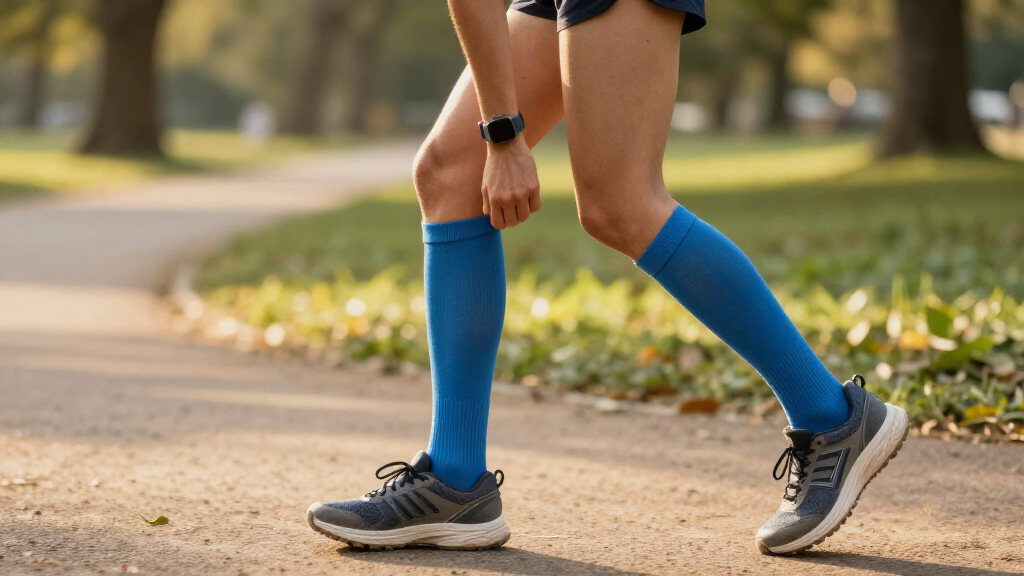
How We Picked
I ranked these options by how clearly their stated features serve runners: compression level and coverage, running-relevant details such as cushioning or arch support, and the usefulness of pack size for regular training. I also weighed how easy it is to identify each sock’s intended role from its product description. A named running model with a stated compression range ranks ahead of general-purpose pairs when the buyer wants a more specific starting point.
The order reflects fit and use-case clarity, not a claim that higher compression is better or that every runner needs knee-high socks. Multipacks can make weekly rotation easier, but pair count does not establish durability or running performance. Copper-infused options rank according to their stated compression, coverage, and practical use rather than the copper label. Where two listings share similar specifications, I avoid inventing differences and recommend checking the size chart and product details before deciding.
| compression socks for running | Care |
|---|---|
| CEP Core Run 5.0 Tall Compress | Machine wash |
| Ankle Compression Socks for Me | Machine wash or hand wash |
| Compression Running Crew Socks | Machine wash |
| 6-Pair Copper-Infused Compress | Machine wash |
| CHARMKING Compression Socks fo | Machine wash |
| ROCKBROS Knee-High Compression | Machine washable |
| FITRELL 3-Pair Compression Soc | Machine wash |
| Iseasoo Copper Compression Soc | Machine wash |
| Physix Gear 20–30 mmHg Compres | Machine wash cold; tumble dry low |
| FuelMeFoot Copper Compression | Machine wash in cold water on low; hang dry |
| FITRELL 3-Pair Graduated Compr | Machine wash |
Factors to Consider When Choosing Compression Socks For Running
Before choosing a pair, I’d match the sock to your run, your fit preferences, and how you plan to use compression. These broader checks can prevent a common mistake: buying by compression number or marketing claim alone.
Match Compression to Comfort and Intended Use
Compression figures such as 15–20 mmHg and 20–30 mmHg describe different stated levels, but they do not tell you how a particular sock will feel on your leg. A tighter fit can be uncomfortable or distracting if the size is wrong, so use the maker’s sizing instructions rather than choosing a level by assumption. If you have a medical condition, circulation concerns, or have been advised to use compression, ask a qualified clinician what level is appropriate. For ordinary training, comfort during movement matters more than selecting the largest number on the label. Stop using a pair that causes pain, numbness, or unusual discomfort.
Choose Coverage for the Run, Not the Trend
Knee-high socks cover the calf, while ankle and crew options leave more of the lower leg uncovered. More coverage can suit runners who prefer a tall sock or want a consistent layer up the calf, but it can also feel warm and take longer to put on. Shorter socks may fit more easily into a familiar running setup, though they do not provide the same calf coverage. Decide based on your clothing, climate, and personal comfort rather than assuming that a taller sock will improve every run. If you plan to wear the socks in warm weather, consider how much fabric you want around the lower leg.
Prioritize Secure Fit Over a Strong Squeeze
A running sock should stay in place without bunching, pinching, or leaving painful pressure points. Check calf and foot measurements against the size chart, since sizing by shoe size alone may not capture the fit around the widest part of your calf. A sock that is too loose can slide, while one that is too tight may be hard to pull on and uncomfortable to run in. Think about how easily you can put it on, especially if you prefer a firm compression level. When between sizes, compare the manufacturer’s guidance rather than automatically sizing down for more compression.
Treat Cushioning and Blister Details as Separate Choices
Cushioning affects shoe fit, so a thicker sock may feel crowded in a close-fitting running shoe. A cushioned or anti-blister design may appeal if you want more padding or have rubbing concerns, but those labels do not guarantee that the sock will prevent blisters for your foot. Check whether the product describes cushioning placement and whether the sock’s thickness suits your shoes. Arch support is another distinct feature: it may change the feel around the midfoot without replacing a good shoe fit. If you already have a well-fitting sock-and-shoe combination, compare any new pair against that setup before using it for a long run.
Decide Whether a Multipack Fits Your Routine
Multipacks are useful for frequent training because they provide pairs for rotation, but pack size says little about fabric feel or lifespan. A larger bundle may suit someone who runs often and wants fewer laundry gaps; a single specialized pair may be a better starting point if you are unsure about compression or height. Check washing instructions and care requirements before buying several pairs at once. Avoid treating copper-infused wording as proof of a running advantage when practical details such as fit, coverage, and construction matter more to your choice. Choose the pack that matches your actual weekly use, not the largest count.
Use Compression Socks for Their Intended Role
Running socks are not a replacement for training adjustments, suitable footwear, or medical advice. Separate comfort preferences from health claims: product descriptions may list compression levels or materials, but they cannot establish that a sock will prevent injury or treat a condition. If your main goal is support during a run, focus on fit and whether the sock stays comfortable through your usual distance. If your goal is related to a diagnosed health concern, get guidance from a clinician before relying on a consumer running sock. Try a new pair on a shorter, lower-stakes run before making it part of a race or long-run kit.
Frequently Asked Questions
Should I choose 15–20 mmHg or 20–30 mmHg for running?
Choose based on fit, comfort, and any guidance you have received—not on the idea that more compression must be better. The listed 15–20 mmHg options, such as CHARMKING and Iseasoo, provide a lighter stated level than the 20–30 mmHg picks. A firmer level may feel restrictive if the sizing is off or if you are not accustomed to compression. Check the size chart and try a new pair on a shorter run first. If you need compression for a medical reason, ask a qualified clinician which level suits you.
Are knee-high compression socks better than ankle or crew socks for running?
Not for every runner: knee-high styles cover more of the calf, while ankle and crew options offer less lower-leg coverage. The CEP Core Run 5.0, ROCKBROS, FITRELL, and several other listed choices are tall styles, whereas the ankle option and cushioned crew model serve different coverage preferences. Taller socks may suit runners who want a continuous layer up the calf, but can feel warmer and take more effort to put on. Shorter coverage may work better if you prefer a lighter feel around the lower leg. Choose the height you will comfortably wear throughout your run.
Can I wear compression socks for a long run or race without trying them first?
I would avoid making an untested pair part of a race or key long run. Compression socks can feel different after extended wear, and a seam, tight spot, or shoe-fit issue may become more noticeable with distance. Try them first on a shorter run in the shoes you plan to wear. Check for slipping, bunching, discomfort, or extra pressure around the foot and calf. If anything feels wrong, adjust the size or choose a different style before relying on the pair for an important run.
Do copper-infused compression socks offer a running advantage?
The product listings identify copper-infused materials, but that label alone does not establish a running benefit. Compare these options with non-copper socks by their stated compression, coverage, fit guidance, and construction. The copper choices in this roundup include several pack sizes and compression descriptions, so the practical differences are not all the same. If you are choosing for running, give more weight to a secure fit and sock comfort in your shoes than to the material claim. Avoid paying extra solely because a product uses copper wording.
Is a multipack a better first purchase than one specialized pair?
A multipack makes sense if you already know you like the sock height and compression level and want pairs available for regular training. If you are new to compression socks, a smaller commitment can help you check fit, warmth, and shoe compatibility before choosing several pairs. The roundup includes multipacks at both 15–20 mmHg and 20–30 mmHg, as well as an option focused on cushioned crew coverage, so pair count does not indicate which style will suit you. Review the sizing and care instructions before buying a bundle. Pick a pack size that matches how often you run and do laundry.
Conclusion
Best overall: I’d start with the CEP Core Run 5.0 if you want a named running sock with tall coverage and a stated 20–30 mmHg level. Best value: FITRELL’s three-pair 20–30 mmHg options are the practical pick for runners who want rotation, though I’d compare their listing details and sizing before selecting one. Best premium: CEP is the standout for buyers prioritizing a dedicated running model over a general-purpose multipack. Best for beginners: CHARMKING’s stated 15–20 mmHg level may suit someone seeking a lighter starting point, provided the fit feels comfortable. Best for specific needs: choose the cushioned crew socks for shorter coverage and cushioning, the ankle pair for less leg coverage, or a copper-infused multipack only if its fit, compression, and pack size match your routine. The right pick is the one that stays comfortable in your shoes and suits the coverage you actually want.


