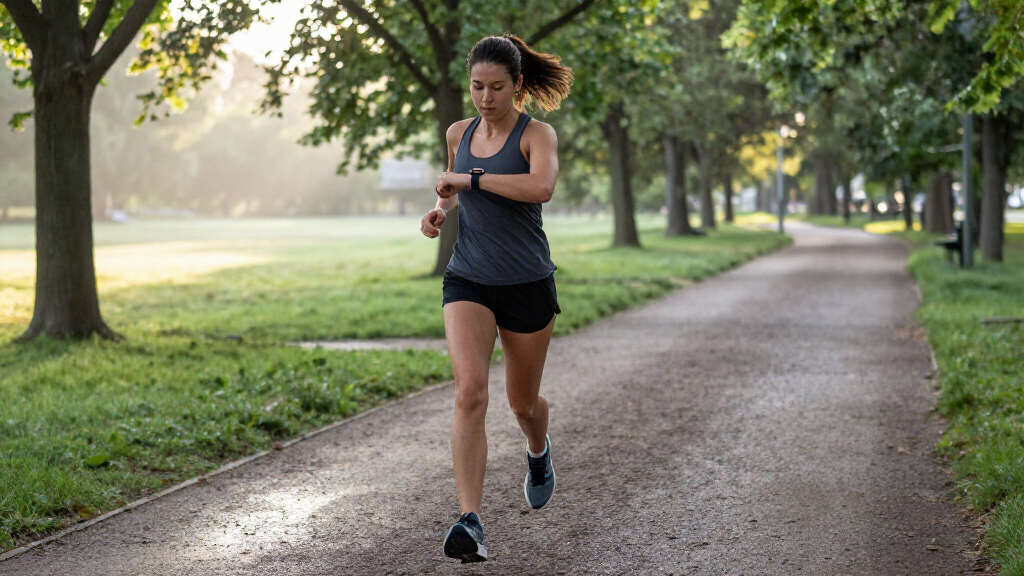

Among these smart fitness watches for runners, the Garmin Forerunner 265 is my best overall pick for its running-focused GPS and training features, while the Forerunner 165 offers a simpler route into structured run tracking. The Google Pixel Watch 5 stands out for Android smartwatch convenience, and Amazfit models bring a different balance of display, GPS, and everyday features. The main tradeoff is between reliable, detailed running data and broader smartwatch functions that may matter more off the road. I also separate dedicated running watches from general fitness watches, since a long list of sport modes does not necessarily mean strong run analysis. Read on for the full breakdown and guidance on choosing by training style, comfort, and phone needs.

Get workout gear delivered free with Prime
- Fast, free delivery on millions of items
- Prime Video, Amazon Music and more included
- Member-only deals all year
Complete the kit



Key Takeaways
- The Garmin Forerunner 265 leads for runners who want training depth: it is the strongest overall fit in this lineup for people who will use dedicated run data rather than just step counts and activity modes.
- The Forerunner 165 is the more approachable Garmin alternative: it keeps the lineup’s running focus while making more sense for buyers who do not need the 265’s broader feature set.
- Smartwatch convenience and run specialization are different priorities: the Pixel Watch 5 is a stronger fit for Android-connected daily use, while Garmin’s Forerunner models are more directly aimed at training.
- Amazfit’s three options serve different preferences: the Active Max favors a larger AMOLED screen, the Bip 6 combines a large display with GPS, and the Active 3 Premium emphasizes a compact screen and sapphire glass.
- Sport-mode counts do not tell the whole running story: several budget models advertise many activities and health features, but runners should check GPS behavior, workout controls, and data clarity before choosing one for regular training.
| Garmin Forerunner 265 Running Smartwatch, 46 mm, Black/Powder Gray |  | Best Overall for Serious Training | Display: 1.3-inch color AMOLED touchscreen | Case size: 46 mm | Battery life: Up to 13 days in smartwatch mode; up to 20 hours in GPS mode | VIEW LATEST PRICE | See Our Full Breakdown |
| GPS Smart Watch for Women and Men with Bluetooth Calling, Black |  | Best for Calls and Everyday Convenience | Display: 2.01-inch HD touchscreen | GPS: Built-in GPS | Battery: 360mAh; up to 7 days stated, approximately 3 days with extended calling and GPS use | VIEW LATEST PRICE | See Our Full Breakdown |
| T7 Smartwatch with Bluetooth Calling, 1.83-Inch HD Touchscreen, Fitness and Sleep Tracking, IP67 Water Resistance, Jet Black |  | Best for Phone-Connected Casual Runs | Display: 1.83-inch HD touchscreen | GPS: None | Activity tracking: Multiple sports modes; steps, distance, calories, and workout duration | VIEW LATEST PRICE | See Our Full Breakdown |
| MorePro Fitness Tracker Watch with 24/7 Heart Rate and Blood Pressure Monitoring |  | Best for Basic Activity and Wellness Tracking | Display: 1.57-inch touchscreen | GPS: Via smartphone | Sports modes: 112 | VIEW LATEST PRICE | See Our Full Breakdown |
| Google Pixel Watch 5 (41mm) Wi-Fi Android Smartwatch, Obsidian |  | Best Compact Android Health Companion | Case size and weight: 41 mm; 31 g | Display: Domed Actua 360 touchscreen with scratch-resistant Gorilla Glass | Battery life: Up to 40 hours | VIEW LATEST PRICE | See Our Full Breakdown |
| Amazfit Active Max Smartwatch with 1.5-Inch AMOLED Display |  | Best for Long Training Blocks | Display: 1.5-inch AMOLED, up to 3,000 nits | Battery life: Up to 25 days | GPS: Built-in; supports BeiDou, GLONASS, GPS, and Galileo | VIEW LATEST PRICE | See Our Full Breakdown |
| Smartwatch with Health Monitoring, Bluetooth Calling, 120+ Sports Modes, and IP68 Water Resistance |  | Best for Phone-Connected Casual Runs | Display: 1.83-inch TFT touchscreen | GPS: Via connected smartphone | Sports modes: More than 120 | VIEW LATEST PRICE | See Our Full Breakdown |
| Garmin Forerunner 165 GPS Running Smartwatch, 43 mm, Black |  | Best Dedicated Running Pick | Display: AMOLED touchscreen | Case size: 43 mm | GPS-mode battery life: Up to 19 hours | VIEW LATEST PRICE | See Our Full Breakdown |
| Garmin vívoactive 5 GPS Smartwatch, 42 mm, Ivory |  | Best for Runners Who Cross-Train | Display: AMOLED touchscreen | Case size: 42 mm | Battery life: Up to 11 days; up to 5 days with always-on display | VIEW LATEST PRICE | See Our Full Breakdown |
| Amazfit Bip 6 Smartwatch with 1.97-Inch AMOLED Display and GPS |  | Best Value for Map-Guided Runs | Display: 1.97-inch AMOLED | Case material: Aluminum | Battery life: Up to 14 days | VIEW LATEST PRICE | See Our Full Breakdown |
| Amazfit Active 3 Premium GPS Smartwatch with 1.32-Inch AMOLED Display and Sapphire Glass |  | Best for Phone-Free Route Guidance | Display: 1.32-inch AMOLED, 390 x 390 resolution | Maximum brightness: 3,000 nits | Glass and case: Scratch-resistant sapphire glass; stainless steel frame | VIEW LATEST PRICE | See Our Full Breakdown |
| Tensky Smart Watch with Alexa, Bluetooth Calling, Fitness Tracking, and 1.8-Inch Touchscreen |  | Best for Phone-Connected Everyday Running | Display: 1.85-inch LCD touchscreen, 320 x 320 resolution | GPS: Via connected smartphone | Sports modes: More than 120 | VIEW LATEST PRICE | See Our Full Breakdown |
| Bestinn H32 Pro Smartwatch Fitness Tracker with Health Monitoring and 120+ Sports Modes |  | Best for Basic Run Tracking on a Large Display | Display: 1.58-inch always-on display | GPS: Route recording through a connected phone | Sports modes: More than 120 | VIEW LATEST PRICE | See Our Full Breakdown |
| smart fitness watches for runner | Display | Water resistance | GPS | Battery life |
|---|---|---|---|---|
| Garmin Forerunner 265 Running | 1.3-inch color AMOLED touchscreen | 50 meters | — | Up to 13 days in smartwatch mode; up to 20 hours in GPS mode |
| GPS Smart Watch for Women and | 2.01-inch HD touchscreen | 1ATM; described for workouts, rain, and hand washing | Built-in GPS | — |
| T7 Smartwatch with Bluetooth C | 1.83-inch HD touchscreen | IP67; not intended for swimming or hot showers | None | Up to 10 days |
| MorePro Fitness Tracker Watch | 1.57-inch touchscreen | IP68; not recommended for swimming, diving, or showering | Via smartphone | Up to 7 days, depending on usage |
| Google Pixel Watch 5 | Domed Actua 360 touchscreen with scratch-resistant Gorilla Glass | 50 meters | GPS listed; no GPS geotagging functionality | Up to 40 hours |
| Amazfit Active Max Smartwatch | 1.5-inch AMOLED, up to 3,000 nits | 50 meters | Built-in; supports BeiDou, GLONASS, GPS, and Galileo | Up to 25 days |
| Smartwatch with Health Monitor | 1.83-inch TFT touchscreen | IP68 | Via connected smartphone | 7–9 days typical use; up to 30 days standby |
| Garmin Forerunner 165 GPS Runn | AMOLED touchscreen | 50 meters | — | — |
| Garmin vívoactive 5 GPS Smartw | AMOLED touchscreen | 50 meters | Built-in | Up to 11 days; up to 5 days with always-on display |
| Amazfit Bip 6 Smartwatch with | 1.97-inch AMOLED | 50 meters | Built-in; supports BeiDou, GLONASS, GPS, and Galileo | Up to 14 days |
| Amazfit Active 3 Premium GPS S | 1.32-inch AMOLED, 390 x 390 resolution | 50 meters | Built-in GPS with six satellite systems | Up to 12 days typical use; up to 7 days heavy use; up to 24 hours continuous GPS |
| Tensky Smart Watch with Alexa | 1.85-inch LCD touchscreen, 320 x 320 resolution | 3ATM; not suitable for hot water or seawater | Via connected smartphone | Up to 12 days typical use; up to 30 days standby |
| Bestinn H32 Pro Smartwatch Fit | 1.58-inch always-on display | IP68 | Route recording through a connected phone | — |
More Details on Our Top Picks
Garmin Forerunner 265 Running Smartwatch, 46 mm, Black/Powder Gray
The Forerunner 265 is the strongest fit here for runners who want training tools and dependable route tracking, rather than a general-purpose watch with a long list of modes. Its multi-band GPS with SatIQ helps balance positioning accuracy and battery use, while training and recovery insights give runs context beyond distance and pace. The AMOLED touchscreen is paired with physical buttons, a useful combination when sweaty fingers or gloves make touch controls awkward. Compared with the Pixel Watch 5, the Garmin is much more directly focused on running and lists up to 20 hours in GPS mode, though the Pixel adds Google health features. The tradeoff is that the 46 mm case may feel large, and incident assistance depends on a compatible phone and network coverage. I’d choose this for structured run training, not for a small, simple everyday watch.
Pros:- Multi-band GNSS with SatIQ supports accurate route tracking while managing battery use.
- Training and recovery insights help runners make sense of effort between workouts.
- AMOLED touchscreen and physical buttons offer flexible control during runs.
- Up to 20 hours of GPS-mode battery life and 50-meter water resistance suit regular training.
Cons:- The 46 mm case may feel oversized on smaller wrists.
- Incident detection and Assistance require a compatible paired smartphone and network coverage.
- Garmin Pay depends on supported countries and payment networks.
Best for: Runners who train several times a week, want detailed training and recovery guidance, and need reliable GPS without giving up a bright touchscreen.
Not ideal for: Runners who prefer a compact case, need a watch that works independently for emergency assistance, or mainly want basic step and sleep tracking.
- Display:1.3-inch color AMOLED touchscreen
- Case size:46 mm
- Battery life:Up to 13 days in smartwatch mode; up to 20 hours in GPS mode
- Satellite navigation:GPS; multi-band GNSS with SatIQ
- Activity profiles:30+
- Water resistance:50 meters
- Connectivity:Bluetooth, USB, Wi-Fi
- Features:Training and recovery insights, music, Garmin Pay, smart notifications, incident detection and Assistance
Our verdict“Choose the Forerunner 265 if running performance and training guidance matter more than a smaller case or broad smartwatch convenience.”
GPS Smart Watch for Women and Men with Bluetooth Calling, Black
This watch suits runners who want a large, feature-packed screen and the ability to take Bluetooth calls from the wrist, alongside built-in GPS and activity tracking. Its more than 110 sport modes and heart-rate, blood-oxygen, sleep, and stress tracking cover a broader everyday routine than the running-focused Garmin Forerunner 265. That breadth comes with a different emphasis: the Garmin provides multi-band GPS and training and recovery insights, while this model prioritizes calling, notifications, and general health features. Its stated battery life drops to about three days with extended GPS and calling, so frequent use of its headline features means more charging than the seven-day estimate suggests. The 1ATM water rating is also a reason to keep it to workouts and rain rather than swimming. I’d pick it for casual runners who value wrist calls over advanced run analysis.
Pros:- Built-in GPS can record routes without relying on a phone for location tracking.
- Bluetooth calling, contacts, call logs, and notifications add practical wrist-level communication.
- More than 110 sport modes plus heart-rate, blood-oxygen, sleep, and stress tracking cover varied activities.
- Large 2.01-inch touchscreen offers customizable watch faces.
Cons:- Battery life is stated at about three days with extended GPS and calling use.
- The 1ATM rating is described for workouts, rain, and hand washing, not as a swimming-ready rating.
- It lacks the Forerunner 265’s multi-band GPS and dedicated training and recovery insights.
Best for: Casual runners who want built-in route tracking, a large display, and Bluetooth calling for everyday use with an Android or iOS phone.
Not ideal for: Runners who need detailed training guidance, frequent long GPS sessions between charges, or a watch intended for swimming.
- Display:2.01-inch HD touchscreen
- GPS:Built-in GPS
- Battery:360mAh; up to 7 days stated, approximately 3 days with extended calling and GPS use
- Sport modes:More than 110
- Health tracking:Heart rate, blood oxygen, sleep, and stress
- Communication:Make and receive Bluetooth calls; contacts, call logs, and notifications
- Water resistance:1ATM; described for workouts, rain, and hand washing
- Compatibility:Android and iOS devices
Our verdict“Pick this model if calls and broad everyday features matter more to your running routine than specialized training analysis.”
T7 Smartwatch with Bluetooth Calling, 1.83-Inch HD Touchscreen, Fitness and Sleep Tracking, IP67 Water Resistance, Jet Black
The T7 is a basic activity companion for runners who already carry a phone and want notifications, Bluetooth calls, and workout tracking on their wrist. Its main running limitation is decisive: it has no built-in GPS, so it cannot independently record a route the way the GPS-equipped Forerunner 265 or the other GPS watch in this lineup can. It can track steps, distance, calories, and workout duration, but runners who care about mapped routes should look elsewhere. On the plus side, the 1.83-inch screen, health tracking, and stated battery life of up to 10 days make it more of an everyday wearable than a dedicated training device. Its IP67 rating is not a pass for swimming or hot showers. I’d treat it as an affordable-feeling convenience watch for short, phone-connected workouts, not as a serious GPS running tool.
Pros:- Bluetooth calls and smartphone notifications keep basic communication accessible during workouts.
- Tracks steps, distance, calories, workout duration, and several health metrics.
- Up to 10 days of stated battery life reduces routine charging.
- Works with both iOS and Android smartphones.
Cons:- No GPS means it cannot independently track or map a running route.
- IP67 water resistance does not make it suitable for swimming or hot showers.
- Its listed tracking is more basic than the Forerunner 265’s GPS and training insights.
Best for: New or occasional runners who carry a smartphone, want calls and notifications on their wrist, and are satisfied with basic workout tracking.
Not ideal for: Runners who want to map routes without a phone, follow detailed training data, or wear their watch while swimming.
- Display:1.83-inch HD touchscreen
- GPS:None
- Activity tracking:Multiple sports modes; steps, distance, calories, and workout duration
- Health tracking:Heart rate, blood oxygen, stress, and sleep
- Battery life:Up to 10 days
- Water resistance:IP67; not intended for swimming or hot showers
- Connectivity:Bluetooth calling and smartphone notifications
- Compatibility:iOS and Android smartphones
Our verdict“Choose the T7 for casual phone-connected workouts and wrist notifications, but skip it if route tracking is part of your running plan.”
MorePro Fitness Tracker Watch with 24/7 Heart Rate and Blood Pressure Monitoring
The MorePro makes more sense as a general activity tracker than as a running watch: it offers 112 sports modes and tracks everyday measures such as steps, distance, speed, and workout duration, but its GPS comes via a smartphone. That means runners need to bring their phone for location tracking, unlike with the standalone GPS on the Forerunner 265. Its included silicone and nylon bands offer a practical way to change the fit, and the watch can show call and message alerts, but it cannot make or answer calls like the Bluetooth-calling model in this lineup. The health readings are described as general wellness references, not medical measurements. I’d choose it for broad daily tracking and notifications if its phone-dependent GPS suits your runs; runners seeking training guidance or swim-ready wear should look elsewhere.
Pros:- 112 sports modes cover a wide range of everyday workouts.
- Tracks heart rate, blood pressure, blood oxygen, sleep, and common activity measures for general wellness reference.
- Includes both silicone and nylon bands for different wearing preferences.
- Call, message, and supported app alerts pair with practical reminders and phone-finding tools.
Cons:- GPS relies on a smartphone, unlike the Forerunner 265’s built-in multi-band navigation.
- Call alerts are available, but making and answering calls are not supported.
- Not recommended for swimming, diving, or showering; health readings are not medical measurements.
Best for: Phone-carrying walkers and casual runners who want broad activity and wellness tracking, interchangeable bands, and basic notifications.
Not ideal for: Runners who want phone-free GPS, call handling from the watch, medical-grade health readings, or a device for swimming and showering.
- Display:1.57-inch touchscreen
- GPS:Via smartphone
- Sports modes:112
- Health metrics:Heart rate, blood pressure, blood oxygen, and sleep duration
- Battery life:Up to 7 days, depending on usage
- Water resistance:IP68; not recommended for swimming, diving, or showering
- Compatibility:Android 7.0+ and iOS 13.0+
- Bands:Silicone and nylon bands included
Our verdict“Choose the MorePro for broad daily tracking with a phone in your pocket, not for independent GPS running or advanced training analysis.”
Google Pixel Watch 5 (41mm) Wi-Fi Android Smartwatch, Obsidian
At 41 mm and 31 g, the Pixel Watch 5 is the compact choice for Android users who want a polished everyday watch with heart-rate and sleep tracking, personalized health insights, and water resistance to 50 meters. It has supported GPS listed, but the product data also says there is no GPS geotagging functionality; runners should verify that route recording meets their needs before choosing it for training. The Forerunner 265 is the clearer pick for dedicated running, with explicit multi-band GNSS, running profiles, and training and recovery insights. The Pixel instead leans toward Google health features and a scratch-resistant domed display. Its up-to-40-hour battery life is shorter than the Garmin’s smartwatch-mode figure, and Android-only compatibility rules out iPhone users. Loss of Pulse Detection adds an emergency-oriented feature, but does not replace running-specific tools.
Pros:- Compact 41 mm case and 31 g weight offer a lighter alternative to the 46 mm Forerunner 265.
- Tracks heart rate and sleep, with personalized Google Health insights and fitness plans.
- Scratch-resistant Gorilla Glass protects the domed Actua 360 display.
- Water resistant to 50 meters and includes Loss of Pulse Detection.
Cons:- Android devices only; it is not compatible with iOS.
- Product data says GPS geotagging is not available, which limits its clarity as a route-tracking choice.
- Up to 40 hours of battery life is shorter than the Forerunner 265’s smartwatch-mode runtime.
Best for: Android users who want a lightweight, compact smartwatch for daily health tracking and occasional runs, and who value Google health features.
Not ideal for: iPhone owners, runners who need clearly specified route geotagging and detailed training tools, or anyone prioritizing long battery life.
- Case size and weight:41 mm; 31 g
- Display:Domed Actua 360 touchscreen with scratch-resistant Gorilla Glass
- Battery life:Up to 40 hours
- Compatibility:Android devices only; not compatible with iOS
- Health features:Heart-rate tracking, sleep tracking, personalized fitness plans, Loss of Pulse Detection
- GPS:GPS listed; no GPS geotagging functionality
- Water resistance:50 meters
- Connectivity and storage:Wi-Fi, Bluetooth; 64 GB storage
Our verdict“Pick the Pixel Watch 5 for a compact Android health smartwatch, but choose the Forerunner 265 if running routes and training analysis lead your priorities.”
Amazfit Active Max Smartwatch with 1.5-Inch AMOLED Display
The Amazfit Active Max is the choice here for runners who value long stretches between charges and want route guidance without carrying a phone. Its up to 25-day battery life and downloadable maps set it apart from the Garmin Forerunner 165, whose built-in GPS is paired with a shorter stated smartwatch-mode battery life. Five satellite systems support location tracking, while the bright 3,000-nit screen is easier to read outdoors. Zepp Coach plans and more than 170 workout modes add structure for runners building a routine. The tradeoff is that the product data does not specify battery performance during GPS-heavy training, so frequent long runs may use power faster than the headline figure suggests. Message replies also require Android for some features.
Pros:- Built-in GPS supports five satellite systems and downloadable maps with turn-by-turn directions.
- Bright 3,000-nit AMOLED display is suited to outdoor readability.
- Up to 25 days of stated battery life reduces routine charging.
- More than 170 workout modes and personalized Zepp Coach plans support varied training.
Cons:- Battery life under GPS use is not specified, making long-run planning less certain.
- Some instant-message reply features require an Android phone.
Best for: Runners who want downloadable maps, training plans, and long intervals between charges, especially those who use an Android phone.
Not ideal for: Runners who need clearly stated GPS-mode battery estimates or rely on hands-free message replies with an iPhone.
- Display:1.5-inch AMOLED, up to 3,000 nits
- Battery life:Up to 25 days
- GPS:Built-in; supports BeiDou, GLONASS, GPS, and Galileo
- Storage:4 GB
- Workout modes:More than 170
- Water resistance:50 meters
- Compatibility:Android and iOS smartphones
Our verdict“Choose the Active Max if offline route guidance and long stated battery life matter more than precise GPS-use battery estimates.”
Smartwatch with Health Monitoring, Bluetooth Calling, 120+ Sports Modes, and IP68 Water Resistance
This smartwatch suits runners who mainly want activity tracking and calls from their wrist, not detailed standalone run tracking. Unlike the Garmin Forerunner 165, its GPS depends on a connected smartphone, so runners who leave their phone at home will lose route tracking. The 1.83-inch touchscreen, Bluetooth calling, and notifications make it a convenient general-use companion, and its 120-plus sports modes cover more than running. The manufacturer states 7–9 days of typical use, though GPS use is tied to the phone rather than built in. Heart rate, blood oxygen, and blood pressure readings are presented as monitoring features, not medical diagnostics. That makes this a simpler pick for casual training, but a weaker fit for runners who want dedicated GPS tools or training and recovery guidance.
Pros:- Bluetooth calling and notifications keep basic phone features accessible during a run.
- More than 120 sports modes support activities beyond running.
- Large 1.83-inch touchscreen offers an expansive viewing area.
- Typical-use battery life is stated at 7–9 days.
Cons:- GPS requires a connected smartphone, limiting phone-free runs.
- Health readings are monitoring features and are not described as medical diagnostics.
Best for: Casual runners who carry a smartphone and want calls, notifications, and broad activity tracking on one watch.
Not ideal for: Runners who train without a phone or need built-in GPS and running-focused training or recovery insights.
- Display:1.83-inch TFT touchscreen
- GPS:Via connected smartphone
- Sports modes:More than 120
- Battery life:7–9 days typical use; up to 30 days standby
- Water resistance:IP68
- Health tracking:Heart rate, blood pressure, blood oxygen, and sleep
- Compatibility:Most Android and iOS smartphones
Our verdict“Pick this watch for phone-connected casual workouts and wrist calls, but choose the Forerunner 165 for standalone running GPS.”
Garmin Forerunner 165 GPS Running Smartwatch, 43 mm, Black
The Garmin Forerunner 165 earns the dedicated-running spot because it combines built-in GPS with wrist-based heart rate, training suggestions, and recovery insights in a lightweight 43 mm format. Its physical buttons alongside the AMOLED touchscreen give runners another way to control workouts, while the Amazfit Bip 6 offers a larger screen and downloadable maps but less explicitly running-centered training guidance in the supplied details. The Forerunner also states battery life in both smartwatch and GPS modes, helping runners plan around a long session: up to 19 hours with GPS, rather than relying only on a general-use estimate. Its tradeoffs are narrower activity coverage than some multipurpose watches and smartphone-dependent safety and tracking features. Garmin Pay support also varies by country and payment network.
Pros:- Built-in GPS and wrist-based heart rate support phone-free run tracking.
- Training suggestions and recovery insights add running-specific context.
- AMOLED touchscreen and traditional buttons provide two workout-control options.
- Battery life is stated separately for smartwatch and GPS modes.
Cons:- Safety and tracking features require a compatible paired smartphone and network coverage.
- Garmin Pay availability depends on supported countries and payment networks.
Best for: Runners who want reliable standalone GPS, wrist heart-rate tracking, and workout and recovery guidance in a dedicated running watch.
Not ideal for: Buyers who prioritize downloadable maps, a larger display, or safety features that work independently of a paired phone and network.
- Display:AMOLED touchscreen
- Case size:43 mm
- GPS-mode battery life:Up to 19 hours
- Smartwatch-mode battery life:Up to 11 days
- Activity profiles:More than 25
- Water resistance:50 meters
- Controls:Buttons and touchscreen
Our verdict“Choose the Forerunner 165 for running-focused GPS and training guidance; choose the Amazfit Bip 6 if a larger screen and downloadable maps matter more.”
Garmin vívoactive 5 GPS Smartwatch, 42 mm, Ivory
The Garmin vívoactive 5 is the more versatile lifestyle-and-training choice beside the Forerunner 165. It has built-in GPS for runs, but its appeal broadens to more than 30 sports apps, sleep coaching, HRV status, music storage, and wheelchair activity tracking. Runners who want one watch for workouts and everyday health features may find that mix more useful than the Forerunner’s clearer running-first focus. Music storage and wireless-headphone support can also make phone-free sessions easier, while Garmin Pay adds a daily-use tool. The compromises are a shorter battery estimate when the display stays always on and health metrics described as estimates. Its supplied details also offer less explicit running-mode battery guidance than the Forerunner 165.
Pros:- Built-in GPS and more than 30 sports apps support running and cross-training.
- Music storage and wireless-headphone support can reduce phone dependence during workouts.
- Sleep coaching, HRV status, stress tracking, and Body Battery add broader wellness context.
- Includes wheelchair activity tracking, smartphone notifications, and Garmin Pay.
Cons:- Battery life falls to up to five days with the always-on display.
- Health metrics are estimates rather than medical measurements.
Best for: Runners who regularly cross-train and want built-in GPS, music, sleep and recovery features, and everyday smartwatch tools.
Not ideal for: Runners focused primarily on run-specific guidance and clearly stated GPS-mode battery life, who may prefer the Forerunner 165.
- Display:AMOLED touchscreen
- Case size:42 mm
- Battery life:Up to 11 days; up to 5 days with always-on display
- GPS:Built-in
- Sports apps:More than 30 indoor and GPS sports apps
- Water resistance:50 meters
- Music:Music storage with Spotify, Amazon Music, and Deezer support
Our verdict“Choose the vívoactive 5 if you want a capable GPS watch across running, cross-training, music, and everyday wellness.”
Amazfit Bip 6 Smartwatch with 1.97-Inch AMOLED Display and GPS
The Amazfit Bip 6 stands out for runners who want built-in GPS and route guidance without moving to a more running-focused Garmin. Its downloadable maps and turn-by-turn directions give it a practical navigation advantage over the Garmin Forerunner 165, while its 1.97-inch AMOLED display makes route and workout information easy to see at a glance. More than 140 workout modes and AI coaching broaden its use beyond running, and the stated battery life reaches up to 14 days. Compared with the Amazfit Active Max, the Bip 6 has a larger screen but less listed storage—512 MB versus 4 GB—and a shorter headline battery estimate. Buyers should also check that their phone meets the Android or iOS version requirement before choosing it.
Pros:- Built-in GPS supports four satellite systems and downloadable maps with turn-by-turn directions.
- Large 1.97-inch AMOLED display aids at-a-glance viewing during workouts.
- More than 140 workout modes and AI coaching support varied training.
- Lightweight aluminum case and up to 14 days of stated battery life.
Cons:- Listed storage is 512 MB, less than the Amazfit Active Max’s 4 GB.
- Requires Android 7.0+ or iOS 14.0+ for compatibility.
Best for: Runners seeking built-in GPS, downloadable maps, and a large readable screen for route-guided training across multiple sports.
Not ideal for: Runners who want a compact watch, greater listed storage, or the longer stated battery life of the Amazfit Active Max.
- Display:1.97-inch AMOLED
- Case material:Aluminum
- Battery life:Up to 14 days
- GPS:Built-in; supports BeiDou, GLONASS, GPS, and Galileo
- Workout modes:More than 140
- Storage:512 MB
- Water resistance:50 meters
- Compatibility:Android 7.0+ and iOS 14.0+
Our verdict“Choose the Bip 6 for a large screen and map-guided GPS runs, or the Active Max if longer stated battery life and more storage matter more.”
Amazfit Active 3 Premium GPS Smartwatch with 1.32-Inch AMOLED Display and Sapphire Glass
The Amazfit Active 3 Premium is the strongest pick here for runners who want navigation on their wrist without depending on a phone. Its offline maps, turn-by-turn directions, and automatic rerouting make unfamiliar routes easier to follow than the Tensky and Bestinn, both of which rely on a connected phone for GPS. A bright AMOLED screen, physical buttons alongside touch controls, and coached running plans also make it better suited to focused training than a general-purpose activity tracker.
The tradeoff is endurance during long GPS sessions: continuous tracking is rated for up to 24 hours, well below its typical-use battery figure. Sapphire glass and a stainless steel case add durability, but the 2.82-ounce weight may feel substantial to runners seeking a lighter watch. Choose this over the Garmin Forerunner 165 if standalone route guidance and the listed premium materials are your priorities; skip it if you want a dedicated running watch and training platform.
Pros:- Offline maps, turn-by-turn navigation, and automatic rerouting support phone-free route guidance
- Sapphire glass and a stainless steel frame offer a more durable-feeling build than the plastic-oriented alternatives
- Coached running plans and performance metrics add structure to training
- Up to 12 days of typical-use battery life reduces routine charging
Cons:- Continuous GPS tracking is rated for up to 24 hours, limiting its appeal for especially long outings
- At 2.82 ounces, it may feel heavier than a lightweight running-focused watch
- Bluetooth calling and voice controls require connection to a compatible phone
Best for: Runners who explore unfamiliar routes and want offline maps, wrist-based directions, and coached plans without carrying a phone for navigation
Not ideal for: Runners prioritizing a lightweight training watch or extended GPS outings beyond its stated 24-hour continuous tracking limit
- Display:1.32-inch AMOLED, 390 x 390 resolution
- Maximum brightness:3,000 nits
- Glass and case:Scratch-resistant sapphire glass; stainless steel frame
- GPS:Built-in GPS with six satellite systems
- Navigation:Offline maps, turn-by-turn directions, and automatic rerouting
- Battery life:Up to 12 days typical use; up to 7 days heavy use; up to 24 hours continuous GPS
- Water resistance:50 meters
- Weight:2.82 ounces
- Training and health:More than 170 workout modes; coached running plans; heart rate, blood oxygen, stress, and sleep tracking
Our verdict“Choose the Active 3 Premium if phone-free mapping and a durable build matter more than minimum weight or the longest possible GPS runtime.”
Tensky Smart Watch with Alexa, Bluetooth Calling, Fitness Tracking, and 1.8-Inch Touchscreen
The Tensky Smart Watch suits runners who want basic activity tracking alongside calls, notifications, and Alexa, rather than a dedicated GPS training tool. Its GPS comes from a connected smartphone, so it can record a route when you bring your phone, but it cannot match the Amazfit Active 3 Premium’s offline maps and wrist-based directions. The 1.85-inch LCD gives notifications and workout information plenty of screen space, while more than 120 sports modes cover activities beyond running.
This is a better fit for casual runs and daily wear than for runners building a plan around detailed pace and route data. The listing gives up to 12 days of typical battery life, but its battery capacity is inconsistent, stated as both 300 and 350 mAh. Its 3ATM water resistance also excludes hot water and seawater. Compared with the Bestinn H32 Pro, it adds Alexa and Bluetooth calling; choose Bestinn instead if an always-on display and washable strap matter more.
Pros:- Bluetooth calling, notifications, and Amazon Alexa support everyday phone-connected use
- More than 120 sports modes provide options beyond running
- Up to 12 days of typical-use battery life is listed
- Aluminum case and customizable watch faces offer a more personalized everyday look
Cons:- GPS route tracking depends on a connected smartphone
- 3ATM water resistance is not suitable for hot water or seawater
- Battery capacity is listed inconsistently as 300 mAh and 350 mAh
Best for: Casual runners who carry a smartphone and want calls, Alexa, notifications, and broad activity tracking in one watch
Not ideal for: Runners who need built-in GPS, phone-free route tracking, advanced running guidance, or a watch for swimming in seawater
- Display:1.85-inch LCD touchscreen, 320 x 320 resolution
- GPS:Via connected smartphone
- Sports modes:More than 120
- Voice assistant:Amazon Alexa
- Connectivity:Bluetooth calls and notifications
- Water resistance:3ATM; not suitable for hot water or seawater
- Battery life:Up to 12 days typical use; up to 30 days standby
- Compatibility:iOS 9.0+ and Android 6.0+ smartphones
- Case and band:Aluminum case with silicone band
Our verdict“Pick the Tensky for casual, phone-connected runs and smartwatch conveniences, not for independent GPS navigation or structured running training.”
Bestinn H32 Pro Smartwatch Fitness Tracker with Health Monitoring and 120+ Sports Modes
The Bestinn H32 Pro is a simple choice for runners who want an always-on screen and broad health tracking without paying for standalone navigation features they may not use. Its phone-connected GPS can record routes when a compatible phone is along, much like the Tensky, but the H32 Pro lists no Bluetooth calling or voice assistant. Instead, it emphasizes an always-on 1.58-inch display, 120-plus sports modes, and around-the-clock heart-rate, blood-pressure, and blood-oxygen monitoring.
That focus makes it more of a general fitness tracker than a purpose-built running watch. The Amazfit Active 3 Premium is the stronger choice for runners who want built-in GPS, route guidance, and coached plans; the H32 Pro is simpler for basic activity logging and phone-connected routes. Its IP68 rating and washable, replaceable strap suit everyday wear, but the product data does not specify a battery-life figure, and route recording still depends on carrying a phone.
Pros:- Always-on 1.58-inch display keeps workout information visible at a glance
- Phone-connected GPS can record routes without requiring a standalone GPS receiver in the watch
- More than 120 sports modes and daily activity tracking cover varied exercise
- Replaceable, washable strap and more than 250 watch faces support everyday customization
Cons:- GPS route recording requires a connected phone, unlike the built-in GPS and navigation on the Amazfit Active 3 Premium
- No battery-life figure is provided in the supplied product data
- The listed features focus on general fitness tracking rather than coached or advanced running training
Best for: New or casual runners who want an always-on display, basic activity and health tracking, and route recording while carrying a compatible phone
Not ideal for: Runners who want built-in GPS, phone-free navigation, coached running plans, or clearly specified battery endurance
- Display:1.58-inch always-on display
- GPS:Route recording through a connected phone
- Sports modes:More than 120
- Health monitoring:24/7 heart rate, blood pressure, and blood oxygen
- Sleep tracking:Tracks light and deep sleep
- Water resistance:IP68
- Compatibility:Android 4.4+ or iOS 8.4+
- Strap:Replaceable and washable
- Watch faces:More than 250
Our verdict“Choose the H32 Pro for basic phone-connected runs and an always-on display, but look elsewhere for independent GPS or running guidance.”
How We Picked
I ranked these watches by how well their stated capabilities match the needs of runners: GPS-based run tracking, training usefulness, workout readability, and day-to-day wearability. I gave dedicated running models an advantage over general smartwatches and fitness trackers because they are designed around recording and reviewing runs, rather than presenting running as one activity among many. I also weighed display size and form, water resistance where specified, and the value of everyday features such as calls and health tracking.
The order reflects role and tradeoffs, not a claim that every watch has equivalent testing or verified performance. Garmin’s Forerunner models rank ahead because their product positioning is explicitly running-focused; the Pixel Watch and Amazfit models follow for buyers who want a broader smartwatch or fitness mix. The remaining watches are treated as entry-level or feature-led choices where the supplied descriptions emphasize calling, health monitoring, or sport modes but give less detail about running-specific tools. Buyers should verify phone compatibility and GPS capabilities for the exact model before purchase.
Factors to Consider When Choosing Smart Fitness Watches For Runners
Before choosing a watch, decide what job it needs to do after you press start on a run. A runner training toward a time goal may need dependable route recording and useful workout feedback, while a casual jogger may care more about comfort, calls, or a screen that is easy to read. These broader checks help prevent paying for features you will not use—or mistaking a long feature list for a better running companion.
Decide How Much Running Data You Will Use
Start with the decisions you expect the watch to support: tracking distance, reviewing pace, following planned workouts, or monitoring progress across weeks. A dedicated running watch can make training data easier to find and interpret than a general fitness model with many activity modes. More metrics are not automatically more useful; a crowded dashboard can distract from the few numbers that guide your next run. If you mostly run for general fitness, prioritize straightforward recording and readable summaries. If you train to a schedule, check that the watch supports the workout structure and review tools you actually need. Avoid choosing solely by the number of sport modes listed, since that count says little about the quality of run analysis.
Check GPS Needs Against Your Routes
GPS matters most when you want distance and pace tied to your route, rather than estimates based on wrist motion. Think about where you run: open paths, dense neighborhoods, wooded trails, and city streets can place different demands on location tracking. Product descriptions that simply say GPS may not spell out every tracking detail, so confirm the exact model’s GPS operation and whether it relies on the watch itself or a connected phone. Phone-assisted tracking can be fine for short, familiar runs, but it adds another device to carry and depends on the phone connection. If you run without your phone, make standalone GPS support a purchasing requirement rather than an assumption. Compare how route recording fits your routine before giving a large touchscreen or calling feature priority.
Balance Display Readability With Running Comfort
A display should be easy to glance at while moving, but a larger screen can also mean a bulkier watch on the wrist. Consider your wrist size, sleeve fit, and whether you want to read pace at a quick glance or interact with the watch mid-run. Touchscreens can feel convenient in daily use, while physical controls may be easier to operate with sweaty hands or when you do not want to look down for long. A bright, attractive panel does not replace clear workout screens or accessible controls. Try to match the screen and case size to your actual use instead of assuming the biggest display is best. For runners who wear a watch all day and overnight, comfort can matter more than a few extra pixels.
Separate Training Battery Needs From Smartwatch Use
Battery life can change with GPS use, screen settings, notifications, calls, and health monitoring, so a general battery claim may not reflect a long run or a full training week. Check for separate estimates for ordinary smartwatch use and continuous GPS tracking when the manufacturer provides them. Frequent calling or bright always-on displays may be useful conveniences, but they can increase charging frequency. If you train for long distances, travel, or dislike daily charging, prioritize the GPS-use figure over a headline smartwatch estimate. A watch that lasts longer between charges can also make overnight tracking more practical. Choose the charging routine you will tolerate, not just the feature list you like.
Treat Health Metrics as Context, Not Diagnosis
Wrist-based health features can help you notice patterns, but they should not replace clinical measurements or medical advice. Labels such as blood-pressure monitoring may sound decisive; check how the feature works, what limitations the maker states, and whether the watch has the relevant regulatory status for your intended use. For training, consistency in how a metric is recorded can be more helpful than a long menu of readings. A watch that tracks fewer measures clearly may suit a runner better than one whose health claims are difficult to interpret. Do not buy a fitness watch as a substitute for a prescribed monitor. Keep health readings in perspective and seek professional guidance about medical concerns.
Match Smart Features to Your Phone and Routine
Bluetooth calling, voice assistants, and notifications are only useful if they work with your phone and fit how you run. Confirm the operating-system requirements, app support, and which functions require a nearby phone before buying. A runner who leaves a phone at home may value standalone connectivity differently from someone who carries a phone on every route. Extra smart features can also add setup steps and notifications that interrupt a workout. If your main goal is running, make sure everyday conveniences do not come at the cost of clear training controls or a comfortable fit. Buy for the routines you already have, rather than expecting a watch to change them.
Frequently Asked Questions
Is the Garmin Forerunner 165 enough for a first running watch, or should I choose the 265?
The Forerunner 165 is the more sensible starting point if you want a running-oriented watch without needing every higher-level training feature. The 265 makes more sense if you expect to use its broader training capabilities as your workouts become more structured. Before stepping up, write down which extra functions you would use each week; features you rarely open add little practical value. Both are more directly aligned with running than the general calling watches in this roundup. If you are unsure, favor the simpler model and reassess after you have built a consistent training routine.
Can I use a watch advertised with many sport modes for serious run training?
Possibly, but a high mode count does not confirm that the watch offers reliable route tracking, useful pace data, or training review tools. Look for details about built-in GPS, workout setup, run summaries, and how data syncs to an app. A watch can record a run without offering much help in planning or evaluating one. For occasional jogging, basic tracking may be enough; for a race plan, dedicated running features are usually a safer priority. Compare the functions you need rather than treating the sport-mode total as a quality measure.
Should I choose the Pixel Watch 5 or a Garmin Forerunner if I use an Android phone?
Choose based on whether you value phone-connected smartwatch features or running-focused tools more. The Pixel Watch 5 is the better match for buyers who want a broader Android smartwatch experience, while the Forerunner 165 and 265 are positioned around running and training. Android compatibility alone does not make a watch the best training choice. Check which apps, notifications, and workout data matter to you, along with how you plan to review runs. If training structure is the priority, lean toward a Forerunner; if daily smart functions lead, the Pixel may fit better.
Are the health-monitoring watches a good substitute for a medical device?
No. A consumer fitness watch can offer readings for general awareness, but those readings should not be treated as a diagnosis or a replacement for a device recommended by a clinician. This matters especially when a product description highlights blood-pressure or other health monitoring without explaining validation and limitations. Check the manufacturer’s instructions and the watch’s regulatory information for the exact feature. If you need a measurement to guide treatment, ask a healthcare professional which device to use. For running, treat wellness data as one source of context rather than a medical decision tool.
What should I verify before buying one of the budget Bluetooth-calling watches for running?
Confirm whether the exact model has built-in GPS or needs a phone to record a route, since Bluetooth calling does not establish GPS capability. Check phone compatibility, how calls connect, water-resistance guidance, and whether workout data can be reviewed in an app. Also look for clear details on battery use during GPS tracking, not just ordinary standby or smartwatch use. If the listing emphasizes health monitoring and sport modes but gives little running information, treat it as a general fitness watch until those details are confirmed. For regular outdoor training, route tracking and usable workout controls should take precedence over call features.
Conclusion
My best overall choice is the Garmin Forerunner 265 for runners who want a dedicated training watch with more room to grow; the best value-oriented running pick is the Forerunner 165 for a simpler route into run-focused tracking. For a best premium-leaning option with a compact display and sapphire glass, consider the Amazfit Active 3 Premium, while the Pixel Watch 5 is better for runners who put Android smartwatch functions first. Beginners who want a clear running direction should start with the Forerunner 165, while casual runners prioritizing a large screen and GPS can compare the Amazfit Bip 6 and Active Max. Choose the budget calling models only after confirming standalone GPS and phone compatibility for your needs; their broad feature claims do not make them automatic substitutes for dedicated running watches.
Black Friday Picks
Garmin Forerunner 265 Running Smartwatch, 46 mm, Black/Powder Gray
As an affiliate, we earn on qualifying purchases.