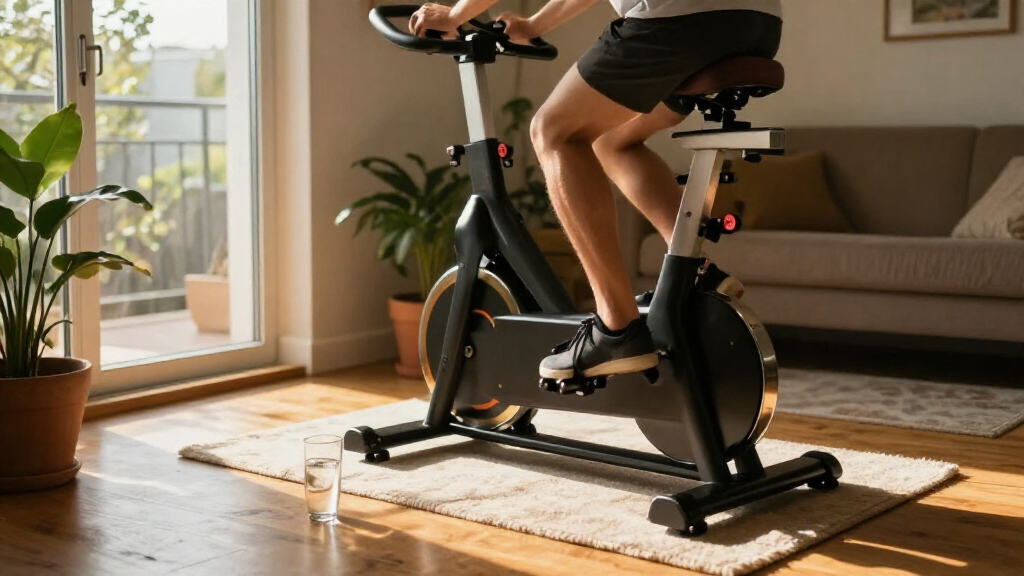

For a compact exercise bike for home, I’d start with the BARWING Foldable 5-in-1 as the best overall pick: its adjustable seat and backrest, 16 resistance levels, and stated 350-pound capacity give it unusual flexibility among folding models. The XTERRA FB150 is a simpler choice for riders who want a straightforward folding bike, while the Lightweight 33LB model puts easy moving and small-apartment storage first. The main tradeoff is between compact folding designs with multiple adjustments and sturdier, more conventional bikes that may take up more room. Comfort, rider fit, and how the bike folds can matter more day to day than a long feature list. Read on for the full breakdown of all 15 options and how I’d match them to different home workout needs.
Complete the kit


Key Takeaways
- Adjustability separates the BARWING from simpler folding bikes: its backrest, adjustable seat, and stated 350-pound capacity suit a wider range of riders than the XTERRA FB150, which lists a 225-pound capacity.
- “5-in-1” describes added workout options, not a smaller footprint: models such as BARWING, GOIMU, and ATIVAFIT add features like bands or alternate riding positions, so check folded and in-use dimensions before choosing one for a tight room.
- Portability and resistance range pull in different directions: the 33-pound model is designed for easier moving and lists 16 resistance levels, while heavier or more feature-rich bikes may be less convenient to put away between sessions.
- Magnetic resistance is common, but training extras vary: Sunny Health & Fitness emphasizes smart features, YOSUDA’s magnetic bike offers app training, and simpler options focus on basic indoor cycling.
- Capacity, fit, and comfort are not interchangeable: the listed capacity ranges from 225 pounds on the XTERRA FB150 to 350 pounds on the BARWING, but buyers should also confirm seat adjustment and back support for their own riding position.


| compact exercise bikes for home | Resistance | Monitor metrics |
|---|---|---|
| BARWING Foldable 5-in-1 Statio | 16 magnetic levels | — |
| Sunny Health & Fitness Smart F | 14 magnetic levels | — |
| JELENS Caromix 5-in-1 Folding | 16-level magnetic | Time, speed, distance, calories, and heart rate |
| pooboo Folding Magnetic X-Bike | 8 magnetic levels | Time, speed, distance, calories, and heart rate |
| Sportneer Foldable Exercise Bi | 16 magnetic levels | — |
| XTERRA Fitness FB150 Folding E | Magnetic; 8 levels | — |
| Exercise Bike | Magnetic; 16 levels | — |
| GOIMU 5-in-1 Foldable Magnetic | Magnetic; 16 levels | — |
| YOSUDA Exercise Bike | — | — |
| PLENY 5-in-1 Folding Exercise | Magnetic; 16 levels | Time, speed, distance, calories, and heart rate |
| Birdfeel Foldable Exercise Bik | 8-level magnetic | Distance, time, speed, calories |
| Lightweight 33LB Foldable Exer | 16-level magnetic | Pulse, calories, time, distance, speed |
| Marcy Foldable Upright Exercis | — | Speed, distance, time, calories |
| YOSUDA Folding Exercise Bike | 16-level magnetic | Time, speed, distance, calories, odometer, pulse |
| ATIVAFIT 5-in-1 Foldable Exerc | — | Distance, speed, time, heart rate |
More Details on Our Top Picks
BARWING Foldable 5-in-1 Stationary Exercise Bike
The BARWING earns my Best Overall spot by balancing compact storage with a broader fit and capacity range than the other bikes here. Its 350 lb capacity is higher than the Sunny Health & Fitness X-Bike and JELENS Caromix, while the stated rider range of 4’11” to 6’6″ covers more heights than either. Sixteen magnetic resistance levels give you finer adjustments than the pooboo’s eight, and its folding frame suits homes where the bike needs to move out of the way between rides. The backrest and quiet belt drive add comfort and shared-space appeal. The tradeoff is that it takes longer to assemble than the Sunny, and the seat cushioning may not suit longer sessions. Choose it for fit flexibility and capacity; skip it if seat softness is your priority.
Pros:- 350 lb capacity exceeds the other bikes in this batch.
- 16 resistance levels allow more gradual adjustments than the pooboo’s eight.
- Foldable frame and operation rated under 15 dB suit compact or shared living spaces.
- Wide stated rider-height range and adjustable backrest accommodate varied fits.
Cons:- Assembly may take up to an hour for first-time users.
- Minimal seat cushioning may become uncomfortable during longer rides.
Best for: Households with riders of different heights who need a foldable bike with high weight capacity and quiet operation.
Not ideal for: Riders planning long sessions who need plush seat cushioning, or buyers who want a quick setup with minimal assembly.
- Weight capacity:350 lb
- Resistance:16 magnetic levels
- Flywheel:5.5 lb
- Drive:ABS belt drive
- Noise level:Under 15 dB
- Seat adjustment:8 positions
- Rider height range:4’11″–6’6″
- Storage and console:Foldable; LCD tracks speed, distance, time, calories, and odometer
Our verdict“Pick the BARWING if you want the strongest combination of capacity, broad rider fit, quiet operation, and fold-away storage.”
Sunny Health & Fitness Smart Foldable Magnetic X-Bike
The Sunny Health & Fitness X-Bike is my pick for riders who want app-linked workouts without giving up an easy-to-store frame. Bluetooth connection to the free SunnyFit app adds guided sessions, making this a more engaging choice than the simpler console on the BARWING or the Sportneer’s listed LCD-and-holder setup. Its transport wheels also make it easier to shift between rooms after folding, a useful distinction in a multipurpose home. Fourteen magnetic resistance levels provide a solid range, though the BARWING, JELENS, and Sportneer offer 16. The 300 lb capacity is below BARWING’s 350 lb, and the product is described for indoor use. I’d choose Sunny for connected routines and mobility, but not for the broadest resistance range or highest capacity.
Pros:- Bluetooth connection supports workouts through the SunnyFit app.
- Foldable design and transport wheels help with storage and repositioning.
- 14 magnetic resistance levels provide a broad adjustment range.
- LCD monitor displays workout information.
Cons:- 300 lb maximum capacity is lower than the BARWING’s 350 lb.
- Offers fewer resistance levels than the BARWING, JELENS, and Sportneer.
- Assembly is required, and the bike is intended for indoor use.
Best for: Home riders who want guided app workouts and need to roll a folded bike between rooms.
Not ideal for: Riders above 300 lb or those who want 16 resistance levels and do not need app connectivity.
- Maximum user weight:300 lb
- Resistance:14 magnetic levels
- Connectivity:Bluetooth; SunnyFit app
- Display:LCD digital monitor
- Seat:Adjustable
- Storage and mobility:Foldable; transport wheels
- Color:Grey
Our verdict“Choose the Sunny if app-guided sessions and easy room-to-room movement matter more than maximum capacity or 16 resistance settings.”
JELENS Caromix 5-in-1 Folding Exercise Bike
The JELENS Caromix stands out for riders who want to alternate between upright and semi-reclined positions while keeping a compact folding bike. Its 16 magnetic resistance levels match the BARWING and Sportneer, and its included resistance bands add upper-body work that the Sunny X-Bike’s listed setup does not provide. The backrest and transport wheels make it a more adaptable home option than a basic upright foldable bike. Its 330 lb capacity falls between BARWING’s 350 lb and the Sunny and pooboo models at 300 lb. The stated rider range starts at 5’1″, so shorter users may have a better fit with the BARWING or pooboo, which list lower minimum heights. The heart-rate tracking method is unspecified, and assembly is still needed despite arriving partly assembled.
Pros:- Two riding positions allow a change between upright and semi-reclined cycling.
- 16 magnetic resistance levels offer detailed workout adjustments.
- Resistance bands add an upper-body exercise option.
- Folds for storage and includes transport wheels and a supportive backrest.
Cons:- Listed rider-height range begins at 5’1″, excluding some shorter riders.
- Heart-rate tracking method is not specified.
- Some assembly is required, even though the bike arrives 70% pre-assembled.
Best for: Riders who want upright and semi-reclined cycling, resistance bands, and a backrest in a foldable home bike.
Not ideal for: Riders under 5’1″ or buyers who need clearly specified heart-rate monitoring.
- Weight capacity:330 lb
- Resistance:16-level magnetic
- Flywheel:5.5 lb
- Riding positions:Upright and semi-reclined
- Rider height range:5’1″–6’6″
- Monitor metrics:Time, speed, distance, calories, and heart rate
- Noise level:Under 20 dB
- Storage and mobility:Foldable; transport wheels
Our verdict“Choose the JELENS if you want multiple riding postures and resistance bands, provided its 5’1" minimum rider height fits you.”
pooboo Folding Magnetic X-Bike, Upright Exercise Bike for Home Gym
The pooboo is the most fitting option here for shorter riders: its stated height range starts at 4’10”, slightly below the BARWING’s 4’11” minimum and well below the JELENS’s 5’1″. Its large seat, back-support cushion, bottle holder, and folding frame give it a practical setup for casual home rides. Compared with the Sportneer, it has fewer riding modes and only 8 resistance levels; compared with the Sunny, it adds resistance bands and a lower listed minimum rider height but lacks app connectivity. That narrower resistance range makes it less suited to riders who want fine progression. The product information also describes the frame as both aluminum alloy and thicker steel, so buyers should treat the material listing as unclear. Its 300 lb capacity and 6.6 lb flywheel are specified.
Pros:- Stated rider-height range begins at 4’10”.
- Oversized adjustable seat and back-support cushion are designed for added comfort.
- Folds and has transport wheels for moving and storage.
- Includes resistance bands and a bottle holder.
Cons:- Eight resistance levels offer fewer adjustment steps than the 14-level Sunny or 16-level BARWING.
- Maximum capacity is 300 lb, below the BARWING and JELENS.
- Frame material is described inconsistently in the product information.
Best for: Shorter riders seeking a foldable bike with a supportive seat, basic resistance adjustment, and light upper-body work.
Not ideal for: Riders seeking fine-grained resistance changes, app-connected workouts, or a consistently specified frame material.
- Maximum weight:300 lb
- Resistance:8 magnetic levels
- Flywheel:6.6 lb
- Rider height range:4’10″–6’1″
- Riding positions:Upright and semi-recumbent
- Monitor metrics:Time, speed, distance, calories, and heart rate
- Dimensions:27.17 in D × 15.75 in W × 46 in H
- Weight:39.3 lb
Our verdict“Pick the pooboo if a low minimum rider height and cushioned support matter more than app features or a wide resistance range.”
Sportneer Foldable Exercise Bike with 16 Level Resistance Training
The Sportneer is the strongest match for riders who want the most posture variety in this group: it lists upright, semi-recumbent, and recumbent positions, while the JELENS offers upright and semi-reclined riding. Sixteen magnetic resistance levels and included arm bands support varied sessions, and the supplied floor mat, transport wheels, and iPad holder add practical home-use touches. Its compact foldable format fits the roundup’s small-space focus, but its 240 lb capacity is the lowest among these five bikes. That makes the BARWING or JELENS a better fit for buyers who need greater stated capacity. Sportneer also lists seven adjustable height positions without giving a rider-height range, so fit is harder to judge in advance. Assembly can take time, and the firm seat may limit longer rides.
Pros:- Three listed riding positions offer more posture variety than the JELENS’s two.
- 16 magnetic resistance levels support a wide range of workout intensity.
- Includes arm bands, transport wheels, an iPad holder, and a PVC floor mat.
- Folds for compact storage.
Cons:- 240 lb capacity is lower than every other bike in this batch.
- No rider-height range is provided, making fit harder to confirm.
- Firm seat padding may be uncomfortable on extended sessions, and assembly can take time.
Best for: Riders under the 240 lb capacity limit who want three riding positions, arm bands, and included floor protection.
Not ideal for: Riders over 240 lb, those needing a stated rider-height range, or anyone prioritizing plush seat comfort.
- Model:Y22-82000-70
- Weight capacity:240 lb
- Resistance:16 magnetic levels
- Flywheel:5.5 lb
- Riding positions:Upright, semi-recumbent, and recumbent
- Adjustable height positions:7
- Included accessories:Arm resistance bands, PVC floor mat, transport wheels, and iPad holder
- Storage:Foldable
Our verdict“Choose the Sportneer for three riding positions and included accessories if its 240 lb capacity and unspecified rider-height fit work for you.”
XTERRA Fitness FB150 Folding Exercise Bike, 225 lb Capacity
The FB150 earns its place for buyers who need a bike that folds into a particularly small stated storage footprint: 18.1 × 18.1 inches. Its eight magnetic resistance levels keep operation simple, while the padded seat, multi-position handlebars, and LCD with pulse tracking cover the basics for steady home rides. Compared with the more feature-rich GOIMU 5-in-1, this XTERRA makes fewer claims about workout positions and offers less resistance variety, but its compact folded dimensions are clearly specified. The tradeoffs are its 225 lb capacity, lower than several alternatives here, and manual resistance adjustment. I’d choose it for space-conscious riders who value a straightforward folding frame over extra modes, higher capacity, or more granular resistance.
Pros:- Folds to a stated 18.1 × 18.1-inch floor footprint for storage
- Eight levels of magnetic resistance provide basic workout progression
- Padded seat and multi-position handlebars support riding comfort
- LCD tracks speed, distance, time, calories, and pulse
Cons:- 225 lb maximum user capacity is lower than the GOIMU and YOSUDA options
- Manual resistance adjustment offers less convenient changes during a ride
Best for: Apartment dwellers who need a clearly specified compact folded footprint and want simple indoor rides.
Not ideal for: Riders above 225 lb or anyone seeking multiple riding positions and a broad resistance range.
- Resistance:Magnetic; 8 levels
- Maximum user weight:225 lb
- Folded floor space:18.1 × 18.1 in
- User height range:58–70 in
- Item weight:32 lb
- Drive system:Belt
- Display:LCD: speed, distance, time, calories, and pulse
- Frame material:Alloy steel
Our verdict“Choose the FB150 if compact, specified storage dimensions matter more than high capacity or advanced workout options.”
Exercise Bike, 3 IN 1 Stationary Bike, Folding Exercise Bike with 16-Level Resistance, Comfortable Seat Cushion, LCD Monitor, 265 lbs Weight Capacity for Home Gym Workout
This 3-in-1 model is the more flexible pick for households that want to alternate between upright and semi-reclining positions without moving to a separate machine. Its 16 resistance levels offer finer workout adjustment than the eight-level XTERRA FB150, and the seat adjusts for riders from 4’9″ to 6’1″. A device holder and LCD add useful support for longer, entertainment-friendly sessions. The listed 265 lb capacity also exceeds the FB150’s 225 lb limit, though it remains below the GOIMU 5-in-1’s 330 lb capacity. The product description calls it foldable and mentions transport wheels, but gives no folded dimensions, so I can’t rank its storage footprint as confidently as the XTERRA’s. Its wide seat and extra positions add versatility, not a guarantee of a smaller stored bike.
Pros:- Offers upright and semi-reclining riding positions
- Sixteen magnetic resistance levels allow more adjustment than the XTERRA FB150
- Seat adjustment accommodates a stated height range of 4’9″ to 6’1″
- Includes a device holder, LCD monitor, and transport wheels
Cons:- Folded dimensions are not provided, making storage planning less certain
- 265 lb maximum capacity is below the GOIMU and PLENY listings
- The listed product information does not specify the display’s measurement accuracy
Best for: Households with shorter and taller riders who want upright and semi-reclining options in one folding bike.
Not ideal for: Buyers who need confirmed folded dimensions or a stated weight capacity above 265 lb.
- Resistance:Magnetic; 16 levels
- Maximum user weight:265 lb
- User height range:4’9″–6’1″
- Dimensions:29.9 × 17.3 × 46.4 in (D × W × H)
- Item weight:35.4 lb
- Riding positions:Upright and semi-reclining
- Display:LCD: time, speed, distance, calories, and heart rate
- Frame material:Alloy steel
Our verdict“Pick this bike for varied riding positions and broad seat-height adjustment, but choose the FB150 if verified folded dimensions matter most.”
GOIMU 5-in-1 Foldable Magnetic Resistance Exercise Bike
The GOIMU stands out among these folding bikes for its 330 lb maximum capacity, the highest specified here, paired with five workout modes and 16 magnetic resistance levels. That combination suits buyers who want more flexibility than the straightforward XTERRA FB150, whose eight resistance settings and 225 lb limit make it a simpler, narrower fit. A quiet flywheel and transport wheels are practical for home use, while the backrest adds support for workouts beyond a conventional upright ride. The limitation is a lack of specifics: the description doesn’t give folded dimensions or explain what each mode involves, so its compactness and mode variety are harder to evaluate than the PLENY’s stated 20 × 20-inch folded footprint. I’d favor it for capacity and flexibility, not for buyers who need exact storage measurements.
Pros:- 330 lb maximum capacity exceeds the stated limits of the XTERRA and 3-in-1 options
- Five workout modes provide more claimed variety than a basic folding bike
- Sixteen magnetic resistance levels support graduated effort
- Quiet operation and transport wheels suit shared home spaces
Cons:- Folded dimensions are not specified
- The available description does not detail the five workout modes
- The 5.5 lb flywheel weight is specified, but no additional ride-performance details are provided
Best for: Riders who need a folding bike rated for up to 330 lb and want several workout modes.
Not ideal for: Small-space shoppers who must confirm exact folded dimensions before choosing a bike.
- Model:G0605
- Workout modes:5
- Resistance:Magnetic; 16 levels
- Maximum user weight:330 lb
- Flywheel weight:5.5 lb
- Frame material:Alloy steel
- Foldable:Yes
- Support:12-month replacement service and lifetime technical support
Our verdict“Choose the GOIMU for its high stated capacity and multiple modes, provided you can accept missing storage measurements.”
YOSUDA Exercise Bike, Magnetic Friction Stationary Bike with App Training
The YOSUDA is the outlier for buyers who prioritize a more cycling-focused setup and connected training over a folding frame. Its 25 lb flywheel, belt drive, adjustable seat and handlebars, and Bluetooth app connectivity point toward longer, more tailored sessions than the compact XTERRA FB150’s simpler folding-bike format. The 300 lb capacity is also higher than the XTERRA’s, though below the GOIMU’s 330 lb rating. There is a tradeoff for a roundup about compact bikes: the YOSUDA’s listed dimensions are 29.9 × 7.47 × 38.6 inches, but folding is not specified, so it may be less convenient to stow than the FB150 or PLENY. Its 100 resistance levels suggest fine adjustment, but the product description labels the system magnetic friction, so buyers should check the adjustment style they prefer. A tablet holder is included; speakers are not.
Pros:- Bluetooth app connectivity supports interactive training
- 25 lb flywheel and belt drive are suited to a more cycling-focused ride
- Seat and handlebars adjust for a more personalized fit
- 300 lb maximum user weight is higher than the XTERRA FB150’s
Cons:- Folding is not specified, making it less clearly suited to tight storage than the FB150 or PLENY
- Assembly is required and listed as taking approximately 30 minutes
- No built-in speakers; audio must come from an external device
Best for: Home cyclists who want app-connected sessions, adjustable fit, and a heavier flywheel rather than a folding frame.
Not ideal for: People who need a bike that folds away after each workout or who want built-in audio.
- Flywheel weight:25 lb
- Resistance levels:100
- Drive system:Belt
- Maximum user weight:300 lb
- Item weight:27 kg
- Dimensions:29.9 × 7.47 × 38.6 in (L × W × H)
- Connectivity:Bluetooth app support
- Frame material:Metal
Our verdict“Choose the YOSUDA if app training and cycling-style adjustability matter more than folding it into a small storage space.”
PLENY 5-in-1 Folding Exercise Bike
The PLENY makes the strongest case for a compact bike that can do more than pedal: it combines 16 magnetic resistance levels with resistance bands, a cushioned backrest, and a phone holder. Its stated 20 × 20-inch folded footprint gives storage planning a useful reference point, unlike the GOIMU 5-in-1, which lists no folded dimensions. The PLENY also lists a 300 lb capacity, but its product information inconsistently gives that figure as both 300 and 330 lb; I’d treat the lower number as the safer guide. A 6.6 lb flywheel and 20.3 kg item weight are listed, while the product description claims quiet operation below 15 dB. The main drawback is uncertainty around heart-rate tracking: it appears in the monitor metrics, but the measurement method isn’t explained.
Pros:- Combines cycling with resistance bands for added upper-body work
- Folds to a stated 20 × 20-inch footprint and has transport wheels
- Sixteen magnetic resistance levels provide workout adjustment
- Includes a cushioned backrest and phone holder
Cons:- Weight capacity is inconsistent in the product information; 300 lb and 330 lb are both listed
- Heart-rate tracking is listed without an explanation of how it is measured
- The claimed noise level is supplied in the product description but not accompanied by testing details
Best for: Home exercisers who want cycling plus resistance-band work and a stated folded footprint for storage planning.
Not ideal for: Buyers who require an unambiguous weight limit or need details on how pulse is measured.
- Resistance:Magnetic; 16 levels
- Flywheel weight:6.6 lb
- Maximum weight capacity:Listed inconsistently as 300 lb and 330 lb
- Item weight:20.3 kg
- Dimensions:49 × 16 × 24 in
- Folded footprint:20 × 20 in
- Monitor metrics:Time, speed, distance, calories, and heart rate
- Warranty:1 year
Our verdict“Choose the PLENY for compact storage and cycling-plus-band workouts, using 300 lb as the prudent capacity limit until the listing is clarified.”
Birdfeel Foldable Exercise Bike with 8-Level Magnetic Resistance
The Birdfeel earns this spot for shoppers who want three riding and storage modes without adding a separate upper-body station. Its upright and semi-recumbent positions offer more posture flexibility than the Marcy Foldable Upright Exercise Bike, while the foldable mode helps reclaim floor space between sessions. Eight magnetic resistance levels suit steady cardio and light-to-moderate adjustments, but offer fewer steps for fine-tuning than the 16-level systems on the YOSUDA 5-in-1 and ATIVAFIT 5-in-1. Resistance bands add arm work, and the wide stated height range makes it a more adaptable shared bike than the narrower-fit 33-pound model in this lineup. The tradeoff is a 300-pound capacity and some setup: it arrives 70% pre-assembled, not ready to ride straight from the box.
Pros:- Three modes combine riding-position flexibility with a foldable storage setup.
- Eight-level magnetic resistance is specified to operate below 15 dB.
- Resistance bands add upper-body exercise without a separate machine.
- Accommodates a stated user-height range of 4’4″–6’6″ and includes an LCD monitor.
Cons:- Eight resistance levels provide fewer adjustment steps than the 16-level YOSUDA and ATIVAFIT models.
- The 300-pound maximum capacity is lower than the YOSUDA model’s stated 380-pound capacity.
- Assembly is still required despite the 70% pre-assembled frame.
Best for: Households seeking a foldable bike with upright and semi-recumbent positions, quiet operation, and optional resistance-band arm work.
Not ideal for: Riders who want many small resistance adjustments, or buyers who need a listed capacity above 300 pounds.
- Resistance:8-level magnetic
- Noise level:<15 dB
- Modes:Upright, semi-recumbent, foldable
- Maximum weight capacity:300 lbs
- Recommended user height:4’4″–6’6″
- Monitor metrics:Distance, time, speed, calories
- Additional features:Dual resistance bands, phone holder, transport wheels
- Assembly:70% pre-assembled
Our verdict“Choose the Birdfeel if multiple riding positions and quiet, foldable storage matter more than having 16 resistance levels or a higher weight limit.”
Lightweight 33LB Foldable Exercise Bike for Small Apartments, Stationary Bikes for Home Workout, Indoor Portable Cycling Bike with 16-Level Magnetic Resistance, 260LBS Capacity, 5.5 LBS Flywheel
At a listed 33 pounds, this folding bike is the portability-focused choice in this group: it is easier to relocate after a workout than the 49-pound YOSUDA 5-in-1. Its 16 magnetic resistance levels also offer more incremental adjustment than the eight-level Birdfeel and Marcy models, which can help users vary effort without changing bikes. The compact-at-home pitch has a practical limit, though: the listed footprint is 29.5 by 17.7 inches, and the product data does not give a folded dimension, so buyers should verify where it will be stored. Its fit range is also narrower than Birdfeel’s, at 5.0–6.1 feet, and its 260-pound capacity is the lowest among these five picks. The LCD tracks pulse as well as basic workout metrics, but the listed flywheel weight is modest at 5.5 pounds.
Pros:- Listed 33-pound weight makes it easier to move than the heavier YOSUDA model.
- Sixteen magnetic resistance levels provide more adjustment steps than the eight-level Birdfeel and Marcy bikes.
- LCD data includes pulse, speed, distance, time, and calories.
- 70% pre-assembled setup is described as requiring less than an hour.
Cons:- The 260-pound capacity is lower than the other four bikes in this batch.
- Stated fit range of 5.0–6.1 feet excludes some shorter and taller riders.
- No folded dimensions are provided, making storage fit harder to judge in a small apartment.
Best for: Apartment dwellers who need a relatively light folding bike they can move between workouts and have a user between 5.0 and 6.1 feet tall.
Not ideal for: Taller or shorter riders outside its stated height range, people above 260 pounds, or buyers needing a published folded-storage footprint.
- Item weight:33 lbs
- Dimensions:29.5″ D x 17.7″ W x 41.3″ H
- Resistance:16-level magnetic
- Flywheel:5.5 lbs
- Maximum weight capacity:260 lbs
- User height range:5.0–6.1 ft
- Monitor metrics:Pulse, calories, time, distance, speed
- Assembly:70% pre-assembled
Our verdict“Pick this model if low listed weight and 16 resistance levels are priorities, provided its height and capacity limits fit the intended rider.”
Marcy Foldable Upright Exercise Bike with Adjustable Resistance for Cardio Workout & Strength Training
The Marcy keeps the proposition straightforward: a foldable upright frame, eight magnetic resistance settings, and an LCD for core workout figures. Its 14-gauge alloy-steel frame gives it a clearly stated construction detail that the lightweight 33-pound bike does not, making Marcy the more appealing choice for buyers who value a steel-frame specification over easy lifting. The tradeoff is a simpler setup than the Birdfeel, which offers semi-recumbent positioning and resistance bands, and fewer resistance steps than the 16-level ATIVAFIT. At 32.5 inches deep and 16 inches wide, its listed footprint is compact enough to plan around, though the product data does not give a folded size. The 250-pound capacity is also the lowest in this batch, so it is a less flexible fit for households with multiple riders.
Pros:- 14-gauge alloy-steel frame construction is explicitly specified.
- Folding design supports storage in homes with limited floor space.
- LCD displays speed, distance, time, and calories.
- Magnetic resistance avoids the friction-based mechanism used by some basic stationary bikes.
Cons:- 250-pound maximum capacity is the lowest among the five products in this batch.
- Eight resistance levels offer fewer adjustments than the 16-level ATIVAFIT and YOSUDA.
- Requires assembly, and battery power means the display batteries may need replacement.
Best for: Riders who want a conventional folding upright bike with a specified steel frame and basic workout tracking.
Not ideal for: Households needing a capacity above 250 pounds, multiple riding positions, or finer resistance adjustment than eight levels.
- Dimensions:32.5″ D x 16″ W x 44″ H
- Weight:16.32 kg
- Resistance levels:8
- Resistance mechanism:Magnetic
- Maximum user weight:250 lbs
- Frame material:14-gauge alloy steel
- Power source:Battery powered
- Monitor metrics:Speed, distance, time, calories
Our verdict“Choose Marcy for a no-frills folding upright with a specified steel frame, but skip it if capacity or riding-position flexibility is a priority.”
YOSUDA Folding Exercise Bike, 5 IN 1 Foldable Stationary Bike for Seniors
Among these five, the YOSUDA has the strongest listed capacity at 380 pounds, making it the clearest fit for households that need more headroom than the Birdfeel’s 300-pound or ATIVAFIT’s 265-pound limit. Its 16 resistance levels, back cushion, and multiple exercise modes give it a broader workout brief than the simpler upright Marcy. Resistance bands and rowing-style exercise add variety, while Bluetooth and a phone holder support app-based sessions. That range comes with a footprint and weight tradeoff: the listed item weight is 49 pounds, so it is less appealing to move often than the 33-pound apartment bike. Product descriptions also conflict on mode names and dimensions, so I would confirm the exact configuration before buying. Its stated height range is 4’9″–6’2″, narrower than Birdfeel’s.
Pros:- Listed 380-pound capacity is higher than the Birdfeel, ATIVAFIT, and Marcy limits.
- Sixteen magnetic resistance levels offer more settings than the eight-level Marcy and Birdfeel.
- Back cushion, resistance bands, and additional exercise modes provide more variety than a basic upright bike.
- Bluetooth connectivity, phone holder, and LCD workout tracking support guided sessions.
Cons:- At 49 pounds, it is heavier to relocate than the 33-pound lightweight folding bike.
- The stated 4’9″–6’2″ fit range is narrower than Birdfeel’s listed height range.
- The supplied product details conflict on exercise modes and dimensions, so configuration should be checked.
Best for: Shared households seeking a folding bike with a higher stated capacity, back support, varied exercise modes, and app connectivity.
Not ideal for: People who need a very lightweight bike to move frequently, riders outside the stated 4’9″–6’2″ range, or buyers who require unambiguous mode and dimension details.
- Resistance:16-level magnetic
- Maximum weight capacity:380 lbs
- User height range:4’9″–6’2″
- Item weight:49 lbs
- Flywheel:6.6 lbs
- Drive system:Magnetic
- Connectivity:Bluetooth and app connectivity
- Monitor metrics:Time, speed, distance, calories, odometer, pulse
Our verdict“The YOSUDA suits households that value higher stated capacity and workout variety over the lightest, simplest bike to store and move.”
ATIVAFIT 5-in-1 Foldable Exercise Bike for Home, Upright & Recumbent Indoor Bike with 16-Level Magnetic Resistance, Resistance Bands, Quiet Cardio, Adjustable Seat
The ATIVAFIT’s defining advantage is its combination of folding storage and resistance bands: it can add arm work to a compact cardio setup without the extra modes and higher capacity of the YOSUDA 5-in-1. Sixteen magnetic resistance levels give it more workout adjustment than the eight-level Birdfeel and Marcy, while its phone holder and monitor add practical support for home sessions. The listing describes upright and recumbent positions, but does not give a user-height range, so fit is harder to judge than with the Birdfeel or the lightweight 33-pound model. Its 265-pound capacity is also modest beside YOSUDA’s stated 380 pounds. Dimensions are listed as 34 by 10 by 15 inches, but it is unclear whether these describe the bike folded or ready to ride; check the setup footprint before assigning it a storage spot.
Pros:- Sixteen magnetic resistance levels provide more adjustment than the eight-level Birdfeel and Marcy.
- Resistance bands add upper-body exercise without requiring a separate station.
- Folding design and transport wheels support moving and storing the bike at home.
- Monitor tracks distance, speed, time, and heart rate, with a phone holder for device placement.
Cons:- 265-pound maximum capacity is well below the YOSUDA model’s stated 380-pound limit.
- No user-height range is provided, making fit harder to assess than on Birdfeel or the lightweight 33-pound bike.
- The listed dimensions are not identified as folded or in-use measurements.
Best for: Riders who want a folding magnetic bike with 16 resistance levels and resistance-band arm exercise in a compact home workout area.
Not ideal for: Buyers who need a clearly stated rider-height range, a capacity above 265 pounds, or verified dimensions for storage planning.
- Resistance levels:16
- Resistance mechanism:Magnetic
- Maximum weight recommendation:265 lbs
- Item weight:14.3 kg
- Listed dimensions:34″ D x 10″ W x 15″ H
- Exercise positions:Upright and recumbent
- Monitor metrics:Distance, speed, time, heart rate
- Additional features:Resistance bands, phone holder, folding frame, transport wheels
Our verdict“Pick the ATIVAFIT if resistance-band work and 16 resistance levels matter more than a higher capacity or clearly documented fit and storage dimensions.”

How We Picked
I compared these bikes around the needs implied by compact exercise bikes for home: manageable storage, usable resistance, rider fit, and the likelihood that the bike works for regular indoor sessions rather than occasional novelty use. I looked at stated weight capacity, seat and backrest adjustments, foldability, resistance type and levels, workout extras, and portability. I also separated feature-rich models from simpler designs, since extra functions can add versatility but do not automatically make a bike easier to store or more comfortable.
The ranking gives more weight to useful flexibility and clear fit information than to the number of advertised modes. The BARWING leads for its combination of adjustment, resistance range, and stated capacity; simpler picks such as the XTERRA FB150 rank well for shoppers who value straightforward storage over extras. Models with limited details or unclear sizing are harder to recommend above options with more explicit specifications. I treat listed features as product claims, not proof of personal testing, and buyers should confirm dimensions, assembly needs, and current specifications before purchase.
| compact exercise bikes for home | Monitor metrics |
|---|---|
| BARWING Foldable 5-in-1 Statio | — |
| Sunny Health & Fitness Smart F | — |
| JELENS Caromix 5-in-1 Folding | Time, speed, distance, calories, and heart rate |
| pooboo Folding Magnetic X-Bike | Time, speed, distance, calories, and heart rate |
| Sportneer Foldable Exercise Bi | — |
| XTERRA Fitness FB150 Folding E | — |
| Exercise Bike | — |
| GOIMU 5-in-1 Foldable Magnetic | — |
| YOSUDA Exercise Bike | — |
| PLENY 5-in-1 Folding Exercise | Time, speed, distance, calories, and heart rate |
| Birdfeel Foldable Exercise Bik | Distance, time, speed, calories |
| Lightweight 33LB Foldable Exer | Pulse, calories, time, distance, speed |
| Marcy Foldable Upright Exercis | Speed, distance, time, calories |
| YOSUDA Folding Exercise Bike | Time, speed, distance, calories, odometer, pulse |
| ATIVAFIT 5-in-1 Foldable Exerc | Distance, speed, time, heart rate |
Factors to Consider When Choosing Compact Exercise Bikes For Home
A compact bike is only a good fit if it works in your room and for your body. I’d make the choice by checking the space it occupies during a ride, the effort needed to fold or move it, and whether its riding position suits the sessions you plan to do.
Measure the Bike in Use, Not Only When Folded
Folded dimensions tell only part of the story: you also need room for your knees, elbows, and safe mounting while the bike is open. Measure the intended workout spot and leave clearance around the pedals and handlebars, especially if the bike will sit near a wall or furniture. Check whether folding requires moving the seat, backrest, or accessories first; a model that is compact on paper can be inconvenient if setup becomes a daily chore. If you plan to roll the bike into a closet, confirm its folded width and whether its wheels work on your flooring. A useful rule is to choose the smallest bike that still leaves you comfortable room to pedal, rather than treating the tightest folded measurement as the deciding spec.
Match the Riding Position to Your Comfort
Upright riding generally asks more of your balance and posture, while a backrest can offer support for gentler sessions or riders who prefer a more relaxed position. A backrest is not a substitute for checking seat height and distance from the pedals: poor reach can make even a cushioned bike uncomfortable. Look for adjustment ranges, not just a claim that a seat is adjustable, and compare those ranges with your height and leg length. If more than one person will use the bike, easy seat changes can matter more than extra workout modes. Avoid choosing by seat padding alone, since fit and posture often shape comfort more than cushion thickness.
Choose Resistance for the Sessions You Will Actually Do
More resistance levels can give you finer control over effort, but the number does not tell you how much resistance the bike can produce or how smoothly it changes. For steady, low-impact movement, a basic range may be enough; riders who want structured intervals may prefer more adjustment and clear level changes. Magnetic systems are often attractive for home use because they avoid the contact-based operation associated with friction resistance, but the product listing should still be checked for noise claims and maintenance details. If app workouts matter, verify what the app connection actually supports rather than assuming that a smart label includes coaching or automatic resistance changes. Pick a system that matches your routine, not the longest feature list.
Treat Weight Capacity as One Part of Fit
Weight capacity is a firm screening point, but it does not tell you everything about stability or comfort. A higher stated limit can widen the pool of suitable riders, yet frame design, floor contact, and riding posture still affect how secure a bike feels. Check the capacity against the heaviest intended rider and leave a margin rather than choosing a model at its limit. Also review the bike’s overall weight: a lighter frame may be easier to move, while a heavier one can be less convenient to store. If stability is a priority, look for clear information about the frame and base, and use the bike on a level, solid surface.
Decide Whether Extra Modes Earn Their Space
Multi-mode bikes can add back support, resistance bands, or alternate riding positions, which may help someone who wants variety from one home machine. Those features are useful only if they fit your routine and can be stored without getting in the way. Bands, for example, add upper-body movement but do not replace a dedicated strength setup for every exercise. More adjustments can also mean more parts to reposition and a longer setup process. If your main goal is regular cycling in a small room, a simpler folding bike may be easier to use consistently than a model with several seldom-used modes.
Plan for Assembly, Storage, and Shared Use
Compact does not always mean ready to use straight from the box, so check assembly requirements and whether another person may be needed to handle the frame safely. Think about where the bike will live between workouts, including whether you have a nearby outlet if the console needs power. A bike shared by several riders needs accessible controls and quick seat adjustment; otherwise, the inconvenience can reduce how often it gets used. Consider the floor surface as well, since a mat may help protect flooring and limit movement. Before buying, decide whether you will fold it after every session or leave it open, because that answer changes which design tradeoffs matter most.
Frequently Asked Questions
Which compact exercise bike is the best starting point for most homes?
I’d begin with the BARWING Foldable 5-in-1 if you want one model that covers a broad range of needs: it lists 16 magnetic resistance levels, an adjustable seat and backrest, and a 350-pound capacity. That mix makes it more adaptable than the simpler XTERRA FB150, though it also has more features to set up and store. If your priority is a basic folding bike rather than multiple riding options, the XTERRA may be the more direct choice. Compare the open dimensions and seat range against your room and body size before deciding.
Is a folding bike a good choice if I need to store it after every workout?
It can be, but folding convenience varies, and a folded frame still needs a place to stand or lie safely. Check the folded dimensions, the bike’s weight, and whether wheels are included before assuming it will fit in a closet or move easily across a room. The 33-pound model is specifically described as lightweight, which may suit frequent moving better than a feature-heavy design. If you will fold the bike daily, favor a simple mechanism and minimal repositioning over extra modes you may rarely use.
Should I choose a bike with a backrest or a standard upright seat?
Choose based on riding posture and comfort rather than assuming one design is universally better. A backrest can support a more relaxed position, while an upright model may suit riders who prefer a conventional cycling posture and want fewer parts. Models such as the BARWING and several 5-in-1 options include backrest or alternate-position features, but those extras can affect storage and setup. Check seat height, pedal reach, and backrest adjustment together; a supportive backrest will not correct a poor fit.
Do 16 resistance levels mean a bike is better for serious workouts?
Not on their own. Sixteen levels offer more steps for adjusting effort than a simpler control, but they do not reveal the full resistance range, how smooth changes feel, or whether the bike suits demanding training. For intervals, look for clear resistance controls and a stable riding position, then confirm the product’s details rather than relying on the level count. For regular gentle cardio, fewer settings may be perfectly adequate. The right choice depends on workout goals and consistency, not a single spec.
What should I prioritize if several people in my household will use the bike?
Start with the fit range and weight capacity for every intended rider, then check how quickly the seat can be adjusted between sessions. A larger stated capacity, such as the BARWING’s 350 pounds, may make it suitable for a wider range of users than the XTERRA FB150’s 225-pound listing, but capacity alone does not confirm fit. Riders who prefer different postures may benefit from an adjustable backrest or alternate riding positions, provided those features do not complicate everyday use. If the bike must be folded after each person rides, also make sure the storage routine is manageable for everyone.
Conclusion
For the best overall, I’d choose the BARWING Foldable 5-in-1 for its adjustable seat and backrest, 16 resistance levels, and stated 350-pound capacity. For a best value in simplicity, the XTERRA FB150 makes sense for buyers who want a folding upright bike without a long list of extra modes, while the lightweight 33-pound model is a stronger fit if moving the bike matters most. Beginners who want room to adjust posture can start with a 5-in-1 design such as BARWING, but should check the extra setup and storage needs. For smart or app-connected training, compare the Sunny Health & Fitness Smart X-Bike and YOSUDA Magnetic Friction bike against your preferred app features before choosing. If you need a supported riding position or multiple workout options, focus on the 5-in-1 and backrest-equipped models, then confirm dimensions and rider fit; for a tighter room and basic cycling, keep the shortlist simple.