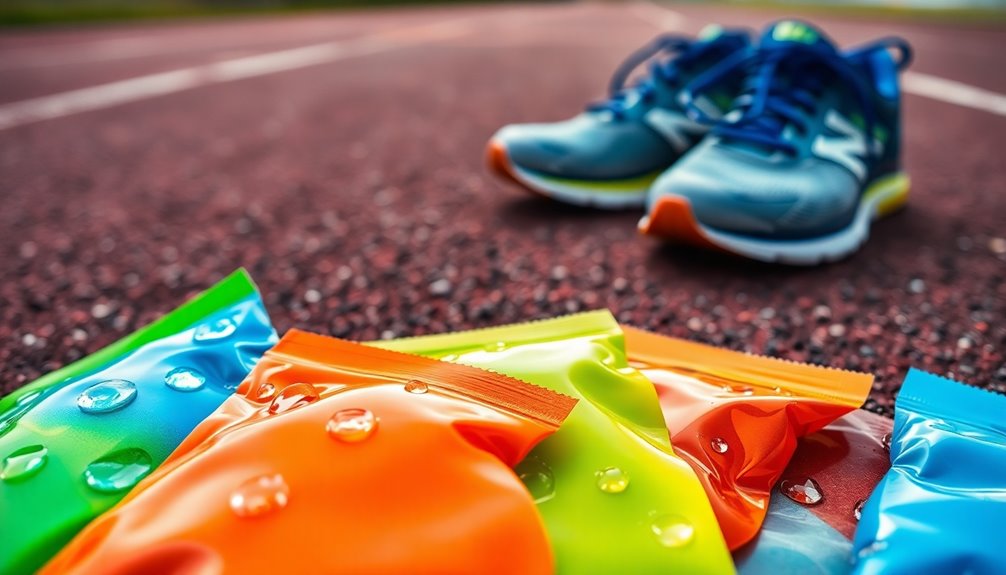

For runners who want a straightforward starting point, Science in Sport GO Isotonic Energy Gel stands out for its ready-to-take format, while Precision Fuel PF 30 offers a neutral-flavor option for runners who want a consistent carbohydrate dose. The lineup also includes UCAN for sugar-free preferences and chia-based Huma gels for runners seeking a different texture. The main tradeoffs are sweetness and flavor fatigue, whether you need water with a gel, and whether caffeine or a specific carbohydrate amount suits your plan. No single gel works best for every runner or every session. Read on for the full comparison and picks by running need.

Get workout gear delivered free with Prime
- Fast, free delivery on millions of items
- Prime Video, Amazon Music and more included
- Member-only deals all year
Complete the kit

Key Takeaways
- The lineup spans multiple fueling styles: isotonic gels, conventional gels, liquid gels, and chia gels, so texture and how you take a gel can narrow the choice quickly.
- Science in Sport GO Isotonic is the clearest pick for runners who want a gel designed to take without water, while other options may fit better when runners already plan to drink alongside fueling.
- Precision Fuel PF 30’s neutral flavor sets it apart for runners who find sweet flavors tiring over long runs; flavor variety is more prominent across the GU and Honey Stinger selections.
- Caffeine-free options are plentiful, but the lineup also includes caffeinated choices such as Honey Stinger Strawberry Kiwi and GU Roctane, making label checks part of planning a race-day routine.
- UCAN‘s sugar-free positioning serves a distinct preference, while most other picks are conventional carbohydrate gels; runners should compare the intended fueling approach rather than assume these products are interchangeable.
| UCAN Energy Gel Variety Pack – 4 Flavors, Sugar Free, 12 Pack |  | Best Sugar-Free Pick | Flavors: 4 | Pack size: 12 packets | Sugar: Sugar-free | VIEW ON AMAZON | See Our Full Breakdown |
| Science in Sport GO Isotonic Energy Gel – Cherry Flavor – 30 Count |  | Best for Water-Free Fueling | Flavor: Cherry | Count: 30 gels | Format: Isotonic energy gel | VIEW ON AMAZON | See Our Full Breakdown |
| GU Energy Original Energy Gel, Tri-Berry, 8 Count |  | Best for a Light Caffeine Lift | Flavor: Tri-Berry | Count: 8 packets | Calories: 100 per packet | VIEW ON AMAZON | See Our Full Breakdown |
| BPN Go Gel Endurance, Mixed Berry, 10 Single-Serving Packs |  | Best Defined Carb Serving | Flavor: Mixed berry | Serving size: 10 single-serving packs | Carbohydrates: 24 g per pack | VIEW ON AMAZON | See Our Full Breakdown |
| Honey Stinger Organic Fruit Smoothie Energy Chew, Gluten Free & Caffeine Free, 21.6 Ounces (Pack of 12) |  | Best Chew for Caffeine-Free Variety | Format: Energy chews | Flavors: Cherry, orange, berry | Net weight: 21.6 ounces | VIEW ON AMAZON | See Our Full Breakdown |
| Honey Stinger Gold Energy Gel, Gluten-Free and Caffeine-Free, 12 Pack |  | Best Honey-Based Caffeine-Free Pick | Flavor: Gold | Pack size: 12 gels | Total weight: 13.2 oz | VIEW ON AMAZON | See Our Full Breakdown |
| GU Energy Liquid Energy Gel with Complex Carbohydrates, Vegan, Gluten-Free, Dairy-Free, 12-Count Assorted Flavors |  | Best Liquid Gel for Flavor Variety | Count: 12 packets | Flavors: Coffee, Lemonade, Orange, Strawberry Banana, Cola | Calories: 100 per packet | VIEW ON AMAZON | See Our Full Breakdown |
| Honey Stinger Strawberry Kiwi Energy Gel, Caffeinated & Gluten Free, 24 Pack |  | Best Caffeinated Honey Gel | Flavor: Strawberry Kiwi | Quantity: 24 gels | Caffeine: 32 mg per serving | VIEW ON AMAZON | See Our Full Breakdown |
| GU Energy Gel Caffeine-Free Variety Pack, 24 Count |  | Best Caffeine-Free Variety Pack | Count: 24 gels | Calories: 100 per gel | Caffeine: Caffeine-free | VIEW ON AMAZON | See Our Full Breakdown |
| Honey Stinger Organic Fruit Smoothie Energy Gel, 12 Pack |  | Best Organic Caffeine-Free Pick | Flavor: Fruit smoothie | Pack size: 12 gels | Total weight: 13.2 oz | VIEW ON AMAZON | See Our Full Breakdown |
| Precision Fuel PF 30 Energy Gels, Neutral Flavour, Pack of 15 |  | Best for Long Runs | Carbohydrates per gel: 30 g | Flavour: Mild, neutral | Pack size: 15 gels | VIEW ON AMAZON | See Our Full Breakdown |
| GU Energy Roctane Ultra Endurance Energy Gel, Vegan, Gluten-Free, Kosher, Dairy-Free, Assorted Flavors, 24-Count |  | Best for High-Sodium Fueling | Count: 24 gels | Carbohydrates: 19–21 g per serving | Sodium: 125–190 mg per serving | VIEW ON AMAZON | See Our Full Breakdown |
| Hüma Chia Energy Gel Variety Pack, 12 Count | 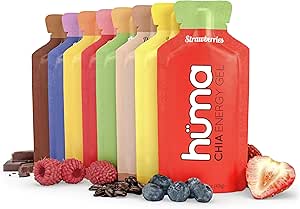 | Best for Fruit-Based Flavor Variety | Pack size: 12 gels | Ingredients: Fruit puree, powdered chia seeds, brown rice syrup | Dietary attributes: Gluten-free, dairy-free, vegan-friendly | VIEW ON AMAZON | See Our Full Breakdown |
| GU Energy Original Sports Energy Gels, Assorted Flavors, 24 Count |  | Best for Familiar, Flexible Fueling | Count: 24 packets | Calories: 100 per packet | Flavors: Chocolate Outrage, Salted Caramel, Vanilla Bean, Jet Blackberry, Tri-berry, Strawberry Banana | VIEW ON AMAZON | See Our Full Breakdown |
| Huma Plus Chia Energy Gel, Variety Pack, 12 Gels |  | Best for Electrolyte Support | Pack size: 12 gels | Electrolytes: Double the electrolytes of original Huma Gel | Sodium: 240 mg per gel | VIEW ON AMAZON | See Our Full Breakdown |
| energy gels for runner | Dietary attributes |
|---|---|
| UCAN Energy Gel Variety Pack | Vegan, gluten-free, non-GMO |
| Science in Sport GO Isotonic E | — |
| GU Energy Original Energy Gel | Vegan, gluten-free |
| BPN Go Gel Endurance | Vegan, gluten-free |
| Honey Stinger Organic Fruit Sm | USDA Organic, gluten-free, caffeine-free |
| Honey Stinger Gold Energy Gel | Gluten-free, non-GMO |
| GU Energy Liquid Energy Gel wi | — |
| Honey Stinger Strawberry Kiwi | Gluten-free, non-GMO |
| GU Energy Gel Caffeine-Free Va | Vegan, gluten-free |
| Honey Stinger Organic Fruit Sm | — |
| Precision Fuel PF 30 Energy Ge | — |
| GU Energy Roctane Ultra Endura | Vegan, gluten-free, kosher, dairy-free |
| Hüma Chia Energy Gel Variety P | Gluten-free, dairy-free, vegan-friendly |
| GU Energy Original Sports Ener | Vegan and gluten-free |
| Huma Plus Chia Energy Gel | Dairy-free, gluten-free, vegan-friendly |
More Details on Our Top Picks
UCAN Energy Gel Variety Pack – 4 Flavors, Sugar Free, 12 Pack
For runners who want to avoid sugar, UCAN’s sugar-free formula gives this pack a distinct place in the lineup. Its LIVSTEADY-powered energy is described as stable and long-lasting, making it a different proposition from Science in Sport GO Isotonic Energy Gel, which emphasizes fast-absorbing carbohydrates for immediate fueling. The 12-pack includes four flavors, so runners can rotate tastes across training sessions, though the supplied product details do not identify the flavors or carbohydrate amount. Vegan, gluten-free, and non-GMO attributes widen its appeal, and it can be used before, during, or after workouts. The tradeoff is a smaller flavor selection than some variety packs and a potentially higher cost than traditional gels; runners who rely on a known carbohydrate dose should check the label before planning race fueling.
Pros:- Sugar-free formula suits runners limiting sugar intake
- Four flavors offer some variety across a 12-pack
- Vegan, gluten-free, and non-GMO
- Listed for pre-, intra-, and post-workout use
Cons:- The product data does not state carbohydrates or calories per packet
- Four flavors may feel limiting over repeated use
- May cost more than traditional gels
Best for: Runners avoiding sugar who want a vegan, gluten-free gel option for training and endurance sessions.
Not ideal for: Racers who need a confirmed carbohydrate amount per packet or runners who prefer conventional, fast-absorbing carbohydrate gels.
- Flavors:4
- Pack size:12 packets
- Sugar:Sugar-free
- Dietary attributes:Vegan, gluten-free, non-GMO
- Listed use:Pre-workout, intra-workout, post-workout
- Energy formulation:LIVSTEADY-powered
Our verdict“Choose UCAN if avoiding sugar is your priority and you are comfortable checking the label for fueling details before a race.”
Science in Sport GO Isotonic Energy Gel – Cherry Flavor – 30 Count
SiS GO Isotonic suits runners who want a gel designed to be taken without extra water, a practical distinction when carrying fluids is difficult or aid-station timing is uncertain. Its stated focus is fast-absorbing carbohydrates for high-intensity exercise, while UCAN Energy Gel Variety Pack is the sugar-free choice for runners with different dietary priorities. The 30-pack supports regular training and gives buyers a larger supply of one familiar flavor, but this listing specifies only cherry, so it offers little taste rotation. The product information describes it as gut-friendly and portable, though it gives no carbohydrate or calorie figure to help runners calculate intake. Choose it for the water-free format; skip it if you need a confirmed fueling dose or want multiple flavors in the box.
Pros:- Designed to be used without additional water
- 30-count pack supports frequent training
- Portable single-use format
- Described as gut-friendly for endurance exercise
Cons:- Only cherry flavor is specified
- Product data does not give carbohydrates or calories per gel
- The description does not confirm ingredient details beyond its fueling claims
Best for: Runners who want a portable gel intended for use without additional water during hard workouts or races.
Not ideal for: Runners who want flavor variety or need a stated carbohydrate amount per gel to plan race fueling.
- Flavor:Cherry
- Count:30 gels
- Format:Isotonic energy gel
- Intended use:High-intensity and endurance exercise
- Water requirement:Description says no additional water is needed
Our verdict“Pick SiS GO if water-free convenience matters most and a single flavor works for your running routine.”
GU Energy Original Energy Gel, Tri-Berry, 8 Count
GU Original Tri-Berry pairs a defined 100-calorie serving with 20 mg of caffeine, giving runners more fueling detail than the supplied listing for Science in Sport GO Isotonic Energy Gel. Its maltodextrin and fructose provide the carbohydrate sources, while sodium and potassium add electrolytes in a compact packet. The modest caffeine amount makes this a more measured option than a strongly caffeinated product, but it still may not suit runners who avoid caffeine or want to control intake late in the day. GU recommends hydration with use, so carrying or accessing water matters; that makes it less self-contained than the SiS gel’s described water-free format. The eight-pack is also a smaller supply, and the single Tri-Berry flavor leaves little room for rotation.
Pros:- 100 calories per packet gives a stated serving amount
- 20 mg caffeine offers a modest caffeine dose
- Includes sodium and potassium
- Vegan and gluten-free
Cons:- Contains caffeine, which may not suit every runner or workout time
- Recommended use requires hydration
- Eight packets of one flavor offer limited variety and supply
Best for: Runners who want a compact, portion-defined gel with a small caffeine amount and electrolytes.
Not ideal for: Caffeine-sensitive runners, those who do not want to pair gels with hydration, or buyers seeking a large multi-flavor supply.
- Flavor:Tri-Berry
- Count:8 packets
- Calories:100 per packet
- Caffeine:20 mg per packet
- Sodium:55 mg
- Potassium:30 mg
- Dietary attributes:Vegan, gluten-free
- Carbohydrate sources:Maltodextrin and fructose
Our verdict“Choose GU Tri-Berry if you want a clearly portioned gel with a modest caffeine lift and can take it with water.”
BPN Go Gel Endurance, Mixed Berry, 10 Single-Serving Packs
BPN Go Gel Endurance gives runners a clear fueling figure: 24 g of carbohydrates and 100 calories per pack. That makes it easier to plan intake than the supplied details for UCAN Energy Gel Variety Pack, which do not state carbohydrates or calories. Electrolytes are included, and the single-serving format is built for carrying on runs; vegan and gluten-free attributes also suit some dietary needs. The listing describes quick absorption, which may appeal during a hard session, but does not specify electrolyte amounts or provide evidence for how long its energy lasts. Mixed berry is the only listed flavor, and the product data cautions that it may not provide sustained energy for very long runs. It is a practical, portion-defined choice, but runners doing extended events may want a longer-duration fueling plan.
Pros:- 24 g of carbohydrates per pack makes serving planning straightforward
- 100 calories per pack
- Electrolytes are included
- Vegan and gluten-free single-serving format
Cons:- Only mixed berry flavor is listed
- Electrolyte quantities are not provided
- May not provide sustained energy for very long runs
Best for: Runners who want a stated 24 g carbohydrate serving in a portable vegan, gluten-free pack.
Not ideal for: Runners seeking multiple flavors, detailed electrolyte amounts, or a gel positioned for sustained fueling on very long runs.
- Flavor:Mixed berry
- Serving size:10 single-serving packs
- Carbohydrates:24 g per pack
- Calories:100 per pack
- Dietary attributes:Vegan, gluten-free
- Electrolytes:Included; amounts not specified
Our verdict“Pick BPN if a known carbohydrate amount and a portable pack matter more than flavor choice or long-run duration claims.”
Honey Stinger Organic Fruit Smoothie Energy Chew, Gluten Free & Caffeine Free, 21.6 Ounces (Pack of 12)
Honey Stinger Organic Fruit Smoothie Energy Chews are the lineup’s chew-format option, useful for runners who prefer bite-sized fuel to squeezing a gel. The listed cherry, orange, and berry flavors provide more rotation than the single-flavor BPN Go Gel Endurance, and the product is USDA Organic, gluten-free, and caffeine-free. Each serving supplies 23 g of carbohydrates, alongside vitamins and electrolytes, though the listing does not state their amounts or clarify how many chews make a serving. Chews can be easier to portion gradually, but they take longer to eat than a gel and may be less convenient while running at pace. Their natural sweeteners and substantial carbohydrate serving may not suit every palate or diet. This is a distinct format choice, rather than a direct gel substitute for runners who want quick, one-squeeze fueling.
Pros:- Chew format allows gradual portioning
- Three listed fruit flavors offer rotation
- USDA Organic, gluten-free, and caffeine-free
- 23 g of carbohydrates per serving with vitamins and electrolytes
Cons:- Chews may take longer to eat than a gel during a run
- Serving size and vitamin and electrolyte amounts are not specified
- Natural sweeteners and carbohydrate content may not suit all diets
Best for: Runners who prefer chewable, caffeine-free fuel and want organic credentials with several fruit flavors.
Not ideal for: Runners who want a quick squeeze gel, avoid natural sweeteners, or follow a low-carbohydrate diet.
- Format:Energy chews
- Flavors:Cherry, orange, berry
- Net weight:21.6 ounces
- Pack size:12
- Carbohydrates:23 g per serving
- Dietary attributes:USDA Organic, gluten-free, caffeine-free
- Additional nutrients:Vitamins and electrolytes; amounts not specified
Our verdict“Choose these Honey Stinger chews if you prefer bite-sized, caffeine-free organic fuel and accept slower eating than a gel.”
Honey Stinger Gold Energy Gel, Gluten-Free and Caffeine-Free, 12 Pack
Honey-based fuel without caffeine gives this gel a clear role for runners who want a straightforward packet during training or a race. Each serving supplies 24 g of carbohydrates, while the compact 12-pack is easy to portion across runs. Compared with Honey Stinger Strawberry Kiwi Energy Gel, Gold leaves out caffeine, which suits runners who manage stimulant intake or run later in the day; the tradeoff is that it offers no caffeine boost. Its honey, electrolytes, and B vitamins set it apart from the maltodextrin-and-fructose blend in GU Energy Gel Caffeine-Free Variety Pack, though the supplied details do not establish a digestion advantage. I would choose it for a simple honey-based option, but skip it if you need flavor details or a larger supply.
Pros:- Provides 24 g of carbohydrates per serving
- Honey-based formula includes electrolytes and B vitamins
- Caffeine-free for runners avoiding stimulants
- Gluten-free and non-GMO
Cons:- Does not provide caffeine for a stimulant boost
- The supplied product details give no taste information
- A 12-pack provides fewer servings than the GU caffeine-free 24-count pack
Best for: Runners who want 24 g of carbohydrate from a honey-based, caffeine-free gel for training or race fueling
Not ideal for: Runners seeking a caffeine boost, detailed flavor guidance, or a larger pack of gels
- Flavor:Gold
- Pack size:12 gels
- Total weight:13.2 oz
- Carbohydrates:24 g per serving
- Caffeine:Caffeine-free
- Dietary attributes:Gluten-free, non-GMO
- Ingredients:Honey, electrolytes, B vitamins
Our verdict“Choose this for portable, honey-based fuel without caffeine; pick Honey Stinger Strawberry Kiwi if you want caffeine in each serving.”
GU Energy Liquid Energy Gel with Complex Carbohydrates, Vegan, Gluten-Free, Dairy-Free, 12-Count Assorted Flavors
Liquid consistency and five listed flavors make this a useful choice for runners who want variety across training sessions. The packets supply 100 calories and electrolytes, while maltodextrin and fructose provide dual-source carbohydrates. The assorted pack also lists coffee and cola alongside fruit flavors, giving it a broader flavor spread than Honey Stinger Gold Energy Gel, which is listed in one flavor. Branched-chain amino acids are included, but the product details do not quantify their effect on fatigue or recovery, so I would treat them as an extra rather than the main reason to choose it. The tradeoff is its liquid texture, which may be less convenient for runners who prefer a thicker gel, and artificial flavors may not suit every palate. Its vegan, gluten-free, and dairy-free labeling broadens its fit.
Pros:- Assorted pack lists five flavors, including coffee and cola
- Dual-source carbohydrates from maltodextrin and fructose
- Includes electrolytes and branched-chain amino acids
- Vegan, gluten-free, and dairy-free
Cons:- Liquid consistency may be inconvenient for runners who prefer thicker gels
- Artificial flavors may not suit runners seeking a less processed flavor profile
- The supplied details do not state carbohydrate grams per packet
Best for: Runners who want a liquid-texture gel, several flavor options, and vegan, gluten-free, dairy-free ingredients
Not ideal for: Runners who prefer thicker gels or avoid artificial flavors
- Count:12 packets
- Flavors:Coffee, Lemonade, Orange, Strawberry Banana, Cola
- Calories:100 per packet
- Dietary:Vegan, gluten-free, dairy-free
- Carbohydrate sources:Maltodextrin and fructose
- Additional ingredients:Electrolytes and branched-chain amino acids
- Texture:Liquid energy gel
Our verdict“Pick this if liquid texture and assorted flavors matter more to you than a thicker gel format.”
Honey Stinger Strawberry Kiwi Energy Gel, Caffeinated & Gluten Free, 24 Pack
32 mg of caffeine per serving is the defining difference here: runners who want caffeine as part of their fueling plan can get it alongside 24 g of carbohydrates. The 24-pack also gives this pick more servings than Honey Stinger Gold Energy Gel, while keeping the honey-based formula and gluten-free positioning. Organic honey, green tea extract, natural sweeteners, and potassium shape the listed ingredients. That makes Strawberry Kiwi a better match than Gold for runners seeking caffeinated fuel, but a worse fit for anyone avoiding caffeine or managing intake later in the day. The supplied details identify the flavor but do not offer taste notes, so I would not choose it on flavor expectations alone. Its role is specific: a portable honey gel with a measured caffeine serving.
Pros:- Provides 24 g of carbohydrates per serving
- Contains 32 mg of caffeine per serving
- 24-pack supplies more servings than Honey Stinger Gold’s 12-pack
- Gluten-free and non-GMO
Cons:- Caffeine may not suit sensitive runners or late-day runs
- Only one flavor is listed
- The supplied details do not include taste information
Best for: Runners who want a honey-based gel with a defined caffeine serving for training or race fueling
Not ideal for: Caffeine-sensitive runners or those who prefer caffeine-free fueling
- Flavor:Strawberry Kiwi
- Quantity:24 gels
- Caffeine:32 mg per serving
- Carbohydrates:24 g per serving
- Dietary attributes:Gluten-free, non-GMO
- Ingredients:Organic honey, green tea extract, natural sweeteners, potassium
Our verdict“Choose Strawberry Kiwi if you want caffeine with honey-based running fuel; choose Honey Stinger Gold to avoid the stimulant.”
GU Energy Gel Caffeine-Free Variety Pack, 24 Count
Twenty-four caffeine-free servings make this the more practical pick for runners who want to stock up on assorted flavors without building caffeine into every fueling interval. Each gel has 100 calories, carbohydrates, electrolytes, and amino acids; the carbohydrate sources are maltodextrin and fructose. Compared with the 12-count GU Energy Liquid Energy Gel, this pack doubles the stated serving count and avoids its liquid format, though the supplied details do not specify the consistency of this variety pack. The suggested use is one packet every 20–30 minutes with hydration, so runners should plan to carry water. Flavor assortment may vary, which makes repeat flavor selection less predictable than a single-flavor option such as Honey Stinger Strawberry Kiwi. I would rank it for steady, stimulant-free fueling rather than flavor control.
Pros:- 24 gels per pack
- Provides 100 calories per gel
- Caffeine-free and suitable for vegan, gluten-free diets
- Includes carbohydrates, electrolytes, and amino acids
Cons:- Flavor assortment may vary
- Suggested use calls for hydration during activity
- No specific carbohydrate amount per gel is provided
Best for: Runners who want a larger supply of assorted, caffeine-free gels and are prepared to hydrate during use
Not ideal for: Runners who need a specific flavor, want caffeine in their fuel, or cannot carry water
- Count:24 gels
- Calories:100 per gel
- Caffeine:Caffeine-free
- Dietary attributes:Vegan, gluten-free
- Carbohydrate sources:Maltodextrin and fructose
- Included support ingredients:Electrolytes and amino acids
- Suggested use:One packet every 20–30 minutes during activity; hydrate
Our verdict“Choose this pack for a larger caffeine-free rotation, provided you can hydrate and are flexible about flavors.”
Honey Stinger Organic Fruit Smoothie Energy Gel, 12 Pack
USDA Organic ingredients and a caffeine-free formula distinguish this fruit smoothie gel for runners who want a simple option before or during exercise. Each serving supplies 24 g of carbohydrates, and potassium is listed alongside natural sweeteners. Compared with Honey Stinger Gold Energy Gel, it adds an organic certification and a named fruit smoothie flavor, while both share a 12-gel count, gluten-free labeling, and no caffeine. The supplied product details do not state how much potassium each serving contains, so runners should not rely on it as a quantified electrolyte source. The pack is also smaller than the 24-count GU Energy Gel Caffeine-Free Variety Pack, which offers more servings and assorted flavors. I would choose this for organic ingredient sourcing and a single flavor, not for variety or a large training supply.
Pros:- Provides 24 g of carbohydrates per serving
- Made with USDA Organic ingredients
- Caffeine-free and gluten-free
- Potassium and natural sweeteners are listed
Cons:- 12-gel pack has fewer servings than the GU caffeine-free 24-count option
- Only the fruit smoothie flavor is listed
- Potassium quantity is not specified
Best for: Runners who prefer USDA Organic, caffeine-free gels with a named fruit flavor and 24 g of carbohydrates
Not ideal for: Runners who want assorted flavors, a larger pack, or quantified electrolyte amounts
- Flavor:Fruit smoothie
- Pack size:12 gels
- Total weight:13.2 oz
- Carbohydrates:24 g per serving
- Dietary features:USDA Organic, gluten-free, caffeine-free
- Ingredients:Potassium and natural sweeteners
- Intended use:Before or during exercise
Our verdict“Pick this for organic, caffeine-free fruit smoothie fuel in a compact pack; choose GU’s variety pack for more servings and flavor options.”
Precision Fuel PF 30 Energy Gels, Neutral Flavour, Pack of 15
For runners who want a predictable carbohydrate target without adding another strong flavor, the PF 30 is the clearest fit here: each gel supplies 30 g of carbohydrate and has a mild, neutral taste. That larger serving can simplify fueling plans compared with GU Energy Original Sports Energy Gels, which are listed at 100 calories per packet but do not specify carbohydrate grams in the provided details. The tradeoff is less variety: a neutral profile may be welcome late in a long run, but it will not offer the flavor rotation of GU’s assorted pack or Hüma’s variety pack. The product description also gives no detailed digestibility information, so runners with sensitive stomachs have less guidance when deciding whether to use it during a race. I’d choose it for steady long-run fueling when a known carb amount matters more than flavor choice.
Pros:- Provides 30 g of carbohydrate per gel
- Mild, neutral flavor may help limit flavor fatigue during long efforts
- Designed for running and other endurance activities
Cons:- Only a neutral flavor is specified, limiting variety
- Digestibility details are not provided
Best for: Distance runners who plan carbohydrate intake by grams and prefer a mild-tasting gel for repeated use on long runs.
Not ideal for: Runners who want varied flavors or detailed information about digestive tolerance before using a gel in a race.
- Carbohydrates per gel:30 g
- Flavour:Mild, neutral
- Pack size:15 gels
- Intended use:Running and endurance sports
- Format:Energy gel
- Flavor profile:Designed to reduce flavor fatigue during longer efforts
Our verdict“Choose PF 30 for long runs when a 30 g carbohydrate serving and mild flavor matter more than variety.”
GU Energy Roctane Ultra Endurance Energy Gel, Vegan, Gluten-Free, Kosher, Dairy-Free, Assorted Flavors, 24-Count
Roctane is the most specialized choice in this group: its 125–190 mg of sodium per serving and blend of amino acids are aimed at runners who want more than carbohydrate delivery during hard, extended efforts. Each serving provides 19–21 g of carbohydrate, less than the 30 g in Precision Fuel PF 30, so runners using Roctane may need to plan servings around their overall fueling target. Its vegan, gluten-free, kosher, and dairy-free attributes also suit runners managing several dietary restrictions, while the 24-count assortment offers flavor variation. The added ingredients and higher sodium make this a more tailored option than GU Energy Original Sports Energy Gels; that specialization may be unnecessary for shorter or less demanding runs. The description also warns that high carbohydrate intake may upset some stomachs, so runners should assess tolerance during training.
Pros:- Supplies 125–190 mg of sodium per serving
- Includes 1425 mg total of BCAAs, taurine, and beta-alanine
- Vegan, gluten-free, kosher, and dairy-free
- Assorted flavors provide variety across a 24-count pack
Cons:- Provides 19–21 g of carbohydrate per serving, less than PF 30
- The added amino acids and sodium may be unnecessary for some runners
- High carbohydrate intake may cause stomach upset for some users
Best for: Runners doing long, intense sessions who want a gel with substantial sodium and amino acids and need options compatible with multiple dietary restrictions.
Not ideal for: Runners seeking a simple, higher-carbohydrate gel per serving or those who prefer to avoid added amino acids and higher sodium.
- Count:24 gels
- Carbohydrates:19–21 g per serving
- Sodium:125–190 mg per serving
- Amino acids:1425 mg total: BCAAs, taurine, and beta-alanine
- Dietary attributes:Vegan, gluten-free, kosher, dairy-free
- Flavor selection:Assorted flavors
- Intended use:Endurance and intense activities
Our verdict“Pick Roctane for demanding long runs when sodium, amino acids, and broad dietary compatibility are priorities.”
Hüma Chia Energy Gel Variety Pack, 12 Count
Hüma Chia takes a fruit-and-chia approach, combining fruit puree, powdered chia seeds, and brown rice syrup in a vegan-friendly gel. Its variety pack suits runners who tire of repeating one flavor, although the exact selection varies and may include only six or seven of the eight listed flavors. Compared with Huma Plus Chia Energy Gel, this standard variety pack does not list the Plus gel’s 240 mg of sodium, so runners seeking more electrolyte support should look at that option instead. Hüma lists a 2:1 glucose-to-fructose ratio and caffeine in some flavors, which gives buyers useful fuel details but also means the caffeine amount depends on the flavor chosen. I’d favor this pack for training runs where ingredient style and flavor rotation count; runners who need a specific flavor or consistent caffeine dose may find the variable assortment awkward.
Pros:- Uses fruit puree, powdered chia seeds, and brown rice syrup
- Gluten-free, dairy-free, and vegan-friendly
- Variety pack includes multiple flavors
- Lists a 2:1 glucose-to-fructose ratio
Cons:- Flavor selection varies by availability
- Caffeine content depends on the flavor
- The provided specs do not state carbohydrate grams or sodium per gel
Best for: Runners who prefer fruit-based, plant-derived gels and want to rotate flavors during training.
Not ideal for: Runners who need a fixed flavor or caffeine selection, or who want the higher listed sodium content of Huma Plus.
- Pack size:12 gels
- Ingredients:Fruit puree, powdered chia seeds, brown rice syrup
- Dietary attributes:Gluten-free, dairy-free, vegan-friendly
- Glucose-to-fructose ratio:2:1
- Caffeinated flavors:Chocolate, raspberries, and lemonade: 25 mg each
- Mocha Doubleshot:100 mg caffeine; not included in the variety pack
- Variety pack flavors:6–7 of 8 flavors, based on availability
Our verdict“Choose Hüma Chia for fruit-based flavor rotation when a changing assortment and flavor-dependent caffeine are acceptable.”
GU Energy Original Sports Energy Gels, Assorted Flavors, 24 Count
GU Energy Original is the flexible all-rounder in this group, with 100 calories per packet from maltodextrin and fructose, plus electrolytes and branched-chain amino acids. The 24 assorted packets give runners more flavor choice than Precision Fuel PF 30, which has a single neutral flavor, while GU’s guidance to take a packet every 20–30 minutes gives a straightforward starting point for fueling during activity. That schedule also calls for hydration, so the gel is less convenient for runners who want a format that does not depend on drinking alongside it. Caffeine varies by flavor, making the assortment less predictable for anyone tracking caffeine closely. Compared with Roctane, this is the simpler GU option: it supplies fewer specialized details, but may suit runners who want portable gels with a mix of flavors and no need for Roctane’s specified amino acid blend.
Pros:- Provides 100 calories per packet
- Uses maltodextrin and fructose as carbohydrate sources
- Includes electrolytes and branched-chain amino acids
- Vegan and gluten-free, with assorted flavors
Cons:- Caffeine content varies by flavor
- Usage guidance calls for hydration alongside each packet
- The provided specs do not state carbohydrate grams per packet
Best for: Runners who want a familiar, portable gel assortment and a simple packet-based fueling routine for training or racing.
Not ideal for: Runners who need consistent caffeine in every packet or prefer a gel they can take without pairing it with hydration.
- Count:24 packets
- Calories:100 per packet
- Flavors:Chocolate Outrage, Salted Caramel, Vanilla Bean, Jet Blackberry, Tri-berry, Strawberry Banana
- Dietary attributes:Vegan and gluten-free
- Carbohydrate sources:Maltodextrin and fructose
- Usage guidance:One packet every 20–30 minutes during activity; hydrate
- Caffeine:Varies by flavor
Our verdict“Choose GU Original for varied, portable fueling when you can pair packets with hydration and check caffeine by flavor.”
Huma Plus Chia Energy Gel, Variety Pack, 12 Gels
Huma Plus keeps the fruit puree and chia seed base of the standard Hüma Chia gel while listing 240 mg of sodium per gel and double the electrolytes of the original Huma Gel. That makes it the more relevant pick for runners who want electrolyte content built into their gel; the standard Hüma Chia Variety Pack offers a 2:1 glucose-to-fructose ratio in its listed specs but does not give comparable sodium figures. The six listed flavor varieties add choice, though some flavors contain caffeine, which can make selection matter for runners managing intake. The description presents these gels as stomach-friendly, but the provided data does not quantify carbohydrate content or substantiate that claim with digestibility details. I’d choose Huma Plus for its listed sodium and plant-based ingredients, while runners prioritizing a clearly stated carb serving should compare it with Precision Fuel PF 30.
Pros:- Provides 240 mg of sodium per gel
- Lists double the electrolytes of the original Huma Gel
- Made with fruit purees, powdered chia seeds, and fruit concentrates
- Dairy-free, gluten-free, and vegan-friendly
Cons:- Carbohydrate grams per gel are not specified in the provided data
- Some flavors contain caffeine
- The provided information does not detail the stomach-friendly claim
Best for: Runners who prefer fruit-and-chia gels and want a stated sodium amount as part of their fueling plan.
Not ideal for: Runners who need carbohydrate grams per gel listed upfront or want to avoid flavor-dependent caffeine.
- Pack size:12 gels
- Electrolytes:Double the electrolytes of original Huma Gel
- Sodium:240 mg per gel
- Potassium:50–145 mg per gel
- Ingredients:Fruit purees, powdered chia seeds, fruit concentrates
- Dietary attributes:Dairy-free, gluten-free, vegan-friendly
- Flavor varieties:Bananas & Berries, Berries & Pomegranate, Oranges & Mangoes, Strawberry Lemonade, Lemons & Limes, Chocolate Peanut Butter
Our verdict“Pick Huma Plus when fruit-and-chia ingredients and a stated 240 mg of sodium matter more than a specified carbohydrate serving.”

How We Picked
I ranked these products around the needs of runners: how practical each format is to carry and take on a run, how clearly its flavor and caffeine profile support a fueling plan, and how well its distinguishing features address a specific preference. Isotonic, liquid, conventional, and chia-based gels each offer a different experience, so I considered ease of use and texture alongside the product’s stated ingredients and serving format.
The top positions go to options with a clear running use case and few extra decisions at the point of fueling. I placed specialist picks lower when their appeal depends on a narrower preference, such as sugar-free fueling, added caffeine, or chia texture. Pack size and flavor assortment help with trying or stocking a preferred gel, but they do not outweigh fit for a runner’s planned intake. Product names and listed attributes are the basis for this comparison; individual tolerance and actual fueling needs vary.
Factors to Consider When Choosing Energy Gels For Runners
Choosing a running gel is partly a nutrition decision and partly a question of what you can comfortably take while moving. I would first match the product to the length and intensity of the run, then account for taste, texture, water access, and caffeine from other sources.
Match the format to your water plan
Think about where you will run and what you will carry before choosing a gel format. A gel designed to be taken without water can be convenient on routes with few fountains, while a thicker product may feel easier to manage when you already carry fluids. Runners sometimes buy based on flavor alone, then discover that the texture or water requirement is awkward at pace. For a race, check aid-station spacing and practice the same routine in training. The easiest format to take consistently can matter more than having many flavors. If you are unsure, try a small amount during an ordinary training run before relying on it for a long effort.
Plan carbohydrate intake across the whole run
Compare the carbohydrate amount per serving and build your plan around the total you intend to consume, rather than the number of packets in a box. A larger serving can mean fewer packets to open, but it may not suit every runner’s stomach or schedule. Count sports drinks, chews, and other fuel too; treating each item as separate can lead to an unintended intake. Your needs can differ between an easy short run and a long race effort. Use product labels and guidance from a qualified sports dietitian or clinician if you need an individualized plan. Practice the timing and amount during training rather than making race day your first trial.
Treat texture and flavor as practical factors
Sweetness, thickness, and mouthfeel can shape whether a gel remains appealing after several hours of running. A neutral flavor may be useful when sweet products become tiring, while flavored assortments let runners rotate tastes. Chia-based gels have a different texture from smooth gels, so the ingredient list alone cannot tell you whether you will enjoy taking one mid-run. A common mistake is buying a large pack before testing a flavor or consistency. Try a single serving in conditions similar to your usual run, including when breathing is hard and you are moving. Choose the product you can take reliably, not simply the one that sounds best on paper.
Account for caffeine from every source
Caffeinated gels may suit runners who already use caffeine as part of a race plan, but the gel is only one possible source. Add up caffeine from coffee, drinks, and other supplements before deciding how many servings to take. Caffeine-free choices make it easier to keep fueling separate from stimulation, which can be useful for evening training or runners who avoid caffeine. Check the serving label carefully because flavor names and product families do not always make caffeine status obvious. Do not introduce a caffeinated gel for the first time during a race. Test your response in training, and seek medical advice if caffeine use may interact with your health or medication.
Decide whether a specialty formula fits your approach
Sugar-free, chia-based, and endurance-focused formulas target particular preferences, but a distinctive ingredient does not automatically make a gel a better fit for every runner. Compare the stated carbohydrate content and ingredients with your fueling goal instead of assuming all gels deliver the same role. Some runners value a specific ingredient profile; others may prefer a simpler, familiar gel they already tolerate. Consider dietary restrictions by reading the full label, including allergen and manufacturing statements where relevant. Changing several parts of a fueling routine at once makes it harder to identify what works. Introduce one new product at a time during training and note both comfort and convenience.
Choose pack size around how often you will use it
Large packs can be convenient for runners who have already settled on a product, while smaller packs reduce commitment when you are still comparing flavors or formats. Check serving count against your training schedule and expiration information so you can use the gels while they remain in date. A variety pack is helpful for finding a preferred flavor, though it may leave you with options you do not want to carry. Buying several formats at once can also complicate practice because it becomes unclear which one caused discomfort. Start with enough to test a planned run or two, then restock the option that fits your routine. Pack size should support consistent practice, not pressure you to use a gel that does not suit you.
Frequently Asked Questions
Which of these gels makes the most sense if I do not want to carry water?
Science in Sport GO Isotonic is the most direct match in this lineup because its product format is designed for taking without water. That can simplify fueling on routes where you do not have easy access to drinks. It does not remove the need to hydrate during a run, so plan fluids separately for the weather and distance. If you already carry water, a thicker gel may still work well as part of your routine. Try your chosen combination during training before using it in a race.
How should I choose between a standard gel and a chia-based gel?
Start with texture and tolerance rather than assuming one style fuels every runner better. Standard gels in this roundup tend toward a smooth or liquid format, while Huma’s chia options have a distinct consistency that some runners may prefer and others may find unfamiliar. Check the label for carbohydrate content and serving details, since the category name alone does not tell you how a product fits your plan. Try one serving during a training run at the pace and conditions where you expect to use it. If texture is a concern, test it before buying a larger pack.
Should I use a caffeinated gel on a long run?
That depends on your caffeine plan, sensitivity, and how much caffeine you already get from other sources. This roundup includes caffeinated options as well as many caffeine-free gels, so you can separate fuel choice from caffeine if that suits you better. Read each label for the amount per serving and account for coffee, sports drinks, and supplements. Test any caffeinated product during training, where you can observe how it affects comfort and sleep. If you have a health condition, take medication, or are unsure about caffeine, ask a clinician for advice.
Is a sugar-free gel interchangeable with a conventional running gel?
Do not assume they are interchangeable: compare the product’s carbohydrate content and ingredients with the intake you plan for the run. UCAN is the standout sugar-free-positioned choice here, while most of the other products are conventional carbohydrate gels. A preference for avoiding sugar may influence your selection, but it does not by itself confirm that a product supplies the amount of fuel you need. Use the label to calculate servings and consider the rest of your fueling plan. If you have a medical reason to manage sugar intake, discuss sports fueling with a qualified health professional.
How many gel flavors should I bring for a marathon?
There is no universal number; choose enough variety to keep the routine manageable without adding unfamiliar products on race day. Some runners do well with one flavor they have practiced using, while others prefer alternating between a neutral option and a sweeter one. Plan around the number of servings you expect to take and keep caffeine status consistent with your strategy. Test that exact mix on a long training run, including how you carry and open each packet. A variety pack can help you find favorites, but race day is a poor time to experiment.
Conclusion
For the best all-around running fit in this group, I would start with Science in Sport GO Isotonic if taking a gel without water is a priority, or Precision Fuel PF 30 if a neutral flavor better suits long efforts. The best value depends on the pack and serving format that match your regular training; among the listed options, GU Original offers a straightforward conventional-gel choice in a larger assorted pack. For a premium or more specialized approach, compare GU Roctane with your specific endurance and caffeine needs before committing. Beginners may find a familiar, caffeine-free option such as Honey Stinger Gold easier to trial, while runners seeking sugar-free positioning can look at UCAN and runners who prefer chia texture can start with Huma. Whichever you choose, practice the product and timing on training runs so your race plan is familiar.
Evergreen bestsellers Picks

KitchenAid Classic Series 4.5-Quart Tilt-Head Stand Mixer, Onyx Black
Vitamix 5200 Professional-Grade Blender, 64 oz. Container, Black

KitchenAid Artisan 5-Quart Tilt-Head Stand Mixer, KSM150PS, Almond Cream
As an affiliate, we earn on qualifying purchases.