Finding a running watch for small wrists means balancing a case that feels manageable with the tools you need on a run. My strongest running-focused picks are the Garmin Forerunner 165 for training features, the Forerunner 55 for a smaller display and long battery life, and the FANY Luna for its petite 1.1-inch screen and lightweight design. The tradeoff is clear: the FANY is more compact but lacks built-in GPS, while Garmin’s dedicated running models record routes without a phone but have larger cases than their display sizes might suggest.

Get workout gear delivered free with Prime
- Fast, free delivery on millions of items
- Prime Video, Amazon Music and more included
- Member-only deals all year
I also include a rose-gold GPS watch with a broad 2.06-inch screen and a stated wrist-fit range beginning at 5.5 inches. It adds outdoor tracking, but its display may feel oversized on a narrow wrist. My ranking weighs fit, GPS independence, running-specific guidance, and the compromises each watch asks you to accept.
Complete the kit


Key Takeaways
- The FANY Luna has the smallest stated display at 1.1 inches and a lightweight, slender-wrist design, but it relies on a connected phone for GPS.
- The Garmin Forerunner 55 pairs a 1.04-inch display with built-in GPS and suggested workouts; it is the most restrained choice for runners who value function over an AMOLED screen.
- The Forerunner 165 offers the strongest training and safety feature set here, though its 43 mm case may feel substantial on a small wrist.
- The rose-gold GPS watch lists a 5.5-inch minimum wrist fit, but its 2.06-inch display is the largest in this group and may dominate a petite wrist.
- Choose based on how the watch sits as well as its screen size: case diameter, thickness, strap adjustment, and GPS needs all affect everyday comfort.



| running watch for small wrist | GPS | Battery life | Display | Water resistance |
|---|---|---|---|---|
| Garmin Forerunner 165 Running | Built-in GPS | Up to 11 days in smartwatch mode; 19 hours in GPS mode | AMOLED touchscreen | 50 meters |
| Garmin Forerunner 55 GPS Runni | Built-in GPS | Up to 2 weeks | — | — |
| FANY Luna Smart Watch for Wome | Connected-phone GPS; no built-in GPS | Up to 10 days heavy use; up to 30 days low-power mode | 1.1-inch AMOLED | Listed as 50 meters and IP68 |
| GPS Running Watch for Men & Wo | Built-in GPS | Up to 7 days heavy use; 20 days light use | 2.06-inch AMOLED | 50 m / 5ATM |
More Details on Our Top Picks
Garmin Forerunner 165 Running Smartwatch, 43mm, Whitestone
The Forerunner 165 is my leading pick for a small-wristed runner who wants a capable training watch and is willing to wear a 43 mm case. Its built-in GPS records runs without requiring a phone, while the AMOLED touchscreen is easier to read at a glance than the Forerunner 55’s MIP display. Personalized training plans, health insights, and safety features make it a more complete running companion than the FANY Luna, whose GPS depends on a connected device.
Its ranking comes with a fit qualification: 43 mm is not especially compact, and the supplied dimensions show a square case measuring 1.69 inches across. At 1.38 ounces, it is light for a feature-rich watch, but a narrow wrist may still find the case visually wide. I would choose it over the smaller-screen Forerunner 55 for the AMOLED interface and broader training experience, not because it is the smallest option here. It also lacks built-in music storage, and smartphone pairing is needed for notifications and safety features.
Pros:- Built-in GPS tracks runs without a connected phone
- AMOLED touchscreen is bright and straightforward to read
- Training plans and health insights support a more structured routine
- Up to 11 days of smartwatch battery life
Cons:- The 43 mm case may look or feel large on very narrow wrists
- No built-in music storage
- Notifications and safety features depend on smartphone pairing
Best for: Runners with small-to-medium wrists who want built-in GPS, a bright AMOLED display, structured training tools, and safety features in one watch.
Not ideal for: Buyers whose first priority is the smallest possible case, or runners who want music stored on the watch without a phone.
- Case size:43 mm
- Display:AMOLED touchscreen
- Weight:1.38 ounces
- GPS:Built-in GPS
- Battery life:Up to 11 days in smartwatch mode; 19 hours in GPS mode
- Water resistance:50 meters
- Band:20 mm silicone band
Our verdict“I recommend the Forerunner 165 to small-wristed runners who want the broadest training toolkit here and can accept a 43 mm case.”
Garmin Forerunner 55 GPS Running Watch with Daily Suggested Workouts and Up to 2 Weeks Battery Life
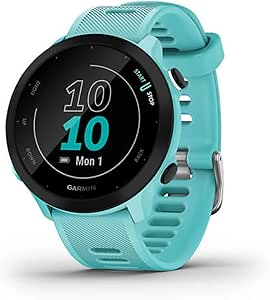
For runners who want a less imposing screen and essential GPS training features, the Forerunner 55 is a compelling alternative to the 165. Its 1.04-inch display is the smallest stated screen in this lineup, and built-in GPS, wrist-based heart rate, daily suggested workouts, and recovery guidance keep it firmly focused on running. The transflective MIP display is a different experience from the 165’s AMOLED: it favors an always-visible, practical presentation over richer color and a touchscreen interface.
That simpler approach also brings a notable advantage for long training stretches: up to two weeks of battery life. The Forerunner 55 is better suited to buyers who want straightforward run tracking and do not need the newer model’s AMOLED screen or wider feature set. Its small display does not prove the entire case is petite, since no case diameter or watch weight is supplied here. It also needs a compatible phone for some connected features, and the listed map type is limited to North America. Compared with the FANY Luna, it is a much more self-contained running watch, but it does not offer the Luna’s AMOLED health-tracker styling.
Pros:- Small 1.04-inch screen suits buyers who prefer a restrained display
- Built-in GPS and wrist-based heart-rate tracking
- Daily suggested workouts and recovery guidance
- Up to two weeks of battery life
Cons:- MIP display is less vivid than the AMOLED screens on the other picks
- No case diameter or weight is supplied to confirm overall fit
- Some features require a compatible smartphone
Best for: Runners who want a modest display, built-in GPS, suggested workouts, and long battery life without prioritizing a colorful touchscreen.
Not ideal for: Buyers who want AMOLED visuals, extensive smartwatch features, or a confirmed small case measurement before choosing.
- Screen size:1.04 inches
- Display type:Transflective memory-in-pixel
- GPS:Built-in GPS
- Battery life:Up to 2 weeks
- Running tools:Daily suggested workouts, PacePro, cadence alerts, recovery advisor
- Heart-rate tracking:Wrist-based
- Compatibility:Android and iOS
Our verdict“I would pick the Forerunner 55 for a no-fuss running watch with a small screen, standalone GPS, and especially long battery life.”
FANY Luna Smart Watch for Women, 1.1-inch AMOLED, Fitness Tracker with Heart Rate, Sleep, SpO2, Step, Menstrual Monitoring (Morning Pink/Sport Band)
The FANY Luna makes the strongest fit-focused case in this roundup: its 1.1-inch AMOLED screen and lightweight design are specifically described for slender wrists. The compact display should feel less visually dominant than the 2.06-inch screen on the rose-gold GPS watch, and its health features cover heart rate, sleep, blood oxygen, and menstrual monitoring. For all-day wear that includes light workouts, those strengths are more relevant than a long list of advanced running metrics.
The central compromise is no built-in GPS. It relies on a connected phone for location tracking, so it cannot match either Garmin when you want to leave your phone behind and record a route. Its 120-plus exercise modes and up-to-10-day heavy-use battery life make it versatile as a general fitness watch, but the supplied details do not describe Garmin-style training plans. I would place it above the large-screen GPS option for a petite wrist and below both Garmins for serious run tracking. Buyers should also confirm smartphone compatibility and be comfortable with the listed Morning Pink color.
Pros:- 1.1-inch AMOLED display and stated slender-wrist design
- Tracks heart rate, sleep, SpO2, and menstrual cycles
- Up to 10 days of battery life with heavy use
- More than 120 indoor and outdoor exercise modes
Cons:- No built-in GPS; route tracking relies on a connected phone
- Full functionality requires a compatible smartphone
- Only Morning Pink is listed
Best for: People with slender wrists who want a lightweight, small-screen smartwatch for everyday health tracking and phone-connected exercise tracking.
Not ideal for: Runners who need independent GPS, advanced running guidance, or a choice of several listed colors.
- Display:1.1-inch AMOLED
- Design:Lightweight, slender-wrist design
- GPS:Connected-phone GPS; no built-in GPS
- Battery life:Up to 10 days heavy use; up to 30 days low-power mode
- Exercise modes:120+
- Health tracking:Heart rate, sleep, SpO2, menstrual monitoring
- Water resistance:Listed as 50 meters and IP68
Our verdict“I recommend the FANY Luna when petite fit and everyday health tracking matter more than phone-free running GPS.”
GPS Running Watch for Men & Women, Waterproof with Heart Rate, Blood Oxygen, Music Control, Long Battery Life (Rose Gold)
This rose-gold watch is the right pick for buyers who want built-in GPS and a stated small-wrist strap range, rather than the smallest-looking screen. Its band is listed for wrists from 5.5 to 8.5 inches, giving shoppers a concrete fit range absent from the Garmin specifications here. It also includes heart-rate and blood-oxygen tracking, more than 170 sport modes, and music control. Against the FANY Luna, it has the advantage of independent GPS; against the Forerunner 55, it offers a much larger, more colorful display and a broader set of general activity features.
That display is also its main fit drawback: 2.06 inches is by far the largest screen in this group and may overwhelm a petite wrist even if the strap fits. The listed 50 m/5ATM resistance is not a promise of suitability for diving or high-velocity water sports, and the product description notes that some functions need a smartphone. Its many features may also mean more interface complexity than the Forerunner 55’s focused approach. I would rank it fourth for this specific roundup: its GPS and fit range are useful, but the screen size makes it a less convincing small-wrist choice than the more restrained options.
Pros:- Built-in GPS for route tracking without a phone
- Stated wrist-fit range starts at 5.5 inches
- More than 170 sport modes and broad health tracking
- Up to 7 days of battery life with heavy use
Cons:- 2.06-inch display may look oversized on a small wrist
- Interface may feel complex because of the large feature set
- Not intended for diving or high-velocity water sports
Best for: Small-wristed buyers whose wrist measures at least 5.5 inches and who want built-in GPS, a large readable display, and numerous activity modes.
Not ideal for: Anyone seeking a discreet, compact watch face or a simple running interface with clearly defined training guidance.
- Display:2.06-inch AMOLED
- Wrist fit:5.5–8.5 inches
- GPS:Built-in GPS
- Battery life:Up to 7 days heavy use; 20 days light use
- Water resistance:50 m / 5ATM
- Sport modes:170+
- Case and band:Aluminum case; silicone band
Our verdict“I would choose this model only when its 5.5-inch wrist-fit range and built-in GPS matter more than having a compact-looking face.”

How We Picked
I ranked these watches around the specific challenge of finding a comfortable fit for a small wrist without giving up the running features a buyer actually needs. A small display can make a watch easier to wear, but it does not tell the whole fit story: case dimensions, weight, strap range, and how much the watch stands out on the wrist matter too. Where the supplied product information did not give a case size or weight, I avoid treating it as a confirmed fit advantage.
For running, I gave weight to built-in GPS, training guidance, battery life, and readable screens. GPS independence matters to runners who do not want to bring a phone; suggested workouts and recovery features can make training more structured. I also distinguished dedicated running watches from general fitness trackers. The FANY Luna’s small AMOLED display and health features earn it a place, but its connected-phone GPS makes it less suitable for runners who want to track a route independently.
The order reflects those tradeoffs rather than feature count alone. The Forerunner 165 ranks first for its blend of running tools, GPS, AMOLED display, and training support, with a clear caveat about its 43 mm case. The Forerunner 55 follows as a practical, smaller-screen alternative with long battery life. FANY comes third for compact everyday wear, and the 2.06-inch GPS model comes fourth because its large display is a less natural match for a petite wrist even though it supplies standalone GPS. I treated water resistance and health measurements as activity features, not medical claims.
| running watch for small wrist | GPS | Battery life |
|---|---|---|
| Garmin Forerunner 165 Running | Built-in GPS | Up to 11 days in smartwatch mode; 19 hours in GPS mode |
| Garmin Forerunner 55 GPS Runni | Built-in GPS | Up to 2 weeks |
| FANY Luna Smart Watch for Wome | Connected-phone GPS; no built-in GPS | Up to 10 days heavy use; up to 30 days low-power mode |
| GPS Running Watch for Men & Wo | Built-in GPS | Up to 7 days heavy use; 20 days light use |
Factors to Consider When Choosing Running Watch For Small Wrists
A small-wrist running watch should stay secure and comfortable without making the screen or case feel cumbersome. I would weigh fit and running needs together: a petite display can improve the look and feel, but built-in GPS and training tools may matter more if you run often or leave your phone at home.
Check the case, not just the screen
Screen size is a helpful starting point, not a complete fit measurement. The Forerunner 55 has a 1.04-inch screen and the FANY Luna a 1.1-inch screen, but the available specifications do not provide full case diameters for either. The Forerunner 165 has a stated 43 mm case, which gives a clearer sense of its footprint, while the rose-gold watch lists a 5.5–8.5-inch wrist range but pairs it with a 2.06-inch display. If you can, compare case width and thickness with a watch you already find comfortable, and check that the strap can be adjusted securely without leaving excess band.
Decide whether you need GPS without a phone
Built-in GPS matters if you want to record distance and routes while running without carrying your phone. Both Garmins and the rose-gold model list built-in GPS. The FANY Luna instead relies on a connected device, making it better suited to phone-connected activity tracking and everyday health features. For a runner who always carries a phone, that may be an acceptable compromise; for phone-free runs, it is a reason to choose another model.
Match the watch to your training style
The Garmin models are the clearest choices for structured run training. The Forerunner 165 adds personalized training plans and health insights, while the Forerunner 55 includes daily suggested workouts, PacePro, cadence alerts, and recovery guidance. The other two watches offer many sport modes and broad wellness tracking, but their supplied details do not describe the same running-specific guidance. If you mainly want steps, sleep, and occasional exercise tracking, the FANY may be enough; if you want prompts that shape a run plan, favor a Garmin.
Choose between AMOLED and longer battery life
The Forerunner 165, FANY Luna, and rose-gold watch use AMOLED screens, which offer vivid color and a modern interface. The Forerunner 55 uses a transflective MIP display and is the better fit for someone who prefers a simpler screen and a stated battery life of up to two weeks. The 165 lists up to 11 days in smartwatch mode, while the FANY and rose-gold model state up to 10 and 7 days respectively under heavy use. Battery figures use different conditions, so I would treat them as guidance rather than a direct like-for-like comparison.
Treat water ratings as activity guidance
Water resistance can be useful for rainy runs, sweat, and some swimming, but a rating does not mean a watch suits every water activity. The Forerunner models list 50-meter resistance, and the rose-gold model lists 50 m/5ATM while specifically excluding diving and high-velocity water sports. The FANY listing says both 50 meters and IP68. I would follow the manufacturer’s activity limits and avoid assuming these watches are suitable for diving.
Know what the health metrics can and cannot tell you
Heart-rate, sleep, and blood-oxygen tracking can help you follow broad patterns, but wrist measurements are not a substitute for medical assessment. The FANY Luna and rose-gold watch include SpO2 monitoring, while both Garmin models provide wrist-based heart-rate features. If your main need is a running tool, treat health tracking as a useful extra rather than the reason to compromise on fit, GPS, or training features.
Frequently Asked Questions
Which watch here is the smallest for a small wrist?
The FANY Luna and Garmin Forerunner 55 have the smallest stated displays, at 1.1 inches and 1.04 inches respectively. The FANY is explicitly described as lightweight and designed for slender wrists, while the Forerunner 55 is the stronger pick if you also need built-in GPS and running guidance. Neither listing gives a full case diameter, so screen size alone cannot confirm which will fit your wrist best.
Which of these watches can track a run without a phone?
The Garmin Forerunner 165, Garmin Forerunner 55, and rose-gold GPS watch list built-in GPS, so they can record running routes without a connected phone. The FANY Luna does not have built-in GPS and relies on a connected device for location tracking. Smartphone pairing may still be required for connected features such as notifications, depending on the model.
Is the Garmin Forerunner 165 too large for a small wrist?
The Forerunner 165 has a 43 mm case, so it may feel wide or look prominent on a very narrow wrist. It is still lightweight at 1.38 ounces, which may help with comfort, but that does not make its case compact. I would choose it for its AMOLED display and training features if you are comfortable with a larger footprint; the Forerunner 55 is a better starting point if a smaller screen is your priority.
Is the FANY Luna suitable for serious running?
The FANY Luna can support exercise tracking and general health monitoring, with more than 120 exercise modes, but its lack of built-in GPS limits its appeal for phone-free route tracking. It makes more sense for casual runs when you are willing to carry a connected phone, or for someone who values a petite everyday smartwatch first. Runners seeking independent GPS and structured run guidance should look at either Garmin instead.
What should I check before buying a running watch for a small wrist?
Check the case width and thickness, strap adjustment range, watch weight, and display size rather than relying on a “small wrist” label alone. Then match the features to your routine: built-in GPS for phone-free runs, training guidance for structured workouts, and battery life that suits your schedule. In this group, only the rose-gold model supplies a specific wrist range, while the FANY is described as a slender-wrist design; the Garmin listings provide other useful measures but not a wrist-fit range.
Conclusion
For a runner who wants the most complete training package and can wear a 43 mm case, I recommend the Garmin Forerunner 165. If a smaller screen and long battery life matter more than AMOLED visuals, choose the Forerunner 55. For petite everyday wear, health tracking, and phone-connected exercise, the FANY Luna is the most fit-focused option, with the tradeoff of no built-in GPS. The rose-gold GPS watch suits buyers who want a stated 5.5-inch minimum wrist fit and standalone GPS, but its 2.06-inch screen makes it the least discreet choice. My practical advice is to match the watch to your running habits, then check the case and strap dimensions against your wrist before deciding.