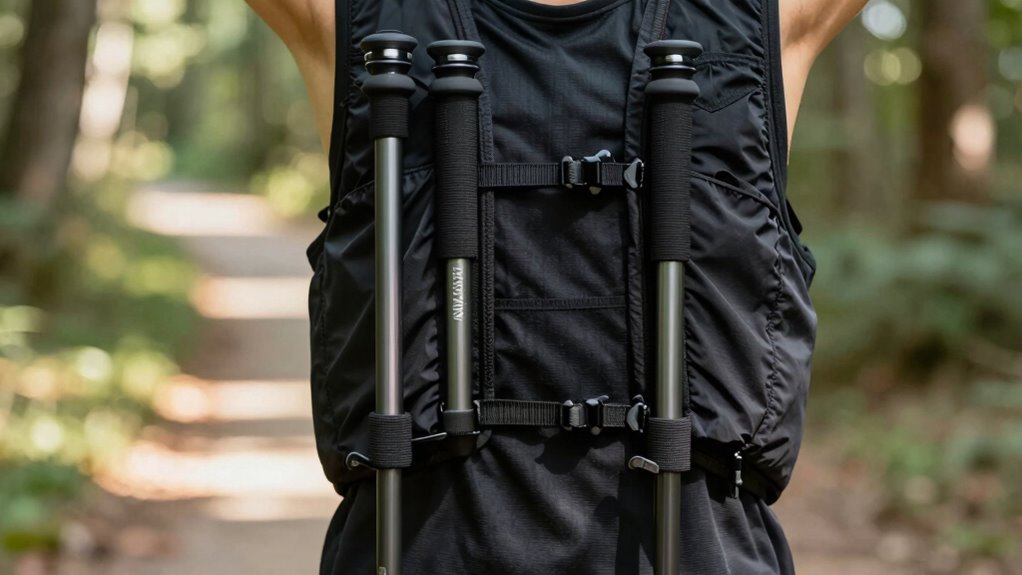
To carry poles on your running vest without fighting them, choose a vest with dedicated attachments or loops designed for poles. Secure your poles using elastic straps, bungee cords, or clip-in points, ensuring they stay parallel and snug against your back or sides. Position the grips upward for quick access, and distribute the weight evenly to prevent shifting. Fine-tune your setup through actual movement to enhance stability—continue to explore how to optimize your pole carry for smooth trail runs.
Key Takeaways
- Choose a vest with dedicated pole attachments or loops for secure, steady storage.
- Attach poles face grips upward and secure at midsection or lower back for stability.
- Keep poles parallel, snug against the back, avoiding interference with hydration packs or gear.
- Use external straps or carabiners to customize pole placement and prevent bouncing.
- Regularly test and adjust the setup to ensure quick access, secure hold, and smooth movement.
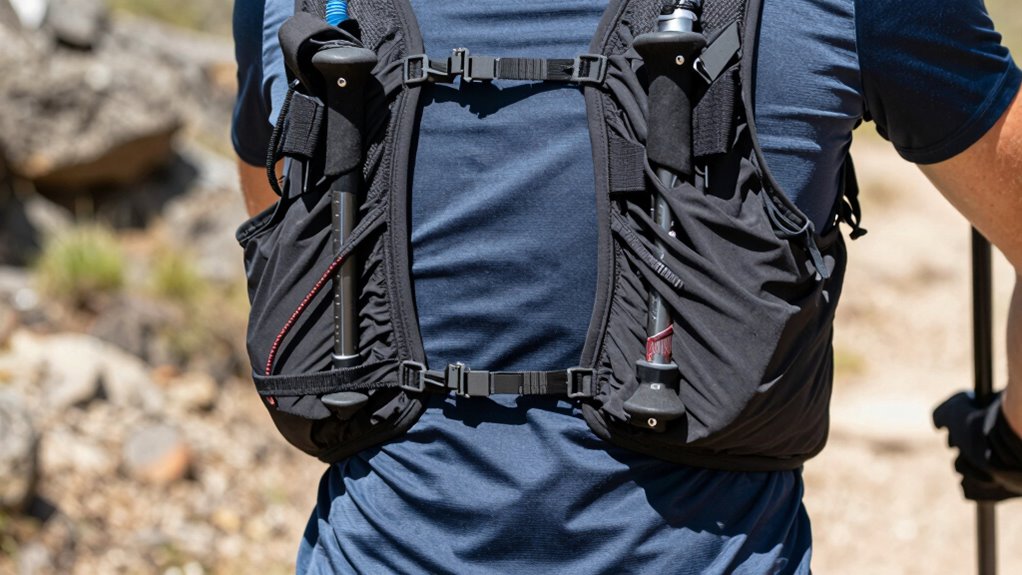
Carrying poles on a running vest can considerably enhance your trail running experience by providing better stability and support on challenging terrain. To get the most out of your poles, it’s essential to find an effective way to carry them that doesn’t interfere with your movement or comfort. Proper pole storage is essential, and it begins with understanding how to secure them efficiently without fighting the gear on your vest. The goal is to keep your poles accessible yet out of the way, so they don’t bounce or shift as you run.
Start by choosing a vest with dedicated pole attachments or loops. Many running vests come with elastic straps, bungee cords, or clip-in points designed specifically for pole storage. These features help keep your poles steady and prevent them from swinging around, which can be distracting and tiring. If your vest lacks such features, consider adding external gear organization options, like carabiners or adjustable straps. These allow you to customize your setup for quick access and reliable hold.
Choose a vest with dedicated pole loops or straps for secure, easy access during trail runs.
When attaching your poles, make sure the grips are facing upward if your vest’s design permits, as this allows for easier grip and quick deployment. Secure the poles at the midsection or lower back, depending on your comfort and the vest’s design. Avoid attaching them too high, as this can interfere with arm movement, or too low, where they might snag on bushes or rocks. The key is to distribute the weight evenly, reducing strain on your shoulders and back, which ultimately enhances your overall stability and endurance. Additionally, choosing the right essential oils for respiratory health can support your breathing during intense trail runs, making your experience more comfortable.
Gear organization plays a key role in carrying poles without fighting them. Keep your poles parallel and snug against your back or sides, ensuring they don’t interfere with your hydration pack or other essential gear. If your vest has multiple compartments, designate a specific space for your poles, so they’re always in the same spot. This consistency makes quick adjustments or reattachments easier, especially when you’re tired or in a hurry. Additionally, consider using pole sleeves or covers to protect your gear and prevent scratches or damage during transit.
Finally, test your pole carrying system before hitting a demanding trail. Walk, jog, and run at different paces to see if the poles stay secure and comfortable. Adjust straps or attachments as needed for a snug fit. With thoughtful pole storage and smart gear organization, you’ll find carrying your poles becomes a seamless part of your run, helping you focus on the trail ahead rather than fighting with your gear.
Frequently Asked Questions
Can I Carry Different Types of Poles on the Same Vest?
Yes, you can carry different types of poles on the same vest if it offers versatile pole attachment options and good pole compatibility. Look for a vest with adjustable straps or multiple attachment points, allowing you to secure various pole sizes and shapes. Ensuring the vest’s attachment system is flexible helps prevent fighting the poles and keeps everything stable during your run. Choose a design that accommodates your specific pole types comfortably.
How Do I Prevent Poles From Slipping During Intense Activity?
To prevent poles from slipping during intense activity, focus on proper pole grip techniques and strap adjustment tips. Make certain your grips are firm but not tight, maintaining control without fatigue. Adjust straps snugly to keep the poles secure against your pack or vest, avoiding slack that causes slipping. Tightening straps properly and maintaining a strong grip helps keep your poles steady, even during vigorous movement, so you stay balanced and confident on the trail.
Are There Specific Vests Designed for Carrying Trekking vs. Trail Poles?
Yes, there are vests specifically designed for carrying trekking versus trail poles. These vests offer better pole fastening options and improved vest compatibility, ensuring your poles stay secure during intense activity. Trekking vests often feature adjustable straps and multiple attachment points tailored for longer, sturdier poles, while trail running vests prioritize lightweight and quick-access features. Choose a vest suited to your activity to keep your poles stable and accessible.
How Should Poles Be Stored When Not in Use During a Run?
Think of your poles as loyal companions resting when not needed. Store them securely using pole storage options like dedicated pockets or collapsible sections on your vest. Use pole attachment techniques such as clip-locked straps or adjustable loops to keep them steady and prevent swinging. This way, your poles stay close but out of your way, ready to support you on the trail when the moment calls for them.
What Are the Best Materials for Durable Pole Straps?
For durable pole straps, choose materials like nylon or polyester, as they offer excellent strap durability and resistance to wear and tear. These materials are strong, lightweight, and withstand exposure to moisture and rough handling, making them ideal for running or hiking. Avoid flimsy fabrics; instead, opt for straps reinforced with padding or overlays to guarantee longevity and secure pole attachment during your activity.
Conclusion
Now that you know how to carry your poles smoothly, you’ll glide through your run like a well-oiled machine. Think of your vest and poles as a dance partner—moving in harmony without stepping on each other’s toes. With these tips, you’ll keep your gear secure and your focus sharp, turning your trail into a flowing river rather than a tangled forest. Embrace the rhythm and enjoy every stride, poles and all, as you conquer new heights.