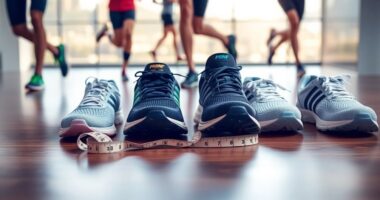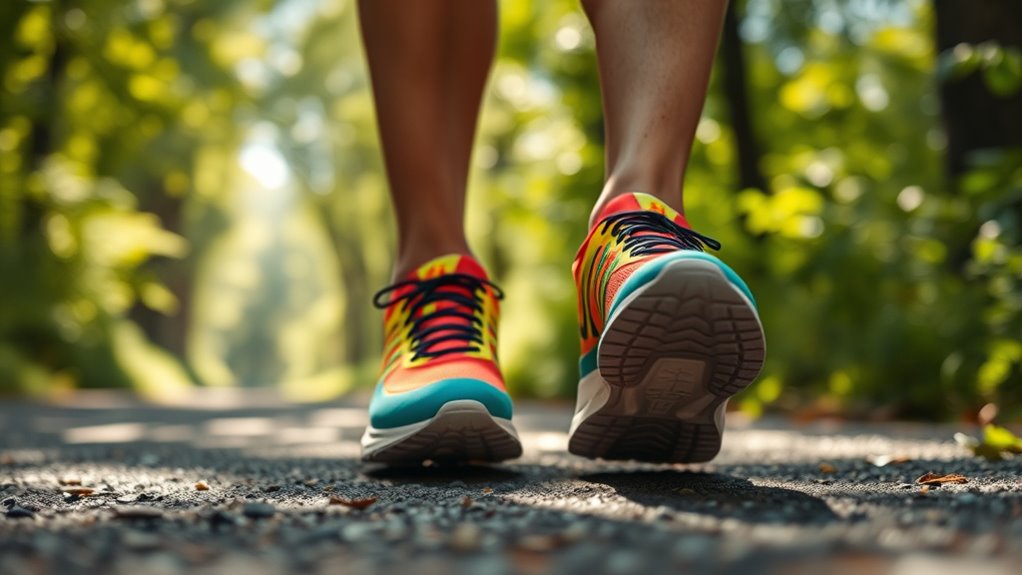

To choose the right running shoes, focus on key features like heel-toe drop, arch support, and fit, rather than marketing hype or myths. Opt for a pair that matches your running style and provides enough room for your toes. Pay attention to how the shoe supports your foot’s biomechanics and guarantees comfort. If you keep exploring these aspects, you’ll find shoes that truly enhance your running experience.

Get workout gear delivered free with Prime
- Fast, free delivery on millions of items
- Prime Video, Amazon Music and more included
- Member-only deals all year
Key Takeaways
- Prioritize proper fit and toe space to prevent discomfort and support your foot shape.
- Match the heel toe drop to your running style, favoring low drop for natural strides or higher for cushioning.
- Assess your arch type and choose shoes with appropriate support to maintain foot alignment and prevent injuries.
- Focus on biomechanical support features that complement your gait rather than relying on aesthetics or brand reputation.
- Start with shoes that offer moderate heel toe drop and good arch support, especially if you’re a beginner or returning runner.

Choosing the right running shoes is essential for comfort, performance, and injury prevention. When you’re shopping, one of the first things to consider is the heel toe drop, which measures the height difference between the heel and the toe of the shoe. A lower heel toe drop, often around 0-4mm, promotes a more natural running stride, encouraging your body to land midfoot or forefoot. Conversely, a higher drop, like 8-12mm, can provide extra cushioning and may feel more familiar if you’re used to traditional running shoes. Understanding your preferred heel toe drop helps narrow down options that fit your running style and comfort needs. Alongside this, pay close attention to arch support, which is vital for maintaining proper foot alignment and preventing issues like plantar fasciitis or overpronation. Shoes with adequate arch support help distribute pressure evenly across your foot, reducing strain on your tendons and joints. If you have high arches, look for shoes that offer more structured support, whereas flat feet might require stability shoes with extra medial support. It’s tempting to rely solely on aesthetic features or brand reputation, but the fit and biomechanical support are what truly matter. When trying on shoes, make sure there’s about a thumb’s width of space between your longest toe and the front of the shoe; this prevents toe jam and discomfort during runs. Your foot should feel snug but not squeezed, with enough room to wiggle your toes freely. Remember, the right fit isn’t just about size—it’s about how the shoe supports your foot’s unique shape and gait. Don’t be swayed by myths that all running shoes are the same or that you must always buy the latest model; instead, focus on how the shoe feels when you run or walk in it. Take advantage of fitting sessions in stores where professionals can analyze your gait and recommend shoes that complement your biomechanics. If you’re a beginner or returning to running after a break, consider starting with shoes that offer a moderate heel toe drop and good arch support, then adjust as you learn more about your running style. Properly fitting shoes that match your heel toe drop preference and provide targeted arch support will serve as a foundation for safer, more enjoyable running. Ultimately, investing time in understanding these features guarantees you select shoes that support your body, enhance performance, and reduce injury risk over the long run.
running shoes with proper arch support
As an affiliate, we earn on qualifying purchases.
As an affiliate, we earn on qualifying purchases.
Frequently Asked Questions
How Often Should I Replace My Running Shoes?
You should replace your running shoes every 300 to 500 miles or roughly every 6 months, whichever comes first. Keep an eye on your shoe lifespan and watch for signs of wear like decreased cushioning or worn-out soles. Sticking to a consistent replacement schedule helps prevent injuries and keeps your runs comfortable. Remember, every runner’s needs are different, so listen to your body and replace shoes promptly when they show signs of aging.
Are Expensive Shoes Always Better for Running?
No, expensive shoes aren’t always better for running. Price tags and brand names can be misleading, as higher costs don’t guarantee better fit or support. Focus on how the shoes feel on your feet, their cushioning, and fit rather than just their price. Sometimes, lesser-known brands offer excellent options that suit your running style without breaking the bank. Remember, comfort and performance matter more than the brand name or price tag.
Can I Wear Running Shoes for Other Sports?
Imagine you’re playing basketball, and you wear your running shoes. While you might feel comfortable, it’s not perfect. Running shoes aren’t designed for cross training benefits or multi sport footwear needs like lateral support. You can wear running shoes for some activities, but for ideal performance and injury prevention, choose shoes tailored for each sport. Multi sport footwear is a better choice for versatility across different athletic activities.
Do Different Foot Types Require Specific Shoes?
Yes, different foot types benefit from specific shoes. If you have high arches, look for shoes with extra arch support to prevent instability. For overpronators, shoes with pronation control help correct your gait, reducing injury risk. Flat-footed runners also need stability features. Understanding your foot type guarantees you get the right combination of arch support and pronation control, making your runs more comfortable and reducing the chance of discomfort or injury.
How Do I Break in New Running Shoes?
To break in new running shoes, start by wearing them around the house or during short runs to ease into their fit. Focus on the shoe fit and avoid tight spots. The break-in process typically takes a few wears; if discomfort persists, consider adjusting laces or trying a different size. This gradual approach helps your shoes mold to your feet and guarantees maximum comfort during your runs.
Conclusion
Choosing the right running shoes can substantially reduce injury risk and improve your performance. Remember, over 70% of runners experience injuries each year, often due to improper footwear. By focusing on fit, cushioning, and support rather than myths, you set yourself up for a more enjoyable, injury-free run. Trust your instincts and prioritize comfort—your feet will thank you. With the right shoes, you’ll stay motivated and ready to hit your next mile confidently.
Halloween Picks
halloween
As an affiliate, we earn on qualifying purchases.