TL;DR
Resistance bands are portable exercise tools that provide resistance as they stretch, letting you train movements such as rows, squats, presses, and glute bridges in a small space. Choose bands for the exercises you plan to do, progress gradually, and inspect them before each session; bands can support strength training but may not provide the precise or heavy loading every goal requires.
Choose band style by exercise: long loops cover many full-body movements, while mini loops suit hip and glute work.
Check the brand’s resistance guidance because band color codes are not standardized.
Progress by changing one factor at a time, such as stretch, tempo, repetitions, sets, or band level.
Inspect bands and anchors before use, keep the band’s path away from your face, and replace damaged bands.
Use bands as one tool in a balanced routine; they may not provide precise or heavy enough resistance for every goal.

Get workout gear delivered free with Prime
- Fast, free delivery on millions of items
- Prime Video, Amazon Music and more included
- Member-only deals all year
Choose a band style that fits your workout
For home training, choose a long loop band for a broad mix of full-body exercises, a mini band for hip and glute movements, or a handled tube band if you prefer a familiar grip for presses and rows. Each style has tradeoffs, so the best pick depends on what you want to do and how much equipment you want to store.| Band style | Works well for | What to check |
|---|---|---|
| Long loop | Rows, presses, squats, assisted movements | Length, resistance guidance, and whether an anchor is needed |
| Mini loop | Lateral walks, bridges, hip exercises | Comfort against skin and loop size |
| Tube with handles | Rows, chest presses, curls | Handle comfort and included anchor compatibility |
| Flat therapy band | Mobility, light resistance, varied grips | Whether the material suits your skin and latex needs |
Products Worth Considering

Garmin Forerunner 165 GPS Running Smartwatch, 43 mm, Black

Fitbit Charge 6 Activity Tracker – Obsidian/Black

Blueair Signature SP1i Smart Air Purifier
As an affiliate, we earn on qualifying purchases.
Build a full-body workout in a small space
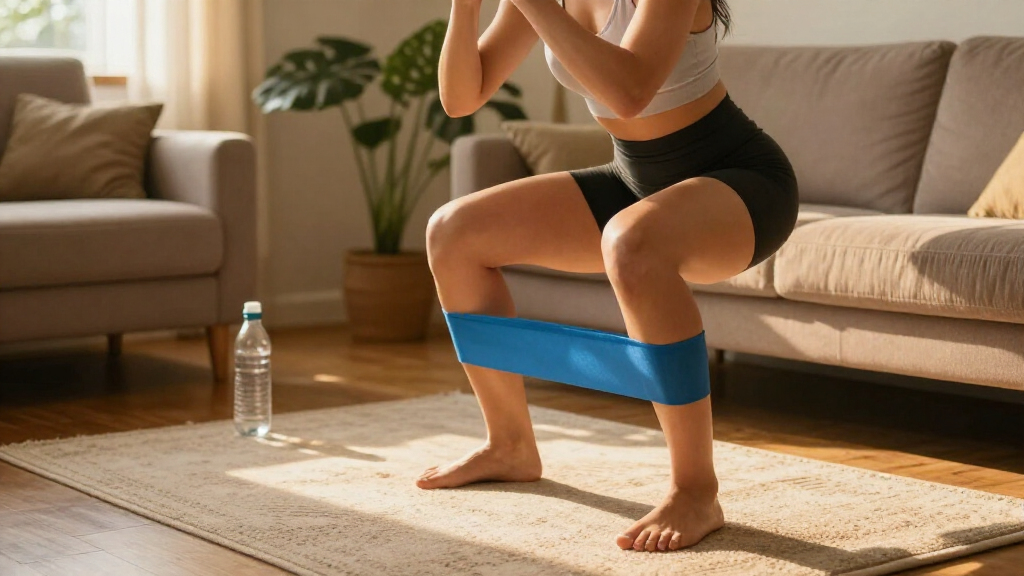
A band routine can cover the main movement patterns—push, pull, squat, hinge, and core—with just a few square feet of clear floor. Start with a band that lets you move smoothly, then use a controlled range rather than yanking through repetitions. The band should add a clear challenge without making you lose your balance or posture. Try this simple sequence as a starting point, adjusting the band and repetitions to your experience:- Do a band squat, keeping the band positioned as the product instructions describe.
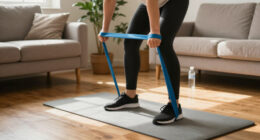
- Perform a standing row by securing the band safely or looping it around a stable setup designed for the exercise.
- Try a chest press with the band routed behind you, keeping its path away from your face.
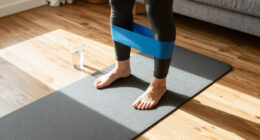
- Add glute bridges or lateral walks with a mini band if you have one.
- Finish with a core movement, such as a controlled press-out, only if you can keep the band secure.
Make each repetition harder without rushing
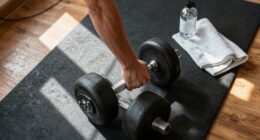
Resistance bands generally become more challenging as you stretch them farther, so the load changes through the movement. That means a row can feel easiest with your arms extended and strongest as your hands approach your ribs. A dumbbell typically provides a steadier external load, while a band gives you a rising pull—useful, but different. This changing tension affects how you judge effort: a repetition that feels manageable at the start can become difficult near the finish, so control through the whole range matters more than simply reaching the endpoint. Progression means making the work gradually more demanding while keeping control. You can select a stronger band, step farther from an anchor, increase your range of motion, slow each repetition, or add a few repetitions or sets. These options do not change the exercise in quite the same way. More stretch raises tension throughout much of the movement, while a slower tempo or pause increases the time your muscles work without requiring a new band. Change one factor at a time so you can tell what made the exercise harder and avoid a jump that disrupts your technique. Imagine that your first rows feel smooth for ten repetitions, but the last two no longer challenge you. You could pause briefly at the end of each row or increase the stretch slightly before moving to a stronger band. If the stronger band makes the first part of the row too difficult, the smaller setup adjustment may let you progress while keeping the full movement controlled. Keep your shoulders relaxed and resist the band’s pull as you return; the return phase matters too. Do not stretch a band beyond its stated range, and avoid combining bands unless the product instructions allow it. Because band tension is harder to measure than a dumbbell’s labeled weight, jot down the band, setup, and repetitions you used so you can repeat the session and compare your effort more consistently.Know what bands can do—and where they fall short
Bands can support strength training when your exercises feel challenging and you gradually increase the demand, but they do not suit every person or goal equally. Their strongest everyday advantages are low storage needs, portability, and exercise variety; their main tradeoffs are less precise load tracking and limited resistance for some advanced lifters. For example, someone in a small apartment can tuck a long loop into a drawer and use it for rows, squats, and presses. A traveler can pack a mini band for a short hotel-room session. A person following a program that depends on recording exact loads may find a band’s changing tension harder to compare from week to week than a fixed dumbbell or weight-stack setting. The band’s tension also depends on setup: small differences in how far you stand from an anchor or how much slack you start with can change the effort. That makes repeatable positioning useful if you want to track progress. Bands can make bodyweight movements more demanding, or add lighter resistance while you learn a movement. Yet a band may not provide enough challenge for every exercise as you get stronger, and some setups depend on a secure anchor. This can shape how you plan: use bands for movements and settings where their tension range suits you, and consider other equipment if you need a larger or more measurable load. They are one useful tool in a balanced routine, not an automatic replacement for every kind of resistance training. Match the equipment to the goal: if your priority is convenient, flexible training, bands may cover a lot; if you need heavy resistance or easy load measurement, you may want other equipment too.Use a quick safety check before you start
A safe band session starts with an inspection and a stable setup. Look for cracks, tears, thinning, or worn patches before every workout, and replace a damaged band instead of trying to make it last one more session. Heat, sharp edges, and poor storage can wear materials down, so follow the maker’s care guidance and store bands away from direct heat and sharp objects. A damaged area matters because the band is under tension during use; if it fails, it can snap back along its path. Inspection reduces that risk, though it cannot guarantee a band will never fail. If an exercise uses a door anchor, attach it exactly as instructed and test the setup gently before pulling hard. Keep your face out of the band’s path, and make sure the anchor cannot slip. A band hooked around a flimsy chair leg can slide or tip; choose a purpose-made anchor or a sturdy attachment point that the product guidance supports. The force you apply is transferred to the anchor, so a setup that looks stable while unloaded may shift once you pull. A gentle test helps reveal movement before the exercise becomes demanding. A practical example: before a standing row, you might inspect the loop, secure the anchor, tug lightly while standing to the side of its path, and then begin with an easy repetition. That brief check can reveal a slipping setup before you put more force into it. Stop if the band shifts or feels damaged. People with latex allergies should verify materials, while people with persistent pain, an injury, or another pre-existing condition should get guidance from a qualified clinician or fitness professional before choosing exercises. Bands can be useful in some rehabilitation plans, but the right movement and resistance depend on the person.Pick a realistic schedule and track what you do
A workable band schedule depends on how hard you train, what else you do, and how well you recover. Many people train major muscle groups around two or more times per week, with enough recovery between demanding sessions; that’s a general guide, not a personal prescription. Light mobility work and hard strength sessions place different demands on your body. Recovery matters because repeating a demanding session before you feel ready can reduce the quality of your next workout, while a schedule that is too sparse may make it harder to build a consistent habit. Start with a simple plan you can repeat. For example, you could schedule two full-body sessions on nonconsecutive days, then add gentle movement or rest between them. Write down the band type, setup, exercises, and repetitions. If you use the same loop for squats one week and rows the next, those notes help you remember how much stretch and effort you used. Record how the session felt as well: because the band does not have a precise weight label, notes about control and difficulty help distinguish a real improvement from a different setup. If a session feels too easy, adjust one element next time: stretch the band a little more, choose a harder variation, slow the lowering phase, or add a small amount of volume. If your form breaks down or you feel unusual discomfort, reduce the challenge and reassess. Consistency beats a complicated plan: a short routine you can follow in your living room is more useful than an ambitious schedule that stays on paper. For pre-existing health concerns, get professional guidance on frequency and exercise selection.Frequently Asked Questions
Can resistance bands help build muscle?
Yes. Resistance bands can support muscle growth when your exercises challenge you, your technique stays controlled, and you increase the demand over time. Their changing tension can make it harder to compare loads precisely than with dumbbells, so record your band, setup, and repetitions.
Are resistance bands a good choice for beginners?
Yes. Beginners can start with light resistance and focus on learning each movement before increasing stretch or choosing a stronger band. If you have a pre-existing condition or are recovering from injury, ask a qualified professional which exercises and resistance levels suit you.
Which resistance band should I buy for home workouts?
Choose based on the movements you plan to train. A long loop is versatile for many full-body exercises, while a mini band is handy for hip and glute work; a set with several levels can give you more options. Check the maker’s resistance guide because colors vary between brands.
Can resistance bands replace dumbbells or a gym?
Bands can cover many movements and work well when space or portability matters. Some people may find them sufficient for their goals, while others may want dumbbells or gym equipment for heavier resistance and more consistent load tracking.
How do I make a band exercise harder?
Increase the band’s resistance or stretch, use a more demanding variation, slow the movement, or add repetitions or sets. Change one factor at a time and keep good form; do not stretch the band beyond the maker’s guidance.
How do I check whether a resistance band is safe to use?
Inspect it before each session for cracks, tears, thinning, or unusual wear, and replace damaged bands. Follow the product’s anchor instructions, test the setup gently, keep the band away from sharp edges, and stay out of its path if it slips.