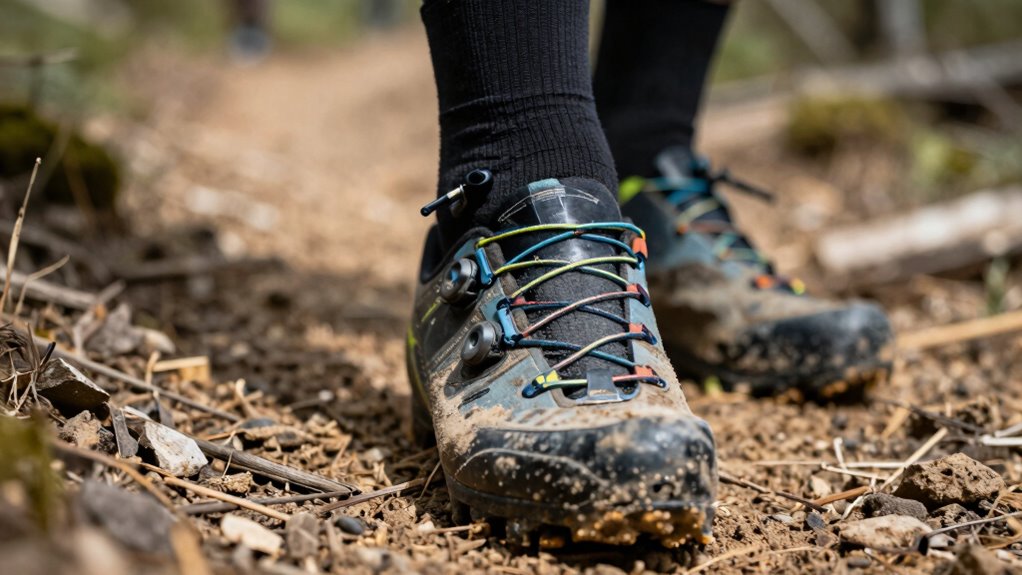

To lace your shoes for downhill runs without crushing your toes, start by using the heel lock technique. Lace up to the last eyelet, then thread each lace through the top eyelet on the same side to create a securing loop. Make sure the laces are snug, but not too tight, starting from the bottom. If needed, skip the last eyelet for extra room in the toe box. These tips will keep your feet comfortable and secure during steep descents, plus there’s more to explore.

Get workout gear delivered free — and shop member deals
- Fast, free delivery on millions of items
- Access to Prime Big Deal Days deals on October 6–7
- Prime Video, Amazon Music and more included
Key Takeaways
- Use the heel lock technique by threading laces through the top eyelet on each side to secure your heel and minimize toe pressure.
- Adjust lacing tension by starting tight at the bottom and loosening towards the toe area, allowing room for toes to wiggle.
- Consider skipping the last one or two eyelets to create extra space in the toe box, reducing pressure during descents.
- Test your lacing technique by walking around to assess comfort and make necessary adjustments before long runs.
- Ensure a snug fit around the midfoot while keeping the toe area comfortable to enhance stability and prevent painful toes.
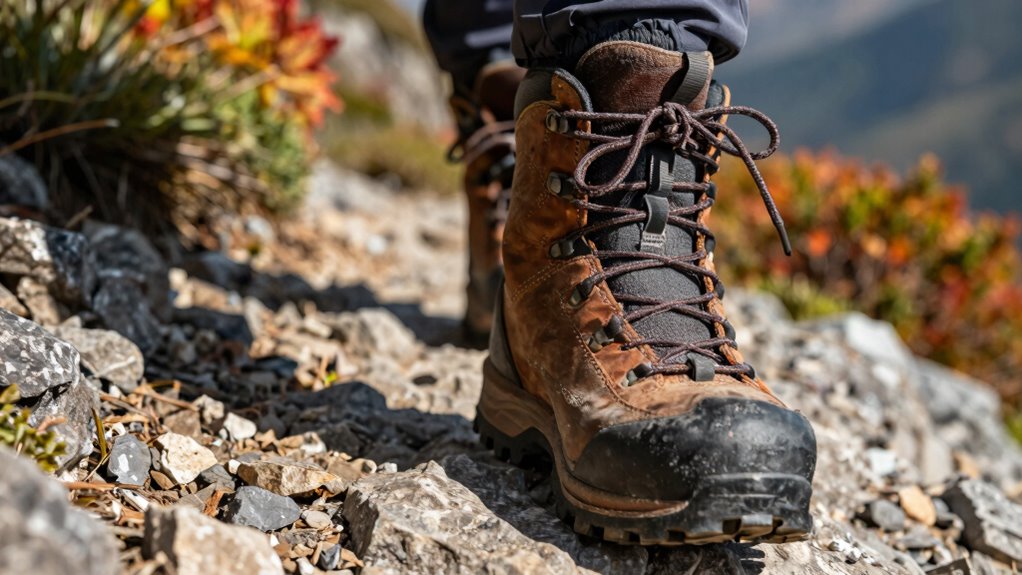
When you’re tackling steep descents, properly lacing your shoes can make all the difference in your stability and control. You might not realize it, but how you lace your shoes can greatly impact your foot’s position within the shoe. If you don’t pay attention to toe pressure, you could end up with painful toes or even blisters by the end of your run. The right lacing techniques can help you avoid these issues and keep your feet secure as you navigate downhill trails.
To start, consider using a lacing technique that allows your foot to sit comfortably without sliding forward. One effective method is the “heel lock” or “lace lock.” To do this, you’ll lace your shoes as usual, but when you reach the last eyelet, instead of crossing the laces, thread each lace through the top eyelet on the same side. This creates a loop that you can pull tight, locking your heel in place. This prevents your foot from sliding forward, which reduces toe pressure and minimizes the chance of your toes hitting the front of the shoe. Ensuring proper shoe fit can further enhance your downhill stability and comfort. Additionally, paying attention to the lacing tension can significantly improve your overall fit and performance on descents. Proper foot biomechanics play a crucial role in how well your shoes support your downhill runs.
Another valuable tip is to adjust the tension of your laces. You’ll want to confirm that the laces are snug but not overly tight. If laces are too tight, they can create excessive pressure on your toes, leading to discomfort. Start from the bottom and work your way up, gradually tightening each section. This way, you create a secure fit without compromising comfort. Remember, a snug fit around the midfoot is essential, while the toe area should have just enough room for your toes to wiggle.
If you find that your toes still feel cramped, you might want to try skipping eyelets. By leaving out the last eyelet or two, you can create more room in the toe box. This adjustment can greatly reduce toe pressure, allowing your feet to breathe and stay comfortable on long descents. Additionally, choosing shoes with a proper fit and design can further improve your downhill stability and comfort.
Lastly, always test your lacing technique before heading out on a long run. Walk around a bit, and pay attention to how your shoes feel. If you notice any discomfort, don’t hesitate to readjust. By taking the time to fine-tune your lacing techniques, you’ll set yourself up for a more enjoyable and pain-free downhill experience.
trail running shoes with heel lock lacing
As an affiliate, we earn on qualifying purchases.
As an affiliate, we earn on qualifying purchases.
Frequently Asked Questions
What Type of Shoes Are Best for Downhill Hiking?
For downhill hiking, you’ll want shoes that offer excellent trail traction and cushioning support. Look for models with a sturdy sole and aggressive tread patterns to grip rocky surfaces effectively. Ample cushioning will help absorb impact, reducing stress on your feet and joints. You should also consider shoes with a snug fit to prevent your toes from sliding forward. Investing in quality footwear guarantees a more comfortable and safer hiking experience.
How Often Should I Replace My Laces?
You should replace your laces every 6 to 12 months, depending on usage—about 20% of hikers neglect this vital lace maintenance. Worn laces can cause blisters and affect your lacing techniques, leading to discomfort on the trail. Regularly checking for frays or wear can save you from issues during hikes. Keeping your laces fresh guarantees they provide the support you need, allowing you to focus on enjoying the journey ahead.
Can I Use Regular Shoelaces for Downhill Lacing?
You can use regular shoelaces for downhill lacing, but it’s best to choose ones that offer some elasticity for better toe comfort. Experiment with different lacing techniques to find what works for you—tightening them in certain areas can help prevent your toes from getting crushed on steep descents. Just make sure your laces are secure, so your foot stays stable while you tackle those downhill trails!
What Are the Signs of Improper Lacing?
Improper lacing feels like a storm brewing in your shoes. You’ll notice toe pain creeping in, as pressure points press against your foot. If your laces are too tight, your feet won’t have the stability they need, leading to instability on the trail. Conversely, if they’re too loose, your foot might slide around, causing blisters. Adjust your lacing techniques to find that sweet balance, keeping comfort and performance in harmony.
How Do Foot Shape and Size Affect Lacing Techniques?
Your foot shape and size greatly influence your lacing techniques. If you’ve got a wider foot, you might need to adjust lacing pressure to avoid discomfort. Proper lacing accommodates your foot anatomy, ensuring even distribution of pressure across your foot. If your toes feel cramped, consider loosening the laces near the toe box. Tailoring your lacing to your unique foot shape can enhance comfort and performance, especially during long descents.
Conclusion
When you lace your shoes for downhill runs, think of your feet as a well-tuned instrument—each string needs the right tension. By adjusting your lacing technique, you can strike the perfect balance between support and comfort, preventing those pesky toe-crushing moments. Remember, a little extra care goes a long way, letting you glide down the trail like a leaf on the wind, free to enjoy the thrill without the pain. Happy trails!
Fall Picks
fall essentials
As an affiliate, we earn on qualifying purchases.