
To pace a crowded 10K without panicking, stay focused on your body’s signals and use landmarks or race markers to track your progress. Keep your breathing steady and practice visualization to stay calm. If distractions or chaos arise, pause briefly, take deep breaths, and refocus on your internal cues. Trust your training and adjust your pace gently when needed, ensuring you stay composed and confident throughout the race—more tips to keep you on track await you.
Key Takeaways
- Use landmarks or race markers to monitor your pace and stay focused amid the crowd.
- Practice controlled breathing techniques to maintain calm and clarity during chaos.
- Break the race into smaller segments to manage mental pressure and stay motivated.
- Adjust your speed gradually based on how your body feels, avoiding sudden changes.
- Trust your training and internal cues rather than external distractions or other runners’ pace.
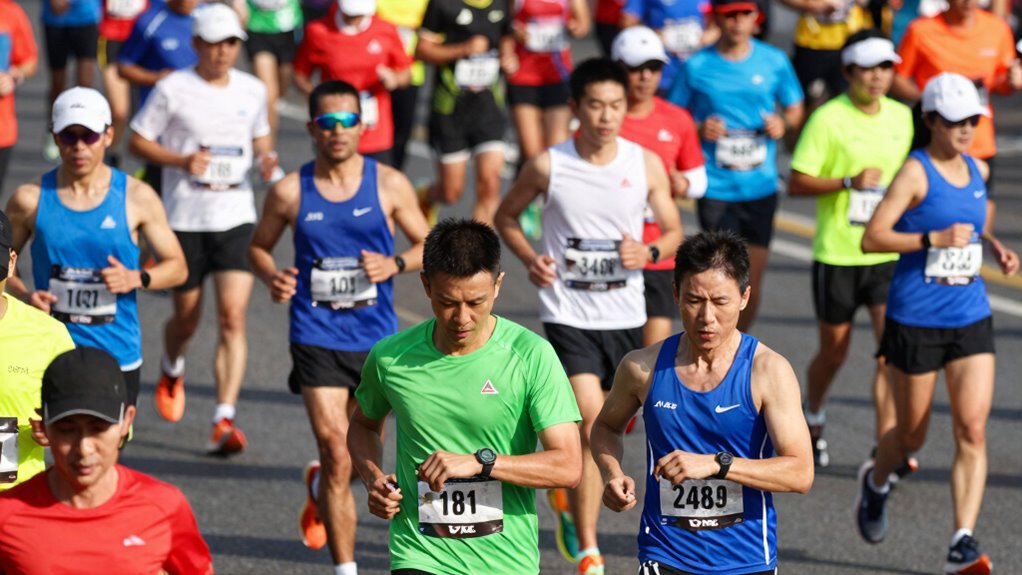
Ever wondered how to maintain your speed and avoid chaos in a crowded 10K race? Staying on pace in a sea of runners can be intimidating, but with the right approach, you can keep your focus and finish strong. One of the most crucial aspects is establishing effective hydration strategies early on. In a crowded race, it’s easy to forget to hydrate properly, which can lead to fatigue and dehydration that throw off your rhythm. Before the race, plan to drink small amounts of water or sports drinks at regular intervals—perhaps at the water stations—and avoid gulping large quantities all at once. During the race, pay attention to your body’s signals; if you feel thirsty or notice your mouth drying out, take a quick sip. Proper hydration helps maintain your energy levels and keeps your muscles functioning efficiently, making it easier to stick to your desired pace. Additionally, understanding the importance of race strategy can help you better navigate crowded courses and adapt to changing conditions. Recognizing the significance of hydration can further enhance your performance and help prevent common issues like cramping or dizziness. Being aware of pacing techniques can also assist you in maintaining a consistent speed, even amidst the chaos. Incorporating mental strategies can also improve your focus and resilience during the race, helping you stay calm and composed even when surrounded by a bustling crowd.
Equally important is your mental focus. In a packed race, distractions are everywhere—other runners bumping into you, sudden changes in terrain, or the noise of the crowd. To stay on track, develop mental strategies that keep you centered. Visualize your goal, break the race into smaller segments, and concentrate on your breathing. When you feel yourself getting overwhelmed or anxious, remind yourself that staying calm is key to pacing well. Take deep, controlled breaths to clear your mind and regain your focus. Concentrate on your form and your stride, rather than the chaos around you. This mental clarity helps you make quick decisions about adjusting your pace if needed, without panicking.
As you progress through the race, it’s essential to keep adjusting your pace based on how you feel. Use landmarks or race markers to gauge your progress, but avoid obsessing over the clock or other runners. Instead, listen to your body and trust your training. If you start to tire, slow down slightly but keep moving forward, maintaining a steady rhythm. Remember, it’s better to finish strong and steady than to push too hard and burn out early. Keep your hydration strategies in mind, stay mentally focused, and you’ll be better equipped to navigate the crowded course confidently. With practice, these techniques will become second nature, helping you stay calm, composed, and on pace, no matter how busy the race gets.

AiRunTech Hydration Running Belt with Bottles Zero Bounce Design for Running, Triathlon, Marathon, 10K, 5K, Trail Fit for Most Smartphones(2 * 10OZ bottle)
- Anti-Slip Fit and Comfort: Secure, friction-free, personalized fit
- Hydration with BPA-Free Bottles: Includes 2 durable, leakproof 10oz bottles
- Easy Drinking No Cap Removal: Push-pull nozzle for on-the-move hydration
As an affiliate, we earn on qualifying purchases.
As an affiliate, we earn on qualifying purchases.
Frequently Asked Questions
How Should I Hydrate During a Crowded Race?
During a crowded race, you should hydrate at hydration stations, taking small sips of water or electrolyte drinks. Focus on maintaining a steady intake, especially if it’s hot or humid. Use electrolyte drinks to replenish salts lost through sweat and prevent cramps. Don’t rush through stations—just grab what you need quickly, then keep running smoothly. Staying consistent with hydration helps you stay energized and avoid panic as the race progresses.
What Should I Do if I Get Stepped on or Bumped?
Remember, “Don’t sweat the small stuff.” If you get stepped on or bumped, stay calm and focus on maintaining your pace. Practice good crowd etiquette by politely adjusting your position and giving others space. Keep your arms close and avoid reacting emotionally, which can cause loss of control. Respect personal space, stay aware of your surroundings, and keep moving steadily to prevent panic or injury.
How Can I Avoid Getting Lost in the Crowd?
To avoid getting lost in the crowd, stay close to the front or middle of the pack, where pacing strategies are clearer. Keep a mental focus on the course markers and your surroundings, and don’t drift too far to the edges. Regularly check your position against others, and use landmarks or signs to stay oriented. Remaining alert and maintaining your mental focus helps you stay on track and prevents confusion.
Is It Better to Start at the Front or Back?
Starting at the front isn’t always best if you’re concerned about getting caught up in congestion. For better race strategy and pacing tips, begin a little behind the leaders to avoid early bottlenecks, then gradually move forward. This approach helps you maintain steady speed without panicking. It’s smarter to start mid-back and work your way up, ensuring a smoother race and maintaining control over your pace from the start.
How Do I Handle Sudden Fatigue or Cramping?
When sudden fatigue or cramping hits, pause briefly to focus on mindful breathing, which helps calm your nerves and oxygenate your muscles. Slow down slightly to conserve energy and prevent further strain. Stretch gently if needed, then resume at a comfortable pace. Listen to your body, stay relaxed, and trust your training. By managing your breathing and conserving energy, you can recover quickly and keep moving forward confidently.
Conclusion
Remember, running a crowded 10K is like steering a ship through turbulent waters—you can’t control every wave, but you can set your course. Trust your pace, stay focused on your rhythm, and let the crowd be your guiding stars rather than stormy clouds. With patience and steady resolve, you’ll navigate through the chaos and reach your finish line, stronger and more confident, knowing you’ve mastered the art of pacing amidst the chaos.