
TL;DR

Get workout gear delivered free with Prime
- Fast, free delivery on millions of items
- Prime Video, Amazon Music and more included
- Member-only deals all year
In a six-month study of 123 healthy adults with an average age of 72, high-intensity interval training reduced fat mass without the small decline in lean tissue seen with moderate exercise. The reported changes were modest, and the study measured lean tissue rather than muscle strength; it does not establish that HIIT is best or safe for every older adult.
A six-month exercise trial involving 123 healthy older adults found that high-intensity interval training (HIIT) reduced fat mass without the small decline in lean tissue recorded in the moderate-intensity group, according to research published in Maturitas. The researchers described the changes as modest. The study measured body composition, not muscle strength.
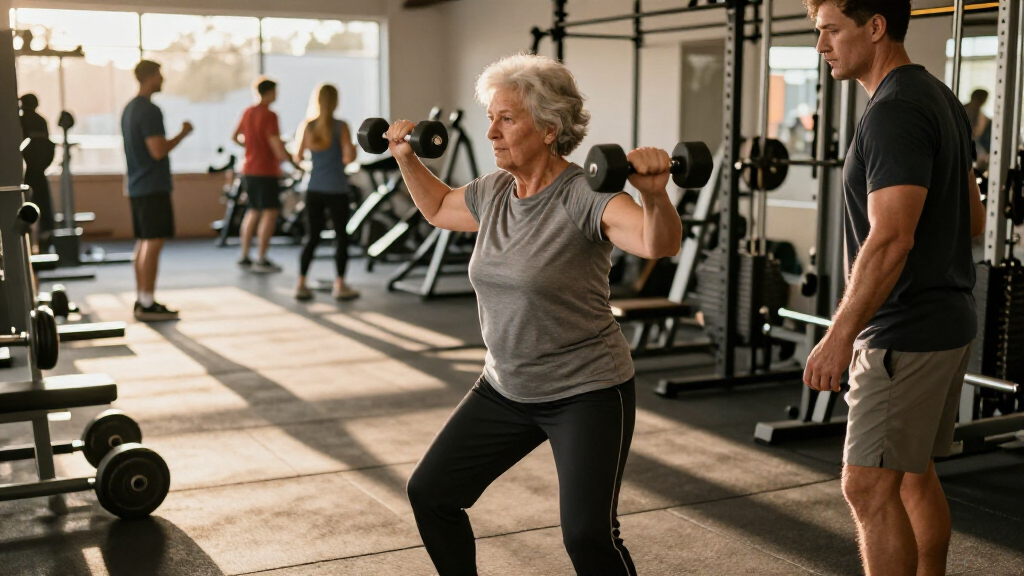
The Australian research team, from the University of the Sunshine Coast, studied participants from the Greater Brisbane region. Their average age was 72, and their average body mass index was about 26 kg/m². Participants were assigned to high-intensity intervals, moderate-intensity exercise or a low-intensity comparison group.
Each group attended three supervised 45-minute gym sessions a week for six months. Researchers assessed body composition at the start, after three months and at the end, using a scanning method that estimates fat and lean tissue throughout the body. The report says both high- and moderate-intensity groups significantly reduced fat mass, with larger improvements than the low-intensity group.
The key reported difference was in lean tissue: participants doing moderate exercise had a small decline, while the HIIT group reduced fat without the same decline. The researchers also reported improvements in the composition of weight carried around the middle for the high- and moderate-intensity groups, including in visceral adipose tissue. The report does not give numerical effect sizes in its summary, and says the improvements were relatively small.
Why Preserving Lean Tissue Matters
For older adults, body weight alone does not indicate how fat and lean tissue have changed. Lean tissue includes muscle, which contributes to movements such as standing from a chair, climbing stairs and maintaining balance. The trial compared body-composition outcomes across exercise groups.
The study did not show that HIIT improves strength, prevents disability or reduces disease. The scans estimated lean mass, not muscle function; lean tissue includes muscle but also other tissues and water. The researchers also cautioned that the observed differences were not clearly clinically meaningful compared with lower-intensity exercise, particularly when measurement uncertainty was considered.
The abdominal-fat findings concerned visceral fat, which is stored deeper in the abdomen around internal organs. The reported body-composition changes do not establish that participants had fewer health problems or lower disease risk. The study compared outcomes among exercise groups.
As an affiliate, we earn on qualifying purchases.
How the Six-Month Trial Worked
HIIT alternates brief, demanding bouts of exercise with easier recovery periods. In this study, participants’ intense intervals were described as hard enough to leave them breathing heavily and make conversation difficult, followed by lower-intensity recovery. The comparison matters because the trial tested a supervised programme over six months, rather than a single workout or an unsupervised routine.
Lead author and exercise physiologist Dr. Grace Rose said all three exercise intensities were associated with modest fat loss, while only the HIIT group retained lean muscle, as measured by the study. Co-author and University of the Sunshine Coast Associate Professor of Physiology Mia Schaumberg proposed that the greater muscular demand of intervals could provide a stronger signal to retain tissue. That is a possible explanation offered by the researchers, not a mechanism established by this trial.
“We found that high, medium and low intensity exercises all led to modest fat loss but only HIIT retained lean muscle.”
— Dr. Grace Rose, lead author and exercise physiologist at the University of the Sunshine Coast
Limits of the Body-Composition Findings
The available report does not provide the exact amount of fat or lean tissue gained or lost in each group, making it difficult to judge the size of the differences. It also says the changes were relatively small and not clearly clinically meaningful compared with lower-intensity exercise after measurement uncertainty was taken into account.
Lean tissue measurements are not equivalent to direct tests of muscle strength, mobility or everyday independence. The study involved healthy older adults in a supervised programme, so the results may not apply in the same way to people with health conditions, different fitness levels or limited access to supervised exercise. The report also says further analysis is needed for the low-intensity group’s abdominal-fat results.
The trial does not establish that HIIT is appropriate for every older person, or that it prevents chronic disease. The source summary does not provide details about longer-term outcomes after the six-month programme ended.
Questions for Future Exercise Research
Further analysis of the trial’s results, particularly the low-intensity group’s abdominal-fat findings, could clarify how the programme affected fat distribution. Longer follow-up and studies that directly measure strength, physical function and lasting effects would help assess whether the body-composition differences are associated with changes in daily function.
The study tested supervised sessions, and HIIT involves demanding effort. Older adults, particularly those with existing health conditions or concerns about strenuous activity, can discuss an exercise plan with a qualified health professional before starting.
Key Questions
What did the study find about HIIT and fat loss?
The six-month trial reported that both high- and moderate-intensity exercise reduced fat mass more than the low-intensity comparison. The HIIT group reduced fat without the small decline in lean tissue reported for the moderate group.
Did the researchers prove HIIT builds muscle?
No. The study reported that the HIIT group maintained lean tissue while losing fat. Its scans estimated lean mass rather than directly measuring muscle strength or muscle growth.
How many people took part, and how long did they exercise?
The trial included 123 healthy older adults, whose average age was 72. They completed three supervised 45-minute gym sessions each week for six months.
Should every older adult start HIIT?
The study does not show that HIIT is suitable for everyone. The participants exercised under supervision, and the report does not establish safety or effectiveness for people with different health conditions. Anyone considering strenuous exercise can seek advice from a qualified health professional.
Source: rss
Fall Picks
fall essentials
As an affiliate, we earn on qualifying purchases.