Choosing the right Mac Studio for machine learning in 2026 depends on balancing raw processing power, expandability, and budget. The Apple 2026 Mac mini with M5 Pro stands out for its compact size and impressive AI performance, ideal for those working in tight spaces. The Mac Studio with M5 Max offers a strong mix of power and expandability for professional workflows. Meanwhile, the MacBook Pro 16.2-inch with M5 Max provides portability without sacrificing performance. Each of these options involves tradeoffs: the mini is less upgradeable, the Mac Studio commands a premium, and the MacBook Pro weighs more but offers mobility. Here’s how they compare and who they suit best.

Get workout gear delivered free with Prime
- Fast, free delivery on millions of items
- Prime Video, Amazon Music and more included
- Member-only deals all year
Complete the kit



Key Takeaways
- The Mac mini M5 Pro delivers impressive AI performance in a tiny form factor, perfect for space-constrained environments.
- The Mac Studio with M5 Max offers high-end processing and expandability for demanding machine learning tasks, but at a higher price.
- The 16.2-inch MacBook Pro with M5 Max balances portability and power, ideal for professionals on the go.
- All options support multiple external displays and fast data transfer, but their upgrade paths differ significantly.
- Pricing varies widely, making it important to consider your budget and specific workflow needs.
| Apple 2026 Mac mini Desktop Computer M5 Pro chip |  | Best Compact Powerhouse for ML in Tight Spaces | Dimensions: 5 x 5 x 1.97 inches | Weight: 1.61 pounds | Chip: Apple M5 Pro | VIEW ON AMAZON | See Our Full Breakdown |
| Apple 2026 Mac Studio Desktop Computer with M5 Max Chip |  | High-End Power for Demanding ML and Creative Work | Processor: M5 Max chip | Memory: Up to 128GB | Storage bandwidth: Up to 614GB/s | VIEW ON AMAZON | See Our Full Breakdown |
| Apple MacBook Pro 16.2-inch Laptop with M5 Max, 18-core CPU, 40-core GPU, 128GB Unified Memory, 2TB SSD – Space Black |  | Portable Powerhouse for ML on the Move | Chip: Apple M5 Max (18-core CPU, 40-core GPU) | Display: 16.2-inch Liquid Retina XDR | Memory: 128GB Unified Memory | VIEW ON AMAZON | See Our Full Breakdown |
| Apple Mac Studio (M3 Ultra, 32-Core CPU, 80-Core GPU, 256GB Unified Memory, 1TB SSD) |  | Extreme Power for Heavy-Duty ML and Rendering | Chip: Apple M3 Ultra | CPU: 32-core | GPU: 80-core | VIEW ON AMAZON | See Our Full Breakdown |
| Apple 2026 MacBook Pro 16.2″ with M5 Max, 18-core CPU, 40-core GPU, 48GB RAM, 2TB SSD | 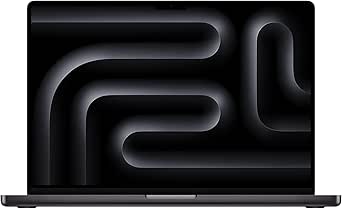 | High-Performance Mobile ML Power | Processor: Apple M5 Max (18-core CPU, 40-core GPU) | Display: 16.2-inch Liquid Retina XDR | Memory: 48GB Unified Memory | VIEW ON AMAZON | See Our Full Breakdown |
| mac studio for machine learning | Ports | Chip | Memory |
|---|---|---|---|
| Apple 2026 Mac mini Desktop Co | 3x Thunderbolt 5, HDMI, 2.5Gb Ethernet, 2x USB-C, Headphone jack | Apple M5 Pro | — |
| Apple 2026 Mac Studio Desktop | Four Thunderbolt 5, USB-C, USB-A, HDMI, SDXC | — | Up to 128GB |
| Apple MacBook Pro 16.2-inch La | 3x Thunderbolt 5, MagSafe 3, SDXC, HDMI | Apple M5 Max (18-core CPU, 40-core GPU) | 128GB Unified Memory |
| Apple Mac Studio | — | Apple M3 Ultra | — |
| Apple 2026 MacBook Pro 16.2" w | 3x Thunderbolt 5, HDMI, SDXC, MagSafe 3 | — | 48GB Unified Memory |
More Details on Our Top Picks
Apple 2026 Mac mini Desktop Computer M5 Pro chip
The Mac mini M5 Pro stands out for packing impressive AI performance into a tiny footprint. Its compact size makes it suitable for environments where space is limited, yet it offers up to 4x faster on-device AI processing than previous models thanks to the M5 Pro chip. Compared with larger desktops, it sacrifices upgradeability—its memory and storage aren’t user-accessible—and requires external peripherals, including a monitor. For those who need a dedicated ML machine in a small form factor, this is an excellent choice. However, users who want extensive internal expansion or a built-in display should look elsewhere.
Pros:- Compact five-by-five-inch design fits nearly anywhere
- Up to 4x faster on-device AI performance with M5 Pro chip
- Extensive port selection including three Thunderbolt 5 ports and 2.5Gb Ethernet
Cons:- Requires external monitor, keyboard, and mouse (not included)
- Memory and storage are not user-upgradable
Best for: Hobbyists and developers with limited space who need strong AI performance
Not ideal for: Users seeking internal upgrade options or integrated displays
- Dimensions:5 x 5 x 1.97 inches
- Weight:1.61 pounds
- Chip:Apple M5 Pro
- Memory Bandwidth:307GB/s
- Ports:3x Thunderbolt 5, HDMI, 2.5Gb Ethernet, 2x USB-C, Headphone jack
- Display Support:Up to 3 external displays
Our verdict“A highly capable, space-efficient choice for ML tasks, best suited for those who prioritize size over expandability.”
Apple 2026 Mac Studio Desktop Computer with M5 Max Chip
The Mac Studio with M5 Max offers exceptional processing and memory for intensive machine learning workloads. Its compact 7.7-inch square design packs up to 128GB of RAM, supporting large models and datasets. The M5 Max chip with a 40-core GPU delivers rapid training and inference capabilities, making it suited for professional AI developers. Compared to the mini, it provides more internal expansion options and a more robust cooling system, but it comes at a significantly higher price. For users who need serious processing power and expandability, this desktop strikes the right balance, though it may be overkill for casual ML projects.
Pros:- Exceptional processing power with M5 Max chip
- Supports multiple external displays and fast data transfer
- Compact, quiet desktop ideal for office environments
Cons:- High price point for most users
- Limited internal upgradeability due to integrated components
Best for: AI professionals and creatives demanding top-tier processing
Not ideal for: Budget-conscious hobbyists or those needing portability
- Processor:M5 Max chip
- Memory:Up to 128GB
- Storage bandwidth:Up to 614GB/s
- Ports:Four Thunderbolt 5, USB-C, USB-A, HDMI, SDXC
- Size:7.7-inch square
Our verdict“A robust desktop solution for demanding ML workloads, best for professionals needing raw power and expandability.”
Apple MacBook Pro 16.2-inch Laptop with M5 Max, 18-core CPU, 40-core GPU, 128GB Unified Memory, 2TB SSD – Space Black
The MacBook Pro 16.2-inch with M5 Max delivers desktop-class AI processing in a portable package. Its stunning Liquid Retina XDR display offers incredible brightness and contrast, making it ideal for data visualization. The 18-core CPU and 40-core GPU with Neural Accelerators accelerate on-device ML training and inference, especially for large models. With 128GB of unified memory and support for up to four external displays, it balances power with mobility. The main tradeoff is weight—at over 4.7 pounds, it’s heavier than typical laptops, and its high price might deter casual users. Still, for on-the-go ML professionals, this model provides a compelling mix of performance and portability.
Pros:- Powerful M5 Max chip with Neural Accelerators
- Large 16.2-inch Liquid Retina XDR display
- All-day battery life with versatile connectivity
Cons:- Premium pricing typical of high-end MacBook Pros
- Heavier than smaller portable laptops
Best for: ML researchers and developers who need power on the road
Not ideal for: Budget-sensitive users or those prioritizing ultra-lightweight laptops
- Chip:Apple M5 Max (18-core CPU, 40-core GPU)
- Display:16.2-inch Liquid Retina XDR
- Memory:128GB Unified Memory
- Storage:2TB SSD
- Ports:3x Thunderbolt 5, MagSafe 3, SDXC, HDMI
Our verdict“A premium, portable option for ML professionals requiring high performance and mobility.”
Apple Mac Studio (M3 Ultra, 32-Core CPU, 80-Core GPU, 256GB Unified Memory, 1TB SSD)
The Mac Studio with M3 Ultra is designed for the most demanding AI, rendering, and large-scale ML workloads. Its 32-core CPU and 80-core GPU, combined with 256GB of unified memory, make it capable of running enormous models entirely in memory. Its support for up to 8 displays at 8K resolutions enhances data visualization and multitasking. Compared to the M5 Max models, this configuration offers even more raw computational power and memory capacity but at a premium price. It’s best suited for enterprise-level ML tasks or intense creative workflows, where internal upgradeability isn’t a concern.
Pros:- Unmatched processing and GPU power with M3 Ultra
- Supports up to 8 displays at 8K resolution
- Massive 256GB unified memory enables large models
Cons:- Extremely high cost for most users
- Not user-upgradable after purchase
Best for: Heavy-duty ML, 3D rendering, and enterprise AI projects
Not ideal for: Casual ML users or those on tighter budgets
- Chip:Apple M3 Ultra
- CPU:32-core
- GPU:80-core
- Unified Memory:256GB
- Max Displays:8
Our verdict“A powerhouse for the most intense ML and creative workflows, suitable only for high-budget enterprise or research environments.”
Apple 2026 MacBook Pro 16.2″ with M5 Max, 18-core CPU, 40-core GPU, 48GB RAM, 2TB SSD
The MacBook Pro 16.2-inch M5 Max offers a compelling blend of raw power and portability, with a focus on mobile ML workflows. Its robust 18-core CPU and 40-core GPU accelerate training and inference tasks, while 48GB of unified memory supports sizeable datasets. The 16.2-inch Liquid Retina XDR display enhances visual clarity, ideal for data analysis and visualization. Its array of ports, including three Thunderbolt 5, makes connecting external devices straightforward. The main tradeoff is weight—at nearly 4.7 pounds—and the premium price, which might deter casual users. This model is best suited for ML professionals who need to work remotely or in the field without sacrificing performance.
Pros:- Powerful M5 Max chip with Neural Accelerators
- Large, vibrant 16.2-inch display
- Versatile connectivity for external peripherals
Cons:- Heavy compared to smaller laptops
- High cost for high-end specs
Best for: ML practitioners needing high-end performance on the go
Not ideal for: Users seeking ultra-lightweight laptops or budget options
- Processor:Apple M5 Max (18-core CPU, 40-core GPU)
- Display:16.2-inch Liquid Retina XDR
- Memory:48GB Unified Memory
- Storage:2TB SSD
- Ports:3x Thunderbolt 5, HDMI, SDXC, MagSafe 3
Our verdict“A top-tier mobile machine for ML professionals who prioritize power and display quality in a portable design.”

How We Picked
Our selections focus on the hardware configurations most suitable for machine learning workloads, emphasizing processing power, memory capacity, and connectivity. We prioritized Apple’s latest chips—M5 Pro, M5 Max, and M3 Ultra—for their AI acceleration capabilities. Price and expandability also played key roles; models offering the best performance-to-cost ratio and upgrade options were favored. We compared specs like core counts, memory bandwidth, and display support, ensuring each pick has a clear role for different types of users—from hobbyists to professionals. Finally, we considered the overall ecosystem integration and portability, making sure each option provides a meaningful advantage for ML tasks in 2026.
| mac studio for machine learning | Chip |
|---|---|
| Apple 2026 Mac mini Desktop Co | Apple M5 Pro |
| Apple 2026 Mac Studio Desktop | — |
| Apple MacBook Pro 16.2-inch La | Apple M5 Max (18-core CPU, 40-core GPU) |
| Apple Mac Studio | Apple M3 Ultra |
| Apple 2026 MacBook Pro 16.2" w | — |
Factors to Consider When Choosing Mac Studio For Machine Learning
Selecting the ideal Mac Studio for machine learning involves understanding your specific workload requirements, portability needs, and budget constraints. The key is to match your project scale with the processing power, memory capacity, and connectivity options of each model. Whether you prioritize compact size, raw computational power, or mobility, this guide helps clarify which Mac suits your workflow best.Processing Power and GPU Capabilities
Machine learning tasks benefit significantly from high core counts and strong GPU performance. The M5 Max and M3 Ultra chips excel in this area, providing the speed needed for training large models or running complex inference workloads. If your projects involve large datasets or deep neural networks, prioritizing a model with a high-core CPU and GPU is essential. Conversely, if your ML work is lighter or more experimental, a less powerful chip like the M5 Pro might suffice.
Memory and Storage
Memory capacity directly impacts your ability to handle large models and datasets in real-time. The Mac Studio with 128GB or 256GB of unified memory supports the most demanding workloads without relying heavily on virtual memory. Storage speed and capacity also matter; faster SSDs reduce bottlenecks during data loading. For extensive datasets or multiple concurrent projects, opting for models with maximum RAM and SSD bandwidth is advisable.
Expandability and Connectivity
While most Apple desktops are limited in upgrade options post-purchase, connectivity features like Thunderbolt 5, HDMI, and SDXC slots enable connecting multiple high-speed peripherals and displays. If you plan to use external GPUs, additional storage, or multiple monitors, ensure your chosen model supports these features. The Mac Studio supports up to 8 displays, a crucial feature for data visualization and multitasking in advanced ML workflows.
Portability and Size
If mobility is a priority, the MacBook Pro variants provide the power you need in a portable form factor. The 16.2-inch models balance screen real estate with weight, suitable for remote work or field research. Desktop options like the Mac mini or Mac Studio are better for dedicated workstations but lack portability. Consider your working environment carefully before choosing between a mobile or stationary setup.
Budget and Price
High-performance Mac systems come with premium prices, especially models with the M5 Max or M3 Ultra chips. If your budget is limited, the Mac mini offers excellent value with strong ML capabilities in a small package. For enterprise or professional use, investing in a Mac Studio or high-end MacBook Pro can deliver the performance needed, though at a higher cost. Balance your project requirements against your available budget to find the best fit.
Frequently Asked Questions
Can I upgrade the memory or storage on these Macs?
Most recent Apple Macs, including the Mac mini, Mac Studio, and MacBook Pro, have memory and storage soldered onto the motherboard, making upgrades impossible after purchase. When selecting a model, it’s advisable to opt for the maximum RAM and storage you anticipate needing, as these cannot be expanded later. This approach ensures your machine remains capable as your ML projects grow in complexity.
Which Mac is best for training large neural networks?
The Mac Studio with the M3 Ultra chip is best suited for this purpose due to its massive 256GB unified memory and 80-core GPU, providing the computational muscle needed for intensive training tasks. For those with a tighter budget, the Mac Studio with M5 Max still offers substantial performance, but the M3 Ultra is designed specifically for the heaviest workloads.
Is portability possible with these high-performance Macs?
Yes, the MacBook Pro models, especially the 16.2-inch version with M5 Max, offer portability while maintaining high processing capabilities. They are ideal for ML professionals who need to work remotely or in the field. However, larger desktops like the Mac Studio or Mac mini are stationary setups best suited for dedicated workspaces.
What are the main tradeoffs between a Mac mini and a Mac Studio?
The Mac mini is more affordable, compact, and suitable for users who need a dedicated ML machine in a small footprint. However, it offers limited upgradeability and internal expansion. The Mac Studio, by contrast, provides higher processing power, more extensive connectivity, and better support for large models, but at a significantly higher price and with a less portable form factor.
How does the Apple ecosystem benefit ML workflows?
Apple’s ecosystem, including seamless integration with macOS, iCloud, and other Apple devices, facilitates efficient data management, transfer, and collaboration. Features like Universal Control and AirDrop simplify file sharing and device management, which can be advantageous for ML practitioners working across multiple devices or collaborating with teams. The ecosystem also ensures software compatibility and access to optimized AI frameworks like Core ML.
Conclusion
For hobbyists or those with limited space and budget, the Apple 2026 Mac mini with M5 Pro offers excellent AI performance in a tiny package. Professionals prioritizing maximum processing power and expandability should lean toward the Mac Studio with M5 Max. Meanwhile, ML practitioners who need mobility without sacrificing performance will find the MacBook Pro 16.2-inch with M5 Max to be the best all-around choice. Each option serves a different niche, making it essential to match your specific workflow and environment to the right machine in 2026.