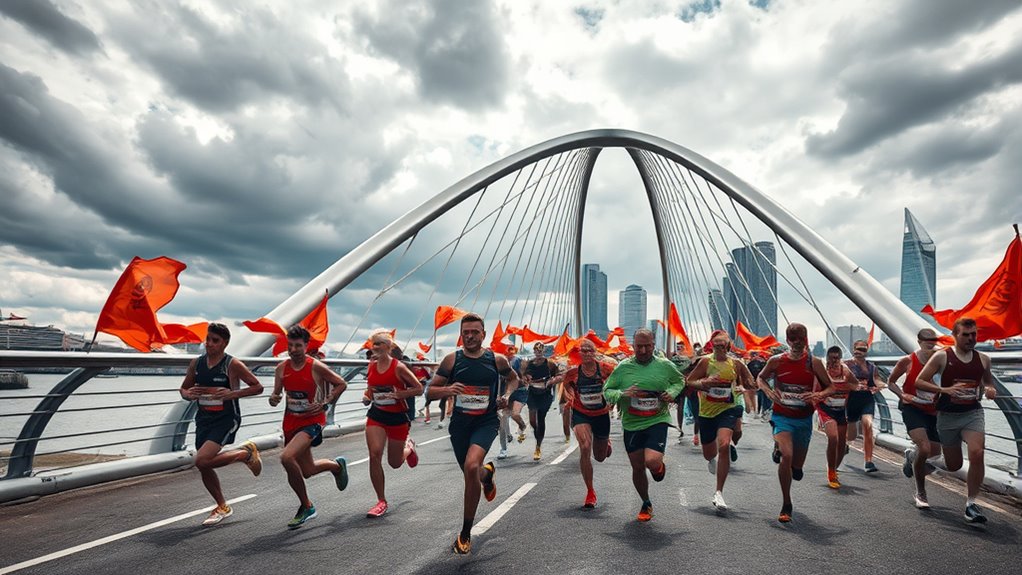

During the Rotterdam Marathon, you’ll encounter iconic bridges and gusty winds that require careful pacing and strategic positioning. The flat, fast course makes it easy to set a steady rhythm, but you’ll need to stay alert for wind gusts and elevation changes at bridges that can give you mental boosts. Managing your effort and staying flexible helps you conserve energy for the final miles. For tips on mastering these elements, continue exploring strategies tailored for this unique race.

Get workout gear delivered free — and shop member deals
- Fast, free delivery on millions of items
- Access to Prime Big Deal Days deals on October 6–7
- Prime Video, Amazon Music and more included
Key Takeaways
- Bridges in Rotterdam mark key race segments and offer mental boosts with elevation changes.
- Wind conditions vary, requiring strategic drafting and positioning to maintain steady pacing.
- Flat, fast course design encourages careful pacing to avoid early exhaustion.
- Using pacing devices and split times helps runners stay on target and conserve energy.
- Environmental factors like gusty winds and bridge elevations influence race strategy and mental resilience.
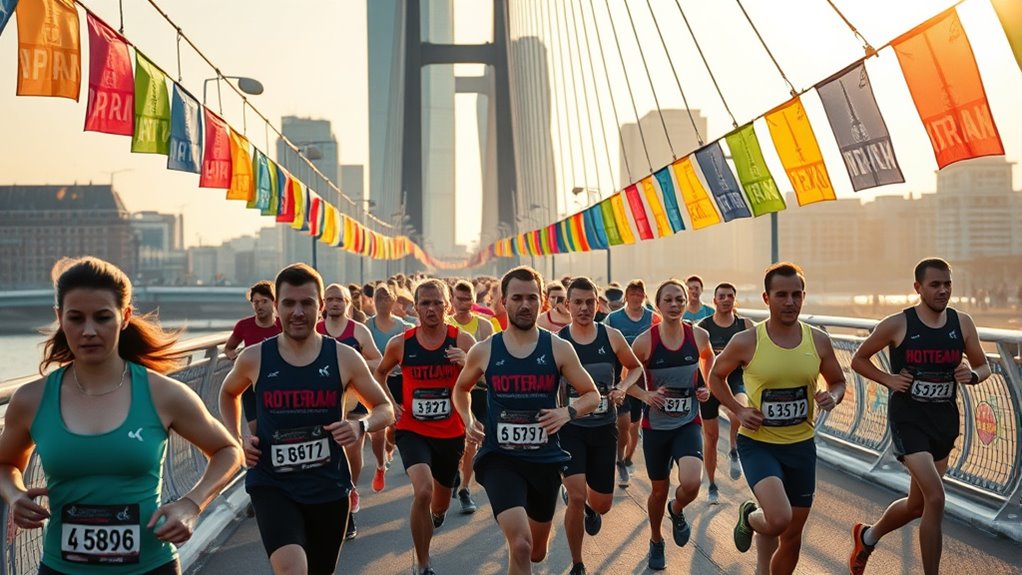
The Rotterdam Marathon is one of Europe’s fastest and most popular marathon events, attracting thousands of runners from around the world each year. If you’re preparing for this race, your race day strategy will be essential to your success. You’ve already put in the hard work through marathon training, but on race day, your ability to execute your plan can make the difference between a personal best and a tough finish. As you step onto the course, focus on pacing yourself carefully. Rotterdam’s flat, fast course rewards steady, disciplined running, so it’s imperative to avoid going out too fast in the early miles. You should have a clear plan that aligns with your training, setting target splits that you can maintain comfortably. This helps conserve energy for the latter stages when fatigue may set in, especially as you approach the iconic bridges that span the city.
Your marathon training has prepared your body for the physical demands of this race, but your mental approach is equally important. During training, you’ve learned to listen to your body, manage hydration, and tune into your pace. Now, on race day, trust those lessons. Keep an eye on your pacing device or splits to guarantee you stay on track, adjusting your effort as needed to avoid burnout. The wind can be a challenge along the course, especially since Rotterdam’s open avenues and bridges create gusty conditions. You’ll need to be adaptable, sometimes leaning into the wind to hold your rhythm or drafting behind other runners when possible. It’s not just about speed; it’s about strategic positioning and maintaining focus through the tougher sections. Additionally, understanding how contrast ratio impacts visual clarity can be likened to how maintaining a steady pace helps sustain your energy levels throughout the race.
As you approach the later miles, remember all the work you’ve invested in marathon training. The mental toughness developed during your preparation will serve you well now. Break the race into manageable segments, celebrating each milestone as you pass them. When you cross the bridges, use the elevation change as a mental boost—these are iconic parts of the course that signal you’re nearing the finish. Stay positive and keep your hydration and nutrition strategy in check, guaranteeing you’re fueling your body appropriately. The finish line in Rotterdam is within reach, and with your well-planned race day strategy and solid marathon training, you’re set to conquer one of Europe’s premier marathons with confidence and pride.
marathon pacing watch with split time
As an affiliate, we earn on qualifying purchases.
As an affiliate, we earn on qualifying purchases.
Frequently Asked Questions
What Is the History Behind Rotterdam Marathon’s Iconic Bridges?
You’ll find the iconic bridges at Rotterdam Marathon are rooted in its rich marathon history. These bridges, including the famous Erasmus Bridge, symbolize the city’s modern spirit and engineering prowess. As you run, you pass over these landmarks, connecting Rotterdam’s past and present. The bridges have become a signature feature, celebrating the city’s innovative architecture while challenging runners with their scenic, yet demanding, crossings.
How Does Wind Typically Affect Runners’ Performance?
You’ll feel wind resistance like an invisible hand pushing against you, making every stride heavier. When the wind blows strong, it slows your pace and drains your energy. To combat this, you’ll want to use drafting techniques—staying close behind another runner to reduce wind resistance. It’s like riding in a slipstream, helping you conserve energy and keep your momentum, so you can finish strong despite the gusts.
What Are the Best Pacing Strategies for This Race?
To optimize your performance, focus on pace planning that conserves energy for challenging sections like bridges and windy areas. Start slightly slower to save strength for the latter miles, maintaining a steady rhythm. Use a consistent pace to avoid burnout and adjust as needed for terrain changes. This strategy helps you conserve energy, stay strong through wind resistance, and finish strong, making your race experience more enjoyable and successful.
Are There Any Unique Local Traditions During the Marathon?
You might think Rotterdam’s marathon is all about speed, but it’s actually a celebration of local festivities and cultural expressions. During the race, you’ll encounter lively spectators dressed in traditional costumes, live music echoing through the streets, and local foods to fuel your run. These unique traditions add a vibrant, festive atmosphere, making your race not just a test of endurance but a memorable cultural experience.
How Does Weather Variability Impact Race Day Planning?
Weather variability can substantially impact your race day planning. You should check climate prediction updates closely and prepare for possible conditions, like rain or wind. Adjust your gear selection accordingly—layer up if it’s cold or bring waterproof gear if rain’s forecasted. Staying flexible with your pace and hydration strategies helps you adapt to changing weather, ensuring you stay comfortable and perform your best despite unpredictable elements.
Conclusion
As you cross the finish line in Rotterdam, the city’s bridges and wind fade behind you. Every stride has tested your limits, and now, with your heart pounding, you realize this race isn’t just about speed—it’s about discovering what you’re truly capable of. But as you catch your breath, a new challenge whispers in the distance. Are you ready to face it? The journey isn’t over; it’s just beginning.
Fall Picks
fall essentials
As an affiliate, we earn on qualifying purchases.