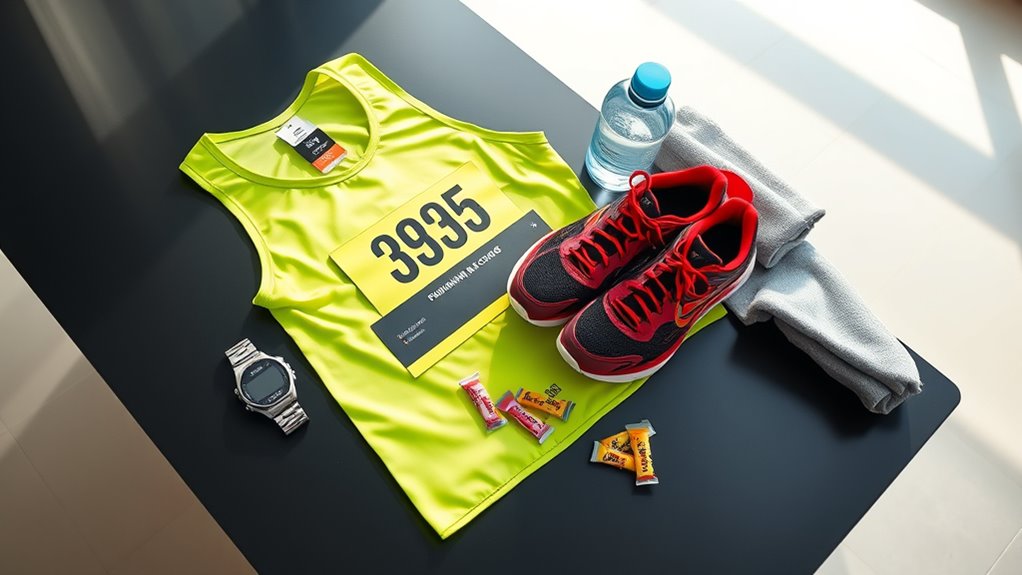

On race day, start with water or an electrolyte drink, and carry or plan to stop at aid stations for fluids every 15-20 minutes. Eat a light, carbohydrate-rich meal 2-3 hours beforehand and practice your nutrition plan during training. Wear moisture-wicking clothes and comfortable shoes, and pack essentials like your bib, safety pins, and energy gels. Staying disciplined and focused will help you enjoy a successful race—stick around to learn more tips for your marathon!
Key Takeaways
- Pack race essentials: bib, safety pins, medical info, extra gels, and salt tablets.
- Wear moisture-wicking clothing, comfortable shoes, and prepare accessories like visor or sunglasses.
- Follow hydration plan: start with water/electrolytes, sip regularly, and plan aid station stops.
- Consume a carbohydrate-rich pre-race meal 2-3 hours before and practice nutrition strategies during training.
- Arrive early for warm-up, mental prep, and ensure readiness to maintain pace and energy throughout the race.
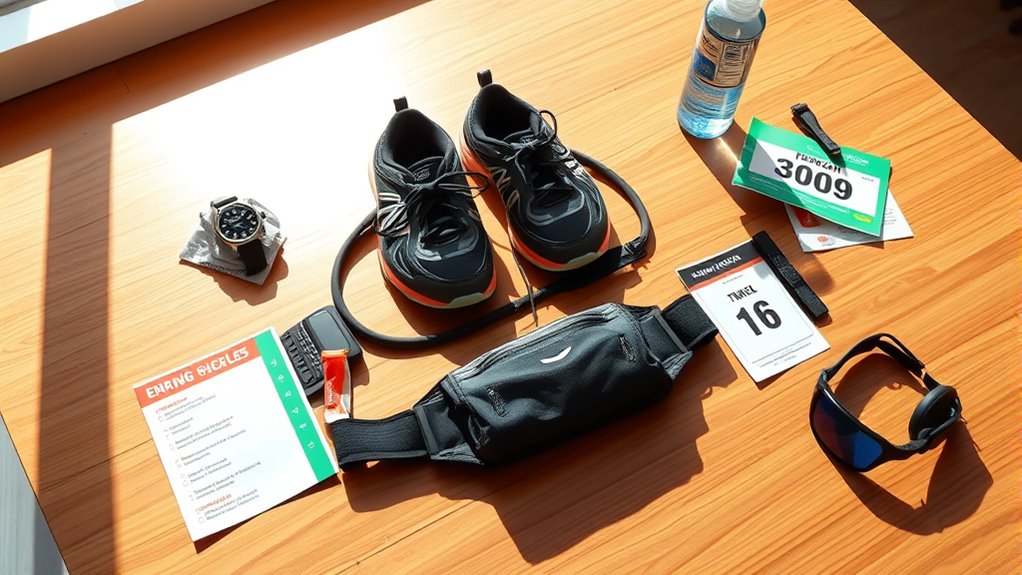
Preparing for a marathon race can feel overwhelming, but having a solid race-day checklist guarantees you’re ready to perform your best. One of the most essential aspects to consider is your hydration strategies. Proper hydration starts well before race day, but on the day itself, you need a plan for maintaining your fluid balance. Think about how much water you’ll need before, during, and after the race. Typically, you want to start the morning with a glass of water or an electrolyte drink to kickstart hydration. During the race, plan to sip small amounts of fluids at regular intervals—many runners aim for about 4-6 ounces every 15-20 minutes, depending on the weather conditions and your sweat rate. Carrying a water bottle or planning your aid station stops can help you stay on track. Remember, overhydration can be as problematic as dehydration, so listen to your body’s cues and avoid drinking excessively.
Nutrition planning is equally essential to guarantee your energy levels stay high throughout the race. Your pre-race meal should be something easily digestible, rich in carbohydrates, and low in fiber and fat to prevent gastrointestinal discomfort. About 2-3 hours before the start, consume a balanced meal like a banana with peanut butter, a bagel with honey, or a sports drink with a small snack. During the race, you’ll want to replenish your glycogen stores with quick sources of energy. Many runners rely on energy gels, chews, or small pieces of fruit, which are easy to carry and digest on the go. Practice your nutrition plan during training to see what works best for you, and stick to familiar foods on race day. Timing is key—consume small amounts regularly to avoid energy dips and stomach upset.
In addition to hydration and nutrition, make sure your race-day gear supports your strategies. Wear moisture-wicking clothing, comfortable shoes, and any accessories like a visor or sunglasses. Have your bib number, safety pins, and any medical info ready. Pack extra supplies like an energy gel or salt tablets if you anticipate needing them. Arrive early to warm up properly, allowing your body to adjust and preventing last-minute stress. Incorporating the use of proper training techniques such as interval runs and long-distance runs can help improve your endurance and overall race performance. With these preparations, you’ll set yourself up for a smooth race experience and peak performance. Staying disciplined with your hydration and nutrition plans can make the difference between finishing strong and hitting a wall. Trust your training, follow your checklist, and enjoy the journey to the finish line.
As an affiliate, we earn on qualifying purchases.
Frequently Asked Questions
What Should I Eat the Morning of the Race?
On race morning, you should eat a light, familiar pre-race breakfast like a banana, toast, or oatmeal to fuel your run. Hydration strategies are key, so drink water or an electrolyte beverage early to stay energized without feeling bloated. Avoid heavy or greasy foods that could upset your stomach. Stick to what your body knows works, and give yourself enough time to digest before the race starts.
How Do I Prevent Chafing During the Marathon?
To keep discomfort at bay, you should apply anti-chafe creams to areas prone to rubbing, like your thighs and underarms. Wearing proper clothing, such as moisture-wicking fabrics and seamless gear, also helps reduce friction. Before the race, make sure your skin is dry and well-prepared, so you glide smoothly through your run. Staying proactive with these tips lets you focus on your pace without unnecessary distractions.
What’s the Best Way to Stay Motivated During the Race?
To stay motivated during the marathon, use pre-race mental strategies like visualization and positive self-talk to boost your confidence. Break the race into smaller goals, focusing on each mile or kilometer. Remember post-race recovery tips to reward yourself and stay inspired for future runs. Keep a steady pace, stay hydrated, and remind yourself of your hard work. These tactics help you push through challenging moments and finish strong.
How Do I Handle Unexpected Weather Changes?
Think of the weather as a wild river—you need to navigate it skillfully. When unexpected weather changes occur, stay calm and focus on weather adaptability. Quickly assess your gear adjustments: add or remove layers, use waterproof gear, or adjust your pace. Staying flexible helps you flow with the conditions instead of fighting them. With the right mindset and gear adjustments, you’ll cross the finish line, no matter what the weather throws your way.
When Should I Start My Race-Day Warm-Up?
You should start your warm-up about 30 to 45 minutes before the race begins. Use this time for your pre-race routine, including dynamic stretching to loosen your muscles and boost circulation. Keep it light and focused, avoiding exhaustion. This warm-up prepares your body for the effort ahead, helps prevent injuries, and gets you mentally ready. Remember to listen to your body and adjust based on the weather and your comfort.
Conclusion
Now you’re ready to race! With your reliable routines, prepared gear, and practiced pace, you’ll confidently conquer the course. Remember to stay steady, hydrate diligently, and enjoy every exhilarating moment. Your preparation pays off, and passion propels you forward. So, step confidently, focus fiercely, and finish strong. The finish line awaits—fuel your focus, follow your fitness, and celebrate your success. You’ve got this; go make your marathon memorable!