
TL;DR
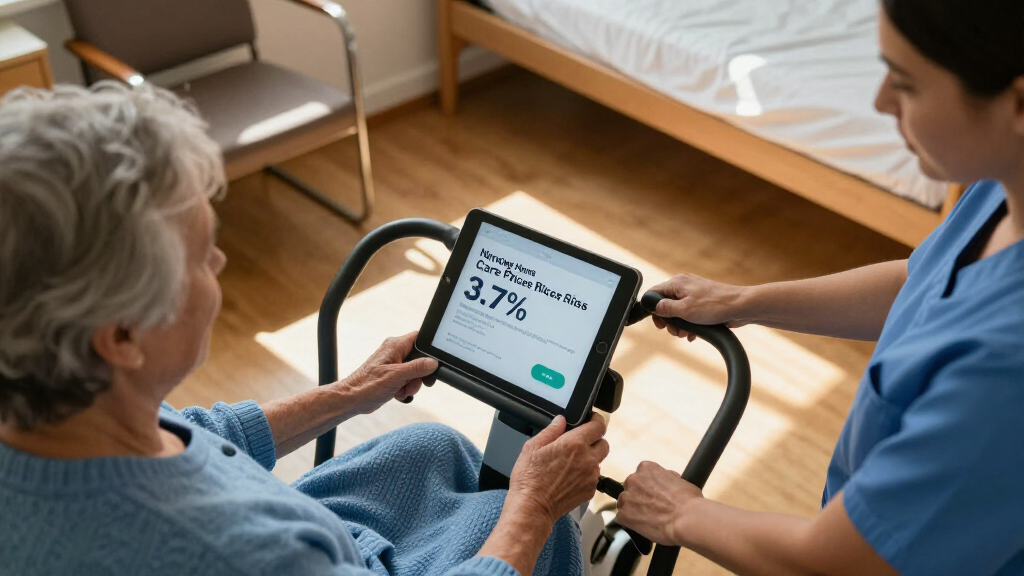
Nursing home care prices increased 3.7% year over year in September 2026, faster than overall health care prices but in line with the Consumer Price Index. Altarum data also show nursing home spending growth slowed, while nursing and residential care facilities lost 8,700 jobs that month.
Nursing home care prices rose 3.7% year over year in September 2026, while spending growth in the category slowed and nursing and residential care facilities recorded a net loss of 8,700 jobs, according to Altarum’s October health care spending brief. The price increase outpaced the overall health care price index, but matched the year-over-year rise in the Consumer Price Index.

Get workout gear delivered free with Prime
- Fast, free delivery on millions of items
- Prime Video, Amazon Music and more included
- Member-only deals all year
The September increase in nursing home care prices was 0.9 percentage points higher than two years earlier, according to the brief. Prices in the overall health care price index rose 2.1% year over year, meaning nursing home price growth remained faster even as health care inflation more broadly moderated. The nursing home increase was below the Producer Price Index’s 6.3% rise.
Price growth varied across other health care services. Dental services rose 6.0% year over year, the fastest increase among the categories cited. Hospital care prices rose 3.3%, while prices for home health care increased 1.1% and physician and clinical services rose 1.3%.
Spending growth also slowed across several health care categories. From August 2025 to August 2026, the year-over-year growth rate for nursing home care spending fell from about 8.3% to 6.7%. Home health care spending growth dropped from 17.7% to 7.8%, and prescription drug spending growth fell from 7.8% to 1.3%. Hospital care was an exception, with its growth rate increasing from about 7.5% to 7.9%.
Employment figures point to a separate pressure on the sector. Nursing and residential care facilities lost 8,700 jobs in September, the largest monthly decline since January 2022, Altarum reported. Nursing care facilities accounted for 1,600 of the losses; other nursing and residential care settings accounted for 7,100. The decline followed an average monthly gain of 5,100 jobs in the subsector over the previous 12 months.
Despite September’s drop, employment in nursing and residential care remained 50,400 jobs above its year-earlier level. Employment at nursing care facilities was described as essentially at its pre-pandemic level. Nominal wages in nursing and residential care facilities rose 3.3% year over year in August, the fastest growth among major health care subsectors, but Altarum said nursing home wages adjusted for inflation remained stagnant.
Prices Rise as Sector Growth Cools
The figures describe a sector facing rising prices alongside slower spending growth, rather than a uniform increase in all measures of activity. Price inflation can affect the cost of nursing home care, while spending growth reflects changes in the total amount spent; the measures are related but are not interchangeable. The data do not, on their own, identify what caused either trend.
The employment decline adds a workforce signal to the picture, but one month does not establish a lasting reversal. The reported year-over-year job increase and nursing-care employment near pre-pandemic levels provide important perspective on the September loss. For residents, families and providers, the combination warrants attention because costs, staffing and spending trends all shape the conditions under which care is delivered.
Products Worth Considering

Levoit Eleva 300X Air Purifier for Home Bedroom

Oral-B iO Series 3 Rechargeable Electric Toothbrush for Adults, Black, with 2 Brush Heads and Travel Case

LEVOIT Vital 200S-P Smart Air Purifier for Large Rooms, White
As an affiliate, we earn on qualifying purchases.
How Prices Compare Across Care
The price and spending figures come from Altarum’s October 2026 health care spending brief, as reported by Skilled Nursing News. The price comparison uses September 2026 year-over-year changes. The spending-growth comparison covers August 2025 to August 2026, while the wage figure is for August 2026. Those different reporting periods matter when comparing the indicators.
Nursing home price growth was higher than the overall health care price index’s 2.1% rate, but it was not the highest measure cited. The CPI rose 3.7% over the same year-over-year period and the PPI rose 6.3%. Among health care services, dental prices grew faster than nursing home prices, while home health, physician and clinical services rose more slowly.
“Nursing home care prices rose 3.7% year over year in September 2026.”
— Altarum, as summarized in its October 2026 health care spending brief
Causes Behind the Trends Remain Unclear
The figures establish changes in prices, spending growth, employment and wages, but the cited brief does not explain what drove the movements. It is not clear from the report whether the September job decline reflects a temporary fluctuation or the start of a sustained change. The data also do not specify how price changes affect costs for individual residents or facilities.
The spending-growth figures describe growth rates, not total spending amounts, and the source material does not provide a full breakdown of the factors behind the slowdown. Wage data are reported for nursing and residential care facilities, while the inflation-adjusted observation refers to the nursing home sector; the measures should not be treated as identical. Later data may change the picture.
Upcoming Data Will Test the Trend
Future monthly reports can show whether nursing home price growth stays above broader health care inflation and whether spending growth continues to cool. Subsequent employment releases will help establish whether September’s 8,700-job decline was followed by recovery or further losses. The source material does not identify a specific date for the next update.
Readers should also track wage figures alongside inflation-adjusted pay and employment counts. Together, those measures can clarify whether nominal pay gains are translating into stronger purchasing power and whether the workforce trend is changing, though they will not by themselves establish what is causing the shifts.
Key Questions
How much did nursing home care prices rise?
They rose 3.7% year over year in September 2026, according to Altarum’s October brief.
How did that compare with overall health care prices?
The overall health care price index rose 2.1% year over year in September, below the nursing home care increase. The CPI rose 3.7% and the PPI increased 6.3% over the same year-over-year period.
Did nursing home spending fall?
The reported measure was the growth rate, which declined from about 8.3% to 6.7% between August 2025 and August 2026. That means spending growth slowed; it does not establish that total spending fell.
What happened to employment in September?
Nursing and residential care facilities recorded a net loss of 8,700 jobs. Employment nonetheless remained 50,400 jobs above its year-earlier level, according to the brief.
Are real wages rising in nursing homes?
Altarum reported 3.3% year-over-year nominal wage growth in nursing and residential care facilities in August, but said inflation-adjusted wages in the nursing home sector remained stagnant.
Source: rss