As a runner at high altitude, it’s essential to watch for symptoms like headaches, dizziness, nausea, and shortness of breath, which can indicate altitude sickness. To stay safe, pace yourself, stay well-hydrated, and ascend gradually to allow your body to acclimate. If symptoms worsen, descend immediately. Medications like acetazolamide can help, but proper planning and awareness are key to preventing emergencies. Keep exploring to learn how you can protect yourself during high-altitude runs.
Key Takeaways
- Recognize early symptoms like headache, dizziness, and nausea to prevent worsening conditions during high-altitude running.
- Acclimate gradually by increasing elevation over several days before intense runs at high altitude.
- Stay well-hydrated and pace yourself to reduce the risk of altitude sickness.
- Consider preventive medications like Acetazolamide after consulting a healthcare professional.
- Descend immediately if symptoms worsen, and prioritize safety by monitoring your body’s response.
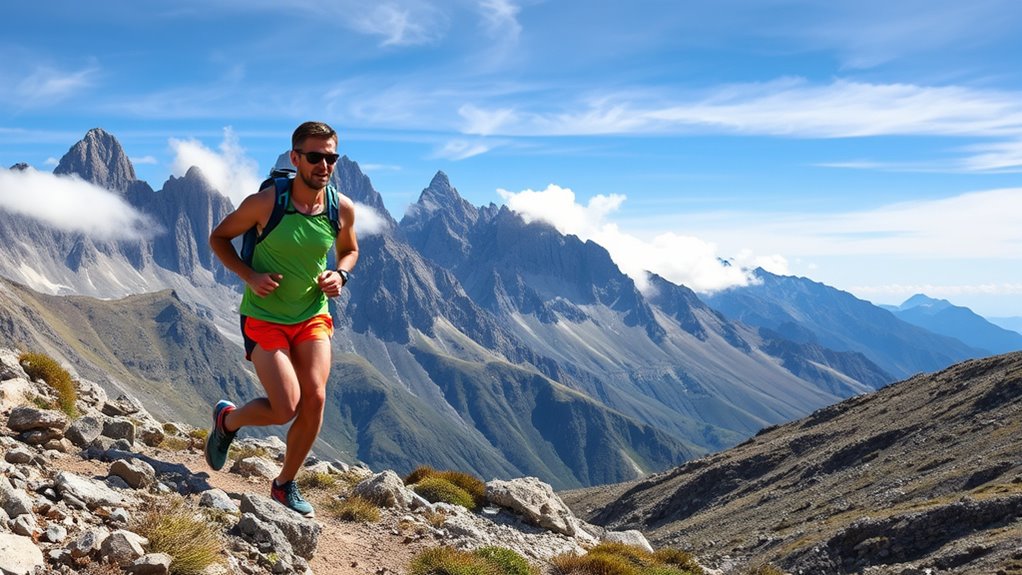
Altitude sickness can strike suddenly when you ascend to higher elevations, and understanding its symptoms and risks is essential for your safety. As a runner, pushing your limits at altitude can be exhilarating, but it also requires careful preparation. One of the most effective ways to do this is by implementing acclimatization strategies. These involve gradually increasing your elevation over several days, giving your body time to adjust to the lower oxygen levels. If you’re planning to run at high altitudes, consider spending a few days at intermediate elevations before tackling your goal. This approach helps your body produce more red blood cells and improves oxygen delivery, reducing your risk of altitude sickness. Additionally, pacing yourself is crucial—start slow and avoid sudden bursts of effort as your body adapts. Hydration also plays a vital role; staying well-hydrated helps prevent symptoms like headaches and fatigue that often accompany altitude sickness.
Preventive medications are another key component of altitude sickness management. Drugs such as acetazolamide (commonly known by the brand name Diamox) can speed up acclimatization and decrease the likelihood of developing symptoms. These medications work by stimulating breathing and increasing oxygen intake, which can be particularly useful if you’re on a tight schedule or unable to spend extended time acclimatizing naturally. Always consult a healthcare professional before using preventive medications, as they can advise you on proper dosages and assess whether these drugs are suitable for you. Remember, medications are not a substitute for proper acclimatization, but they can serve as an added layer of protection.
It’s also important to be aware of state tax implications, which can impact your financial planning if you’re traveling or relocating for high-altitude adventures. In addition to these strategies, listening to your body is critical. Recognize early signs of altitude sickness such as headache, dizziness, nausea, or shortness of breath, and don’t ignore them. If symptoms worsen or persist, it’s vital to descend to a lower altitude immediately. Combining acclimatization strategies with preventive medications maximizes your safety while allowing you to enjoy the run. It’s also wise to plan your ascent carefully, giving yourself enough time to adapt and avoiding rapid elevation gains. Proper preparation can make all the difference between a successful high-altitude run and a dangerous health emergency. By respecting the altitude and taking proactive steps, you can protect yourself and ensure that your running adventure remains both thrilling and safe.

mibro GS Active2 Running GPS Smartwatch with 46mm AMOLED, Lightweight and 15-Day Battery, Supports Training Guidance and Dual-Band GNSS, 150+ Sport Modes (Dark Gray)
[ Lightweight Design ] The Mibro Active2 Running watch boasts a 46mm diameter, 11.7mm case and an ultra-light...
As an affiliate, we earn on qualifying purchases.
Frequently Asked Questions
How Does Hydration Help Prevent Altitude Sickness in Runners?
Hydration helps prevent altitude sickness by maintaining your electrolyte balance and supporting proper fluid absorption. When you stay well-hydrated, your body can better adapt to lower oxygen levels, reducing symptoms like headaches and fatigue. Drinking enough water with electrolytes ensures your muscles and organs function effectively, preventing dehydration. This balance is essential for acclimatization, helping you run safely at high altitudes and avoiding the risks associated with altitude sickness.
Can Altitude Sickness Affect Experienced Marathon Runners?
Yes, altitude sickness can affect experienced marathon runners, especially if you have a genetic predisposition or aren’t acclimated. High altitude fatigue might set in suddenly, even for seasoned athletes. You may notice symptoms like dizziness, headaches, or nausea. To reduce risks, you should gradually increase elevation exposure, stay well-hydrated, and listen to your body. Awareness helps you recognize symptoms early and prevent serious health issues during your run.
Are There Specific Training Strategies to Acclimate Faster?
Your body can adapt faster to altitude with strategic training. Start with gradual climate adaptation, increasing elevation over weeks, and incorporate altitude training sessions. Use simulated altitude environments or mask training to boost your red blood cell count. Consistent exposure is like turning your body into a well-oiled machine, ready to conquer thin air. Proper planning accelerates acclimatization, making altitude sickness less of a threat during your race.
What Are Early Signs of Severe Altitude Sickness?
You might notice severe altitude sickness early through symptoms like high altitude headaches, which are intense and persistent, along with fatigue and dizziness that worsen despite rest. You could also experience nausea, shortness of breath, or confusion. If these signs appear, it’s vital to descend to lower elevations immediately. Ignoring these symptoms can lead to more serious issues like pulmonary or cerebral edema, so stay alert and act quickly.
Is Altitude Sickness Hereditary or Genetic?
Altitude sickness isn’t directly hereditary, but your genetic predisposition and hereditary factors can influence how your body responds to high altitudes. Some people naturally adapt better due to genetic traits that affect oxygen utilization and blood flow. While these factors aren’t the sole determinants, they can make you more or less susceptible. Knowing your family history and genetic background can help you prepare better for altitude exposure and reduce risks.

EZON GPS Running Watch with Distance Pace Alarm and Calorie Counter and Stopwatch for Men T031B01 Black
⌚Advanced GPS for Precise Tracking – Our watch is equipped with cutting-edge GPS technology, featuring a cold start...
As an affiliate, we earn on qualifying purchases.
Conclusion
Remember, running at high altitude is like climbing a mountain—your body needs time to adjust. When I first tried a race at 8,000 feet, I felt like I was running through water; it was a tough lesson. But with proper awareness and gradual acclimatization, you can conquer the summit safely. Don’t ignore your body’s signals—think of altitude sickness as a warning flag. Stay informed, stay safe, and keep reaching new heights.

Beeasy Mens Digital Sports Watch, 50M Waterproof 49mm Rubber Strap Mens Watches with Stopwatch, Countdown Timer, Alarm & Dual Time—Ideal for Sport, Gym, Running, Referee, School & Daily Wear
【Digital Watch with Ultra-clear & Enlarged Display】Using the imported EL backlit screen and enlarged digital numerals, perfect for...
As an affiliate, we earn on qualifying purchases.

Gosasa Lightweight LED Digital Sport Watch Waterproof Fitness Tracker with Calorie Counter, Pedometer, Vibrating Alarm, USB Rechargeable Silicone Wristband for Men Women (Black)
Lightweight & Comfortable Fit – Only 0.63 oz (≈18g) with a 0.67 in (≈1.7 cm) soft silicone strap....
As an affiliate, we earn on qualifying purchases.