
TL;DR
A new at-home testing kit for ticks aims to identify infected ticks before they bite, potentially improving early Lyme Disease detection. The development is still in experimental stages but shows promise for public health.
Scientists have developed a new at-home testing kit that allows individuals to check ticks for Lyme Disease infection before they bite, a breakthrough that could improve early diagnosis and prevention efforts.
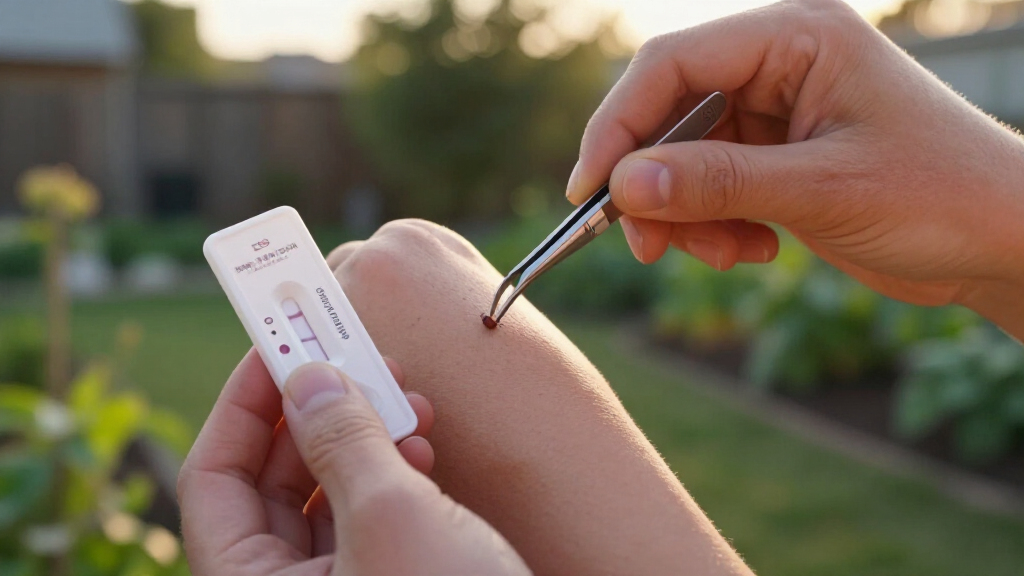
The testing kit, currently in the research phase, uses a simple process that individuals can perform at home to determine if a tick carries the bacteria Borrelia burgdorferi, which causes Lyme Disease. According to the researchers at the University of California, this method could enable people to identify infected ticks without specialized equipment or laboratory analysis.
Preliminary studies indicate that the kit detects bacterial presence with a high degree of accuracy, though it is not yet available for commercial use. The researchers emphasize that the test is designed to supplement existing prevention strategies, such as avoiding tick habitats and using repellents, rather than replace professional diagnosis.
Potential Impact on Lyme Disease Prevention and Diagnosis
This development could significantly enhance public health efforts by enabling individuals to identify infected ticks quickly, reducing the risk of undetected bites that lead to Lyme Disease. Early detection of tick infection may prompt timely medical intervention, decreasing the likelihood of long-term health complications associated with late-stage Lyme Disease.
Experts note that if the kit proves reliable and easy to use, it could be especially valuable in high-risk areas where tick exposure is common. However, health authorities caution that this is an early-stage development and should not replace professional medical advice or diagnostic testing.
at-home tick testing kit for Lyme Disease
As an affiliate, we earn on qualifying purchases.
As an affiliate, we earn on qualifying purchases.
Background on Lyme Disease and Tick Testing Challenges
Lyme Disease is the most common vector-borne illness in the United States, with over 476,000 cases estimated annually, according to the CDC. It is transmitted through the bite of infected black-legged ticks. Currently, diagnosing Lyme Disease relies on clinical symptoms and laboratory tests after a tick bite or symptom onset, which can delay diagnosis.
Existing methods for testing ticks require laboratory analysis, making it difficult for individuals to determine infection status promptly. This often results in late diagnosis, when symptoms become severe or chronic. The new at-home test aims to address these gaps by providing a quick, accessible screening tool.
Previous efforts to develop tick testing kits have faced challenges related to accuracy and ease of use, but recent advances in molecular diagnostics have improved prospects for at-home applications.
“Our goal is to empower individuals with a simple tool to assess tick infection status before bites occur, potentially reducing Lyme Disease cases.”
— Dr. Emily Carter, lead researcher at UC Berkeley
Uncertainties Surrounding Test Accuracy and Availability
It is not yet clear how reliable the at-home tick test will be in real-world settings. The research is still ongoing, and the kit has not undergone large-scale validation or received regulatory approval. Additionally, it remains uncertain when or if the kit will be commercially available for public use.
Next Steps in Development and Validation
Researchers plan to conduct larger clinical trials to evaluate the test’s accuracy and usability. If successful, they will seek regulatory approval and aim to partner with manufacturers for commercial production. Public health agencies may also monitor the kit’s adoption and effectiveness in reducing Lyme Disease cases.
Key Questions
How does the at-home tick test work?
The test involves collecting a tick, then using a simple chemical process to detect the presence of Borrelia burgdorferi, the bacteria that causes Lyme Disease. The process is designed to be straightforward for non-experts.
Is the test currently available for public use?
No, the test is still in the research and development stage. It has not yet been approved or commercially produced.
Can this test replace professional diagnosis?
No. The test aims to supplement existing prevention methods and professional testing but should not replace consultation with healthcare providers if symptoms develop or after a tick bite.
Will the test be affordable and easy to use?
Researchers are designing the test to be affordable and user-friendly, but these aspects are still being evaluated in ongoing studies.
What are the limitations of the current development?
The main limitations include uncertain accuracy in diverse real-world conditions and the lack of regulatory approval at this stage. Further validation is needed before widespread use.
Source: hn