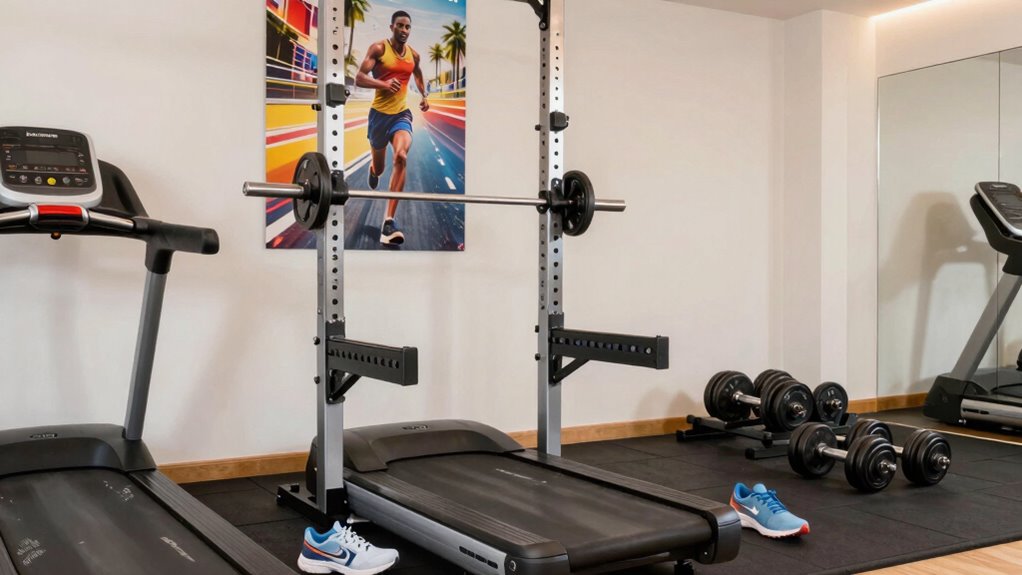

When choosing a power rack as a runner, focus on a model that enhances strength and prevents injuries. Make sure it fits your workout space and has a solid weight capacity for future gains. Prioritize safety mechanisms like adjustable bars to lift confidently. Look for attachments, such as dip and pull-up bars, to diversify your training. These elements can greatly boost your performance. Stick around, and you’ll discover more tips on maximizing your power rack’s benefits.

Get workout gear delivered free — and shop member deals
- Fast, free delivery on millions of items
- Access to Prime Big Deal Days deals on October 6–7
- Prime Video, Amazon Music and more included
Key Takeaways
- Prioritize a power rack that enhances stability and strength to support running performance and prevent injuries.
- Measure your workout space to ensure the power rack fits comfortably without hindering your movement.
- Choose a rack with a suitable weight capacity that accommodates your current lifts and future strength goals.
- Look for safety features like adjustable safety bars to ensure safe lifting while focusing on form.
- Consider attachments like dip bars or cable systems to diversify your training and target muscles critical for running.
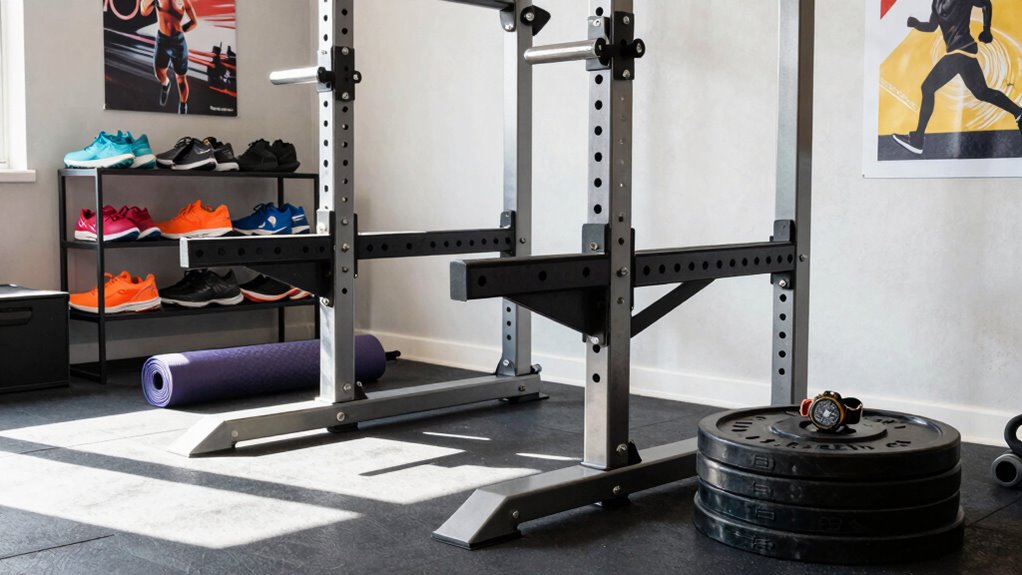
When it comes to strength training, runners often overlook the importance of a power rack. You might think that your primary focus should be on logging miles, but incorporating a power rack into your routine can greatly enhance your performance and help with injury prevention. A power rack provides a safe and versatile environment for performing various exercises, allowing you to train multiple muscle groups essential for running.
First, evaluate the space you have available. A power rack can take up a considerable amount of room, so you’ll want to measure your workout area before you choose one. Make sure there’s enough space not just for the rack itself, but also for the movements you’ll perform around it. You don’t want to find yourself cramped up while attempting lifts. This setup can be a game-changer for your strength training, offering a sturdy frame to safely perform squats, bench presses, and overhead lifts.
Evaluate your workout space carefully; a power rack requires room for both the equipment and your movements to ensure safe lifting.
Next, contemplate the weight capacity. Runners often underestimate how much weight they can lift, but it’s important to select a power rack that can handle your anticipated load. Look for options that offer a higher weight limit than you’ll initially use. This way, as you progress in your strength training, you won’t need to invest in a new rack. A solid frame can also enhance your confidence, knowing it can support your efforts as you push your limits.
Another significant feature to evaluate is the safety mechanisms. Since you’ll likely be lifting heavy weights, having adjustable safety bars is essential. These bars can catch the weight if you lose control during a lift, providing you with peace of mind. This is especially important for injury prevention, as it allows you to focus on your form without worrying about potential mishaps.
Lastly, don’t forget about attachments and accessories. Some power racks come with options for dip bars, pull-up bars, or even cable systems. Reflect on how these additions can complement your strength training. They can provide variety and help you target specific muscle groups, aiding in overall athletic performance.
Incorporating a power rack into your routine can be a transformative decision for your running. By enhancing your strength training and focusing on injury prevention, you can become a more robust, resilient runner. Understanding the importance of proper equipment can make a significant difference in your training outcomes. So, take the time to choose the right power rack that aligns with your goals, and watch how it elevates your running game.
As an affiliate, we earn on qualifying purchases.
Frequently Asked Questions
Can a Power Rack Improve My Running Performance Directly?
Yes, a power rack can directly improve your running performance. By incorporating strength training into your routine, you enhance muscle power and endurance, which translates to better speed and efficiency on the track. Additionally, strength training helps with injury prevention by strengthening key muscle groups, reducing the risk of strains and sprains. So, using a power rack might just give you that edge you need to run faster and longer.
What Are the Best Exercises to Complement Running in a Power Rack?
Think of your body as a finely tuned machine; to keep it running smoothly, you need strength training. In a power rack, focus on exercises like squats, deadlifts, and bench presses. These movements not only build strength but also enhance your running performance and aid in injury prevention. Incorporating them into your routine will create a solid foundation, ensuring you can tackle those miles with power and resilience.
How Much Space Do I Need for a Power Rack?
You’ll need at least 8 feet by 6 feet of space for a power rack, considering the dimensions and space requirements for safe use. This allows room for movements like squats and bench presses without feeling cramped. Don’t forget to account for additional space if you’re using weight plates or other equipment. Ensuring you have enough room will help you train effectively and avoid accidents.
Are There Budget-Friendly Power Rack Options for Runners?
Absolutely, there are budget-friendly power rack options for runners. Did you know that over 60% of home gym enthusiasts prioritize affordability? Look for racks under $300 that feature essential features like sturdy construction and adjustable safety bars. Brands like Fitness Reality and HulkFit offer great value without compromising safety. With a little research, you’ll find affordable options that fit your budget and training needs perfectly!
Can I Use a Power Rack for Bodyweight Exercises?
Yes, you can definitely use a power rack for bodyweight exercises! The rack’s versatility allows you to perform a variety of movements like pull-ups, dips, and push-ups. These exercises offer significant bodyweight benefits, helping you build strength and stability without heavy weights. Plus, you can easily adjust the height of the bars to suit your workout needs. So, incorporate a power rack into your routine to enhance your bodyweight training!
Conclusion
In the end, picking the right power rack comes down to balancing your strength training needs with your running goals. Remember, “a chain is only as strong as its weakest link.” So, verify your rack supports your overall fitness without compromising your running form. Invest in quality, prioritize versatility, and make certain it fits your space. With the right setup, you’ll build strength that enhances your running, keeping you on track for your goals.
Fall Picks
fall essentials
As an affiliate, we earn on qualifying purchases.