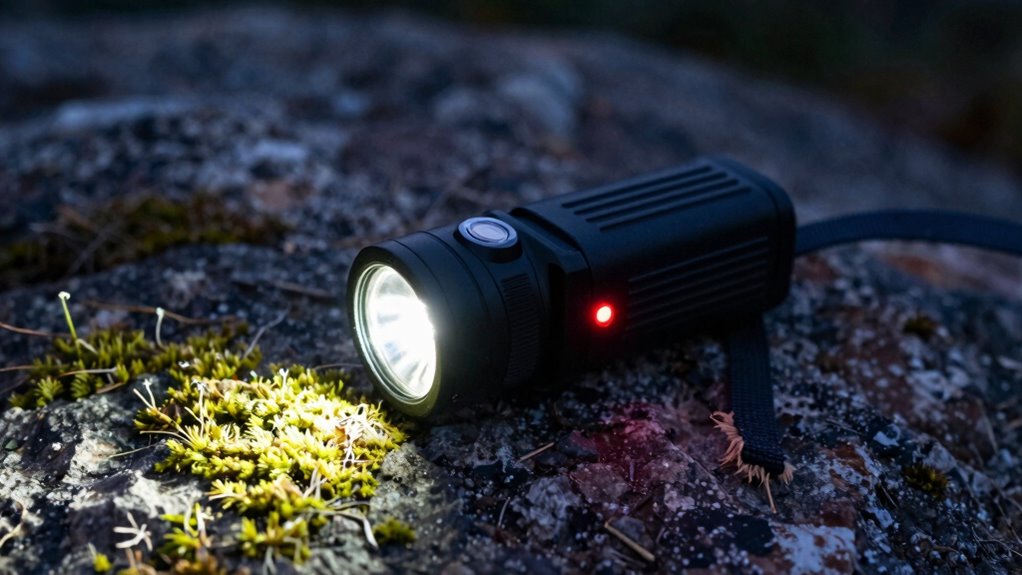

High brightness settings and unnecessary power modes quickly drain your headlamp’s battery, reducing your outdoor time. Keeping the beam at maximum output or leaving power saving features off wastes energy and shortens battery life. Using high intensity in simple tasks is inefficient and can leave you stranded. To extend your headlamp’s run time, it’s vital to understand which settings consume the most power. If you want to discover how to optimize your performance, keep exploring the details.
Key Takeaways
- High brightness levels and maximum beam intensity consume the most power, draining batteries quickly.
- Non-essential features like strobe mode significantly increase power consumption when enabled.
- Using power saving modes or lowering brightness during less demanding tasks extends battery life.
- Continuous use of high brightness or rapid mode changes accelerates battery drain.
- Poorly configured settings before activity, such as defaulting to maximum brightness, can lead to faster power depletion.
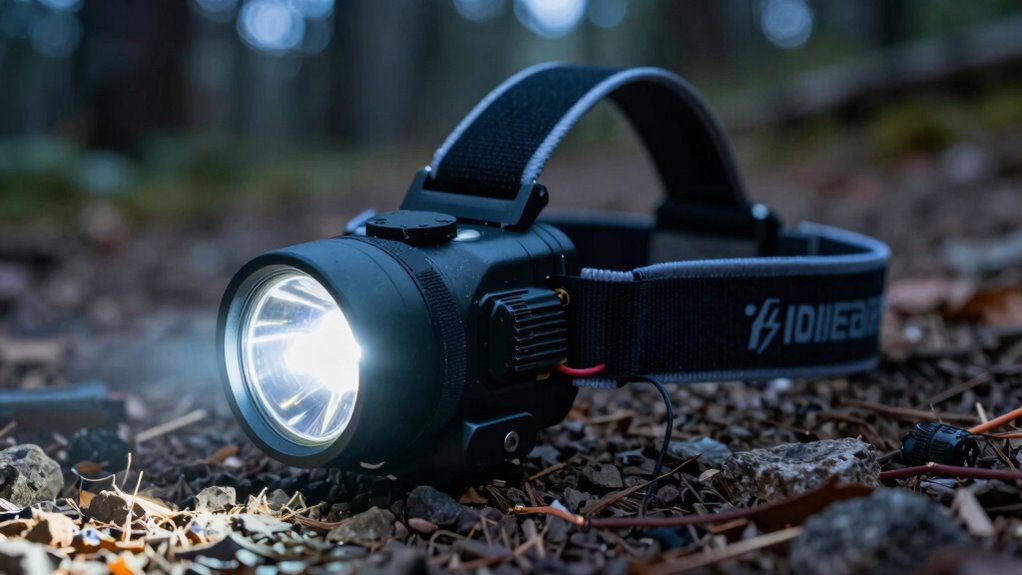
Adjusting your headlamp battery settings guarantees peak performance and longevity. One of the most effective ways to do this is by mastering brightness adjustment and utilizing power saving modes. Many headlamps come with multiple brightness levels, allowing you to tailor the light output to your specific needs. High brightness settings deliver maximum illumination but drain the battery quickly. If you’re on a long hike or working in the dark, it’s tempting to keep it on high, but this significantly reduces your headlamp’s runtime. Instead, switch to lower brightness levels when full power isn’t necessary. For tasks that require just a little light, dimming the beam conserves energy, extending your battery life and reducing the frequency of replacements or recharges. Additionally, understanding the power consumption patterns of your headlamp helps you optimize usage and prevent unnecessary battery drain.
Power saving modes are another crucial feature for maintaining battery health. These modes are designed to optimize energy use without sacrificing essential visibility. When activated, they often reduce the overall brightness and sometimes limit additional features like strobe or flashing modes. Many modern headlamps automatically enter power saving modes after a certain period of inactivity or when the battery reaches a low level. It’s a smart way to prolong your headlamp’s operational time without constant manual adjustments. By enabling these modes proactively, you prevent unnecessary power drain, especially during extended outdoor adventures or when backup batteries aren’t readily available.
You should also pay attention to your headlamp’s settings before you start your activity. Adjust brightness levels based on your environment—brighter isn’t always better, and sometimes a lower setting provides enough light while conserving power. For instance, if you’re setting up camp, a dimmer setting can be sufficient and more economical. Conversely, if you’re navigating treacherous terrain, bumping up the brightness temporarily is wise, but remember to revert to a lower setting afterward. Familiarize yourself with how your headlamp’s power saving modes work; some models feature a simple toggle, while others require navigating through menus. Taking a moment to configure these settings before heading out ensures you maximize efficiency and battery life throughout your activity.

Lepro LED Headlamp Rechargeable – Super Bright Head Lamp with 5 Modes for Camping & Hiking Gear Essentials, IPX4 Waterproof Headlight Flashlight with Red Light, USB Cable Included
Super Bright & 5 Light Modes – 3 Levels of white light brightness (High/Low/Strobe) and two modes of…
As an affiliate, we earn on qualifying purchases.
As an affiliate, we earn on qualifying purchases.
Frequently Asked Questions
Do Different Headlamp Brands Have Unique Battery Consumption Patterns?
Yes, different headlamp brands have unique battery consumption patterns. You’ll notice that brand-specific power management features influence battery longevity, with some brands optimizing settings better than others. When choosing a headlamp, consider how the brand’s design impacts battery life, especially if you need long-lasting performance. By understanding these patterns, you can select a headlamp that offers better battery longevity and minimizes frequent recharging or battery replacements.
Can Adjusting Brightness Settings Extend Battery Life Significantly?
Think of your headlamp’s brightness settings as a dimmer switch—adjusting them can stretch your battery life like a rubber band. By optimizing brightness and switching to power-saving modes, you profoundly extend usage time. Lowering brightness during less demanding tasks conserves energy, ensuring your headlamp lasts longer. So, don’t hesitate to tweak those settings; your battery will thank you with a longer, brighter performance when you need it most.
Are There Specific Environmental Conditions That Accelerate Battery Drain?
Yes, environmental conditions like weather influence and temperature effects can speed up your headlamp’s battery drain. In cold weather, your battery’s chemical reactions slow down, reducing power and runtime. Hot temperatures can cause overheating, leading to quicker battery depletion or damage. To extend your headlamp’s battery life, avoid exposing it to extreme temperatures and store it in a cool, dry place when not in use.
How Often Should I Replace Headlamp Batteries for Optimal Performance?
You should replace your headlamp batteries every 6 to 12 months for maximum performance. Battery lifespan varies based on usage and environmental factors, but regular replacement guarantees your headlamp stays bright when you need it most. Keep an eye on dimming or reduced runtime, which are signs it’s time for a new set. Following a consistent replacement frequency helps maintain reliable lighting and prevents unexpected failures.
Is It Better to Turn off the Headlamp Completely or Use Standby Mode?
Think of your headlamp like a smartphone—standby mode is your sleep mode, conserving power when you’re not using it. Turning it off completely saves more energy than just standby. I once left mine on standby during a long hike, and it drained quickly, leaving me in the dark. For maximum power saving, turn off your headlamp completely when not in use, especially if you’ll be idle for a while.

LED Headlamp 2-pack Battery Powered (AAA) (Batteries Not Included) | Head Lamp for Running Hunting Camping Fishing Hiking with Red Light and Adjustable Headband – Bright Forehead Headlamp 7 Modes
PRACTICAL BRIGHTNESS FOR CLOSE- AND MEDIUM-RANGE TASKS – Designed for walking, running, camping, hiking, fishing, repairs, and household…
As an affiliate, we earn on qualifying purchases.
As an affiliate, we earn on qualifying purchases.
Conclusion
So, you thought tweaking those headlamp settings would save your batteries, huh? Turns out, chasing brighter, faster, or longer-lasting beams might just be the fastest way to drain them. Irony’s sweet spot: your desire for better visibility could leave you in the dark sooner than expected. Next time, maybe stick to the basics—less is more—and avoid turning your headlamp into a flashlight on steroids. Sometimes, simple really is better.
LED Headlamp 2-pack Battery Powered (AAA) (Batteries Not Included) | Head Lamp for Running Hunting Camping Fishing Hiking with Red Light and Adjustable Headband – Bright Forehead Headlamp 7 Modes
PRACTICAL BRIGHTNESS FOR CLOSE- AND MEDIUM-RANGE TASKS – Designed for walking, running, camping, hiking, fishing, repairs, and household…
As an affiliate, we earn on qualifying purchases.
As an affiliate, we earn on qualifying purchases.

klarus HM1 IPX6 Waterproof Rechargeable Headlamp with Motion Sensor, 70 Hours Long Battery Life, Full Charge in 2.5 Hours, 440 Lumens Consistent Output, Shock and Drop Resistant
【Extended Battery Life & Rapid Charging】Enjoy up to 70-hour runtime on low (ideal for 3-day camping trips) and…
As an affiliate, we earn on qualifying purchases.
As an affiliate, we earn on qualifying purchases.