
For a 5K, hydrate beforehand and sip water if needed, avoiding overdrinking. For 10K and 15K races, start drinking early and take small sips during, especially in warm weather, with electrolyte drinks if necessary. During half marathons and marathons, plan hydration breaks and balance water with electrolytes to prevent hyponatremia. Adjust based on weather and listen to your body’s cues—more tips await to optimize your hydration for each distance.
Key Takeaways
- 5K races require minimal during-race hydration, focusing on pre-race hydration and small sips if needed.
- 10K and 15K races benefit from regular, small fluid intakes (3-5 oz every 15-20 minutes) during the run.
- Half marathons and marathons demand structured hydration plans with electrolytes to prevent hyponatremia and cramps.
- Proper hydration timing involves early intake, consistent small sips during the race, and adjusting for weather conditions.
- Electrolyte drinks are essential across all distances to replace minerals lost through sweat and maintain muscle function.
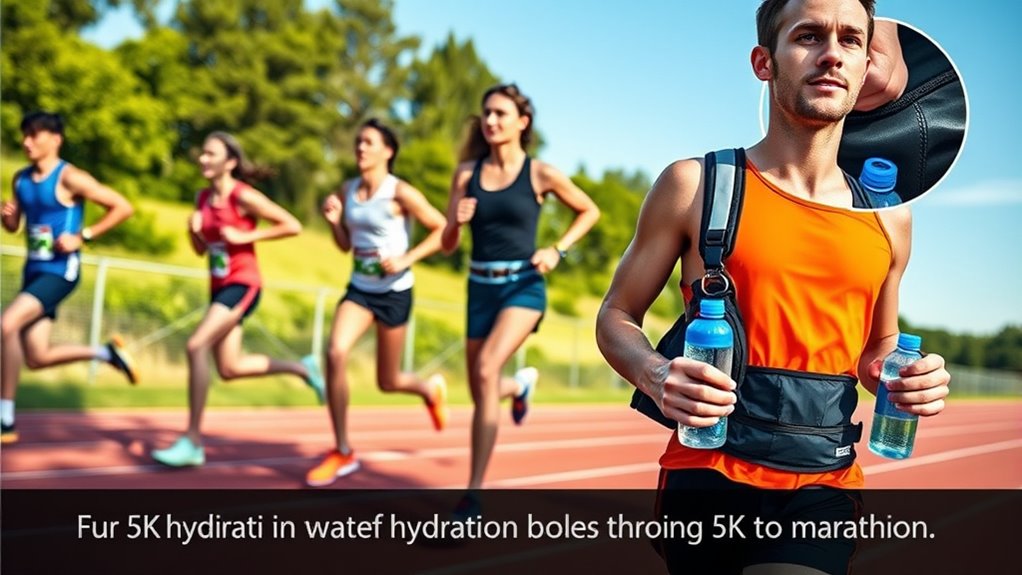
Staying properly hydrated is essential for peak performance, but the amount and timing of fluid intake should vary depending on the race distance. For shorter races like 5Ks, your goal is to maintain hydration without overdoing it. Since these races last less than an hour, you typically won’t need to consume fluids during the run, especially if you’ve properly fueled beforehand. However, sipping small amounts of water during warm weather or if you feel thirsty can help prevent dehydration. The key here is hydration timing—consume fluids early enough to stay ahead of thirst, but not so much that you risk feeling sluggish or experiencing stomach discomfort. Balancing electrolyte levels is also critical, as even short races can cause minor electrolyte loss through sweat. If you tend to sweat heavily, a small electrolyte beverage or supplement can help maintain electrolyte balance, reducing cramping and fatigue. Using the right materials, such as electrolyte drinks that contain sodium and potassium, can optimize your hydration strategy.
When you move up to middle-distance races like the 10K or 15K, your hydration strategy needs to be a bit more deliberate. These races last between 30 minutes to an hour, so you’ll want to start hydrating before the race begins and continue with small, regular sips during the event. Proper hydration timing becomes indispensable here—you don’t want to start dehydrated, nor do you want to drink excessively during the race, which might cause stomach upset. Many runners find that consuming about 3 to 5 ounces of fluid every 15 to 20 minutes works well, especially in warm conditions. Keeping electrolytes in mind, choose drinks that contain sodium and potassium to help replenish lost minerals and maintain electrolyte balance. This helps prevent cramping and fatigue, keeping your muscles functioning at their best throughout the race.
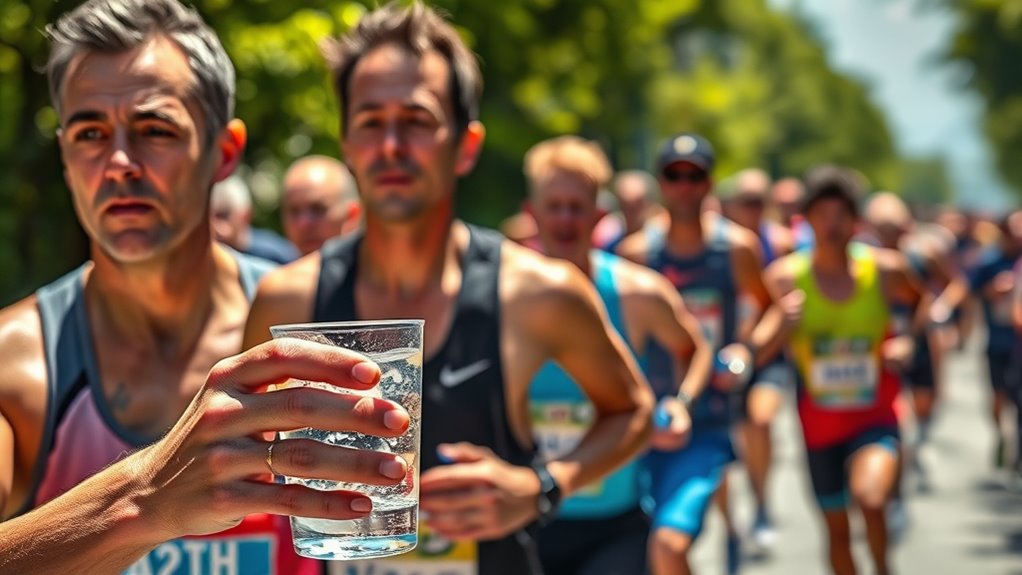
For longer races like the half marathon or marathon, your hydration plan becomes even more essential. These events last over an hour, often several hours, so you need a well-structured approach that includes both hydration timing and electrolyte replacement. Start hydrating well before the race, and plan to take small, frequent sips at aid stations or during planned hydration breaks. Since you’ll be sweating heavily, electrolyte drinks are indispensable to replace sodium, potassium, and other minerals lost through sweat. Drinking too much water alone can lead to hyponatremia, so balancing fluid intake with electrolyte-rich beverages prevents this dangerous condition. During the marathon, listen to your body and adjust your fluid and electrolyte intake accordingly, ensuring you’re neither under-hydrated nor over-hydrated. Proper hydration timing and electrolyte management are your best tools for maintaining energy, preventing cramps, and ensuring a strong finish.

Gatorade Fit Electrolyte Beverage, Healthy Real Hydration, New 2.0 4 Flavor Variety Pack, 16.9.oz Bottles (12 Pack)
Contains twelve (12) 16.9 fl oz (500ml) bottles of Gatorade Fit. Healthy, Real Hydration, Fueled by Gatorade: Tropical…
As an affiliate, we earn on qualifying purchases.
As an affiliate, we earn on qualifying purchases.
Frequently Asked Questions
How Do Hydration Needs Differ for Elite vs. Amateur Runners?
You’ll find that elite runners focus on precise hydration timing to optimize performance, often drinking small amounts regularly to prevent dehydration without feeling bloated. As an amateur, your needs are more flexible, but staying consistently hydrated remains key. Both groups aim for performance optimization, but elites fine-tune their intake more meticulously, while amateurs should listen to their bodies and hydrate before, during, and after runs to stay balanced.
What Are Signs of Overhydration During Long-Distance Runs?
Imagine your body as a delicate balance scale; overhydration tips it, causing signs like nausea, headache, or bloating. You might notice swelling, especially in hands or face, or confusion, signaling electrolyte imbalance. To avoid this, pay attention to hydration timing, drinking just enough to quench your thirst without overdoing it. Recognizing these signs helps prevent overhydration, so you stay safe and perform your best during long-distance runs.
How Does Climate Influence Hydration Strategies Across Distances?
Climate impact directly influences your hydration adaptation during races. In hot, humid conditions, you need to increase fluid intake and replenish electrolytes more frequently to prevent dehydration and heat exhaustion. Conversely, in cooler climates, you can reduce intake but still stay consistent. Pay attention to how your body responds and modify your hydration plan accordingly. Properly adapting to climate ensures you stay safe, comfortable, and perform at your best across all race distances.
Are There Specific Hydration Techniques for Different Age Groups?
You should adjust hydration timing and fluid absorption techniques based on your age. Younger runners often absorb fluids quickly, so drinking small amounts frequently works best. Older runners might need to hydrate more slowly to prevent stomach issues. Pay attention to how your body responds, and practice your hydration strategy during training to optimize fluid absorption, ensuring you stay well-hydrated without discomfort during your race.
How Should Hydration Be Adjusted for Running on Hilly Versus Flat Courses?
Imagine you’re running a hilly course, and elevation effects increase sweat loss. You should adjust your hydration by increasing intake before, during, and after the run, focusing on terrain adaptation. On hills, prioritize electrolyte-rich drinks to replace lost minerals and prevent cramps. For flat courses, maintain steady hydration, but on hills, listen to your body and hydrate more frequently to combat increased dehydration from elevation effects.

AiRunTech Hydration Running Belt with Bottles Zero Bounce Design for Running, Triathlon, Marathon, 10K, 5K, Trail Fit for Most Smartphones(2 * 10OZ bottle)
ANTI-SLIP TECHNOLOGY FOR ULTIMATE FIT AND FRICTION-FREE COMFORT : AiRunTech Upgraded run belt hook&loop tape's in place nicely…
As an affiliate, we earn on qualifying purchases.
As an affiliate, we earn on qualifying purchases.
Conclusion
As you cross the finish line, imagine the cool, invigorating splash of water reviving your tired muscles. Your hydration strategy, like a well-tuned compass, guides you through each mile, ensuring you stay energized and focused. Whether it’s sips from a handheld bottle or fueling at aid stations, picture yourself sipping clarity amidst your race. With every drop, you’re fueling your journey, turning your run into a victorious, memorable story etched in every stride.

QLUR Water Bottle with Straw, 32oz Motivational Water Bottles with Time Marker to Drink, Tritan BPA Free, 1L Sports Water Bottle with Carry Strap LeakProof for Women Gym Fitness Outdoor (1 Pack)
Motivational Time Marker: QLUR 32 oz Water Bottles as your daily partner is designed with motivational quotes by…
As an affiliate, we earn on qualifying purchases.
As an affiliate, we earn on qualifying purchases.

Liquid I.V.® Hydration Multiplier – Variety Pack – Lemon Lime, Passion Fruit, Strawberry, Tropical Punch | Electrolyte Powder Drink Mix | 1 Pack (16 Servings)
HYDRATION MIX: A great-tasting, non-GMO electrolyte drink mix that delivers hydration faster than water alone.
As an affiliate, we earn on qualifying purchases.
As an affiliate, we earn on qualifying purchases.