
To protect your hips and knees on an indoor bike, start by adjusting the seat height to hip level, ensuring your leg has a slight bend when the pedal’s at its lowest. Check that your knees align with your toes and move straight up and down. Position the handlebars for a relaxed posture, keeping your back straight. Incorporate a warm-up routine to prepare your joints, and listen to your body for any signs of discomfort. There’s more to optimizing your setup!

Get workout gear delivered free with Prime
- Fast, free delivery on millions of items
- Prime Video, Amazon Music and more included
- Member-only deals all year
Key Takeaways
- Adjust the seat height so your leg has a slight bend at the lowest pedal position to prevent knee strain.
- Ensure pedals align with your knees, keeping them straight up and down to reduce stress on hips and knees.
- Position handlebars for a relaxed posture, avoiding excessive forward leaning to protect your lower back and hips.
- Incorporate proper warm-up routines to prepare joints and muscles, minimizing discomfort and injury risks during cycling.
- Regularly monitor body feedback and make necessary adjustments to bike setup for optimal comfort and joint health.
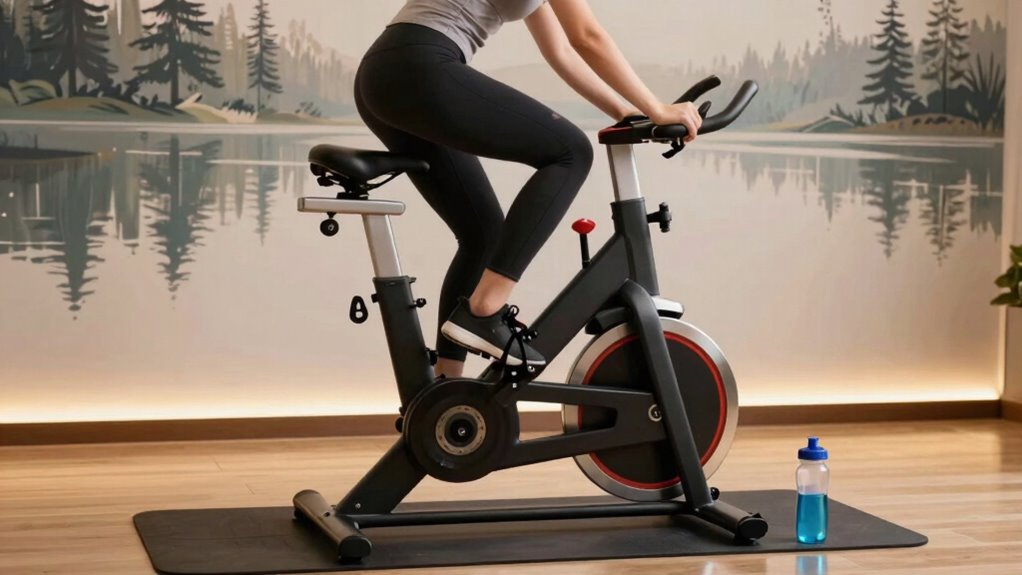
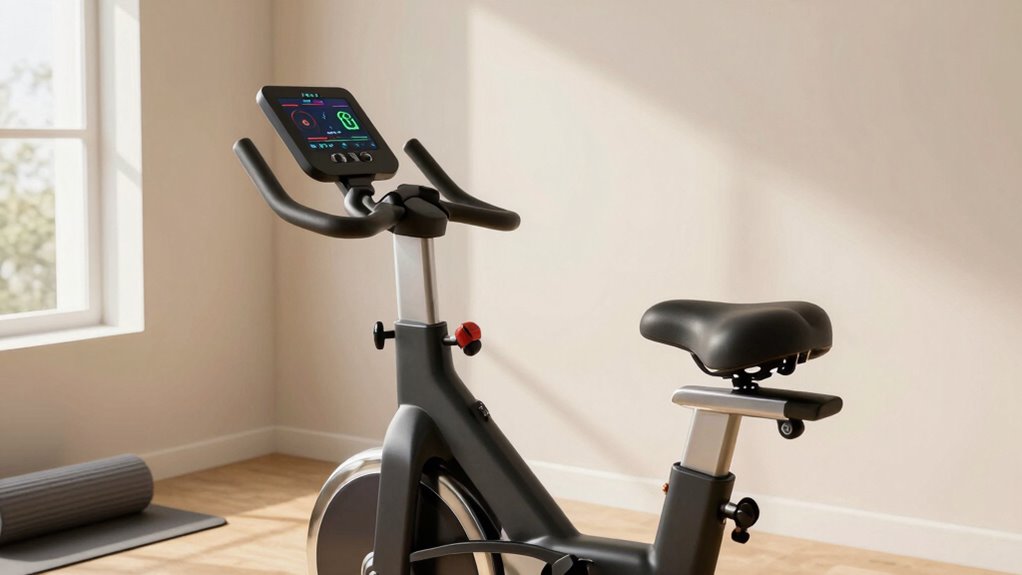
When you’re setting up your indoor bike, getting the right fit is essential, especially for your hips and knees. Proper adjustments can prevent discomfort and potential injuries, making your workouts more enjoyable and effective. Start with your seat height. A seat that’s too high or too low can strain your knees, causing pain over time. To find the right height, stand next to the bike and adjust the seat so it’s level with your hip. When you sit down and place your feet on the pedals, your leg should have a slight bend at the knee when the pedal is at its lowest point. This setup helps maintain proper alignment and reduces the risk of injury.
Next, you’ll want to focus on pedal alignment. Misalignment can lead to undue stress on your knees and hips. Confirm that your pedals are positioned so that your knees stay in line with your toes throughout the entire pedaling motion. When you’re pedaling, your knees should move straight up and down, not inward or outward. If you notice your knees drifting, it might be necessary to adjust your cleats or pedal straps to achieve better alignment. This small tweak can make a significant difference in your comfort level during rides. Additionally, ensuring your bike fit is correct can help prevent long-term joint issues. Proper bike fit is crucial for joint health, especially during regular use. Also, paying attention to your cycling posture can further reduce strain on your hips and knees.
Don’t overlook the importance of handlebars, either. They should be at a height that allows you to maintain a relaxed posture. If your handlebars are too low, you might find yourself leaning forward excessively, which can strain your hips and lower back. Ideally, your elbows should have a slight bend, and your back should remain straight, allowing you to breathe easily while cycling. Incorporating proper bike adjustments can also help in achieving a comfortable and injury-free ride.
Additionally, incorporating proper warm-up routines can help prepare your joints and muscles for cycling, reducing the risk of discomfort. As you begin to ride, pay attention to how your body feels. If you experience any pain or discomfort in your hips or knees, it might be time to revisit your setup. Making minor adjustments can often lead to significant improvements. After a few sessions, you’ll find that the right setup not only enhances your performance but also protects your joints.
indoor bike seat height adjustment
As an affiliate, we earn on qualifying purchases.
As an affiliate, we earn on qualifying purchases.
Frequently Asked Questions
How Often Should I Adjust My Bike Setup?
You should adjust your bike setup regularly, especially when you notice discomfort or after significant training changes. Check your bike height and saddle position every few weeks. If you’re growing stronger or changing your riding style, small tweaks can make a big difference. Don’t hesitate to make adjustments if your knees or hips start feeling sore. Keeping your bike properly fitted helps you ride comfortably and efficiently, so pay attention to those details!
What Are the Signs of Improper Bike Setup?
If your bike’s setup feels like a medieval torture device, you’ve got issues. Signs of improper bike setup include discomfort or pain in your hips and knees. If your saddle height’s too low or high, you’ll notice strain during rides. Similarly, if your handlebar position’s off, you might feel back or neck pain. Listen to your body; adjusting these elements can make your rides enjoyable and pain-free.
Can I Use My Outdoor Bike Indoors?
Yes, you can use your outdoor bike indoors, but you might need some modifications. Consider investing in a bike trainer to stabilize it for indoor cycling. This setup allows you to enjoy the benefits of indoor workouts, like convenience and controlled environments, while using your familiar outdoor bike. Just make certain you adjust the saddle height and handlebar position for comfort to avoid any strain during your sessions.
What Type of Shoes Are Best for Indoor Cycling?
When it comes to your indoor cycling experience, think of shoes as your trusted companions on a journey. You’ll want to choose cycling shoes that offer a snug fit and good breathability. Look for shoe types compatible with your bike pedals, whether they’re clipless or flat. This guarantees a secure connection, letting you pedal efficiently while keeping comfort in mind. Investing in the right pair will make every ride feel like a breeze!
How Do I Maintain My Indoor Bike?
To maintain your indoor bike, start with regular cleaning. Use a damp cloth to wipe down the frame and components. Check the chain and gears for dirt, and lubricate them with indoor cycling tools like a bike-specific lubricant. Inspect the brakes and tighten any loose bolts. Don’t forget to adjust the seat height and position for comfort. Following these bike maintenance tips guarantees a smoother ride and prolongs your bike’s lifespan.
Conclusion
By fine-tuning your indoor bike setup, you’re not just adjusting a seat or handlebars; you’re crafting a sanctuary for your hips and knees. Like a sculptor chiseling away to reveal a masterpiece, each small tweak transforms your ride into a smooth melody, harmonizing comfort and performance. Embrace this journey, and let your body dance freely on the pedals, free from pain. Your bike becomes more than just a machine; it’s a pathway to liveliness and joy.
Halloween Picks
halloween
As an affiliate, we earn on qualifying purchases.