
TL;DR

Get workout gear delivered free — and shop member deals
- Fast, free delivery on millions of items
- Access to Prime Big Deal Days deals on October 6–7
- Prime Video, Amazon Music and more included
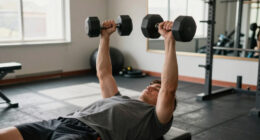
A Fit&Well contributor describes introducing his 73-year-old father to a three-move dumbbell routine: goblet squats, single-arm rows and overhead presses. The account outlines technique, suggested sets and repetitions, and lower-intensity modifications; it does not report measured strength gains or provide a controlled assessment of the routine.
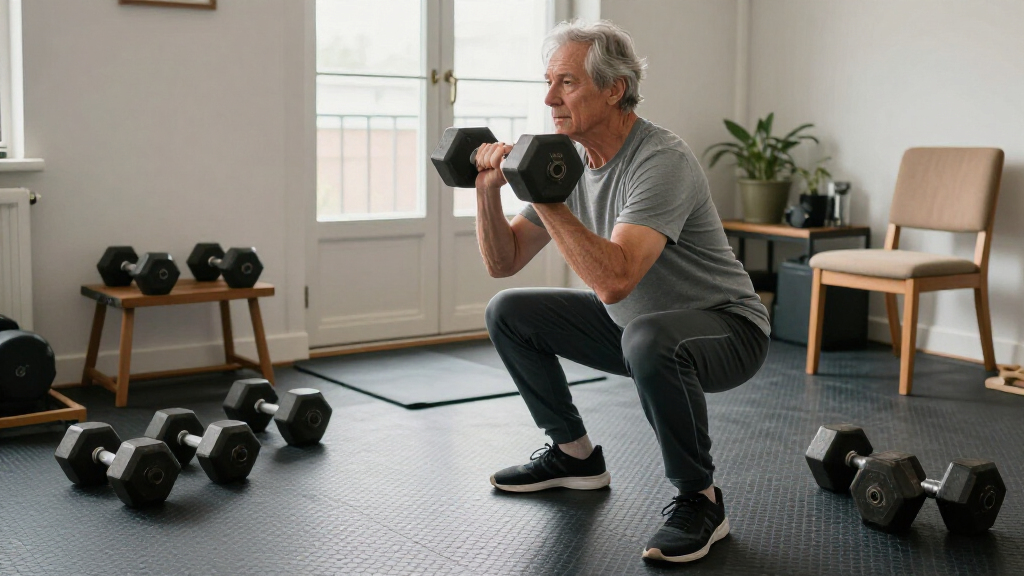
Fit&Well has published a first-person report describing how a personal trainer helped his 73-year-old father return to strength work with three dumbbell exercises: a goblet squat, a single-arm row and an overhead press. The father has limited time for exercise while caring for his wife, who has Parkinson’s, and the article presents the plan as a practical way to train several movement patterns in a short routine—not as a clinically tested program.
According to the Fit&Well report, the father had been active but had recently neglected strength training because caregiving left him little time for himself. The writer says he supplied light-to-medium dumbbells and refreshed his father’s lifting technique, including holding a weight close to the chest, engaging the core and keeping an upright posture. They first spent a few weeks practicing bodyweight movements such as squats, hip hinges, lunges and pushes before adding the three weighted exercises.
The routine lists three sets of eight to 12 repetitions for each movement. For the goblet squat, the lifter holds one dumbbell at the chest, bends the knees and hips, then pushes back to standing. The article links the movement to everyday actions such as rising from a chair or bending to pick something up. It suggests beginning with bodyweight squats or chair-assisted sit-to-stands if a loaded version is too challenging.
For the single-arm row, the report instructs the lifter to hinge forward while supporting the free hand on a sturdy surface, pull the dumbbell toward the ribs and lower it with control. A one-knee-supported version is offered for added stability. The overhead press is performed by moving dumbbells from shoulder height to overhead while keeping the torso upright; a seated version with back support or pressing one arm at a time is suggested as an easier option. The article does not state how often the routine is performed each week.
Three Movements, Everyday Tasks
The routine focuses on three basic movement patterns: standing and sitting, pulling an object toward the body, and reaching or pressing overhead. Those actions appear in common tasks, from getting up from a chair to handling bags or placing items on a shelf. That practical framing may help readers understand why a strength plan need not rely on a long list of specialized exercises.
The story also describes a real constraint: the father’s available time is affected by his caregiving responsibilities. A brief, structured plan may be easier to fit around daily demands than a more elaborate schedule. However, the report is a personal account, not evidence that these exact exercises or the stated volume will produce a particular outcome for every older adult. Ability, balance, joint comfort and health history vary, and the article supplies no measured results for the father.
Its modifications are part of the news value for readers considering a similar routine. Bodyweight squats, supported rows and seated presses offer ways to reduce the initial challenge, while the source emphasizes learning technique before adding resistance. The suggestions should not be read as individualized medical advice or a substitute for professional guidance where health conditions or movement limitations are present.
As an affiliate, we earn on qualifying purchases.
Preparation Before Adding Weights
The writer says his father had been active, but had let strength work lapse. Rather than begin immediately with weighted repetitions, the pair practiced bodyweight versions of several patterns for a few weeks. The report describes this as a chance to refresh form and build familiarity; it does not provide details about the father’s medical status, prior lifting experience or an evaluation by a health professional.
The article’s exercise explanations are specific to its suggested routine: keep the squat weight close to the chest, brace the trunk during lifts, hinge with a flat back for rows, and lower weights under control. It also presents alternatives where a full version may be difficult, including a chair-assisted squat, a kneeling row and a seated overhead press. The source offers no equipment measurements beyond describing the dumbbells as light to medium.
Fit&Well frames strength work as relevant to maintaining muscle and performing everyday tasks as people age. In this account, those points are background for the contributor’s choice of exercises, not findings from a study of his father. The report gives no before-and-after measurements, training log or independent assessment of changes in strength, mobility or balance.
“He cares for my mother, who has Parkinson’s, so he ends up with little time for himself.”
— Fit&Well contributor, describing his father
Results and Training Schedule Unreported
The report does not say how often the father completes the routine, how long each session takes, which dumbbell weights he uses, or whether he has experienced measurable changes. It also does not identify a specific publication date in the supplied material. The routine’s title describes its purpose, but the account does not independently establish that it built strength or improved mobility.
The source gives no details about the father’s health assessment, injuries, balance, pain or other factors that could affect safe exercise selection. It is also not clear whether the exercises were reviewed by a clinician or another qualified professional. Readers should not assume that the same movements, range of motion or load are suitable for everyone of the same age.
Progress Only When Form Allows
The source provides no announced follow-up on the father’s training or results. Its practical progression is to begin with easier variations where needed, prioritize controlled technique and use heavier weights only when the current version feels manageable. The report also mentions a push press as a harder variation, but does not say that the father performs it.
Anyone considering the routine can use the article’s descriptions as general exercise information, not a personalized prescription. People with chronic conditions, pain, balance concerns or a history of injury can seek guidance from a qualified health professional or exercise specialist before starting or changing resistance training. The next relevant development would be any follow-up from the contributor documenting the schedule, progression or outcomes; none is included in the supplied report.
Key Questions
Which three exercises are in the routine?
The Fit&Well account lists a dumbbell goblet squat, a single-arm dumbbell row and a dumbbell overhead press.
How many sets and repetitions does the article suggest?
It lists three sets of eight to 12 repetitions for each exercise. The report does not state how many days per week the father follows the routine.
What are the easier versions?
The article suggests bodyweight or chair-assisted sit-to-stands for squats, a kneeling row for added stability, and a seated press with back support—or pressing one arm at a time—for the overhead movement.
Does the report show that the routine improved the father’s strength?
No measured results are provided. It is a first-person account describing the plan and its intended purpose, not a study or documented before-and-after assessment.
Should every older adult use the same exercises?
The report does not establish that the routine suits everyone. Exercise choices and loads depend on an individual’s ability and health history; people with medical conditions, pain or balance concerns can seek professional guidance before starting.
Source: rss
Halloween Picks
halloween
As an affiliate, we earn on qualifying purchases.