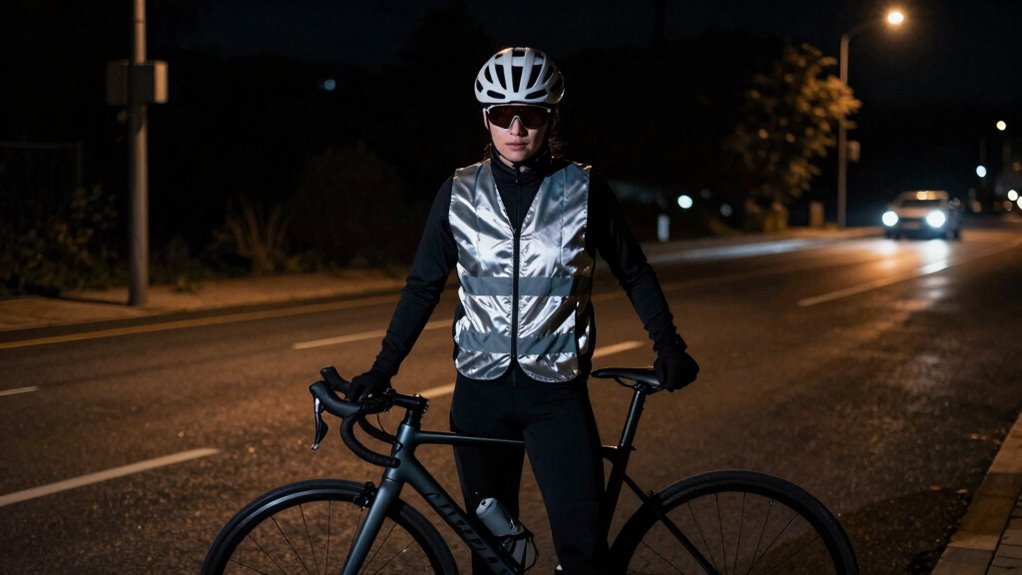

At night, your visibility depends on both reflectors and lights, but they work differently. Reflective gear bounces back external light, like headlights, making you visible when illuminated, but it needs a light source to work effectively. Lights, meanwhile, emit their own beams, actively signaling your presence regardless of external light. Combining both strategies offers the best safety. To discover which options suit your needs, explore how each method enhances your nighttime safety even further.
Key Takeaways
- Reflective gear relies on external light sources and is passive, bouncing back headlights for visibility.
- Lights are active signals that emit their own beam, making them visible regardless of external illumination.
- Combining reflective materials with active lights enhances overall visibility and safety at night.
- Reflective gear is most effective in good lighting conditions, while lights perform better in poor weather or darkness.
- Both strategies complement each other; passive reflectivity provides distance, while lights offer immediate, active signaling.
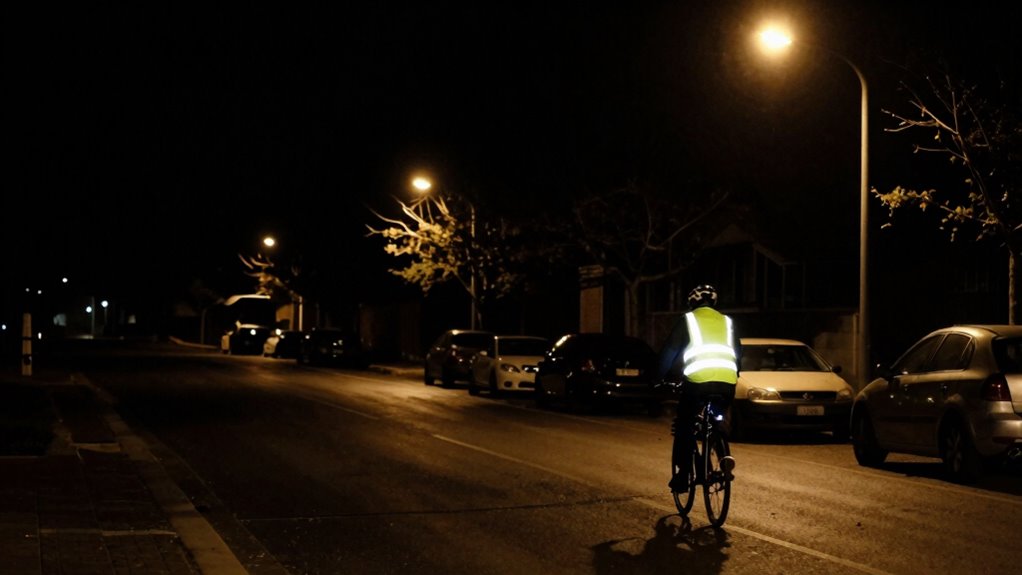
Have you ever wondered whether reflective materials or lights offer better visibility in low-light conditions? When it comes to staying visible at night, understanding how clothing material and visibility distance play a role can make a big difference. Reflective gear relies on the principle of bouncing back light from sources like vehicle headlights, making you stand out without needing a power source. This means that the effectiveness of reflective clothing depends heavily on the clothing material itself. Smooth, tightly woven fabrics tend to reflect light more effectively because they create a smooth surface that catches and redirects light toward the driver’s eyes. Conversely, bulky or textured fabrics might scatter the light, reducing visibility. The clothing material’s quality and design are critical in maximizing visibility distance—the range at which drivers can see you clearly. Generally, reflective materials can be seen from hundreds of feet away, especially when illuminated directly by headlights, but this varies based on fabric quality and the amount of reflective coverage. Additionally, fabric type plays a crucial role in how well the material reflects light, impacting overall safety. The lights, on the other hand, require a power source, such as batteries or rechargeable units. When you activate lights, they emit their own beam, which can be seen from a significant distance depending on the brightness, beam angle, and placement. For instance, flashing or high-powered LED lights can be seen from far away, sometimes over a thousand feet, provided they’re positioned correctly. The advantage of lights is that they can be turned on or off as needed and are visible regardless of the surrounding lighting conditions. They also tend to be more effective in poor weather conditions like fog or rain, where reflective materials might struggle to bounce back enough light for visibility. While reflective materials excel in providing passive visibility—meaning you don’t need to do anything for them to work—they depend heavily on external light sources for their effectiveness. Lights, however, actively signal your presence and can be seen from greater distances in many situations, especially if you choose high-quality, bright options. Combining both strategies offers the best protection, as reflective gear ensures you’re visible when light hits it, and lights provide an active signal that draws attention to your position. Ultimately, your choice should consider your specific environment, the clothing material’s reflective properties, and the visibility distance you need to maintain safety at night. By understanding how each method works, you can better decide which option—or combination—is right for you to stay safe and visible.
reflective safety vest for night running
As an affiliate, we earn on qualifying purchases.
As an affiliate, we earn on qualifying purchases.
Frequently Asked Questions
How Do Reflective Materials Perform in Poor Weather Conditions?
In poor weather conditions, reflective materials still perform well, but weather impact can diminish their effectiveness. Rain, snow, and fog can wash away or cover reflectors, making you less visible. Durable materials withstand these conditions better, lasting longer without cracking or fading. To stay visible, choose high-quality, weather-resistant reflective gear, and guarantee it’s properly maintained. This way, you maximize your safety even when weather turns bad.
Are Certain Colors More Visible at Night Than Others?
Certain colors are more visible at night due to color contrast and color psychology. Bright, high-contrast colors like yellow, orange, and neon shades stand out against dark backgrounds, making you more noticeable. Dark colors like black or navy blend in more, reducing visibility. To stay safe, wear clothing with vibrant colors or reflective materials, especially in low-light conditions. Your choice of color can markedly improve how easily others see you at night.
Can Reflective Gear Be Effective Without Additional Lighting?
Reflective clothing can be highly effective without additional lighting, especially since studies show drivers are 2.5 times more likely to notice pedestrians wearing reflective gear. When you wear reflective clothing, your night visibility increases markedly because the material bounces back light from vehicle headlights, making you stand out. So, if you’re walking or biking at night, don’t rely solely on lights—your reflective gear alone can keep you safer.
How Long Do Reflective Surfaces Stay Visible After Exposure?
Reflective surfaces can stay visible for several hours after exposure, especially if they’re designed with glow-in-the-dark or phosphorescent coatings. These coatings absorb light and then slowly release it, maintaining visibility even in darkness. However, the glow diminishes over time, so the longer you’re away from light sources, the less visible you become. For consistent safety, combining reflective gear with active lighting is the best approach.
What Are the Best Practices for Combining Lights and Reflectors?
To stay visible at night, combine lights and reflectors smartly. Use flashlight techniques like sweeping beams to illuminate yourself clearly. Place reflectors at points where headlights or flashlights will hit, such as your chest or bike frame, for maximum effect. Remember, a well-timed beam and strategic reflector placement work hand in hand—don’t put all your eggs in one basket, so stay bright and safe on your journey.
LED bike lights rechargeable
As an affiliate, we earn on qualifying purchases.
As an affiliate, we earn on qualifying purchases.
Conclusion
Remember, it’s better to be seen than sorry. Both reflectives and lights play essential roles in keeping you visible at night, but using them together offers the best safety. Reflective materials bounce back light from headlights, while lights actively make you more noticeable. Don’t rely on just one—think of it as putting all your eggs in one basket. Stay safe by combining visibility methods; after all, it’s better to light up the night than stumble in the dark.
high visibility reflective gear for pedestrians
As an affiliate, we earn on qualifying purchases.
As an affiliate, we earn on qualifying purchases.

4 Pack LED Safety Light, Clip on Reflective Gear Lights for Walking at Night, Running, Jogging, High Visibility Strobe Light Accessories for Runners, Kids, Hiking, Kayak, Cycling, Camping, Boat Red
New Improved Design – Keep your family and loved ones safe with this slim, lightweight, compact, and super…
As an affiliate, we earn on qualifying purchases.
As an affiliate, we earn on qualifying purchases.